2024 Curtain Style Matcher
Find the perfect window treatment for your space by answering a few quick questions.
Your Perfect Match
-
-
-
-
-
-
You walk into a room, and the first thing you notice isn’t the sofa or the rug. It’s the way the light hits the fabric hanging by the window. Curtains aren’t just about blocking out the sun anymore; they’re the jewelry of your home. If you’ve been staring at your tired, dusty drapes wondering if they still fit the vibe of 2024, you’re not alone. The shift this year is subtle but significant. We are moving away from the stark minimalism that dominated the early 2020s toward something warmer, more textured, and honestly, a lot more fun.
The Rise of Natural Fibers and Texture
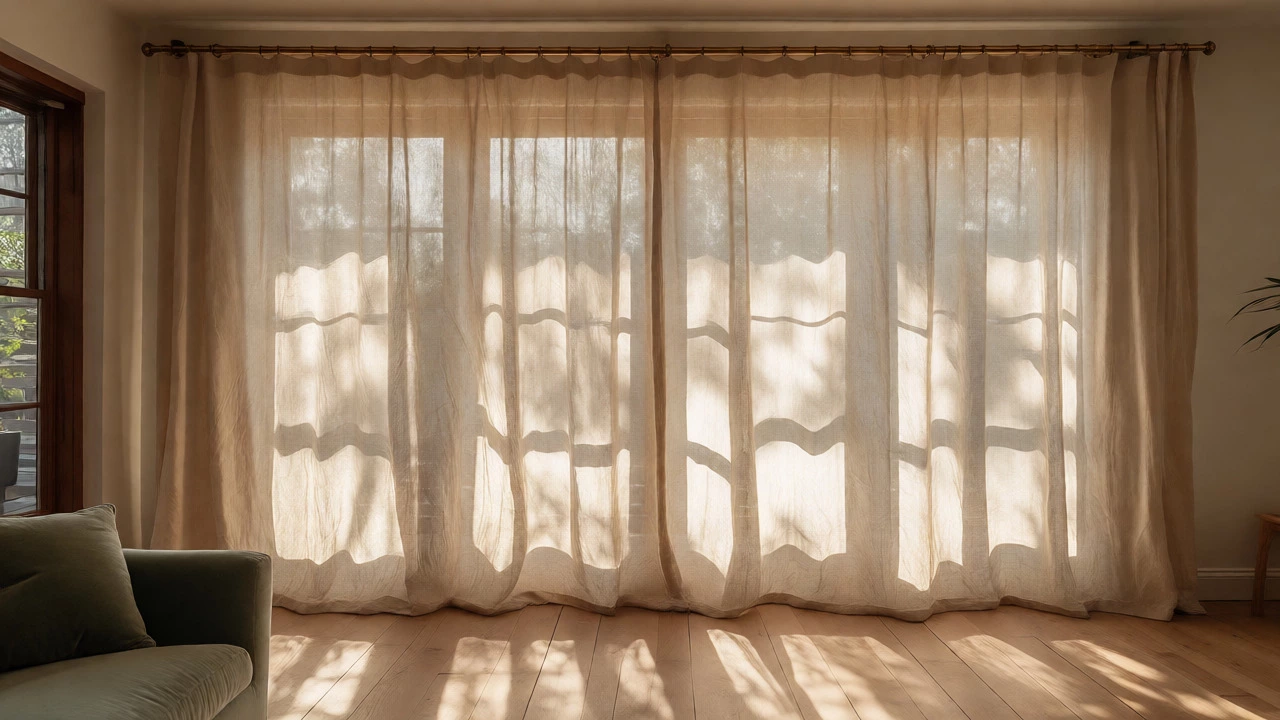
Let’s talk about what you can actually feel. Synthetic polyester blends, while durable, often lack that organic charm we are craving right now. The biggest player in the 2024 scene is Linen is a breathable, textured fabric derived from flax plants, prized for its ability to filter light softly while adding a casual, airy aesthetic to interiors. It’s wrinkly? Yes. Is that a bad thing? Absolutely not. That slouchy, lived-in look is exactly what designers are pushing. It signals comfort. It says, "I live here, and I’m relaxed."
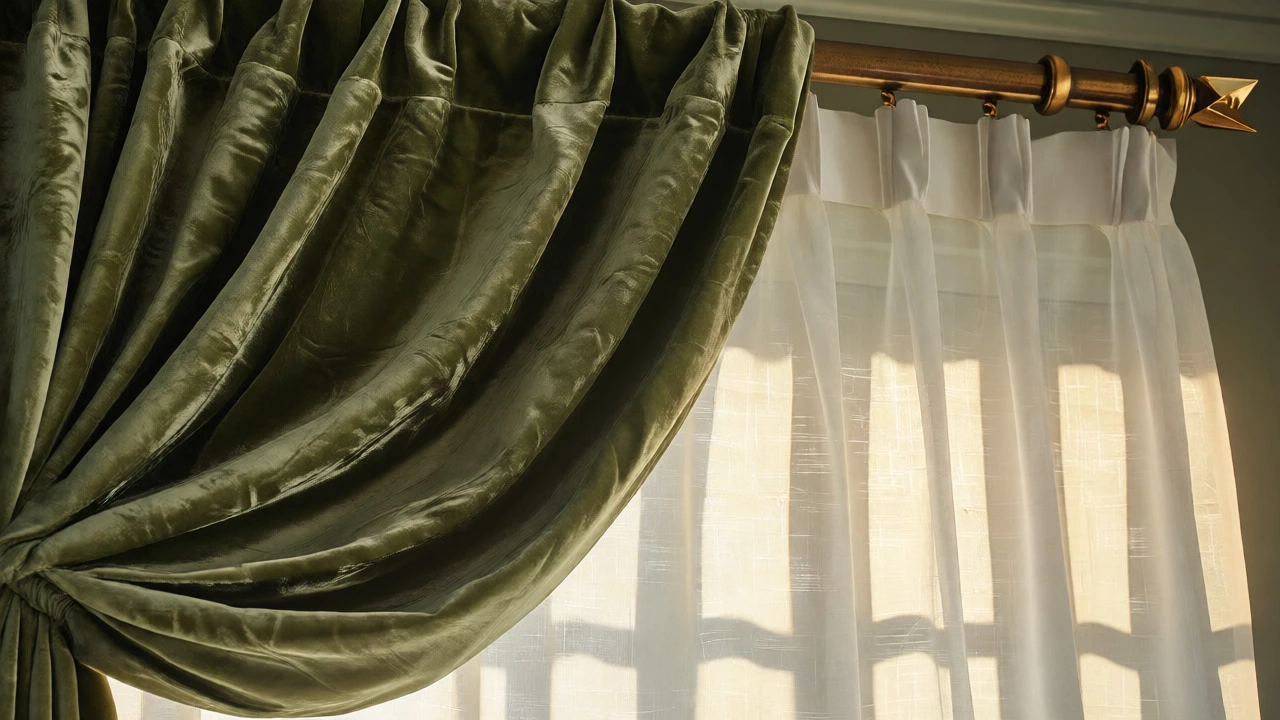
If linen feels too sheer for your needs, look at cotton canvas or heavy-weight velvet. Velvet has made a massive comeback, but not the shiny, formal kind. Think matte, crushed, or moss-green velvet that adds depth and warmth to a cold winter room. The key attribute here is tactile quality. When you run your hand across the curtain, it should invite touch. Avoid anything that feels like plastic. If it doesn’t have texture, it doesn’t have trend status this year.
Silhouette Matters: Floor-to-Ceiling Drama
Here is a quick rule of thumb: if your curtains stop three inches above the windowsill, take them down. Seriously. The 2024 standard is floor-grazing length. You want the fabric to just kiss the floor or puddle slightly (about an inch) for that extra layer of luxury. This elongates the walls and makes small rooms feel taller. Mounting the rod high up, close to the ceiling, rather than just above the window frame, amplifies this effect.
Beyond length, the shape is changing. We are seeing a move away from tight, uniform pleats. Instead, wave headers and pinch pleats that allow for deep folds are popular. These styles create shadow lines and visual interest. A flat panel looks boring. A gathered, voluminous panel looks expensive and intentional. If you are renting and can’t install new rods, try using clip rings to add height without drilling holes. It’s a cheap hack that instantly updates the silhouette.
Color Palettes: Earth Tones Meet Bold Accents
Remember when everything had to be beige or gray? That era is over. While neutrals remain safe bets, they are warmer now. Cream, oatmeal, terracotta, and sage green are dominating the palette. These colors connect the indoors with nature, which is a huge theme in current interior design. But don’t be afraid to go bold. Deep navy, forest green, and even muted burgundy are trending for accent walls or statement windows in living rooms.
For those who love patterns, florals are back, but not the tiny, busy chintz prints of the past. Large-scale botanical prints, abstract organic shapes, and geometric designs in earthy tones are the go-to choices. The goal is to make the pattern feel grounded, not chaotic. If your room is already full of colorful art, stick to solid curtains in a complementary shade. Let one element be the star.
| Style | Best For | Vibe | Maintenance |
|---|---|---|---|
| Sheer Linen | Living rooms, sunny bedrooms | Airy, relaxed, modern | Low (machine washable) |
| Velvet Drapes | Dining rooms, media rooms | Luxurious, cozy, dramatic | Medium (dry clean recommended) |
| Cotton Canvas | Kitchens, kids' rooms | Casual, durable, bright | High (easy to clean) |
| Roman Shades | Small windows, bathrooms | Tailored, neat, space-saving | Medium (spot clean) |
Layering Like a Pro
One curtain panel rarely does the job well. Layering is the secret weapon of professional stylists. Start with a sheer curtain closest to the glass. This protects your privacy during the day while letting light in. Then, hang a heavier blackout or thermal-lined curtain on top. This gives you flexibility. Need total darkness for a movie night? Pull the heavy curtains. Want a soft glow? Keep the sheers closed.
This technique also adds depth. When you pull back the heavy drapes, the edge of the sheer curtain peeks through, creating a layered look that feels curated. Make sure the layers match in width. A common mistake is buying sheers that are narrower than the main drapes, leaving gaps. Measure your window carefully. You generally want your curtain panels to be 2 to 2.5 times the width of the window to ensure enough fullness when drawn.
Hardware as Decoration
Don’t ignore the rod. In 2024, the hardware is part of the decor. Thin, sleek metal rods are fading out in favor of chunkier wooden poles or brass fixtures. Matte black is still around, but brushed brass and antique gold are stealing the spotlight. These metals add warmth and reflect light beautifully.
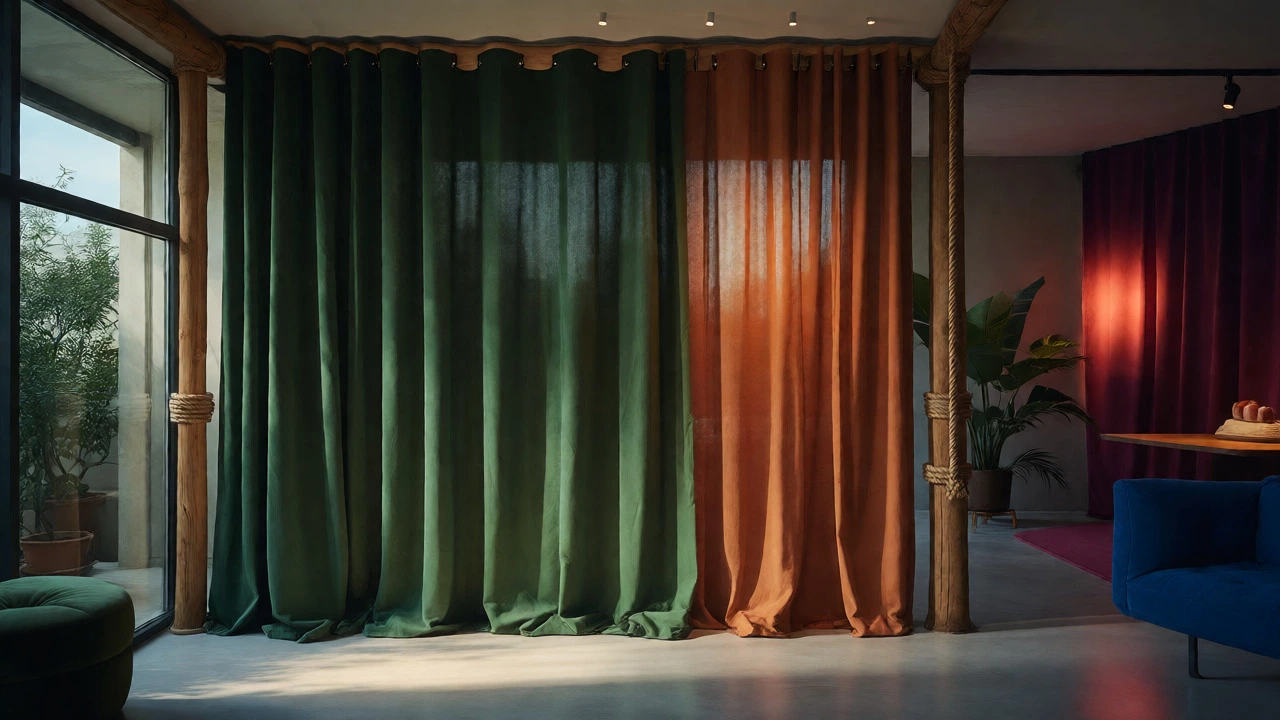
If you have tall ceilings, consider double rods. One for the sheer, one for the drape. Or, use decorative finials to add personality. A simple ball finial is fine, but why not choose something unique? Animal shapes, geometric ends, or even rope-wrapped details can turn a functional item into a conversation piece. Just ensure the rod is sturdy enough to hold the weight of your chosen fabric. There is nothing worse than a sagging rod ruining a beautiful setup.
Eco-Conscious Choices
Sustainability isn’t just a buzzword; it’s influencing how we buy textiles. Consumers are looking for curtains made from organic cotton, recycled polyester, or hemp. Brands are responding by offering transparent supply chains. Look for certifications like OEKO-TEX or GOTS (Global Organic Textile Standard). These labels prove that the fabric was produced without harmful chemicals.
Vintage shopping is also booming. Thrifting high-quality vintage curtains saves money and reduces waste. You might find unique silk or wool pieces that you can’t get in modern stores. Tailoring them to fit your current windows is usually cheaper than buying custom new ones. Plus, you get a story with every purchase. Did those curtains come from a 1970s apartment in London? That’s cool.
Practical Tips for Buying
Before you hit "add to cart," measure twice. Order samples. Never, ever buy curtains online without touching the fabric first. Photos lie. A screen can make a thin polyester look like thick linen. Samples cost a few dollars but save you hundreds in returns.
- Check the drop: Ensure the length fits your ceiling height, not just the window.
- Test the opacity: Hold the sample up to a light source. Is it too see-through?
- Consider washing: Can you throw it in the machine, or does it need dry cleaning? Factor in long-term costs.
- Look at the lining: Unlined curtains fade faster and offer less insulation. Lined curtains last longer and hang better.
Are white curtains still in style for 2024?
Yes, but the shade matters. Stark, cool white is out. Warm whites, creams, and ivory are in because they complement the earthy color palettes trending this year. They keep spaces feeling open and bright without looking clinical.
How wide should my curtains be?
For a luxurious look, your total curtain width should be 2 to 2.5 times the width of your window. This ensures the fabric has enough volume to look full when closed and creates attractive folds when open. Too narrow, and they will look skimpy.
Should curtains touch the floor?
Ideally, yes. Curtains should either graze the floor or puddle slightly (by about half an inch to an inch). Breaking the line of sight at the floor makes ceilings appear higher. Puddling adds a casual, romantic feel, while grazing looks more tailored.
What is the most popular curtain fabric right now?
Linen and linen-blend fabrics are currently the most popular due to their natural texture and light-filtering properties. Cotton canvas is a close second for durability, especially in high-traffic areas like kitchens and children's rooms.
Do I need both sheers and heavy curtains?
You don't strictly need them, but layering provides maximum versatility. Sheers offer daytime privacy and soft light, while heavy curtains provide nighttime privacy, insulation, and light-blocking capabilities. It’s the best way to control the mood of a room throughout the day.