New Build Wall Drilling Safety Checker
Drilling Safety Check
Check if your planned drilling location is safe before you start.
You can drill here, but verify with a stud finder and cable detector first.
Drill here only after confirming with a stud finder and cable detector.
Drilling into new build walls sounds simple-until you hit something you weren’t expecting. Maybe it’s a cable, a pipe, or worse, a structural stud you weren’t supposed to touch. New builds aren’t like older homes where walls have been patched, painted, and drilled into a dozen times. They’re fresh, precise, and often full of hidden systems you can’t see. If you’re moving into a new home and want to hang shelves, mount a TV, or install a light fixture, you need to know what’s behind that plasterboard before you pick up the drill.
What Are New Build Walls Made Of?
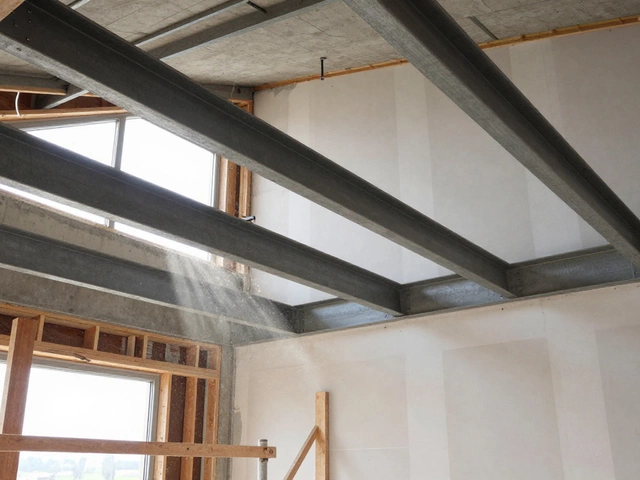
Most new homes in New Zealand, Australia, and North America use lightweight steel or timber framing with double-layered plasterboard (also called drywall or gyprock). The space between the studs is filled with insulation, and wiring and plumbing run through these cavities. In some newer builds, especially high-end ones, you might find soundproofing layers, vapor barriers, or even radiant heating pipes embedded in the walls.
Unlike older homes where walls might have brick, lath, or uneven layers, new build walls are engineered for speed and efficiency. That means they’re thin, uniform, and-here’s the catch-packed with things you don’t want to drill into accidentally.
Why Drilling Into New Build Walls Is Riskier Than You Think
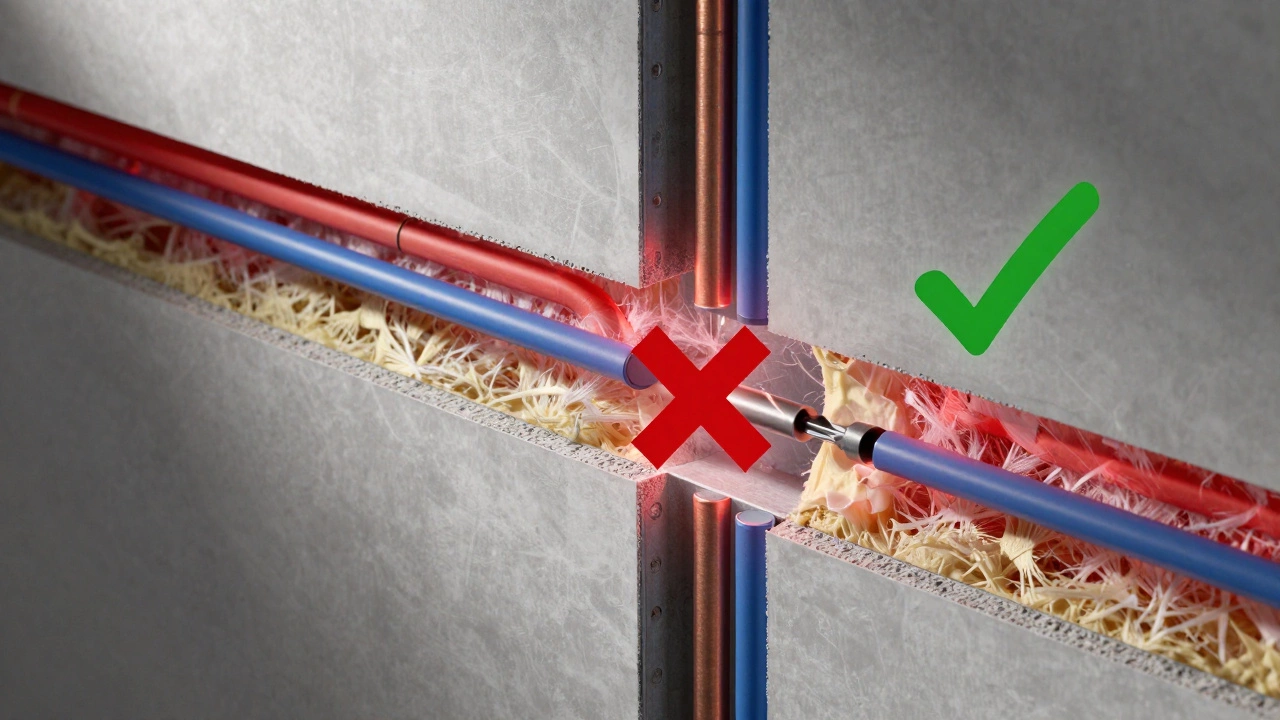
You might think, “It’s just a wall,” but new builds are wired differently. Electrical cables often run horizontally just above or below switch plates and outlets, following strict building codes. Plumbing lines, especially for bathrooms and kitchens, can run vertically inside walls that look like ordinary living room or bedroom walls. In some cases, heating pipes or underfloor heating manifolds even extend into external walls.
A 2024 survey by the New Zealand Building Industry Association found that 37% of new homeowners who drilled into walls without checking first damaged wiring or plumbing. In half of those cases, the damage wasn’t noticed until weeks later-when lights flickered or water started dripping from the ceiling.
It’s not just about leaks or shocks. Drilling into a structural stud the wrong way can weaken the wall’s integrity. And if you’re in a multi-story apartment or townhouse, you could damage your neighbor’s wall-or their wiring-without even realizing it.
How to Safely Drill Into New Build Walls
You can drill into new build walls. But you need to do it right. Here’s how:
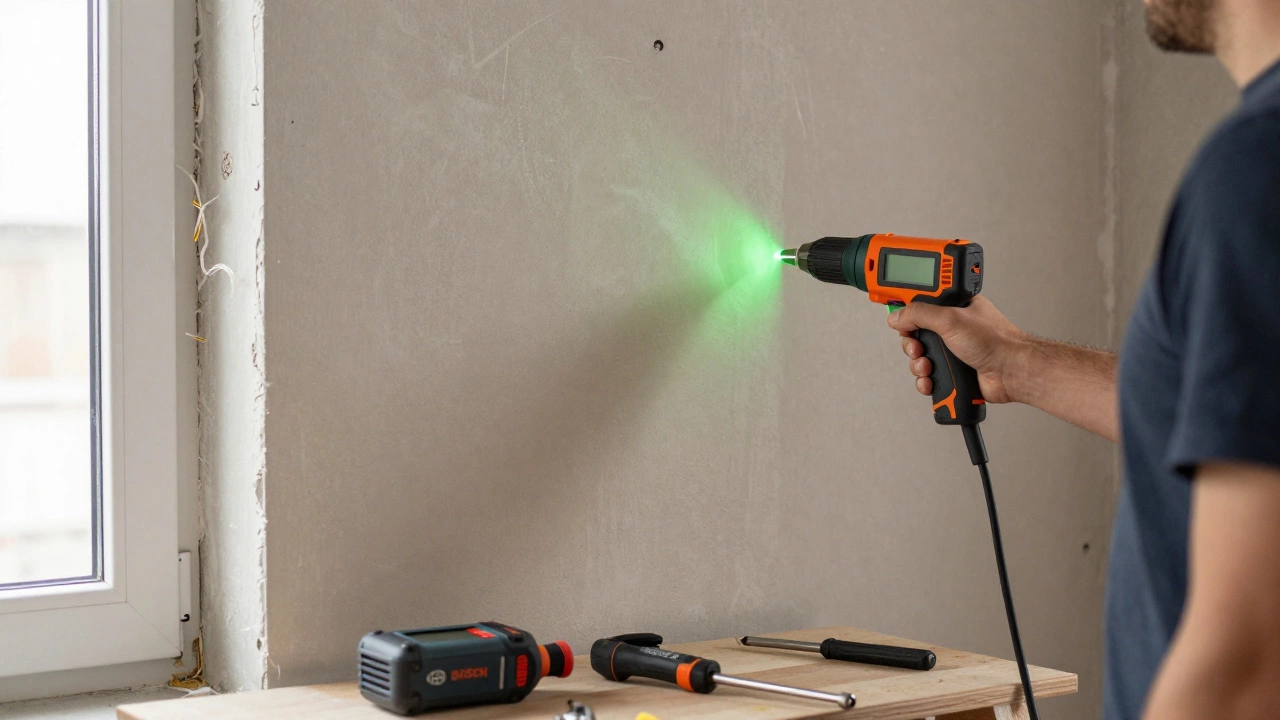
- Find the studs-Use a stud finder that detects both wood and metal. Not all stud finders work well on steel framing. Look for one with deep-scan mode, like the Bosch GMS120 or DeWalt DW020. Mark the edges of each stud-you’ll want to anchor within 1 inch of the center.
- Check for wires and pipes-Use a cable and pipe detector. Devices like the Zircon MultiScanner i500 can detect live AC wires up to 2 inches deep and plastic or copper pipes. Scan the area where you plan to drill, especially around power points and light switches.
- Know the height-Electrical cables often run at 12 to 18 inches above the floor, or just above and below sockets. Avoid drilling in those zones unless you’ve confirmed it’s safe.
- Use the right drill bit-For plasterboard, a standard twist bit works. But if you’re hitting a stud, switch to a wood or metal bit depending on the framing. Don’t use masonry bits-they’re overkill and can crack the plasterboard.
- Use wall anchors for heavy items-If you’re hanging a TV, shelf, or heavy mirror, don’t rely on plastic wall plugs alone. Use toggle bolts or metal anchors designed for hollow walls. For steel studs, use self-drilling screws with a pilot hole.
What Happens If You Drill Into the Wrong Spot?
Let’s say you drill and hear a pop. Or see a spark. Or worse-water starts leaking. Here’s what to do:
- If you hit a wire-Turn off the circuit at the main panel immediately. Don’t touch the wire. Call a licensed electrician. Even if nothing seems wrong, damaged insulation can cause fires months later.
- If you hit a pipe-Shut off the main water valve. Dry the area. Call a plumber. Small leaks in new builds can cause mold inside walls before you even notice.
- If you’re not sure-Stop. Take a photo. Don’t try to fix it yourself. New build warranties often cover accidental damage if you report it quickly, but only if you didn’t ignore warning signs.
Many builders offer a 90-day to 1-year defect inspection. Use it. If you’ve drilled into a wall and aren’t sure what you hit, ask the builder to send someone out. They’ve got the blueprints. They know where every pipe runs.
What You Can and Can’t Hang
Not everything belongs on a new build wall. Here’s a quick guide:
| Item | Safe to Hang? | How to Hang It |
|---|---|---|
| Lightweight shelves (under 10kg) | Yes | Use toggle bolts in plasterboard, avoid power points |
| TV (50-inch or larger) | Yes, but... | Must mount into steel or timber studs. Use a bracket rated for your TV’s weight. |
| Heavy mirrors (over 15kg) | Only if anchored to studs | Never rely on drywall anchors alone. Use multiple toggle bolts or screw into two studs. |
| Bookshelves | Only if fixed to floor and wall | Free-standing bookshelves can pull away from walls. Anchor to studs with L-brackets. |
| Decorative wall art (under 5kg) | Yes | Picture hooks or small nails are fine. Avoid drilling near outlets. |
| Ceiling lights (new fixtures) | No | Requires electrical box and circuit approval. Hire an electrician. |
What Builders Don’t Tell You
Most new home buyers assume the walls are just blank slates. But builders often install things you won’t see-like pre-wired speaker cables, security system conduits, or even smart home wiring behind the plasterboard. These are usually marked on the electrical plans, but you won’t get them unless you ask.
Before you drill, request the as-built drawings from your builder or the council. These show the exact location of pipes, wires, and structural elements. Most builders will give you a copy-it’s part of the handover process.
Also, don’t assume the wall behind your bathroom is just plasterboard. In many new builds, the bathroom walls have waterproof membranes, tile backer boards, or even foam insulation that changes how you drill. You might need a special bit or extra care to avoid tearing the membrane.
When to Call a Professional
You don’t need to be an electrician or plumber to hang a shelf. But if you’re unsure, or if the item you’re hanging weighs more than 15kg, or if it’s near a bathroom, kitchen, or power point-call someone who knows.
A licensed electrician can use a thermal imaging camera to find hidden wires. A plumber can scan for pipes with an acoustic detector. Both cost less than $200 and can save you thousands in repairs.
And if you’re renting? Check your tenancy agreement. Some landlords forbid drilling without written permission. Violating that can cost you your bond.
Final Tip: Test Before You Commit
Before you drill your final hole, make a small pilot hole with a nail or thin drill bit. Look at the dust. Plasterboard dust is white and powdery. If you see metal shavings, stop. If you see insulation fibers, you’re fine. If you smell anything odd-like ozone or dampness-stop immediately.
New build walls aren’t dangerous. They’re just unpredictable. Treat them like a puzzle. Find the edges. Map the hidden lines. And always, always check twice before you drill.
Can I drill into new build walls at all?
Yes, you can drill into new build walls, but only after identifying studs, avoiding electrical wires and plumbing pipes, and using the right tools. New walls are thin and contain hidden systems, so guessing is risky.
What happens if I drill into a wire in a new build?
Drilling into a live wire can cause sparks, power outages, or even a fire. Turn off the main power immediately, avoid touching the wire, and call a licensed electrician. Even small damage can lead to long-term hazards like arcing or overheating.
Do I need to use wall anchors in new build walls?
For lightweight items under 5kg, standard picture hooks or small nails are fine. For anything heavier-like shelves, TVs, or mirrors-you need to anchor into studs or use heavy-duty toggle bolts. Plastic wall plugs alone won’t hold in plasterboard over time.
Are new build walls different from older homes?
Yes. Older homes often have lath and plaster, brick, or uneven layers. New builds use uniform plasterboard over steel or timber framing, with wiring and plumbing running in precise, hidden paths. This makes them more efficient but also more dangerous to drill into without planning.
Should I ask the builder for wall plans before drilling?
Absolutely. Builders are required to provide as-built drawings showing electrical, plumbing, and structural layouts. These are your best defense against accidental damage. Request them during the handover-don’t wait until after you’ve drilled a hole.