Construction Material Selector
Project Requirements
Recommended Materials
Select project requirements to see recommended materials
When you hear the phrase construction raw materials, you might picture a pile of bricks or a stack of steel beams. In reality, the backbone of any building-from a tiny garden shed to a skyscraper-relies on a diverse set of raw inputs that each play a specific role. Understanding what these materials are, how they behave, and when to use them can save time, cut costs, and avoid costly rework.
What Counts as a Raw Material in Construction?
In the construction world, a Construction raw material is defined as any unprocessed or minimally processed natural or industrial product that serves as a fundamental component in building structures. Unlike finished components such as doors or pre‑fabricated panels, raw materials are the building blocks that get transformed on‑site or in a plant into the finished elements you see in a project.
Major Categories of Raw Materials
Raw materials can be grouped into several broad categories based on their source and function. Below, each category is introduced with a short definition, key attributes, and common applications.
Aggregates
Aggregates are a mix of sand, gravel, crushed stone, and recycled concrete that serve as the filler in concrete and mortar. Their size distribution (often called grading) influences the strength, workability, and durability of the final mix. Typical uses include foundations, road bases, and pre‑cast concrete elements.
Cement
Cement is a powdered binder made primarily from limestone, clay, and gypsum, which hardens when mixed with water. The most common type is Portland cement, known for its high compressive strength. It binds aggregates together, forming concrete and mortar.
Steel
Steel is an alloy of iron and carbon, often mixed with other elements to improve corrosion resistance or strength. Structural steel members-such as I‑beams, rebar, and studs-provide tensile strength that concrete alone cannot achieve. Steel is essential in high‑rise frames, bridges, and industrial buildings.
Timber
Timber (or lumber) refers to processed wood sourced from trees, typically softwoods like pine or hardwoods like oak. It’s prized for its ease of handling, natural aesthetics, and renewable nature. Applications include framing, flooring, and interior finishes.
Bricks
Bricks are fired clay or concrete units used for walls, pavements, and decorative façades. Their uniform size and high compressive strength make them ideal for load‑bearing walls and aesthetic detailing.
Glass
Glass is a silicate material formed by melting sand, soda ash, and limestone, then cooling it quickly. Modern glass can be tempered, laminated, or insulated for safety, energy efficiency, and acoustic control. It’s common in windows, curtain walls, and skylights.
Insulation
Insulation materials-including fiberglass, mineral wool, expanded polystyrene (EPS), and spray foam-reduce heat transfer through building envelopes. Choosing the right R‑value and moisture resistance is crucial for energy performance.
Gypsum Board
Gypsum board (also known as drywall) is a panel made of a gypsum core sandwiched between paper facings. It provides quick interior wall finishes, fire resistance, and sound attenuation.
PVC Piping
PVC piping (polyvinyl chloride) is a lightweight, corrosion‑resistant plastic used for water supply and drainage. It’s favored for its low cost, ease of installation, and longevity.
Aluminum
Aluminum is a lightweight, non‑ferrous metal with excellent corrosion resistance. It’s used for window frames, cladding, and structural components where weight savings matter.
How to Choose the Right Raw Material
Picking the best material isn’t just about price; you need to balance strength, durability, environmental impact, and local availability. Below are the top criteria most professionals weigh:
- Structural requirements: Load‑bearing walls need high compressive strength (e.g., concrete, brick, steel), while non‑structural partitions can use lighter options like gypsum board.
- Exposure conditions: Exterior walls face weather, so you’ll lean toward materials with good moisture and UV resistance-think concrete, steel with protective coating, or treated timber.
- Fire performance: Materials such as gypsum board, concrete, and steel have high fire ratings, whereas timber and PVC need additional fire‑stop measures.
- Thermal efficiency: Insulation type, wall cavity depth, and the thermal mass of brick or concrete all affect heating and cooling loads.
- Cost and availability: Local aggregates and timber usually cost less than imported steel or specialty glass.
- Sustainability goals: Recycled aggregates, certified timber, and low‑carbon cement alternatives help meet green building certifications.

Side‑by‑Side Material Comparison
| Material | Typical Use | Compressive Strength (MPa) | Cost (USD/ton) | Environmental Impact |
|---|---|---|---|---|
| Aggregates | Concrete mix, road base | 150‑300 | 15‑30 | Low (natural, often local) |
| Cement | Binder for concrete | 30‑50 | 100‑120 | High (CO₂ intensive) |
| Steel | Reinforcement, framing | 250‑500 | 600‑800 | Medium (recyclable) |
| Timber | Framing, finish | 20‑50 | 300‑500 | Low (renewable) |
| Bricks | Load‑bearing walls | 15‑25 | 150‑250 | Medium (energy for firing) |
| Glass | Fenestration, façades | 5‑10 | 400‑600 | Medium (melting process) |
| Insulation (fiberglass) | Thermal barrier | 0.5‑1 | 200‑300 | Low‑Medium (recycled content) |
Common Pitfalls and How to Avoid Them
Even seasoned builders trip over simple mistakes. Here are a few that directly tie back to raw material selection:
- Using ungraded aggregates: Poor grading can cause weak concrete and excessive shrinkage. Always test the gradation curve before mixing.
- Over‑relying on low‑cost cement: Cheap, low‑quality cement may set too slowly or not achieve design strength, leading to structural failures.
- Neglecting moisture content in timber: Wet wood shrinks as it dries, potentially opening gaps in framing. Store lumber in a dry environment.
- Installing PVC in high‑temperature zones: PVC softens above 60 °C and can sag. Opt for CPVC or metal piping where heat is a concern.
- Skipping fire‑rating checks for glass: Standard glass shatters under fire. Use tempered or laminated fire‑rated glass for safety.
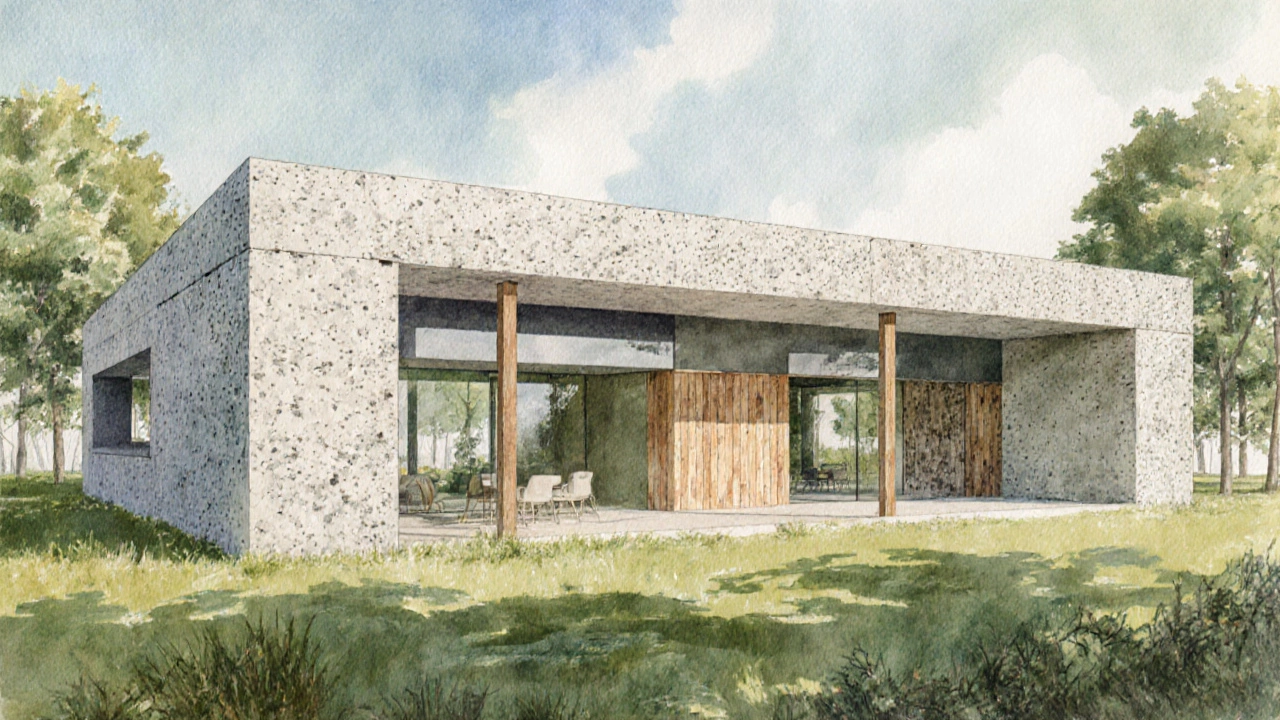
Going Green: Sustainable Raw Materials
Environmental pressure is nudging the industry toward greener choices. Some alternatives gaining traction include:
- Recycled aggregates: Crushed demolition waste replaces virgin stone, cutting landfill use.
- Geopolymer cement: Uses fly ash or slag, slashing CO₂ emissions by up to 70 % compared with Portland cement.
- Cross‑laminated timber (CLT): Engineered wood panels deliver steel‑like strength with a fraction of the carbon footprint.
- Recycled steel: Using scrap steel in the furnace reduces ore extraction and energy consumption.
- Bio‑based insulation: Materials like hempcrete or sheep’s wool offer comparable R‑values while being renewable.
When you factor lifecycle costs-including energy savings, maintenance, and disposal-these options often make financial sense, not just ecological.
Quick Reference Checklist for Material Selection
- Define structural loads and span lengths.
- Identify exposure (weather, moisture, fire).
- Set performance targets (strength, insulation R‑value, fire rating).
- Check local code requirements and certifications.
- Compare material costs, availability, and lead times.
- Consider sustainability goals and potential rebates.
What are the most common raw materials used in residential construction?
The bulk of a typical house relies on aggregates, cement, steel rebar, timber framing, bricks or concrete block walls, gypsum board for interiors, and various insulation types. Glass for windows and doors, plus PVC or copper piping for water, complete the list.
How does the grade of aggregates affect concrete strength?
Well‑graded aggregates fill voids efficiently, reducing the required cement paste. This leads to higher compressive strength and lower shrinkage. Poorly graded or flaky aggregates create weak points and increase water demand.
Is recycled steel as strong as new steel for reinforcement?
Yes, if it meets the same grade specifications (e.g., ASTM A615 Grade 60). Recycled steel retains the same tensile properties, and modern mills can produce it to meet strict quality standards.
Can I substitute timber with engineered wood like CLT for load‑bearing walls?
Absolutely. Cross‑laminated timber panels have uniform strength across all axes and can replace steel or concrete in many mid‑rise projects while delivering a lighter footprint.
What raw material alternatives lower a building’s carbon footprint?
Recycled aggregates, geopolymer cement, CLT, recycled steel, and bio‑based insulation are the top hitters. They cut embodied CO₂ by 20‑70 % compared with traditional options.