Foundation Crack Risk Assessment Tool
Is your crack an emergency?
Answer these questions to determine if your horizontal foundation crack requires immediate attention.
Results will appear here after calculation.
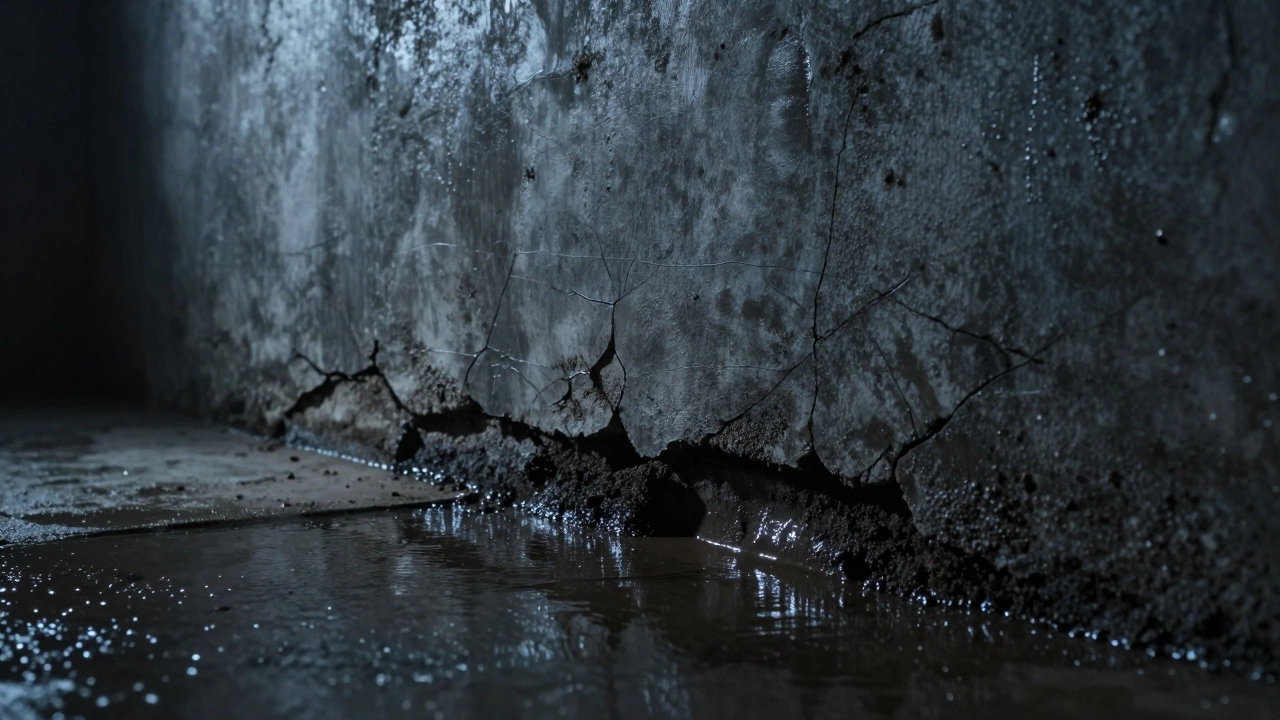
When you spot a horizontal foundation crack running across your basement wall or crawl space, it’s not just a cosmetic issue-it’s a warning sign. Unlike vertical or stair-step cracks that often come from normal settling, horizontal cracks are caused by pressure pushing against the wall from outside. And that pressure? It’s usually from wet soil, poor drainage, or shifting ground. If ignored, these cracks can lead to wall failure, water intrusion, and even structural collapse. This isn’t something you can patch with caulk and hope for the best.
Why Horizontal Cracks Are Different
Most homes develop small cracks over time. Vertical cracks are common in concrete block or poured concrete foundations. They usually happen as the concrete cures or settles slightly. These are rarely dangerous unless they’re wider than 1/4 inch and growing. But horizontal cracks? They tell a different story.Horizontal cracks form when lateral pressure-often from saturated soil-bends the foundation wall inward. This is especially common in clay soils, which expand when wet and shrink when dry. In Auckland, where heavy winter rains are normal, this is a frequent problem. A 10-foot section of basement wall can experience over 1,500 pounds of pressure per square foot when the soil is soaked. That’s like having a small car pressing against the wall from the outside.
These cracks typically appear near the bottom third of the wall, where the pressure is highest. They’re often straight, not jagged, and may be accompanied by bowing, bulging, or leaning. If you see a horizontal crack, assume it’s structural until proven otherwise.
When It’s an Emergency
Not every horizontal crack needs immediate action, but some are red flags. Here’s when to act fast:- The crack is wider than 1/4 inch
- The wall is visibly bowing inward (more than 1 inch)
- You notice new cracks appearing after heavy rain
- Doors and windows suddenly stick or won’t close properly
- Water is leaking through the crack or pooling on the floor
One homeowner in Mt. Albert noticed a 3/8-inch horizontal crack after a week of rain. Two months later, the wall had bowed 1.5 inches inward. By then, the foundation had lost 60% of its load-bearing strength. That’s not a repair-it’s a rebuild waiting to happen.
What Causes Horizontal Cracks?
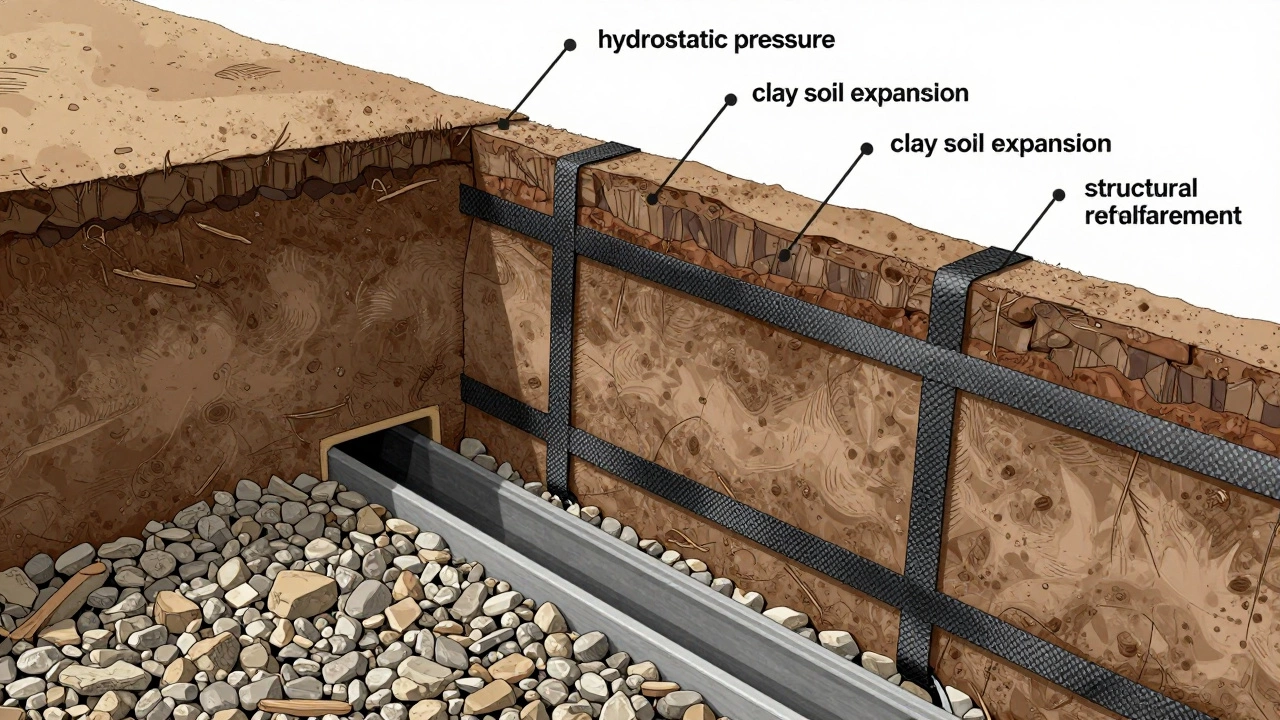
Understanding the cause helps you fix it right. Here are the top three reasons:- Hydrostatic pressure - Water builds up in the soil around your foundation. Without proper drainage, it pushes against the walls. This is the #1 cause in Auckland’s rainy climate.
- Soil expansion - Clay soils swell when wet. If your house sits on heavy clay (common in parts of Manukau and Papakura), seasonal swelling can push walls inward over years.
- Tree roots - Large trees planted too close to the foundation can draw moisture from the soil, causing uneven settling. When the roots die or are removed, the soil can shift suddenly.
Less common causes include poor backfilling during construction, underground erosion from leaking pipes, or seismic activity. In Auckland, earthquakes aren’t frequent, but they’re enough to worsen existing weaknesses.
How to Tell If It’s Structural
You don’t need an engineer to spot a serious crack-but you should know what to look for.Use a ruler or tape measure to check the width. Then, mark the ends of the crack with tape or a pencil. Come back in 30 days. If the crack has widened, the pressure hasn’t stopped. That’s progress toward failure.
Look for other signs:
- Diagonal cracks starting at the top of the wall and angling down
- Cracks that run from the floor up the wall
- Cracks that are wider at the top than the bottom
These patterns suggest the wall is bending under pressure. If you see any of these, stop using the basement as storage or living space until you get a professional inspection.
What Happens If You Ignore It?
Ignoring a horizontal crack is like ignoring a leaky roof. At first, it’s just a drip. Then it’s mold. Then the ceiling collapses.Left untreated, horizontal cracks lead to:
- Wall failure - The wall can buckle, crack further, or even collapse inward
- Water damage - Moisture seeps through, rotting floor joists, insulation, and drywall
- Structural instability - The whole house can settle unevenly, leading to cracked walls, sloping floors, and misaligned doors
- Loss of resale value - Buyers walk away from homes with unaddressed foundation issues. In Auckland’s market, a foundation problem can slash value by 20-40%
A 2023 study by the New Zealand Building Research Association found that 73% of homes with unaddressed horizontal foundation cracks required major structural repairs within 5 years. The average cost? $42,000. Fixing it early? Around $8,000.
How It’s Fixed - Real Solutions
There’s no magic spray or DIY fix for horizontal cracks. The solution depends on the severity.For minor cracks (under 1/4 inch, no bowing):
- Improve drainage: Install or clean gutters, extend downspouts at least 6 feet from the house
- Grade the soil: Make sure the ground slopes away from the foundation (at least 1 inch per foot for 6 feet)
- Install a French drain: A perforated pipe buried in gravel along the foundation edge redirects water away
For moderate cracks or slight bowing (1/4 inch to 1/2 inch, up to 1 inch of inward movement):
- Carbon fiber straps: These are strong, lightweight strips bonded to the wall with epoxy. They stop further movement and can handle up to 10,000 pounds of pressure. They’re invisible once painted over.
- Steel I-beams: Installed vertically along the wall, they act like braces. Used when carbon fiber isn’t enough.
For severe bowing or cracks over 1/2 inch:
- Wall anchors: Steel plates installed outside the wall, connected by rods through the foundation. They pull the wall back into place.
- Helical piers: Steel shafts drilled deep into stable soil below the foundation. They lift and stabilize the wall.
- Full wall replacement: In extreme cases, the wall is dug out, removed, and rebuilt. This is costly ($25,000-$50,000) but sometimes the only option.
Carbon fiber reinforcement is now the most common fix in New Zealand. It’s fast, non-invasive, and comes with a 25-year warranty from reputable installers.

What Not to Do
Don’t fall for these common mistakes:- Painting over the crack - This hides the problem, doesn’t fix it
- Using hydraulic cement alone - It seals the crack but doesn’t stop the pressure causing it
- Waiting for dry weather - Pressure builds even in dry spells if the soil is still saturated
- Trying to fix it yourself with epoxy kits - These are for vertical cracks, not horizontal
One Auckland family spent $1,200 on a DIY epoxy kit. Six months later, the crack widened to 1/2 inch. The repair cost jumped to $18,000.
When to Call a Professional
You should call a foundation specialist if:- The crack is wider than 1/4 inch
- You see any bowing or leaning
- Water is coming through
- You’ve had multiple cracks appear in a short time
- You’re planning to sell or refinance
Get at least two written quotes. Ask for:
- Before-and-after photos of similar jobs
- Proof of insurance and licensing
- Warranty details (minimum 10 years)
- Whether they use carbon fiber, steel, or anchors - and why
Reputable companies in Auckland include Foundation Repair NZ, Basement Waterproofing Solutions, and Structural Repair Experts. Avoid companies that pressure you into a full replacement without showing you alternatives.
Preventing Future Cracks
Once it’s fixed, protect your investment:- Keep gutters clean and downspouts extended
- Plant trees at least 10 feet from the foundation
- Check the soil grade every spring
- Install a sump pump if you have a basement
- Have your foundation inspected every 3-5 years
In Auckland, the best time to do maintenance is late summer. That’s when the soil is driest, making it easier to spot new cracks before winter rains hit.
Are horizontal foundation cracks always serious?
Not always, but they should always be treated as potentially serious. A hairline horizontal crack under 1/8 inch that hasn’t grown in a year might be harmless. But if it’s wider than 1/4 inch, or if the wall is bowing, it’s structural. Never assume it’s just settling-horizontal cracks are caused by external pressure, not normal shrinkage.
Can I fix a horizontal foundation crack myself?
You can seal a very small, stable crack with epoxy, but you can’t fix the cause. Horizontal cracks happen because soil is pushing against the wall. Without addressing that pressure-through drainage, grading, or structural support-the crack will return. DIY kits won’t stop a wall from bowing. For anything over 1/4 inch wide, hire a professional.
How much does it cost to fix a horizontal foundation crack?
Costs vary by method and severity. Minor cracks with drainage fixes: $1,500-$4,000. Carbon fiber reinforcement: $5,000-$8,000. Steel beams or wall anchors: $8,000-$15,000. Full wall replacement: $25,000-$50,000. The earlier you act, the cheaper it is. Waiting increases damage and cost.
Will insurance cover foundation cracks?
Most standard home insurance policies in New Zealand don’t cover foundation damage from gradual settling, soil pressure, or poor drainage. They only cover sudden events like earthquakes or burst pipes. If the crack is caused by a covered event, you might get partial coverage. But routine foundation issues? You’re on your own. Check your policy wording carefully.
How long does carbon fiber repair last?
Carbon fiber straps are designed to last 25-50 years. They’re made of high-strength polymer fibers bonded with epoxy to the concrete. Once installed, they don’t corrode, rust, or degrade. Reputable installers offer 25-year warranties. The repair is permanent as long as the underlying water pressure is managed.
Do horizontal cracks mean my house is unsafe?
Not immediately, but they mean your foundation is under stress. A small, stable crack doesn’t make your house collapse tomorrow. But if the wall is bowing more than 1 inch, or if multiple cracks are appearing, the structural integrity is compromised. In extreme cases, walls can fail suddenly. It’s not a matter of if-it’s a matter of when. Don’t wait for the wall to fall.