Build vs Buy Home Cost Calculator
Calculate whether building or buying a home makes more financial sense for you in New Zealand in 2025. This tool considers hidden repair costs, energy efficiency, and long-term savings.
Input Your Details
Cost Comparison Results
| Category | Build | Buy | Savings |
|---|---|---|---|
| Initial Cost | $0 | $0 | $0 |
| 5-Year Repair Costs | $0 | $0 | $0 |
| 5-Year Energy Costs | $0 | $0 | $0 |
| Insurance Costs | $0 | $0 | $0 |
| 5-Year Total | $0 | $0 | $0 |
Recommendation: Based on your inputs, building your home is the more cost-effective choice over the next five years.
When you’re thinking about a new home in 2025, the biggest question isn’t whether you want a modern kitchen or a big backyard-it’s whether it makes more sense to build or to buy. For years, buying an existing home was the easy choice. But today, the math has flipped in many parts of New Zealand, especially in places like Auckland, Wellington, and Christchurch. It’s no longer obvious which path saves you money-and it’s not just about the sticker price.
What’s the real cost of buying an existing home?
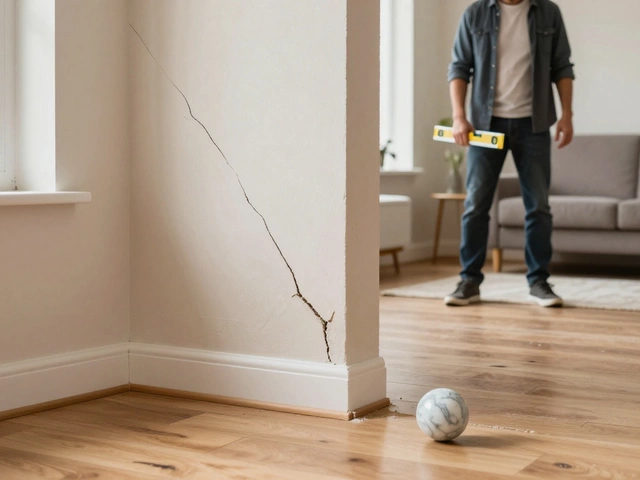
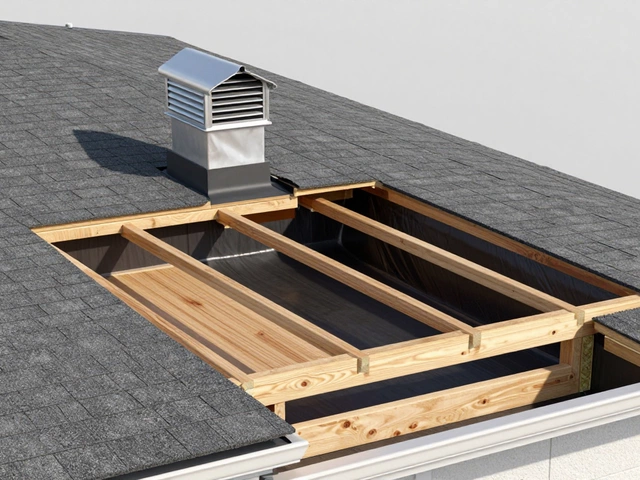
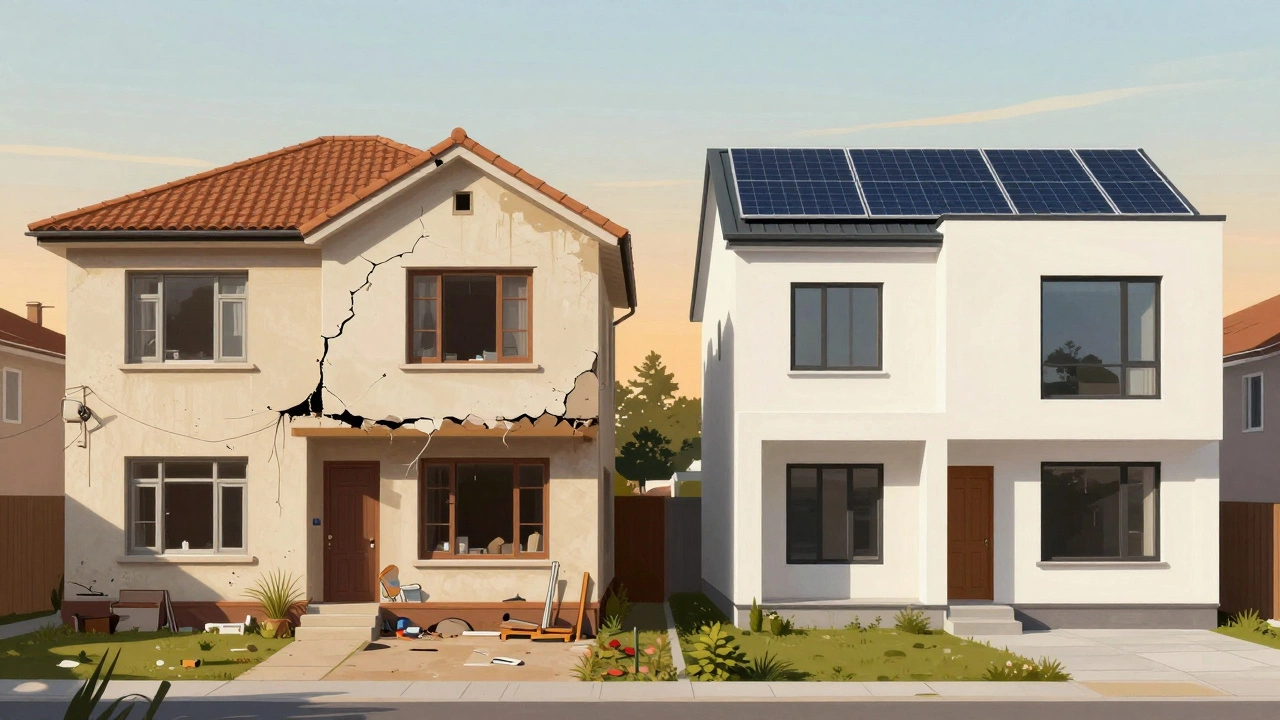
Let’s start with what you see: the listing price. A three-bedroom, 1990s-era house in South Auckland might list for $950,000. Sounds reasonable, right? But that’s only the beginning. Most homes built before 2010 need work. Wiring, insulation, plumbing, and roofing often don’t meet current standards. In 2024, a Ministry of Business, Innovation and Employment (MBIE) survey found that 68% of homes built before 2000 had at least one major defect requiring $15,000 or more in repairs.
That means if you buy a $950,000 home, you might need to spend another $50,000 to $80,000 fixing leaks, upgrading insulation, replacing windows, or bringing the kitchen up to code. And that’s not even counting the cost of moving, legal fees, or council charges. Add it all up, and you’re looking at $1.05 million to $1.1 million before you even hang a picture.
What does it actually cost to build?
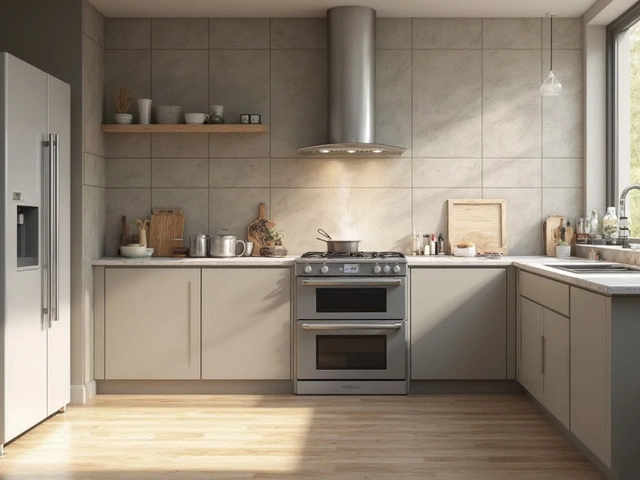
Building a new home sounds expensive-and it is, on paper. But the numbers have changed. In 2025, the average cost to build a 180-square-metre, three-bedroom house in Auckland is around $720,000. That includes design, consents, materials, labour, and a full fit-out: kitchen, bathrooms, flooring, lighting, and even basic landscaping. You’re not getting a luxury finish, but you’re getting a home built to current standards: thermal efficiency, earthquake resilience, and modern ventilation.
Here’s the key difference: when you build, there are no hidden repair bills. No surprises. No guesswork. You know exactly what’s in the walls, what’s under the floor, and what’s in the roof. No one else’s mistakes. No previous owner’s shortcuts. You get a brand-new warranty-typically ten years for structural defects and two years for finishes.
Why building is now cheaper than buying
It’s not just about the numbers-it’s about control and predictability. In 2023, the average time to sell an existing home in Auckland was 42 days. In 2025, it’s 68 days. Fewer buyers. More listings. Prices are softening. But here’s the twist: the cost of building hasn’t dropped as fast as house prices have. That’s because labour and material costs are still high, but they’re stable. They don’t swing wildly like the market does.
Meanwhile, the cost of buying has gone up-not because homes are more expensive, but because buyers are paying more for the risk. A home with a leaky roof, old wiring, or asbestos insulation is priced lower, but the buyer pays more in hidden costs. Builders and banks now factor in these risks. Many lenders won’t approve loans for homes with known defects unless repairs are done upfront. That means you either pay to fix it yourself or walk away.
According to the New Zealand Institute of Economic Research (NZIER), in 2025, the total cost of owning a pre-2010 home-including repairs, insurance, and energy bills-is 18% higher than owning a new build over a five-year period. That’s $180,000 extra on a $1 million home.
When buying still makes sense
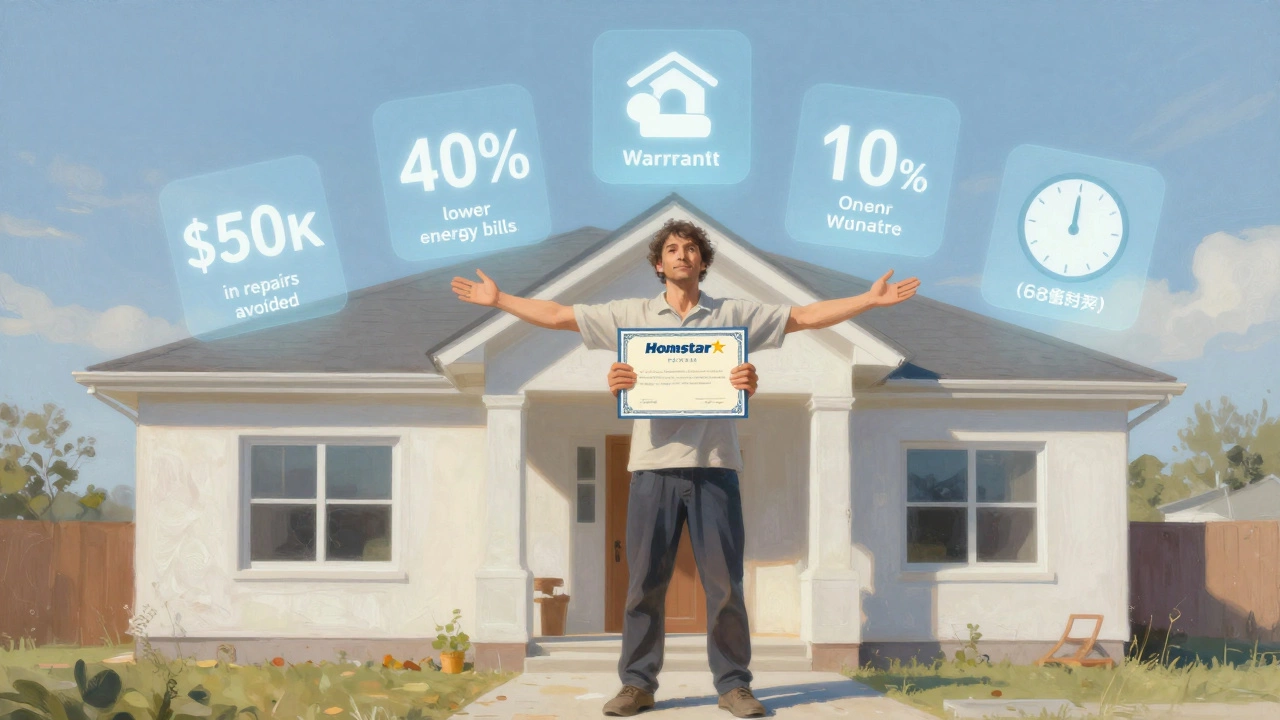
That doesn’t mean buying is always the wrong choice. If you find a home that’s been fully renovated to modern standards-with new plumbing, insulation, wiring, and a compliant kitchen and bathroom-it can be a better deal. These homes are rare, but they exist. Look for properties that have a recent Code of Compliance Certificate (CCC) and a full building inspection report. If the seller can prove the home passed a recent Homestar assessment (6+ stars), you’re getting a high-performance home without the wait.
Another case where buying wins: location. If you want to live in a specific suburb with great schools, public transport, or a tight-knit community, your options might be limited to existing homes. You can’t build a house on a section that doesn’t exist. And in some areas, like Devonport or Mount Eden, land prices are so high that building isn’t financially feasible-even if you could get a section.
What you need to know before you decide
Here’s a quick checklist to help you compare:
- Build if: You want zero maintenance surprises, energy efficiency, modern design, and control over layout and finishes. You’re willing to wait 6-9 months.
- Buy if: You need to move immediately, you’ve found a home with a recent CCC and Homestar rating of 6+, and you’re in a location where land isn’t available for new builds.
Don’t forget the emotional side. Building a home is stressful. You’ll make dozens of decisions. You’ll deal with delays. You’ll second-guess your choices. But when you walk into your new house on completion day-everything working, everything clean, everything yours-it’s different from moving into someone else’s life.
What’s happening with land and consents?
One of the biggest hurdles for building is getting land and approval. In 2025, Auckland Council has streamlined the consent process for new builds that meet the new minimum insulation and ventilation standards. If you’re building to the updated Building Code (2023 version), you can get consent in 4-6 weeks instead of 12-16.
Land prices are still high, but there’s more availability now. Developers are releasing smaller sections in suburbs like Manurewa, Papakura, and Howick. These sections are 400-500 square metres-smaller than the old 600+ sqm norm-but they’re enough for a modern, energy-efficient home. And because they’re on the edge of existing infrastructure, you save on connection fees for water, sewer, and electricity.
How to get the best deal when building
If you decide to build, here’s how to avoid overpaying:
- Get three fixed-price quotes from registered builders. Don’t go with the cheapest. Look for clear breakdowns: materials, labour, profit margin, and contingencies.
- Ask for a Homestar rating target. Aim for 6 or 7 stars. It adds $15,000-$25,000 upfront but cuts your power bills by 40%.
- Use a registered architect or designer. They’ll help you avoid costly changes later.
- Don’t rush the design phase. Changing the layout after construction starts can cost $20,000+.
- Check if you qualify for the KiwiBuild First Home Grant or the Welcome Home Loan. Even if you’re not first-time buyers, some programs allow you to use the grant if you’re building your first home.
Bottom line: Build if you can, buy only if you have to
In 2025, building a new home is cheaper than buying an older one in most cases. Not because it’s cheaper upfront-but because it’s cheaper over time. You avoid repairs, save on energy, and get a home that works for you. Buying might feel faster, but it often means paying more in the long run.
If you’re patient, have a bit of flexibility, and want to own a home that’s truly yours-not someone else’s renovation project-building is the smarter financial move. Just make sure you’re working with trusted professionals, know your budget inside out, and don’t skip the inspections.
The house you build today will last 50 years. The house you buy might need another $100,000 in repairs before it does.
Is it really cheaper to build a house than buy one in 2025?
Yes, in most cases. When you factor in hidden repair costs, energy bills, and insurance for older homes, building a new home is often $50,000 to $100,000 cheaper over five years. New builds come with modern insulation, efficient systems, and no surprise defects, which saves money long-term.
How much does it cost to build a house in Auckland in 2025?
The average cost to build a 180-square-metre, three-bedroom home in Auckland is around $720,000. This includes design, consents, materials, labour, and full fit-out. Land costs are extra and vary by location, ranging from $300,000 to $600,000 depending on the suburb.
Can I use a government grant to build a house?
Yes. The KiwiBuild First Home Grant and Welcome Home Loan are still available in 2025 for eligible buyers building their first home. You can get up to $10,000 per person (up to $20,000 for couples) if your income is under $120,000 and you’re building a home under $950,000. Check with Kāinga Ora for current eligibility.
What’s the biggest mistake people make when building?
Skipping the design phase. Many people rush into construction without finalising plans, then change their mind mid-build. A single layout change after framing starts can cost $20,000-$30,000. Take time to get the design right, use a professional, and get a detailed fixed-price quote before signing anything.
Should I buy a renovated house instead of building?
Only if it has a recent Code of Compliance Certificate and a Homestar rating of 6 or higher. Many homes labeled ‘renovated’ are just painted over old problems. Ask for the builder’s name, inspection reports, and proof of compliance. If the seller can’t provide it, walk away.