Construction Material Comparison Tool
Compare Construction Materials
Select criteria to compare the five primary raw materials used in construction
Concrete
Most used material globally
Steel
Skeleton of modern buildings
Wood
Oldest renewable building material
Brick
Ancient, durable facade material
Sand
Critical aggregate for concrete
Comparison Results
Select criteria above to view comparison
When you see a new house going up, a bridge spanning a river, or a skyscraper rising in the city, you’re not just looking at finished structures-you’re seeing the result of five core raw materials that make modern construction possible. These aren’t fancy or high-tech. They’re simple, abundant, and foundational. Get these five right, and you’ve got the backbone of almost every building on the planet.
Concrete
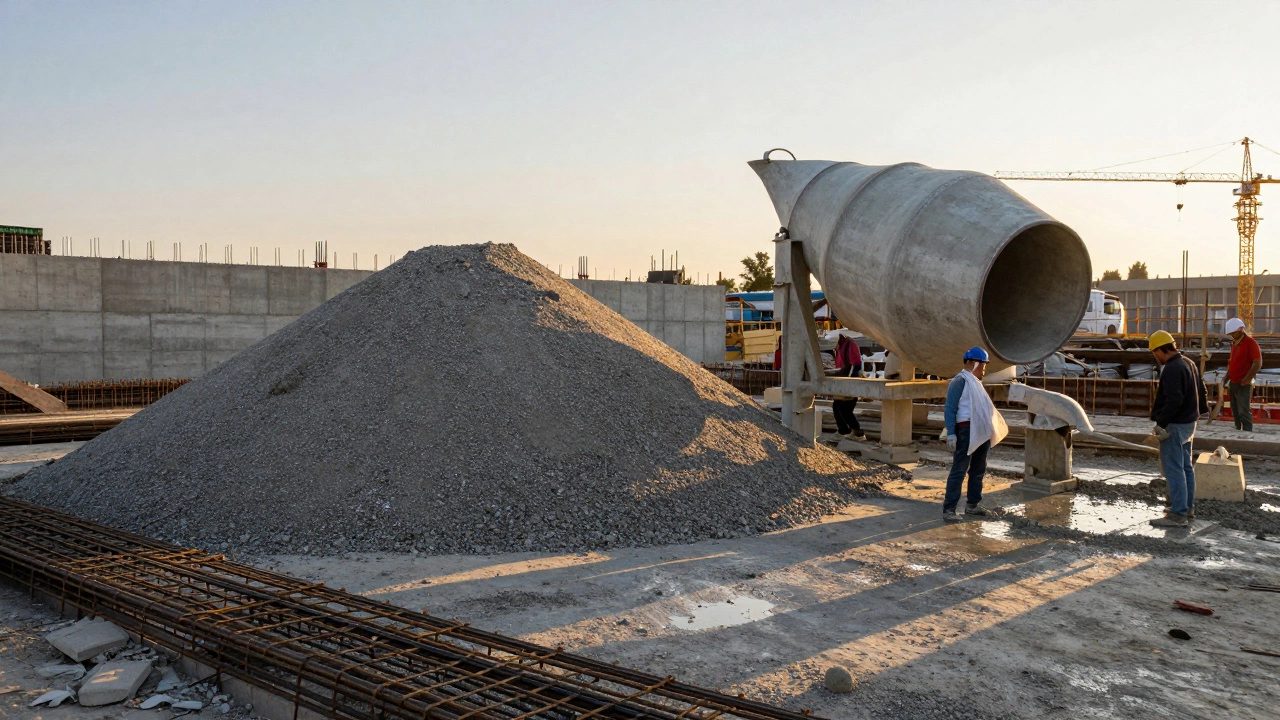
Concrete is the most used construction material on Earth. More than 10 billion tons are produced every year worldwide. It’s made from a mix of cement, water, sand, and crushed stone or gravel. Cement, the binding agent, comes from limestone and clay heated in kilns to over 1,400°C. That’s what turns it into the gray powder you see in bags at hardware stores.
Why is it everywhere? Because it’s cheap, strong under pressure, and can be poured into almost any shape. Foundations, driveways, sidewalks, dams, and high-rise floors all rely on concrete. It doesn’t rust, burn, or rot. But it’s not perfect-it cracks under tension, which is why it’s almost always reinforced with steel bars. Without concrete, modern cities wouldn’t exist.
Steel
Steel is the skeleton of the modern built world. It’s made by refining iron ore with coke (a form of coal) and limestone in massive blast furnaces. The result is an alloy that’s far stronger and more flexible than pure iron. Steel can handle tension, compression, and bending-something concrete can’t do alone.
You’ll find steel in the frames of skyscrapers, the beams of bridges, the rebar inside concrete slabs, and even the roof trusses of suburban homes. A single high-rise might use over 10,000 tons of steel. It’s recyclable, too-nearly 90% of structural steel gets reused. That’s why it’s the go-to for anything needing to stretch high or span wide.
Wood
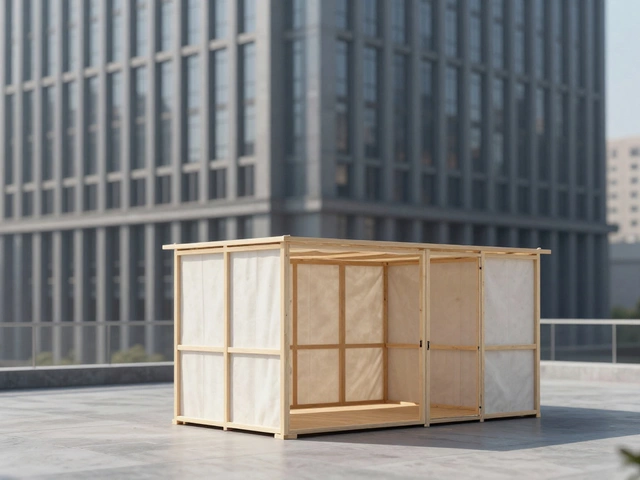
Wood is the oldest building material still in heavy use today. It’s renewable, easy to cut and shape, and has natural insulating properties. In North America and Europe, most single-family homes are built with wood framing-2x4s, 2x6s, floor joists, roof rafters. It’s the backbone of light-frame construction.
Engineered wood products like plywood, OSB (oriented strand board), and laminated veneer lumber have expanded its use. You can now build entire multi-story buildings with cross-laminated timber (CLT), a material so strong it’s replacing steel in some projects. Wood isn’t just for houses-it’s used in bridges, warehouses, and even some commercial offices. The key? Proper treatment to resist moisture, insects, and fire.
Brick and Clay Products
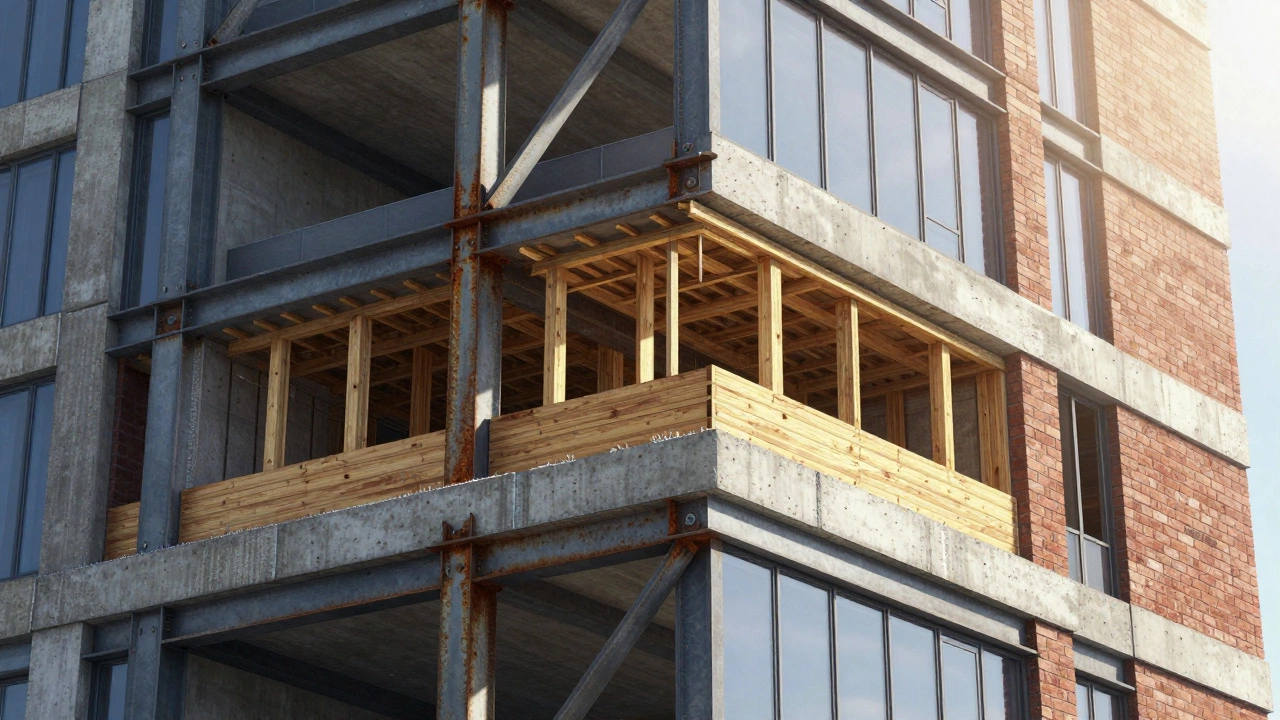
Bricks have been used for over 9,000 years, and they’re still going strong. Made from clay and shale molded into blocks and fired in kilns, bricks offer durability, fire resistance, and low maintenance. They’re not structural in most modern buildings anymore, but they’re still the go-to for exterior walls, chimneys, and facades.
Clay products also include concrete blocks (cinder blocks), which are cheaper and faster to lay than bricks. Both are used for walls that need to bear weight or provide sound insulation. In places like India and China, brick is still the primary wall material for homes. It’s not glamorous, but it lasts. A well-built brick wall can stand for centuries with little more than a fresh coat of mortar.
Sand and Aggregates
Sand might seem like just dirt you walk on at the beach, but it’s one of the most critical raw materials in construction. It’s the fine aggregate in concrete, the base layer under driveways and sidewalks, and the filler in mortar and asphalt. Without sand, concrete wouldn’t hold together. Asphalt roads would crumble.
But here’s the catch: not all sand works. River sand and desert sand are too smooth to bind well. Construction-grade sand is crushed rock sand or washed river sand with angular grains that lock together. The global demand for sand is so high that shortages are emerging in places like India and Singapore. Some countries are even importing sand from others. It’s not just dirt-it’s a finite resource that’s becoming harder to source sustainably.
Why These Five Matter
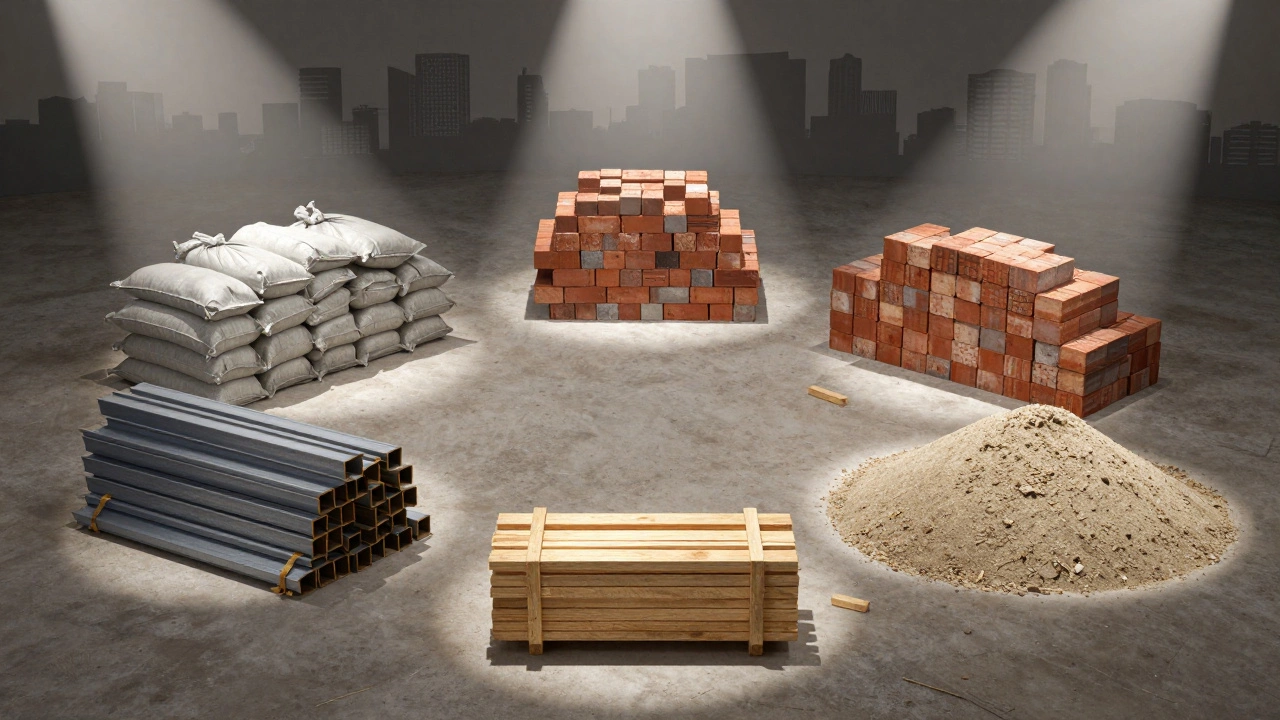
These five materials-concrete, steel, wood, brick, and sand-are the foundation of everything built since the Industrial Revolution. They’re not optional. You can’t build a house without at least three of them. Even green buildings and modular homes rely on these same inputs-they just use them more efficiently.
Modern innovations like carbon-capturing concrete, recycled steel, and mass timber are changing how we use these materials, but they’re not replacing them. They’re improving them. The future of construction isn’t about finding new materials. It’s about using these five better: less waste, less energy, and more reuse.
What You’ll See in Your Next Project
If you’re planning a renovation, a new deck, or even a backyard shed, you’re already working with these materials. Concrete for the footing. Steel for the anchor bolts. Wood for the frame. Brick for the chimney. Sand for the base under the pavers. You don’t need to be an engineer to understand this-just look around.
Next time you walk past a construction site, notice the piles of gravel, the steel beams being lifted, the wooden forms for the slab, the stacks of bricks, and the trucks hauling sand. That’s the real story of building. It’s not about blueprints or permits. It’s about these five raw things pulled from the earth and turned into shelter.
What are the most common raw materials in residential construction?
The most common raw materials in residential construction are wood for framing, concrete for foundations and slabs, steel for reinforcement and structural supports, brick or concrete blocks for exterior walls, and sand as a key component in concrete and mortar. These five make up over 90% of the material volume in most single-family homes.
Is plastic a primary raw material in construction?
Plastic is not considered a primary raw material in traditional construction. While it’s used in pipes, insulation, windows, and finishes, it’s a processed material derived from petroleum. The five primary raw materials-concrete, steel, wood, brick, and sand-are naturally occurring and form the structural base of buildings. Plastic is a secondary material that enhances performance but doesn’t carry structural load.
Can you build a house without concrete?
Yes, you can build a house without concrete, but it’s rare and comes with trade-offs. Traditional methods like timber framing on stone foundations or earthbag construction avoid concrete. However, without concrete, you lose the durability, fire resistance, and load-bearing capacity it provides. Most modern codes require concrete footings to prevent settling. In areas with high seismic activity or heavy rainfall, skipping concrete increases risk and long-term maintenance.
Why is sand in short supply for construction?
Sand used in construction needs specific grain size and shape-angular, washed, and free of salt. Most river and desert sand doesn’t work. The global demand for construction sand has outpaced natural replenishment. Mining it damages rivers and coastlines, leading to bans in countries like India and Indonesia. Some nations now import sand, and alternatives like crushed rock are being adopted, but they’re more expensive. Sand shortages are now a real constraint on building projects worldwide.
Which of these materials is the most sustainable?
Wood is the most sustainable of the five, if sourced from responsibly managed forests. Trees absorb carbon as they grow, and wood requires far less energy to process than steel or concrete. Steel is highly recyclable, with most new steel made from scrap. Concrete and brick have high carbon footprints due to kiln heating. Sand is abundant but its extraction harms ecosystems. The most sustainable approach uses wood where possible, recycled steel, and low-carbon concrete mixes.