Trim Cost Calculator
Your Trim Project
Estimated Cost
Enter your details to see estimated costs.
Pro Tip: 2024's trending 6" baseboards cost 15% more than standard 4" but increase your home's value by up to 7%.
Trim isn’t just the finishing touch anymore-it’s the star of the show. In 2024, the way homes use baseboards, crown molding, and door casings has shifted from background detail to bold design statement. If you’ve walked into a newly built or renovated home this year and noticed how the edges feel sharper, taller, or strangely minimalist, you’re seeing the trim trend in action. It’s not about adding more wood. It’s about rethinking what trim even is.
Trim isn’t shrinking-it’s stretching
Five years ago, narrow 2-inch baseboards were the norm. Today, 5- to 7-inch profiles are standard in new builds and high-end renovations. You’ll find them in homes from Brooklyn to Brisbane, not because they’re fancy, but because they work. Taller baseboards create a sense of vertical space, making ceilings feel higher and rooms feel more grounded. In Auckland, where many older bungalows have low ceilings, designers are using 6.5-inch painted white baseboards to visually lift the walls without adding square footage.
It’s not just height. The profile matters. Gone are the busy, carved Victorian details. Modern trim favors clean, flat planes with subtle bevels. Think of it like a slab of marble-smooth, uninterrupted, and quiet. The most popular profile right now is the ‘Ogee Lite’-a soft S-curve that’s barely there, just enough to catch light without drawing attention to itself.
Painted trim is the default, not the exception
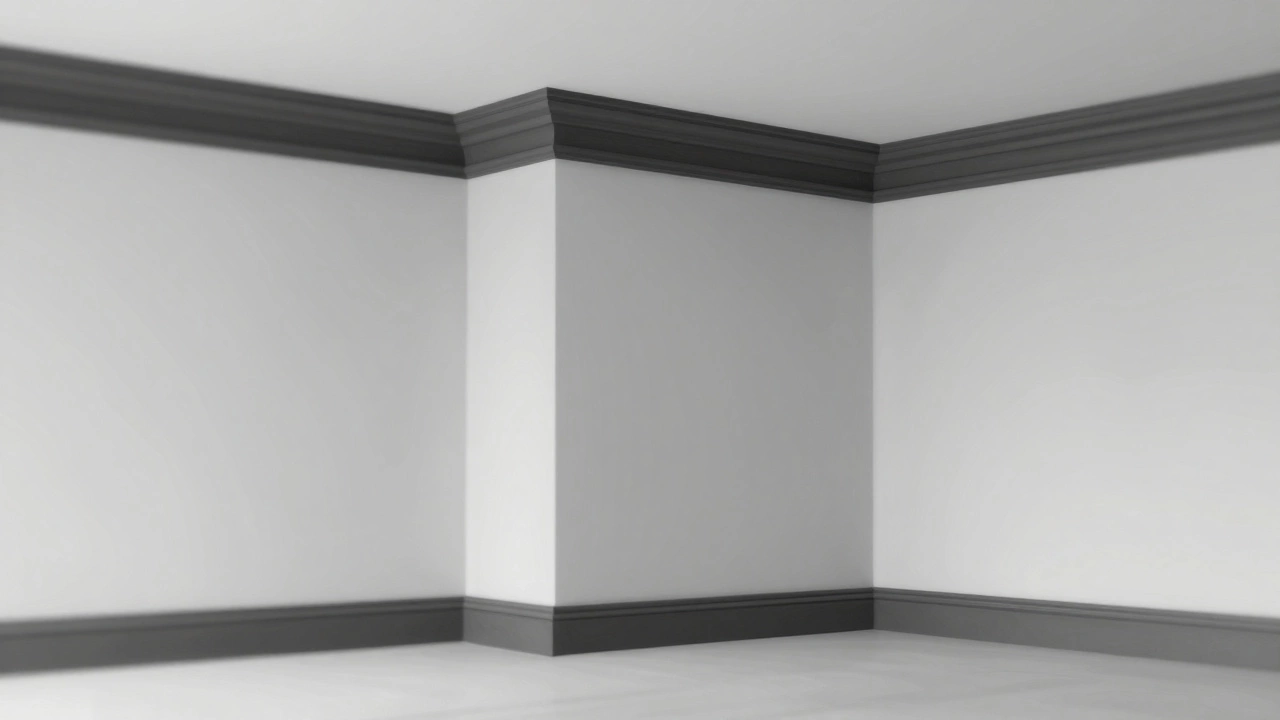
Wood trim is still around, but it’s no longer the default. In 2024, 8 out of 10 homes with new trim have it painted. Not just white-though that’s still the top choice-but in colors that match or subtly contrast the walls. A deep charcoal baseboard against a warm greige wall? That’s not a mistake. It’s intentional. It creates depth. It makes the room feel layered.
Painting trim lets you control the mood. A navy baseboard in a bedroom feels cozy, almost luxurious. A sage green crown molding in a kitchen ties into the cabinetry without needing matching hardware. The trick? Use the same paint brand and finish as the walls. If your walls are matte, your trim should be too. Mixing sheens makes it look cheap, not curated.
Crown molding is getting simpler-sometimes, it’s gone
Crown molding used to mean elaborate cornices with dentils and egg-and-dart patterns. Now, it’s often just a single, thin strip of wood or MDF running along the ceiling line. Some designers skip it entirely. Why? Because ceilings are no longer treated as a separate zone. Open-plan living means walls flow into ceilings without interruption. When you remove the crown, you get a seamless, architectural look that feels more modern and less decorative.
But if you do use crown, it’s usually 3 to 4 inches wide and painted the same color as the ceiling. The goal isn’t to draw the eye upward-it’s to let the eye rest. In homes with 9-foot ceilings or higher, a simple 3.5-inch crown can soften the transition without overwhelming the space. In lower-ceiling homes, skip it. The illusion of height comes from clean lines, not extra wood.
Door and window casings are becoming slimmer
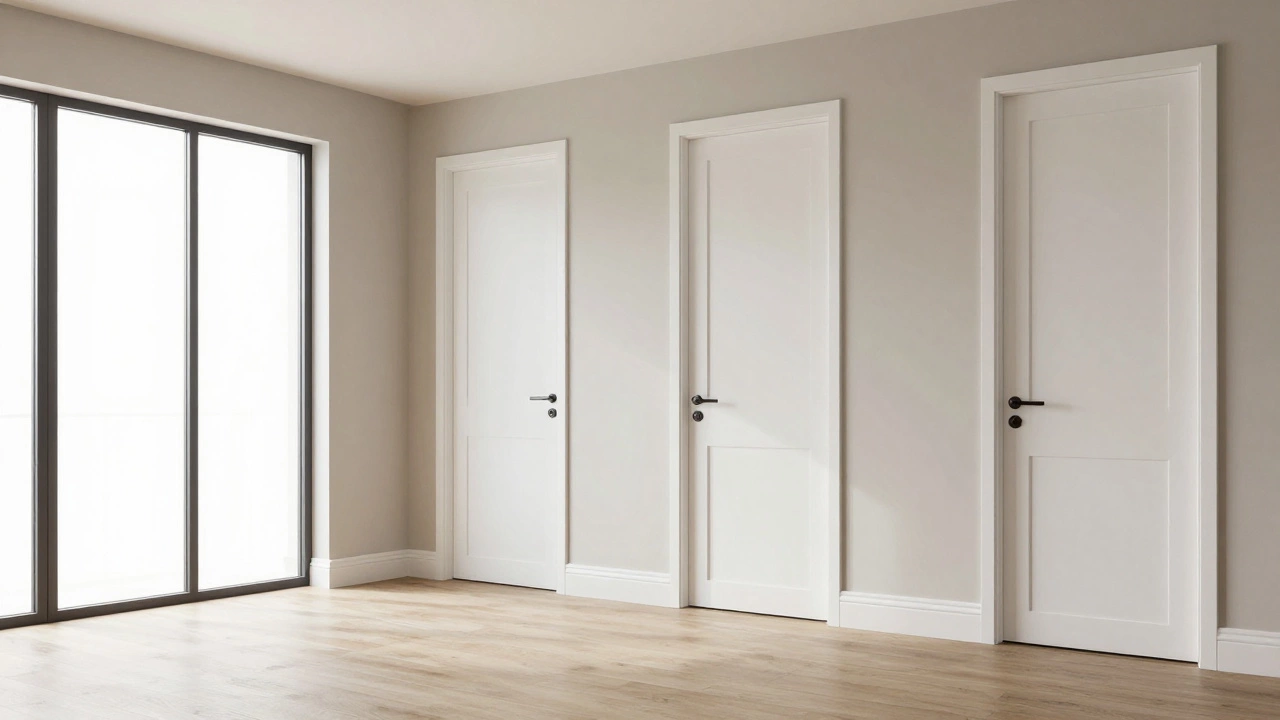
Door frames used to be thick-sometimes over 4 inches wide. Now, they’re 2 to 2.5 inches. The same goes for window casings. Slimmer profiles make openings feel lighter, more like frames in a picture. This trend pairs perfectly with floor-to-ceiling windows and minimalist doors with hidden hinges.
In 2024, you’ll see more flush-mounted doors-where the casing is barely visible because the door sits flush with the wall. It’s not easy to install. It requires precise framing and drywall work. But the result? A wall that looks like a single plane, with the door disappearing into it. It’s the kind of detail that doesn’t shout, but makes you notice the room’s calmness.
Trim color matching is replacing contrast
Remember when white trim was always contrasted against darker walls? That’s fading. The new rule: match the trim to the wall color, but in a different finish. For example, a matte wall in warm gray with a satin-finish trim in the same shade. The difference is subtle-only visible in the light. It’s sophisticated. It’s quiet. It’s expensive-looking without being loud.
This technique works best in rooms with natural light. In Auckland’s north-facing living rooms, this method makes walls feel like they’re breathing. The trim doesn’t pop-it dissolves. It’s a trick used by high-end designers to avoid visual clutter. If you’re painting your own home, try this: pick your wall color first. Then choose the exact same color for trim, but upgrade the sheen from flat to eggshell. That’s it.
Trim materials are changing, too
Real wood trim is still used, but mostly in high-end homes or for statement pieces. For most, it’s MDF or PVC. MDF is smooth, paintable, and doesn’t warp. PVC is moisture-resistant-perfect for bathrooms and kitchens. Both are cheaper than oak or pine and far more consistent. No knots. No gaps. No sanding nightmares.
Some brands now offer pre-primed, pre-cut trim kits with matching corner blocks. You can install entire rooms in a weekend. Companies like Trim-Tech and ProTrim have made this accessible. You don’t need a carpenter to get a designer look anymore. Just a level, a saw, and some painter’s tape.
What trim to avoid in 2024
Not all trim styles are making the cut. Avoid these:
- Heavy, ornate crown molding-it looks dated unless you’re restoring a 1920s mansion.
- Wood trim in high-moisture areas-bathrooms and laundry rooms need PVC or MDF.
- Contrasting trim colors-like black baseboards with white walls. It’s a 2010s trend that’s over.
- Too many trim types in one room-don’t mix crown, chair rail, and wainscoting unless you’re going for a Victorian museum look.
The goal isn’t to fill every edge with detail. It’s to let the architecture breathe.
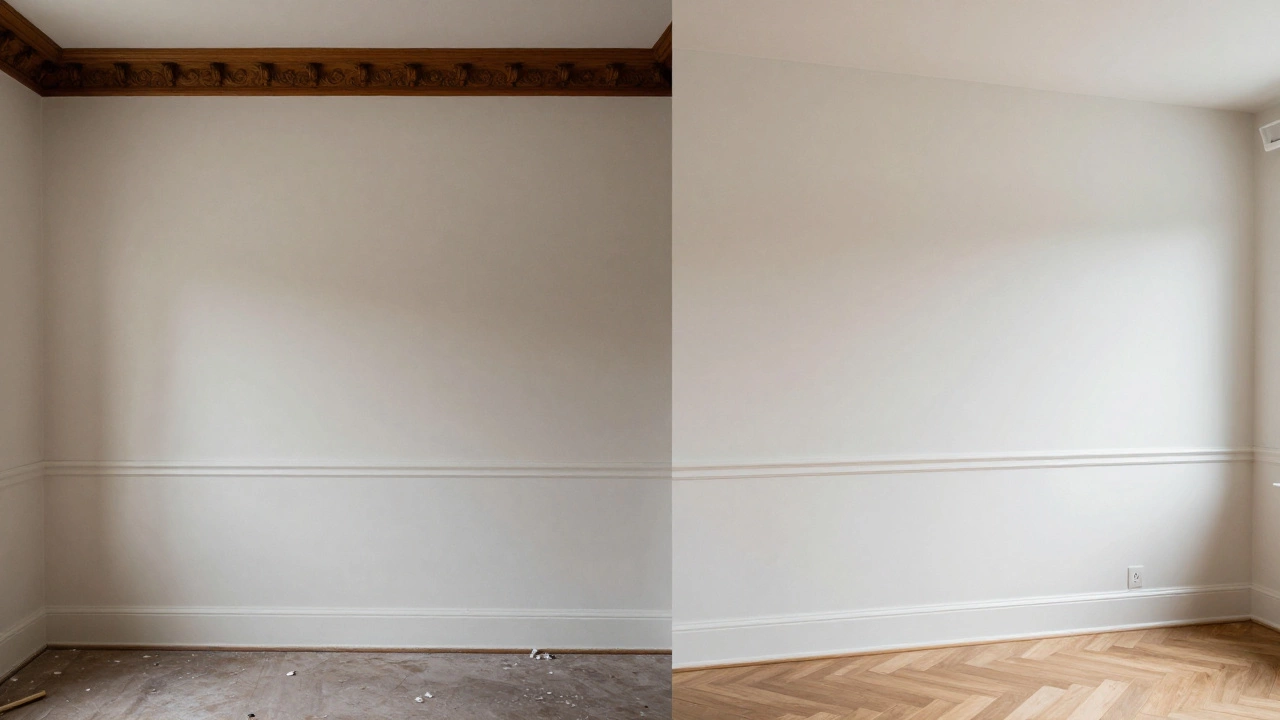
Real homes, real results
In a 1950s bungalow in Mt. Eden, Auckland, a homeowner replaced 3-inch baseboards with 6-inch painted MDF and removed the crown molding. The walls stayed the same color-light oatmeal. The result? The room felt 15% larger. No structural changes. Just trim. The homeowner said, ‘It didn’t cost much, but it felt like we moved into a new house.’
Another example: a downtown apartment in Wellington. The designer painted the baseboards, casings, and ceiling trim all in the same deep charcoal. The walls were a lighter gray. From across the room, it looked like the floor and ceiling were floating. No one noticed the trim until they were told it was there.
How to update your trim without a full renovation
You don’t need to rip out walls to join this trend. Here’s how to start small:
- Replace your baseboards with 5- to 6-inch painted MDF. It’s the easiest upgrade.
- Paint your existing trim the same color as your walls. Use satin finish for durability.
- Remove outdated crown molding if your ceiling is low. You won’t miss it.
- Use painter’s tape to create clean lines when painting. It makes a huge difference.
- Don’t rush. Let the paint dry fully before removing tape. A 24-hour wait avoids peeling.
These changes cost under $500 for a medium-sized home. The impact? Instantly modern.
Why this trend is lasting
This isn’t just a fad. Trim in 2024 reflects a bigger shift in design: less decoration, more architecture. People want spaces that feel calm, intentional, and timeless. Trim that’s simple, well-executed, and consistent does that. It doesn’t compete with furniture or art. It supports it.
It’s also practical. Painted MDF trim is easier to clean than wood. It doesn’t need refinishing. It lasts. And in a world where homes are being lived in harder than ever-work-from-home, kids, pets-durability matters.
The trim trend in 2024 isn’t about what you add. It’s about what you remove. The clutter. The noise. The unnecessary detail. What’s left is clean. Quiet. And surprisingly powerful.
Is painted trim cheaper than wood trim?
Yes, painted MDF or PVC trim is typically 30-50% cheaper than solid wood. It’s also easier to install and maintain. Solid wood needs sanding and sealing every few years. Painted MDF just needs a wipe-down. For most homeowners, painted trim is the smarter long-term choice.
Can I paint over wood trim without sanding?
You can, but you shouldn’t skip prep. Lightly sanding with 120-grit paper removes gloss and helps paint stick. Then clean with a damp cloth and apply a primer designed for wood. Skipping sanding leads to peeling, especially in high-touch areas like baseboards. A little prep saves you from redoing it in a year.
Should I match my trim to my cabinets?
Only if you want a cohesive, unified look. In kitchens, matching trim and cabinets in the same color family creates a seamless flow. But if your cabinets are dark and your walls are light, matching trim to the walls often looks more balanced. The key is consistency-not copying.
What’s the best paint finish for trim?
Eggshell or satin. Flat paint looks dull and doesn’t clean well. Semi-gloss is too shiny for modern interiors-it reflects too much light and highlights imperfections. Eggshell gives you durability without the glare. It’s the sweet spot for today’s clean-lined homes.
Do I need to remove baseboards to paint them?
No, you don’t need to remove them. But you do need to protect the floor and wall with painter’s tape and a shield. Use a small angled brush for the top edge where the baseboard meets the wall. Take your time. It’s messier than removing them, but it’s doable for most DIYers.