Flooring Durability Calculator
What's Your Home Situation?
Answer these questions to see which flooring lasts longer
Results
Your flooring choice will last:
When you’re picking out new flooring, you don’t want to replace it in three years. You want something that holds up through kids, pets, spills, and heavy foot traffic. Two of the most popular choices today are vinyl and laminate. Both look like wood or stone. Both are affordable. But which one actually lasts longer? The answer isn’t as simple as you might think.
Vinyl Flooring: Built to Last Decades
Vinyl flooring has come a long way since the sticky, plastic-looking sheets of the 1970s. Modern vinyl - especially luxury vinyl plank (LVP) and luxury vinyl tile (LVT) - is built with multiple layers. The top layer is a clear, wear-resistant coating that protects against scratches, scuffs, and stains. Below that is a printed design layer that mimics real wood grain or stone texture. Then comes a rigid core, often made of stone plastic composite (SPC) or wood plastic composite (WPC), which gives it stability and impact resistance. Finally, there’s a backing layer that helps with moisture resistance.
High-quality vinyl flooring can last 20 to 30 years with proper care. That’s not just marketing talk. A 2024 study by the National Association of Home Builders found that 78% of homeowners who installed LVP in high-traffic areas like kitchens and hallways reported no visible wear after 15 years. Some commercial-grade vinyl installations in schools and hospitals have lasted over 40 years.
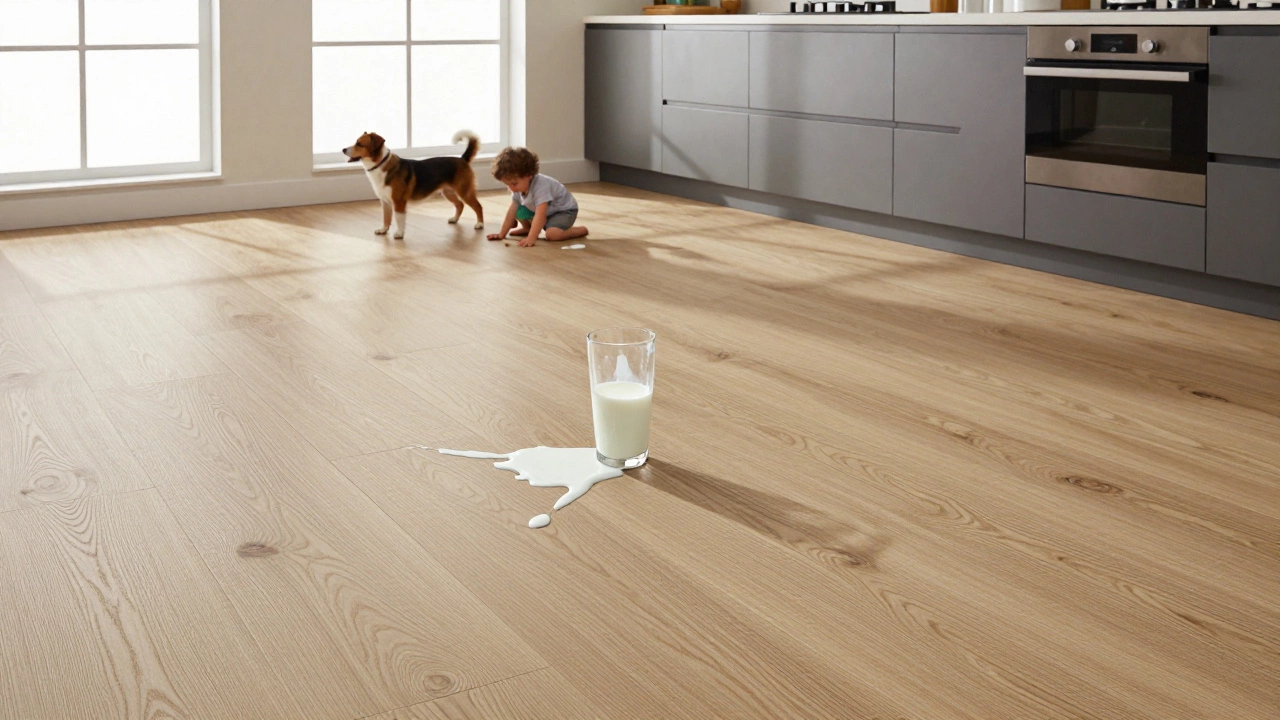
What makes vinyl stand out? It’s waterproof. Not water-resistant. Vinyl won’t swell, warp, or buckle if water sits on it. Spill a glass of milk? Mop it up. Flood from a broken pipe? The floor stays intact. That’s why vinyl is the top pick for basements, bathrooms, and homes in humid climates.
Laminate Flooring: Looks Great, But Has Limits
Laminate flooring is made of layers too - but they’re different. A high-density fiberboard (HDF) core forms the base. That’s topped with a printed image of wood or stone, then sealed under a clear, protective layer. It’s designed to look good and resist scratches from furniture legs or pet claws.
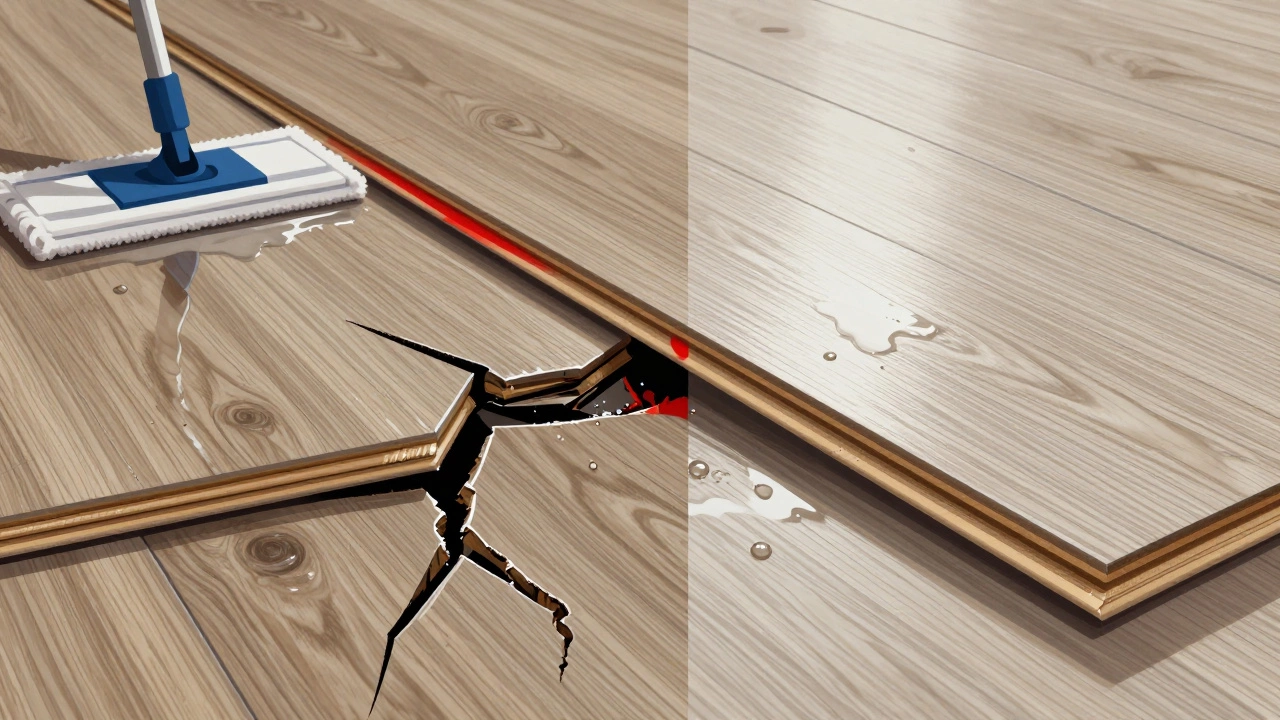
On paper, laminate sounds durable. And for light to moderate use, it holds up fine. But here’s the catch: it’s not waterproof. If water seeps into the seams - from a leaky faucet, a wet mop, or even high humidity - the HDF core absorbs it like a sponge. The boards swell, buckle, and warp. Once that happens, you can’t sand or refinish it. You have to pull up the whole section and replace it.
Most laminate flooring warranties say 10 to 25 years, but that’s only if you keep it dry. In practice, many homeowners see problems after 8 to 12 years, especially in kitchens, entryways, or anywhere moisture is common. A 2023 survey by Flooring Today found that 42% of laminate owners reported warping or swelling within 10 years, mostly in homes with pets or young children.
Real-World Durability: Who Wins?
Let’s say you have a busy household. Two dogs, three kids, a messy kitchen, and a basement that gets damp in spring. Which floor will still look good in 15 years?
Vinyl wins. Every time.
Here’s why:
- Water damage? Vinyl laughs it off. Laminate cracks and swells.
- Heavy furniture dragged across the floor? Vinyl’s rigid core absorbs the impact. Laminate can dent or crack at the seams.
- Scratches from claws or heels? Vinyl’s wear layer can be thicker than laminate’s, and it’s easier to clean without damaging the surface.
- Temperature changes? Vinyl expands and contracts without lifting. Laminate can gap or pop up if the room gets too hot or cold.
Even in low-moisture areas like living rooms or bedrooms, vinyl holds its edge. It’s more forgiving. It doesn’t need perfect installation. It doesn’t require perfect climate control. It just works - day in, day out.
Installation and Repair: Easy Fix or Full Replacement?
Laminate is often sold as a DIY-friendly click-lock system. That’s true - but if one plank gets damaged, you might need to take out half the floor to replace it. The planks lock tightly together, so pulling one out can break others. And if the core is swollen, you can’t just patch it. You have to replace the whole section.
Vinyl, especially LVP, uses a similar click system, but many modern vinyl planks are designed to be replaced individually. If one board gets gouged, you can cut it out and glue in a new one. No need to tear up the whole room. That’s a huge time and money saver.
Also, vinyl can be installed over most subfloors - concrete, tile, even old vinyl. Laminate needs a perfectly flat, dry surface. If your subfloor has even a slight slope or moisture issue, laminate will fail. Vinyl? It’ll still look great.
Cost Over Time: The Hidden Price of Cheap Floors
Laminate often costs less upfront. You can find it for $1 to $3 per square foot. Vinyl runs $2 to $6, depending on quality. At first glance, laminate seems like the bargain.
But look at the long game. If your laminate warps in 8 years, you’ve paid for it twice. You’ve also paid for removal, disposal, and new installation. Vinyl, even at $5 a square foot, might still be cheaper over 20 years because you won’t need to replace it.
Plus, vinyl holds its value better. Real estate agents say homes with LVP sell faster and at higher prices than those with laminate. Buyers know the difference.
What About Style and Comfort?
Both vinyl and laminate can look incredibly realistic. High-end vinyl even has embossed textures that match the grain pattern - you can feel the wood ridges under your fingers. Some vinyl planks even have beveled edges for that authentic hardwood look.
Comfort-wise, vinyl is softer underfoot than laminate. It has a slight cushion from its core, which makes it easier on knees and joints. Laminate is rigid. Walk on it barefoot for hours, and your feet will thank you for vinyl.
And noise? Vinyl is quieter. Laminate can sound hollow or echoey, especially on concrete. Add an underlayment to laminate, and you’re adding cost and complexity. Vinyl often comes with a built-in pad.
Bottom Line: Choose Vinyl If You Want It to Last
Laminate has its place. If you’re renting, on a tight budget, and the room is dry with minimal traffic, it can work. But if you want flooring that survives real life - spills, pets, kids, humidity, and decades of use - vinyl is the clear winner.
It’s not just about price. It’s about peace of mind. You shouldn’t have to worry about your floor every time it rains or your dog knocks over a water bowl. Vinyl lets you live without fear.
When you’re standing in the store, looking at samples, ask yourself: Do I want a floor that looks good for a few years, or one that lasts as long as my home? The answer tells you everything you need to know.
Can vinyl flooring be installed in a bathroom?
Yes, vinyl is one of the best flooring options for bathrooms. It’s completely waterproof, so it won’t warp from steam or spills. Many vinyl planks are designed specifically for wet areas and come with slip-resistant finishes. Just make sure the seams are sealed properly during installation.
Is laminate ever a better choice than vinyl?
Only in very specific cases. If you’re installing flooring in a dry, low-traffic room like a guest bedroom or home office - and you’re on a tight budget - laminate can work. But even then, vinyl still offers better durability and easier maintenance. Most experts recommend vinyl over laminate for any room where moisture or heavy use is possible.
How do I tell if vinyl is high quality?
Look for three things: thickness of the wear layer (at least 20 mil for homes, 28 mil or higher for heavy use), core material (SPC or WPC is better than basic PVC), and warranty length (20+ years for residential use). Brands like Shaw, Armstrong, and Mohawk offer reliable high-end vinyl with strong warranties.
Does vinyl scratch easily?
High-quality vinyl resists scratches very well. The wear layer is designed to handle pet claws, high heels, and moving furniture. But no floor is scratch-proof. Sharp objects or dragging heavy furniture without pads can still cause damage. Regular cleaning and using felt pads under furniture legs will keep it looking new for decades.
Can I install vinyl myself?
Yes, most vinyl planks are designed for DIY installation. They use a click-lock system or can be glued down. You’ll need a utility knife, measuring tape, and a tapping block. The biggest challenge is preparing the subfloor - it needs to be clean, flat, and dry. If you’re unsure, hire a professional. A bad installation can ruin even the best vinyl.