Build vs. Buy Cost Estimator
Compare the true financial impact of building a new home against purchasing an existing property. Adjust the inputs below to reflect your local market conditions.
Building New Home
Buying Existing Home
Build Total Cost Breakdown
Buy Total Cost Breakdown
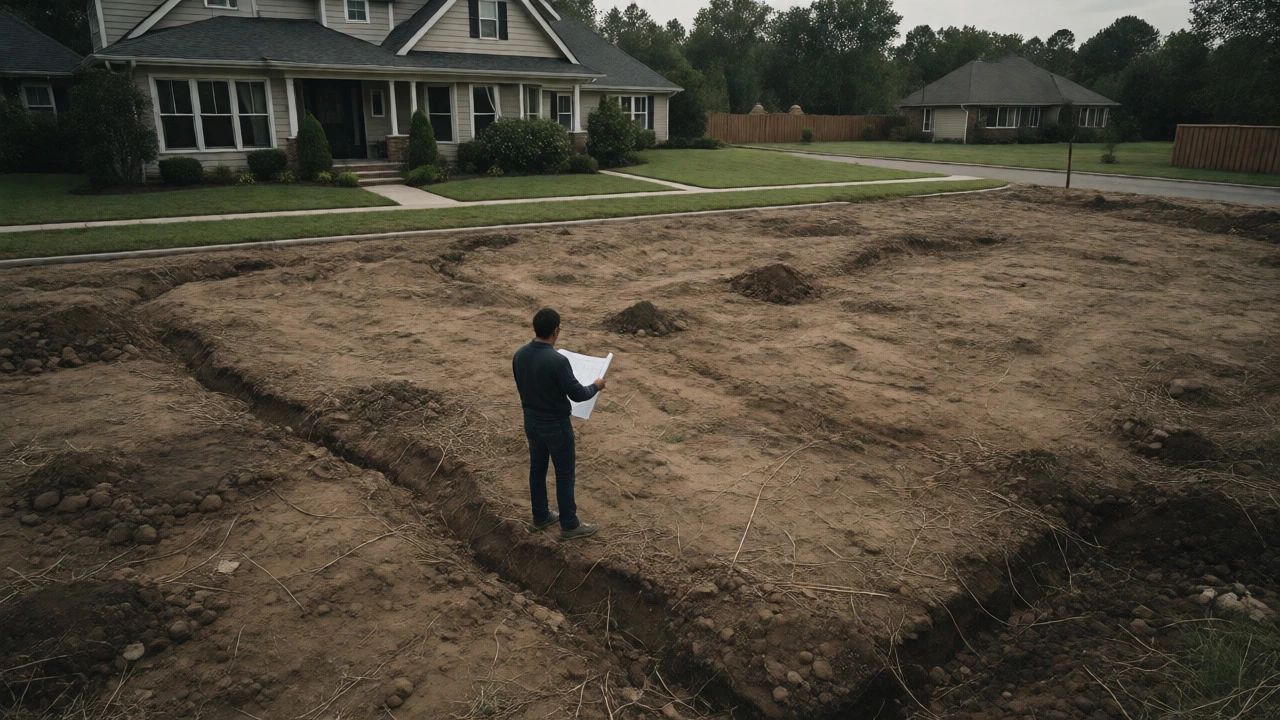
You stand on a patch of dirt, looking at the empty lot where your future kitchen will be. The bank account says one thing, but the dream house next door says another. You’re asking the million-dollar question-or maybe the two-million-dollar question depending on where you live: is it cheaper to build than buy now?
Here’s the uncomfortable truth: there is no single answer that fits every zip code. In late 2026, the gap between building and buying has narrowed, shifted, and sometimes flipped entirely based on land prices, labor shortages, and interest rates. If you assume building is always the budget-friendly hack for getting more square footage, you might be walking into a financial trap. Conversely, if you think buying an existing home is always the safe bet, you could be overpaying for outdated systems and hidden repairs.
The Hidden Costs of "Cheap" Land
Most people start their calculation by looking at the price per square meter of comparable homes. They see a finished house selling for $800,000 and figure they can build a similar one for $600,000. This math ignores the biggest variable in the equation: the land itself.
In many markets across New Zealand and Australia, land prices have remained stubbornly high even as construction costs fluctuate. When you buy an existing home, you are buying a bundle: land + structure + landscaping + driveway + connections. When you build, you often have to buy these components separately. That “cheap” plot of land might not have water or power connected. It might need a retaining wall because it’s on a slope. It might require a septic tank instead of municipal sewage. These aren’t minor line items; they can add $50,000 to $100,000 to your bill before you pour a single slab.
| Cost Item | Existing Home | New Build |
|---|---|---|
| Utility Connections | Included in sale price | $15k - $40k (if undeveloped) |
| Site Preparation | N/A (already done) | $10k - $30k (earthworks) |
| Permits & Consents | $500 - $1,500 (renovation) | $5k - $15k (new build) |
| Landscaping/Driveway | Often included/negotiable | $20k+ (usually excluded) |
Construction Costs in Late 2026: A Reality Check
Let’s talk about the actual act of building. In 2026, material prices have stabilized compared to the chaotic spikes we saw in 2022-2023, but labor costs haven’t followed suit. Skilled tradespeople-carpenters, electricians, plumbers-are still in short supply. This means builder margins are tight, and if you want quality work, you pay a premium.
A standard turnkey build currently averages between $3,000 and $4,500 per square meter for mid-range finishes. If you want custom architecture, high-end appliances, or sustainable features like solar integration or heat pump hot water systems, you’re looking at $5,000+ per square meter. Compare this to the median price of existing homes. If the median home in your area is 180m² and sells for $900,000, that’s roughly $5,000/m². On paper, building looks competitive. But remember, that existing home comes with a garden, a garage, and zero stress about whether the roof will leak in six months.
The Time Tax: Why Speed Matters More Than Price
There’s a concept in economics called opportunity cost. When you build, you are paying twice: once for the construction loan, and once for rent (or current mortgage) while you wait. Construction timelines have slipped. What used to take 9 months now takes 12 to 18 months due to weather delays, supply chain hiccups, and consent processing times.
If you’re renting, that’s $400-$600 a week extra out of pocket. Over 15 months, that’s nearly $40,000 in pure carrying costs. Does building save you enough money upfront to cover that? Often, no. Buying an existing home lets you move in within 4-6 weeks of offer acceptance. For families with school-age kids or people whose leases are expiring, time is literally money. Building forces you to juggle two lives simultaneously, which adds mental fatigue that rarely shows up in a spreadsheet.
Maintenance and Energy Efficiency: The Long Game
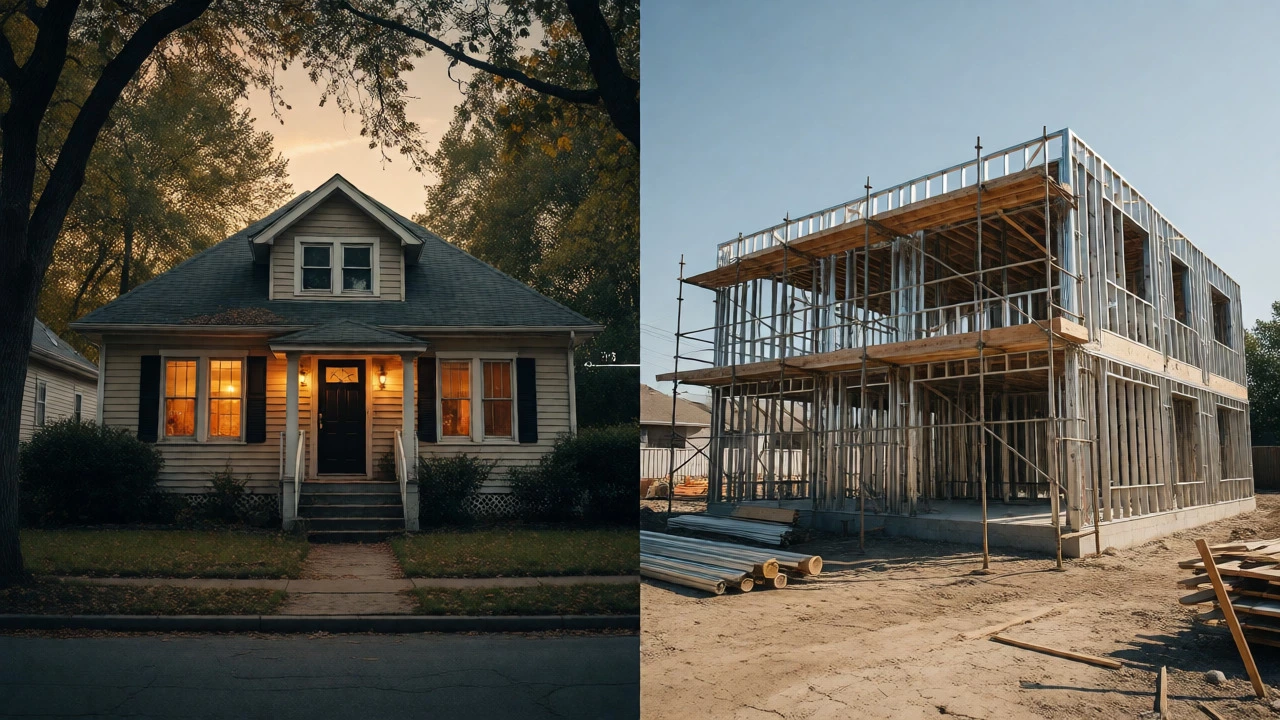
This is where building wins, hands down. An existing home, even a well-maintained one from the 1990s, is likely less energy-efficient than a new build constructed to 2026 insulation standards. New builds feature double glazing, superior vapor barriers, and modern HVAC systems. Your heating bills could drop by 30-40% immediately.
Then there’s maintenance. When you buy an older home, you inherit its history. The roof might have five years left. The plumbing might be polybutylene (a plastic pipe known to fail). The electrical wiring might lack earthing. Budget $10,000-$20,000 in the first year for immediate fixes when buying resale. With a new build, you get warranties. Most builders provide a 1-year defect warranty and a 5-year weathertightness warranty. You won’t be fixing a leaking window seal on a Saturday morning; you’ll just call the builder.
Market Liquidity: Can You Sell It Fast?
Housing markets cycle. In a hot market, everything sells. In a cooling market, location and condition matter immensely. Existing homes generally sell faster because buyers can visualize themselves living there immediately. They can touch the walls, smell the kitchen, and check the neighborhood vibe.
New builds can be harder to sell off-plan or even completed, because buyers perceive them as risky. They worry about the builder going bust or the finish quality being subpar. However, in 2026, certified green-rated new homes are becoming highly desirable. If you build with energy efficiency ratings (like Homestar or Green Star), you create a niche asset that appeals to eco-conscious buyers. But if you build a generic box on a bad street, you might struggle to recoup your investment quickly.
When Building Makes Sense (And When It Doesn’t)
To help you decide, here is a quick heuristic:
- Build if: You want specific layout control, you plan to stay 10+ years, you have cash reserves for overruns, and the land is already serviced.
- Buy if: You need to move soon, you dislike project management, you want established neighborhoods with mature trees, or you are sensitive to interest rate fluctuations during the build phase.
Consider the renovation hybrid. Sometimes, buying a fixer-upper and renovating offers the best of both worlds. You get the character and location of an old home with the efficiency of new systems. But beware: renovations often blow budgets by 20-30% more than new builds do, because you’re dealing with unknowns behind the drywall.
Final Verdict: Run Your Own Numbers
Don’t rely on national averages. Talk to three local builders for quotes on a standard design. Look at sold properties in your target suburb for the last 6 months. Calculate the total cost of ownership including holding costs, connection fees, and landscaping. If the difference between building and buying is less than 10%, choose the option that causes you less stress. Because ultimately, the cheapest house isn’t always the one with the lowest sticker price-it’s the one that doesn’t keep you awake at night worrying about the next invoice.
Is it cheaper to build a house in 2026 compared to 2020?
Generally, no. While material costs have stabilized since the peak inflation of 2022-2023, labor costs remain high due to skilled trade shortages. Additionally, financing costs (interest rates) are significantly higher in 2026 than in 2020, increasing the total cost of borrowing for construction loans. Therefore, the total outlay is typically higher now than in 2020.
How long does it take to build a new home in New Zealand?
From signing contracts to moving in, expect 12 to 18 months. This includes 3-6 months for consents and planning, followed by 9-12 months of construction. Delays due to weather, supply chain issues, or council backlogs are common, so always add a buffer to your timeline.
Do new builds hold their value better than older homes?
Not necessarily. Older homes in prime locations with land scarcity often appreciate faster due to the land value component. New builds depreciate slightly in the first few years as the 'newness' wears off, but they offer lower maintenance costs and better energy efficiency, which can appeal to certain buyer demographics. Location remains the primary driver of value retention.
What are the main risks of building a house?
The main risks include budget overruns (often 10-20%), timeline delays, builder insolvency, and unexpected site conditions (such as poor soil requiring extra piling). There is also the risk of interest rate hikes during the construction period, which increases the cost of your construction loan.
Can I use KiwiSaver funds to build a house?
Yes, eligible first-home buyers in New Zealand can withdraw KiwiSaver savings to help fund a new build, provided they meet the eligibility criteria, such as having been a member for at least three years and intending to live in the property. You must apply through Kāinga Ora.