Foundation Crack Severity Calculator
This tool helps determine if your foundation crack is safe to live with and what action you should take. Based on criteria from industry experts.
Input Crack Details
Recommended Action
Repair Options
Living in a house with a cracked foundation isn’t always a reason to panic-but it’s never something to ignore. Many homeowners spot a thin line in the basement wall or a gap near the door frame and wonder: can you live in a house with a cracked foundation? The answer isn’t yes or no. It’s it depends. Some cracks are harmless. Others are warning signs that your home’s structure is slowly falling apart.
Not All Cracks Are the Same
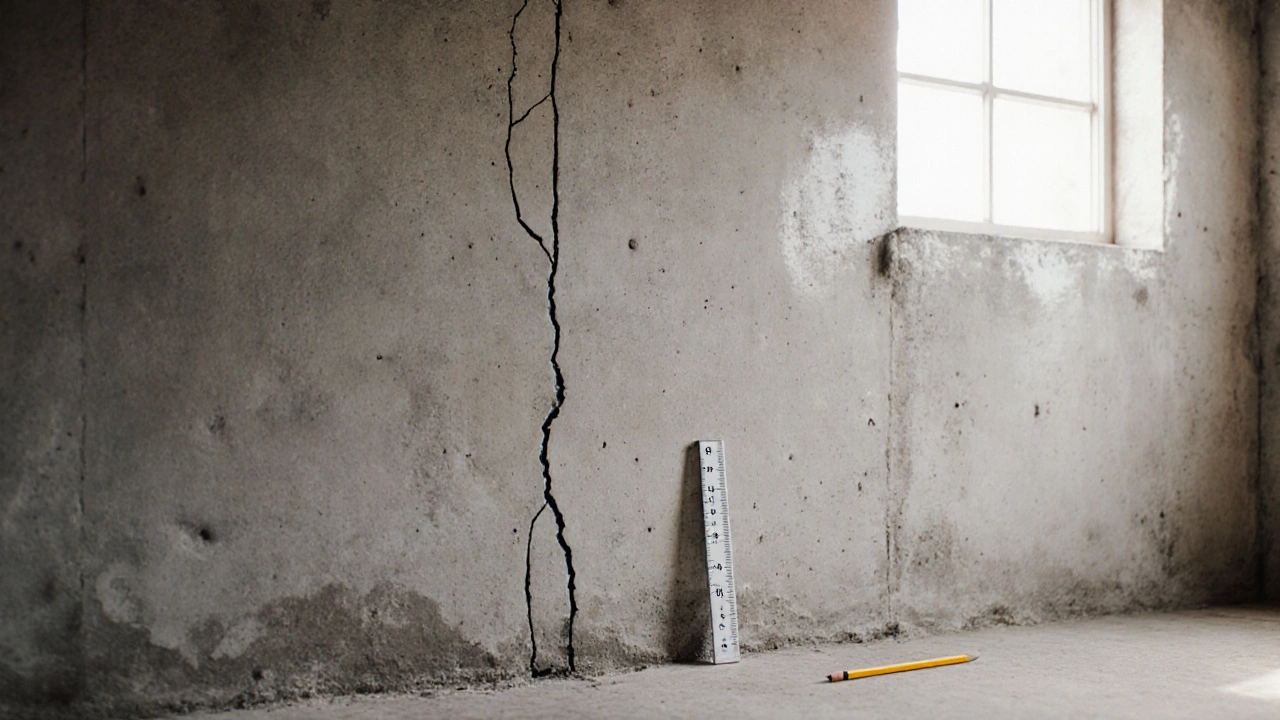
Foundations crack for all kinds of reasons. The most common are settling, moisture changes, and poor soil conditions. But not every crack means trouble.Vertical hairline cracks under 1/8 inch wide? These usually happen as concrete cures and shrinks. They’re normal, especially in homes less than five years old. If the crack stays the same size year after year and doesn’t let water in, it’s not a safety issue.
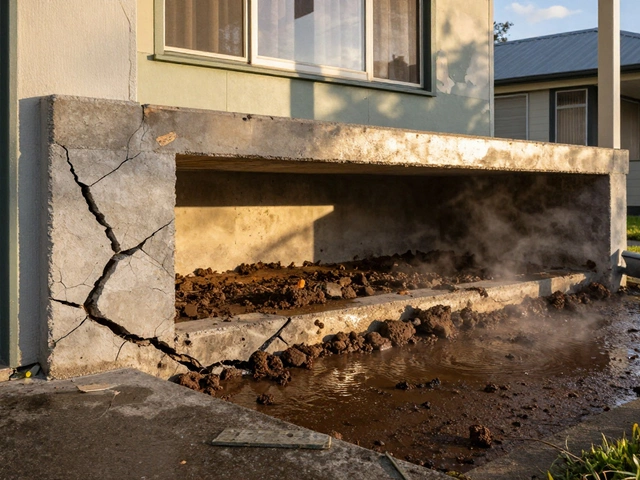
But if you see horizontal cracks, stair-step cracks in brickwork, or cracks wider than 1/4 inch, that’s different. These often point to serious movement-like soil pushing against the wall or the foundation sinking unevenly. Horizontal cracks are especially dangerous. They mean the wall is bending under pressure. Left unchecked, it can lead to collapse.
Signs You’re Dealing with a Real Problem
If your foundation crack is just a line on the wall, you might be fine. But if you’re seeing other symptoms, you’re not just dealing with a crack-you’re dealing with structural failure.- Doors and windows that stick or won’t close properly
- Uneven floors, especially near the center of the house
- Crumbling mortar or brick that’s pulling away from the wall
- Water pooling in the basement after rain
- Gaps between walls and ceilings, or walls pulling away from each other
- Crack that’s growing wider over time-measure it once a month
One homeowner in Ohio noticed her front door wouldn’t latch. She thought it was humidity. A year later, the gap at the top of the door was over an inch. By then, the foundation had sunk nearly two inches on one side. Repair cost: $28,000. If she’d acted when the door first stuck, it would’ve been $6,000.
Can You Still Live There?
Yes, you can live in a house with a cracked foundation-if the damage is minor and stable. Many people do. But you need to monitor it closely and plan for repair.Here’s the reality: if the crack is active (getting bigger), water is leaking in, or the house is visibly leaning, living there isn’t just uncomfortable-it’s risky. Structural failure doesn’t happen overnight, but it doesn’t give warnings either. A wall can hold for years, then suddenly give way during a heavy rain or earthquake.
Insurance won’t cover foundation damage from settling or poor drainage. Most policies only pay out if the damage comes from a covered event like a burst pipe or fire. So if you’re waiting for insurance to fix it, you’re waiting forever.
What Happens If You Do Nothing?
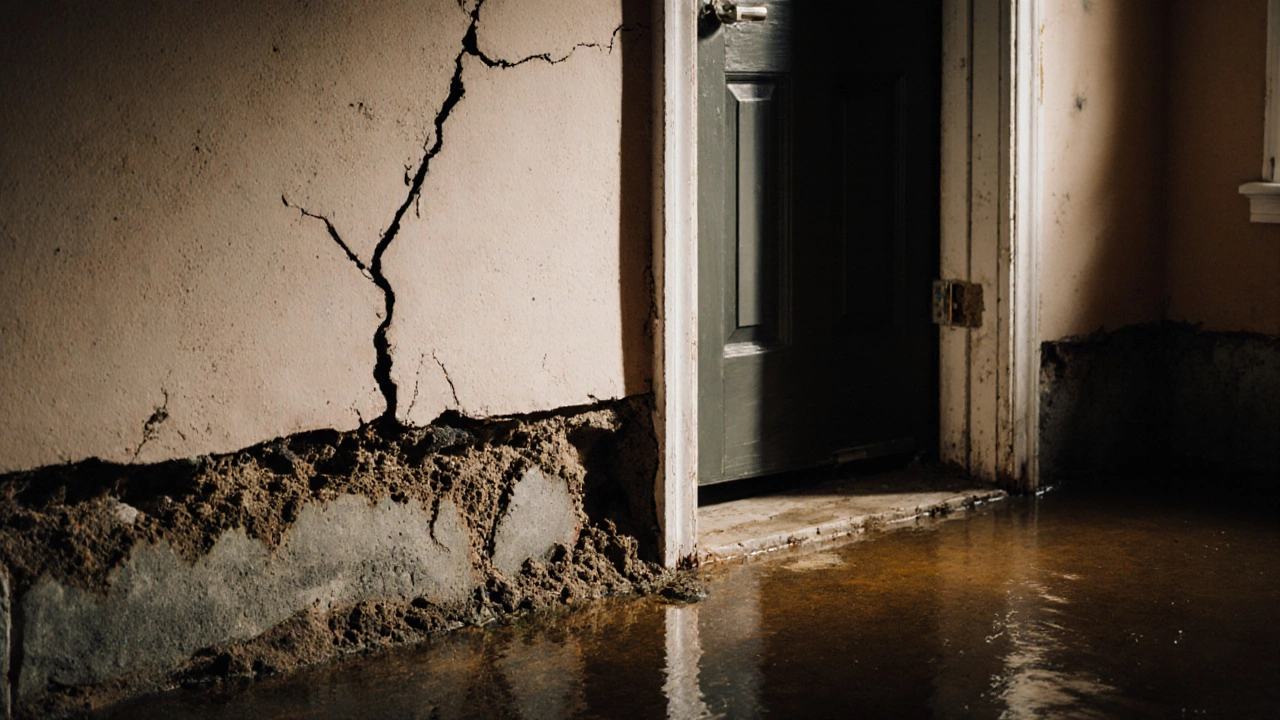
Ignoring foundation cracks is like ignoring a cavity. At first, it’s just a small hole. Then it spreads. Then the tooth breaks.Over time, a small crack lets water seep in. That water freezes in winter, expands, and widens the crack. Moisture also attracts termites and mold. Both eat away at wood framing and drywall. Your insulation loses effectiveness. Your energy bills go up. Your home’s value drops by 20-30%.
And the longer you wait, the harder-and more expensive-the fix becomes. A $5,000 pier installation today can become a $40,000 full foundation replacement in five years. Some homes with untreated damage end up condemned. You can’t sell them. You can’t refinance them. You’re stuck.
When to Call a Professional
You don’t need to panic over every crack. But you do need to know when to call in help.Call a structural engineer or licensed foundation specialist if:
- A crack is wider than 1/4 inch
- Cracks are horizontal or stair-stepped
- There’s visible tilting or bowing in walls
- Multiple signs of movement are present (doors sticking, uneven floors, etc.)
- You’ve measured the crack and it’s grown more than 1/16 inch in six months
Don’t trust a contractor who says, “It’s fine.” Get a second opinion. Look for someone certified by the International Association of Foundation Repair Contractors (IAFRC). Ask to see photos of past jobs. Ask how they diagnose the cause-not just how they fix it.
Common Fixes and What They Cost
There’s no one-size-fits-all fix. The solution depends on what’s causing the damage.| Repair Method | Best For | Average Cost | Longevity |
|---|---|---|---|
| Carbon Fiber Straps | Vertical cracks under 1/4 inch | $1,500-$3,500 | 25+ years |
| Steel Piers | Sinking or settling foundations | $1,000-$3,000 per pier | 50+ years |
| Helical Piers | Soft or expansive soil | $1,800-$4,000 per pier | 50+ years |
| Slabjacking | Uneven concrete slabs | $500-$2,000 | 10-15 years |
| Full Foundation Replacement | Severe damage, multiple cracks, structural failure | $30,000-$100,000 | 80+ years |
Carbon fiber straps are the most common fix for non-structural cracks. They’re cheap, quick, and don’t require excavation. Steel piers are the gold standard for lifting and stabilizing sinking foundations. They go down 20-40 feet to reach bedrock. Slabjacking is a temporary fix for driveways or patios-it won’t fix your home’s main foundation.
Preventing Future Cracks
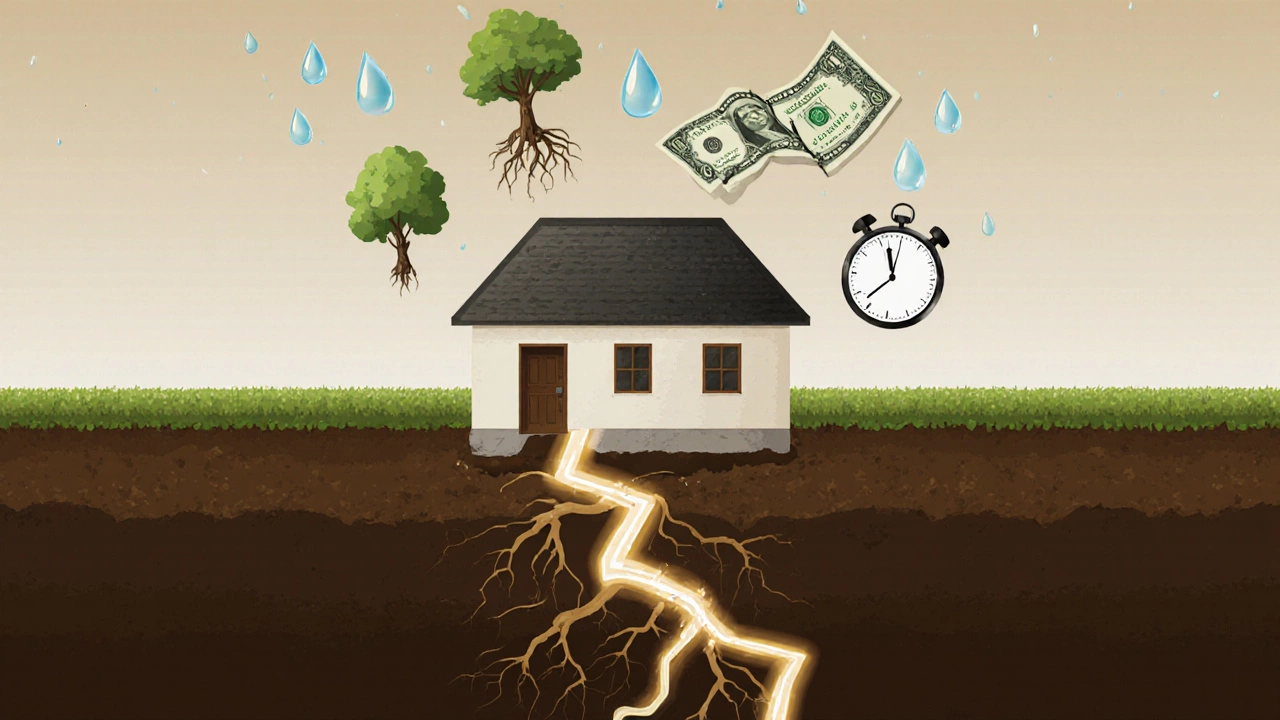
Once you fix it, you don’t want to fix it again. Most foundation problems come from water.- Keep gutters clean and extend downspouts at least 6 feet from the house
- Grade the soil so it slopes away from the foundation (at least 1 inch per foot for 6 feet)
- Install a French drain if your yard holds water after rain
- Don’t plant large trees closer than 15 feet from the house-roots dry out soil and cause shifting
- Water the foundation during long droughts. Dry soil shrinks, pulls away, and lets the foundation settle
One family in Texas saved $18,000 in repairs by simply installing a $300 rain gutter extension. Their foundation had been cracking because water from the roof was pooling right against the wall.
Final Verdict
Can you live in a house with a cracked foundation? Yes-if the crack is small, stable, and you’re actively monitoring it. But if you’re seeing signs of movement, water intrusion, or structural stress, you’re not just living in a house-you’re living with a ticking time bomb.Don’t wait for the walls to fall. Get it inspected. Know your options. Fix it early. A small investment now can save you tens of thousands later-and keep your family safe.
Is a cracked foundation dangerous?
It depends. Small vertical cracks are usually not dangerous. But horizontal cracks, wide gaps, or cracks that are growing can mean the foundation is failing. These can lead to wall collapse, uneven floors, or even structural failure. If you’re unsure, get a professional inspection.
Will homeowners insurance cover foundation repair?
Almost never. Most policies exclude damage from settling, poor drainage, or gradual wear. Insurance only pays if the damage comes from a sudden covered event like a burst pipe or fire. Foundation issues are considered maintenance problems, not accidents.
Can I fix a cracked foundation myself?
You can seal small hairline cracks with epoxy or polyurethane sealant. But you can’t fix structural damage yourself. If the foundation is sinking, bowing, or shifting, professional equipment and expertise are required. DIY fixes for major cracks are temporary and often make things worse.
How do I know if a crack is active?
Measure the crack with a ruler or caliper. Mark the ends with a pencil. Check it again in 30 days. If it’s grown more than 1/16 inch, it’s active. Also look for dust or debris falling from the crack-that means movement is still happening.
Does a cracked foundation affect home value?
Yes. Even minor foundation issues can reduce home value by 10-20%. Major damage can cut value by 30% or more. Buyers often walk away unless the repair is documented and done by a licensed contractor with a warranty.
How long does foundation repair last?
Properly installed steel or helical piers last 50+ years. Carbon fiber straps last 25+ years. Slabjacking lasts 10-15 years. The key is fixing the root cause-not just patching the crack. If water isn’t managed, the problem will return.