
Sofa Cushion Replacement Calculator
How Often Should You Replace Cushions?
Answer these questions to find out if your cushions need replacing.
So you’ve been sitting on the same sofa for years. It still looks fine from a distance, but when you sink in, you notice it doesn’t bounce back like it used to. The cushions feel flat, lumpy, or worse - they slide around every time you shift your weight. You’re not imagining it. Your sofa cushions are done.
How Long Do Sofa Cushions Actually Last?
Most sofa cushions start to lose their shape between 3 and 7 years, depending on how often you use them. If you live alone and watch TV on weekends, you might get 6 or 7 years out of them. But if you’ve got kids, pets, or you’re the kind of person who naps on the couch every night, you’re probably looking at 3 to 4 years before things start to sag.The foam inside is the real culprit. High-density foam (30+ kg/m³) holds up better than low-density stuff. You’ll find that in higher-end sofas. Cheaper models often use 18-22 kg/m³ foam - it feels soft at first, but it compresses like a sponge left in the sun. After 2-3 years, it doesn’t spring back. That’s when your couch starts to feel like a beanbag with arms.
One study from the International Journal of Furniture Science tracked 120 sofa sets over five years. The ones with high-density foam retained 85% of their original height after 4 years. The low-density ones dropped to 60% - and kept sinking after that.
Signs It’s Time to Replace Your Sofa Cushions
You don’t need to wait until the cushions are completely flat. Here are five clear signs it’s time to act:- Deep indentations - If you can see your body shape pressed into the cushion and it doesn’t bounce back after 10 seconds, the foam is spent.
- Lumpy or uneven surfaces - Foam breaks down unevenly. One side sinks more than the other. That’s not a design feature - it’s failure.
- Cushions slide or shift - If you have to constantly fluff and reposition them, the internal structure (like webbing or baffles) is worn out.
- Stains or odors you can’t remove - Spilled coffee, pet accidents, or sweat buildup that won’t come out with cleaning? That’s not just dirty - it’s a health hazard.
- Bottom fabric is thinning or tearing - If you can see the foam through the fabric or feel the frame underneath, you’re sitting on a skeleton.
These aren’t just aesthetic issues. Poor cushion support leads to bad posture. Sitting on sunken cushions forces your spine into a C-curve, which can cause lower back pain over time. That’s not something you can ignore.
Can You Just Reupholster or Flip the Cushions?
Flipping cushions helps - but only if they’re still in decent shape. If you flip them every 3 months and they’re only 2 years old, you might stretch their life by another year. But if they’re already sagging, flipping just moves the problem to the other side.Reupholstering the outer fabric won’t fix the foam. You can spend $200 to re-cover cushions and still end up with a couch that feels like a pancake. The cover is just the skin. The foam is the muscle. If the muscle is dead, the skin doesn’t matter.
Some people try adding foam inserts or toppers. That’s a band-aid. It might make the couch feel firmer for a few weeks, but the original foam is still collapsing underneath. It’ll push the new layer down, creating a weird double-sag effect. You’ll end up with a couch that’s both lumpy and flat.
What’s the Best Foam to Replace With?
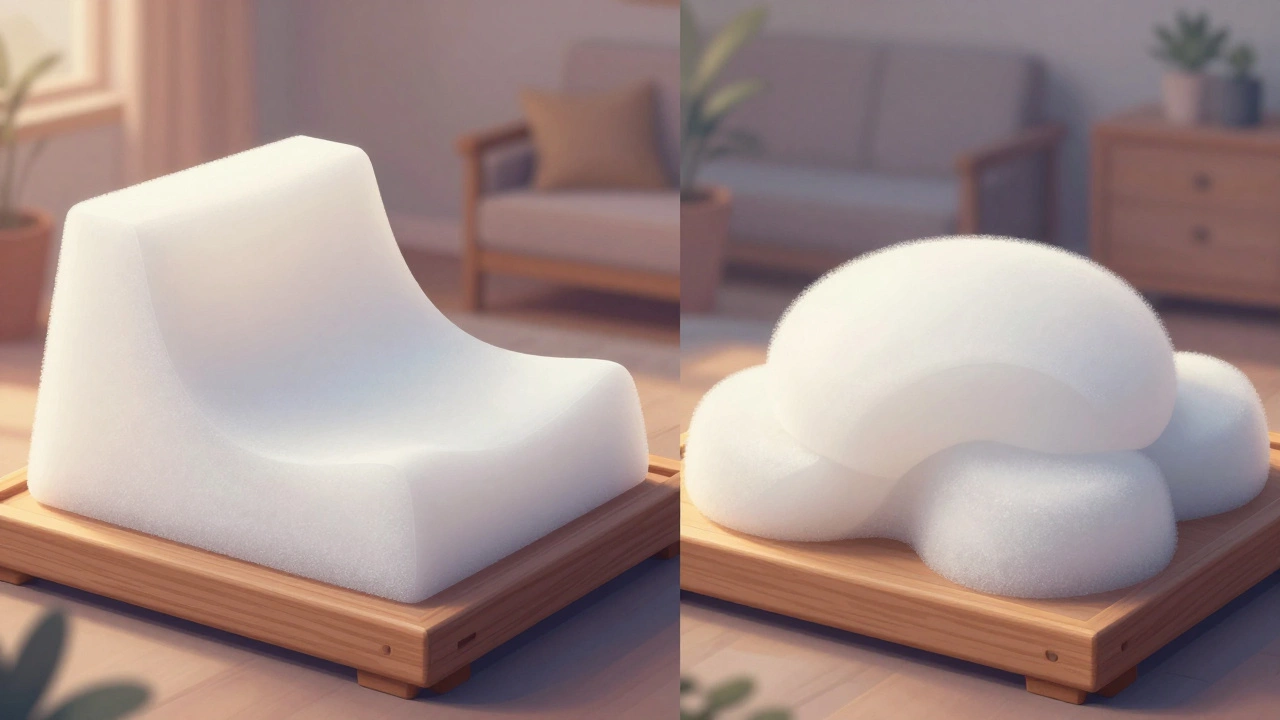
If you’re replacing cushions, don’t just grab the cheapest foam at the hardware store. You need the right type:- High-density polyurethane foam (35-45 kg/m³) - Best for daily use. Lasts 8-12 years. Feels firm but supportive. Ideal for families and heavy users.
- Memory foam (50+ kg/m³) - Great for pressure relief, especially if you have back issues. But it heats up fast and can feel too soft for some. Best as a thin layer on top of high-density foam.
- Down or feather blends - Luxurious and soft, but they flatten quickly. Need fluffing daily. Not ideal for daily use unless you love the maintenance.
- Avoid low-density foam (under 25 kg/m³) - It’s cheap, but it dies in under 2 years. You’re just wasting money.
When ordering replacements, ask for the density in kg/m³. If they give you “firm” or “premium” without numbers, walk away. That’s marketing speak, not specs.
Cost of Replacement vs. New Sofa
Replacing cushions costs between $150 and $500, depending on size, foam type, and whether you do it yourself or hire someone. For a standard 3-seater with 5 cushions, you’re looking at $250-$350 for quality foam and professional sewing.A new mid-range sofa? Around $1,200-$2,000. So replacing cushions is about 20% of the cost of a new one - and you keep the frame, which is often still solid.
But here’s the catch: if your sofa frame is wobbly, the legs are broken, or the springs are squeaking, then replacing cushions is pointless. You’re fixing a house with a crumbling foundation. Check the frame before spending money on foam.
DIY vs. Professional Replacement
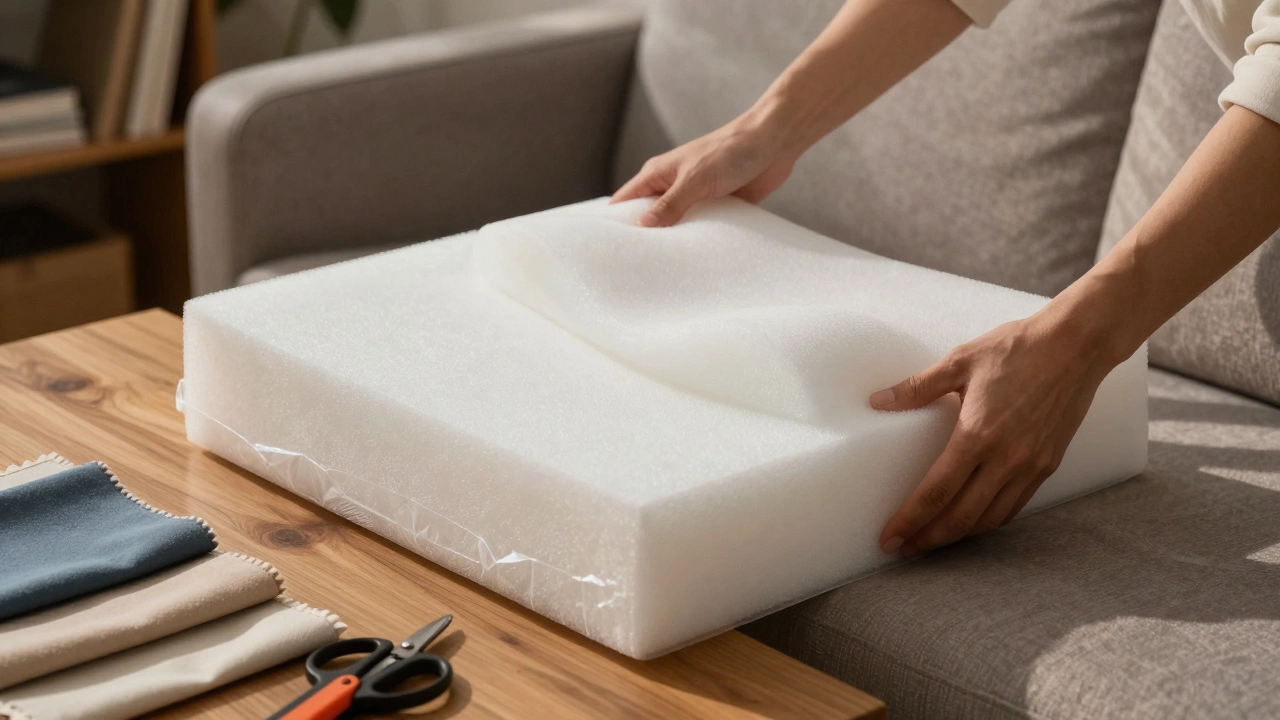
If your sofa has removable cushion covers with zippers, you can do this yourself. Here’s how:- Remove the old cushions and measure each one (length, width, thickness).
- Order new foam with the same dimensions. Add 5% extra thickness if you want a plumper look.
- Buy upholstery fabric that matches or consider a new color to refresh the look.
- Wrap the foam in Dacron batting for a smoother finish.
- Slide the new foam into the cover and zip it up.
It takes a Saturday afternoon. You’ll need a staple gun, scissors, and maybe a helper. YouTube has dozens of step-by-step videos. The hardest part is lifting the old foam - it’s heavy when it’s soaked with sweat and dust.
Go professional if:
- The cushions aren’t removable
- You’re replacing more than 4 cushions
- You want custom shapes or piping
- You don’t have time or tools
Local upholstery shops usually charge $50-$80 per cushion for labor. That’s worth it if you want it done right and don’t want to deal with the mess.
How to Make New Cushions Last Longer
Once you’ve replaced them, don’t let them die again in 3 years. Here’s how to stretch their life:- Rotate them weekly - Swap front with back, left with right. Even wear = even lifespan.
- Fluff them daily - Just give them a good shake and pat. It keeps the foam fibers aligned.
- Use a slipcover - Protects the fabric from UV rays, spills, and pet claws.
- Keep them away from direct sunlight - UV breaks down foam faster than you think. Move your sofa if it’s near a window.
- Don’t sit on the arms - That’s where the frame is weakest. It puts stress on the cushion supports.
These habits add 2-4 years to your cushions. That’s like getting a free upgrade.
When to Just Buy a New Sofa
Replacing cushions makes sense only if the rest of the sofa is in good shape. Ask yourself:- Is the frame solid? No wobbling, creaking, or loose joints?
- Are the springs still tight? Sit on the back and press down - if it feels like a trampoline, the springs are shot.
- Is the fabric in good condition? No fading, tears, or stains you can’t clean?
- Do you still like the style? If you’re tired of it, replacing cushions won’t change that.
If you answered “no” to two or more of these, it’s time for a new sofa. Don’t waste money fixing something you’re already ready to replace.
Final Thought: It’s Not Just About Comfort
Your sofa cushions are more than padding. They’re part of your daily posture, your comfort, and even your health. Sitting on worn-out cushions every day adds up - lower back pain, slouching, fatigue. Replacing them isn’t a luxury. It’s maintenance, like changing your car’s oil or replacing your mattress.Don’t wait until your couch looks like a pancake. Watch for the signs. Measure your cushions. Choose quality foam. Do it right once, and you’ll thank yourself for years.