Sofa Repair Method Selector
Difficulty:
Longevity:
Step-by-Step Guide:
There is nothing quite as frustrating as sinking into your favorite armchair only to find that one side feels like a rock while the other gives way completely. You shift around, trying to find a comfortable spot, but the non-removable sofa cushion a seat pad permanently attached to the sofa frame, making it difficult to access and replace the internal filling refuses to cooperate. Unlike loose covers you can toss in the washing machine or flip over with ease, these built-in pads are designed for a clean look but come with a hidden drawback: when they sag, flatten, or develop lumps, fixing them feels like a major project.
But here is the good news. You do not need to buy a new sofa, and you usually do not need to hire an expensive upholsterer. Most issues with fixed cushions-whether it is flattened foam, shifted batting, or loose fabric-can be resolved with some basic tools and a bit of patience. This guide will walk you through diagnosing the problem and applying the right fix, whether you are dealing with a cheap particle board base or a high-end hardwood frame.
Diagnose the Problem Before You Start
Before you grab a screwdriver or start cutting fabric, you need to understand exactly what is going wrong. Not all sagging is created equal. The solution depends entirely on the root cause. Take a few minutes to inspect your sofa closely. Press down on different areas of the cushion. Does it feel firm in some spots and mushy in others? Is the fabric stretched thin? Or does the whole thing just slide off the base?
Here are the three most common culprits:
- Compressed Foam: Over time, the polyurethane foam inside breaks down. It loses its resilience and stays flat even after you stand up. This is the most common issue in sofas older than five years.
- Shifted Batting or Filling: Many cushions have a layer of soft polyester batting wrapped around the foam. If this shifts to one side, the cushion looks lumpy and uneven.
- Loose Attachment Points: Sometimes the cushion itself is fine, but the webbing or springs holding it to the frame have weakened, causing the entire seat to droop.
If you press the cushion and it bounces back slightly but never fully, the foam is likely degraded. If the shape is distorted but the material still feels springy, the filling has probably moved. Identifying this early saves you from buying unnecessary materials.
Gather Your Tools and Materials
You do not need a professional workshop to fix a sofa. In fact, most of these repairs can be done with items you might already have in your garage or local hardware store. Having the right tools makes the process smoother and less messy.
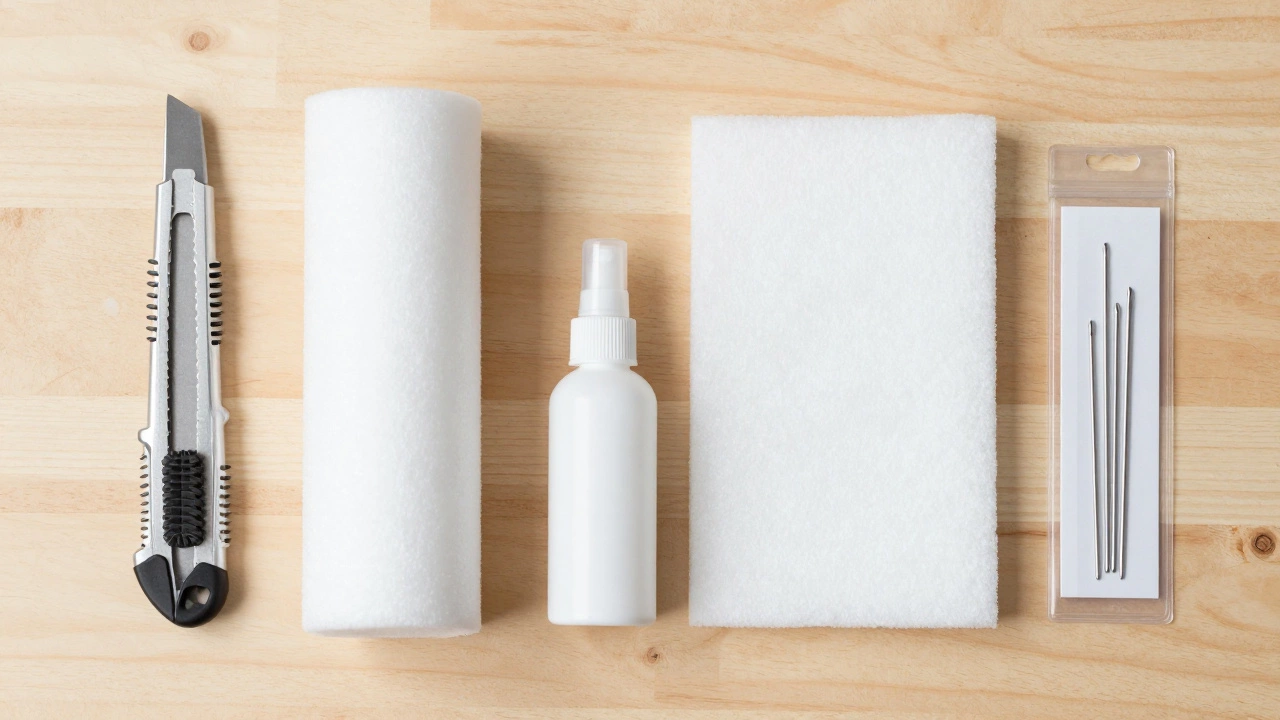
For a basic reshaping or rebatting job, you will need:
- A utility knife or seam ripper: To carefully open the casing if there is one, or to trim excess fabric.
- High-density foam sheets: Available at fabric stores or online. Look for foam with a density of at least 1.8 lb/ft³ for durability.
- Polyester batting: Used to wrap the foam for a softer feel and to prevent the fabric from stretching.
- Fabric glue or spray adhesive: To secure the batting to the foam without sewing.
- Sewing kit: Heavy-duty needle and thread if you need to close seams.
- Vacuum cleaner with hose attachment: Essential for removing dust and debris from inside the cushion before you start.
If your issue is with the frame rather than the cushion filling, you might also need staple remover, heavy-duty staples, and possibly replacement elastic webbing. Keep your workspace well-ventilated, especially if you are using adhesives.
Method 1: Reshaping and Fluffing (The Quick Fix)
Before committing to a full rebuild, try the simplest approach first. Sometimes, cushions just need a little help returning to their original form. This method works best if the cushion is relatively new or if the sagging is minor.
- Remove surface debris: Use the vacuum hose to suck out any crumbs, dust, or pet hair that has accumulated deep within the folds of the fabric.
- Manual compression: Stand on the cushion (carefully) or press down firmly with your hands. Apply pressure evenly across the surface. Then, release quickly. Repeat this several times. The goal is to agitate the foam cells and encourage them to expand.
- Steam treatment: If you have a garment steamer, run it lightly over the fabric. The heat and moisture can help relax the fibers and allow the foam to rebound. Do not soak the fabric; a light mist is enough. Let it air dry completely before sitting on it again.
- Rotate and flip: Even though the cushion is non-removable, you can often rotate it 180 degrees if it is attached by velcro or simple straps. Check the underside for attachment points. Rotating ensures even wear over time.
This method buys you time but is rarely a permanent solution for severely compressed foam. If the cushion still feels flat after 24 hours, move on to the next step.
Method 2: Adding Support Layers (The Intermediate Fix)
If the foam is too far gone to bounce back, you can add new support without replacing the entire cushion. This involves accessing the interior of the cushion, which requires careful handling since the cover is not removable.
First, locate a discreet seam. Most non-removable cushions have a small opening on the bottom or side, often hidden under a flap or secured with a zipper. If there is no opening, you may need to carefully cut a small slit in an inconspicuous area, such as underneath the seat where it meets the frame.
- Open the casing: Use a seam ripper to gently undo the stitches or unzip the hidden closure. Be patient to avoid tearing the outer fabric.
- Assess the interior: Pull out the old foam core. Check if it is crumbling. If it is intact but just flat, you can keep it. If it is disintegrating, discard it.
- Insert new foam: Cut a piece of high-density foam to match the dimensions of the original. If you are keeping the old foam, place the new, firmer foam on top of it to boost resilience.
- Add batting: Wrap the foam in a layer of polyester batting. Use spray adhesive to secure the edges. This adds a plush feel and helps the outer fabric maintain its shape.
- Reassemble: Slide the new core back into the casing. Stitch the opening closed by hand, using a ladder stitch for an invisible finish. Ensure the fabric is taut but not stretched tight.
This method restores comfort and appearance significantly. It is ideal for mid-range sofas where the frame is solid but the padding has worn out.
Method 3: Reinforcing the Frame (The Structural Fix)
Sometimes the cushion is fine, but the foundation is failing. If your sofa has a wooden frame with elastic webbing or springs, these components can stretch or break over time. This causes the cushion to sink regardless of how good the foam is.
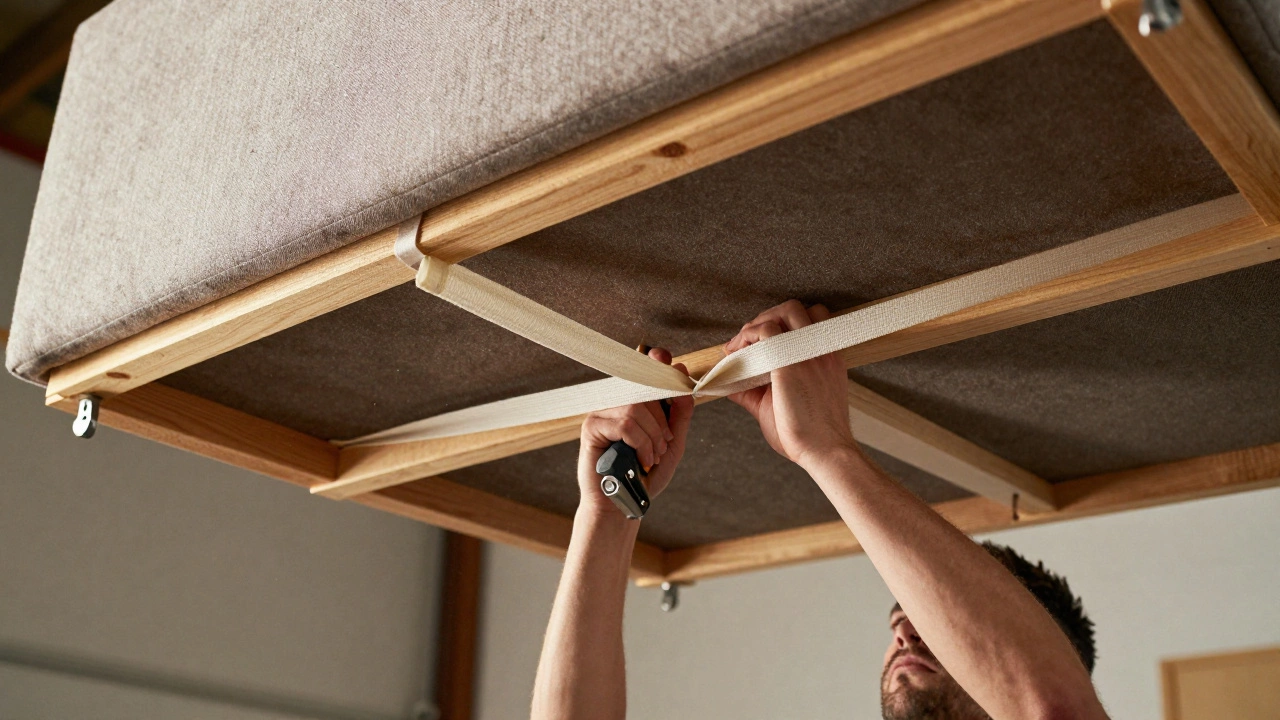
To fix this, you need to access the underside of the sofa. Turn the sofa upside down or lay it on its side. Inspect the webbing-the crisscross strips of elastic that hold the seat.
- Check for sagging webbing: If the webbing is loose, it needs to be replaced. Remove the old staples and install new elastic webbing, pulling it tight across the frame. Staple securely every few inches.
- Inspect springs: If your sofa uses sinuous springs (S-shaped wires), check for broken connections. Re-staple any loose ends. For coil springs, ensure the zigzag wires connecting them are intact.
- Add plywood support: For a more robust solution, cut a piece of half-inch plywood to fit the base of the sofa frame. Secure it with screws. This provides a solid, unyielding surface for the cushion to rest on, preventing further sagging.
Once the frame is reinforced, place the cushion back. You should notice an immediate improvement in support. This fix extends the life of the sofa by years.
| Method | Difficulty Level | Cost Estimate | Longevity | Best For |
|---|---|---|---|---|
| Reshaping & Fluffing | Easy | $0 - $10 | Temporary (Weeks) | Minor sagging, new sofas |
| Adding Support Layers | Moderate | $20 - $50 | Medium (1-3 Years) | Flattened foam, lumpy seats |
| Reinforcing Frame | Hard | $30 - $80 | Long-term (5+ Years) | Structural sagging, old frames |
Maintenance Tips to Prevent Future Sagging
Fixing your sofa is only half the battle. Keeping it in good shape requires a few simple habits. Regular maintenance can double the lifespan of your cushions.
Start by rotating the cushions weekly. Even if they are non-removable, shifting your weight distribution helps. Avoid sitting in the same spot every day. Also, vacuum the sofa monthly to remove abrasive dust particles that break down fabric fibers and clog foam pores.
If you spill something, blot it immediately. Do not rub, as this pushes the liquid deeper into the foam. Stains can weaken the fabric's integrity over time. Consider using a fabric protector spray, which creates a barrier against liquids and dirt. Finally, keep your sofa away from direct sunlight, which fades fabric and degrades foam faster.
Can I replace the foam in a non-removable cushion without cutting the fabric?
In most cases, no. Non-removable cushions are sewn shut. However, many have a hidden zipper or a small service opening on the bottom. Check thoroughly before cutting. If there is no opening, you must carefully cut a slit, replace the foam, and sew it back up. Choose a discreet location like the underside near the frame.
What type of foam is best for sofa cushions?
High-resilience (HR) polyurethane foam is the best choice. Look for a density of at least 1.8 lb/ft³ and an ILD (Indentation Load Deflection) rating between 1.5 and 2.5 for a balance of comfort and support. Higher density foams last longer but feel firmer.
Is it worth repairing an old sofa with sagging cushions?
It depends on the condition of the frame. If the wood is solid and the fabric is in good shape, repairing the cushions is cost-effective. If the frame is cracked or the fabric is torn, replacement might be more economical. Generally, if the repair cost is less than 50% of a new sofa, it is worth trying.
Why does my sofa cushion feel lumpy?
Lumpiness is usually caused by shifted batting or unevenly compressed foam. The soft layer around the foam can migrate to one side, creating hard and soft spots. Opening the cushion and redistributing or replacing the batting solves this issue.
Can I use memory foam to fix a sagging sofa cushion?
Memory foam is not ideal for sofa cushions because it conforms too much and lacks support. It tends to flatten quickly under constant weight. Stick to high-density polyurethane foam for better durability and bounce-back properties.