50 Rule Decluttering Tracker
Focus on momentum! Find 50 items to remove. Click the category buttons below as you find items to track your progress toward the goal.
Quick-Add Categories:
Quick Wins for a Clearer Home
- Focus on momentum over perfection; small wins lead to big changes.
- Use the "50 items" goal as a daily or weekly challenge to lower anxiety.
- Prioritize high-traffic areas like the kitchen counter or entryway first.
- Combine the rule with a strict "one-in, one-out" policy to prevent regrowth.
What Exactly is the 50 Rule?
When people talk about the 50 rule, they aren't referring to a rigid law of physics, but a gamified approach to Minimalism is a lifestyle movement focused on owning only the things that provide genuine value, intentionally reducing physical and mental clutter. The core idea is simple: find 50 items in your home that you no longer need and remove them. This could be a 50-item sprint in one afternoon, or a challenge to remove 50 items every single week.
Why 50? Because it's a psychological sweet spot. Removing five items feels insignificant; trying to clear an entire garage in a weekend feels like a nightmare. Fifty items is enough to make a visible difference in a room, but small enough that you won't spend four hours crying over an old high school yearbook. It's about building a "decluttering muscle." Once you hit 50, the dopamine hit from the clean space encourages you to do it again.
How to Execute the 50 Rule Step-by-Step
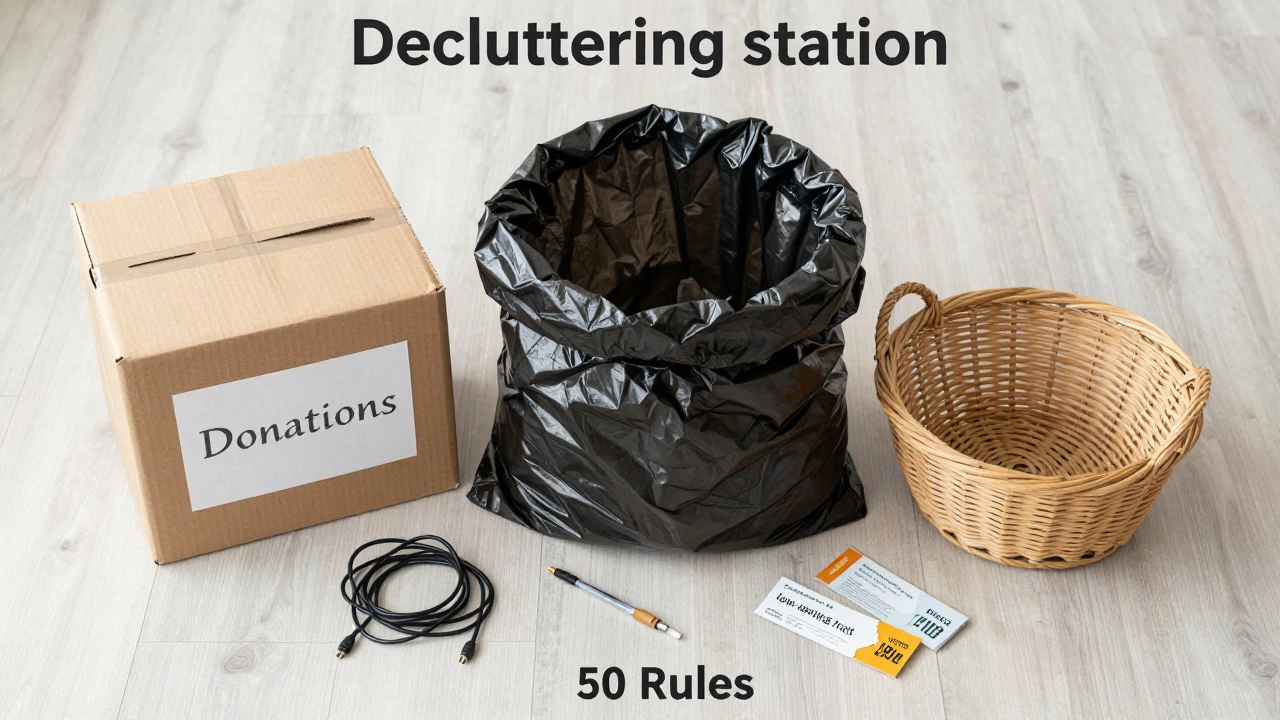
To make this work, you can't just wander around your house aimlessly. You need a system. Start by grabbing three large bags or boxes: one for donations, one for trash, and one for "relocation" (things that belong in another room).
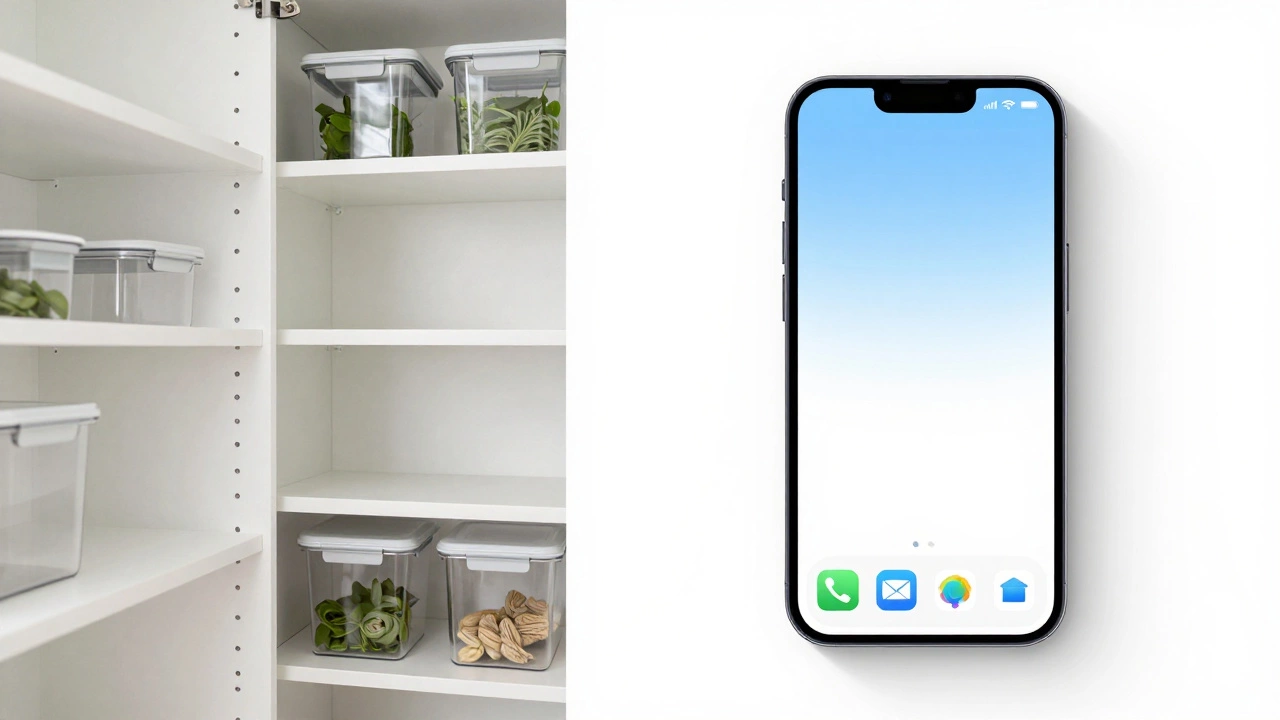
- Pick Your Zone: Don't try to do the whole house. Start with a Pantry is a dedicated storage area for non-perishable food and kitchen supplies or a junk drawer. Narrowing your focus prevents decision fatigue.
- The Rapid-Fire Scan: Move quickly. If you have to think about an item for more than five seconds, put it in a "maybe" pile and move on. The goal is to reach 50, not to curate a museum.
- Target the "Low-Hanging Fruit": Look for expired coupons, dried-out pens, old charging cables for phones you don't own anymore, and duplicate kitchen gadgets. These are easy wins that count toward your total.
- The Final Tally: Once you hit 50, stop. Even if you feel like you could do 100 more, stopping at 50 prevents the "clutter crash" where you're left with a mess and no energy to finish.
Comparing the 50 Rule to Other Popular Methods
You've probably heard of other ways to clean up your space. While the 50 rule is great for momentum, it serves a different purpose than some of the heavy hitters in the organization world.
| Method | Primary Goal | Best For... | Intensity |
|---|---|---|---|
| The 50 Rule | Momentum & Habit | Beginners or overwhelmed people | Low/Medium |
| KonMari Method | Emotional Connection | Total home transformations | High |
| Swedish Death Cleaning | Legacy Management | Seniors or long-term downsizing | Medium |
| The 90/90 Rule | Utility Assessment | Determining what is actually used | Low |
The KonMari Method, developed by Marie Kondo, focuses on whether an item "sparks joy." That's a deep, emotional process. The 50 rule is more tactical. It's less about joy and more about the physical removal of bulk. If you're too stressed to think about your emotional relationship with a spatula, the 50 rule is your best bet.
Common Pitfalls and How to Avoid Them
The biggest mistake people make is the "Relocation Trap." You find 50 things in the bedroom and move them to the hallway, telling yourself you'll deal with them later. Now you haven't decluttered; you've just moved the clutter. To avoid this, the items must leave the house immediately. If they go into a donation bag, that bag needs to be in your car trunk before you sit down for dinner.
Another hurdle is the "Sentimental Stall." You find an old postcard from 1994, and suddenly you're spending an hour reminiscing instead of counting. If you hit a sentimental item, set it aside in a separate basket. Do not let it count toward your 50 unless you are certain it's going. The 50 rule is a speed game; don't let a single photograph kill your pace.
Expanding the Rule: Advanced Strategies
Once the basic 50-item sprint becomes easy, you can evolve the practice. Some people implement a "50-item Month," where they remove 50 things every single week. Others use a variation called the 50/50 split: for every new item brought into the house (like a new pair of shoes), they must find 50 small things to discard over the next month to keep the balance.
You can also apply this to digital spaces. We often forget that Digital Decluttering is the process of organizing and deleting unnecessary files, emails, and apps from electronic devices to improve productivity is just as important. Try deleting 50 unused apps, 50 old screenshots, or 50 unsubscribed newsletters. The mental clarity is surprisingly similar to cleaning out a physical closet.
Is the 50 rule effective for very large homes?
Yes, but you have to adjust your perspective. In a 4,000-square-foot house, 50 items might feel like a drop in the bucket. The key is to apply the rule to specific micro-zones. Instead of "the house," do "the medicine cabinet" or "the spice rack." The goal is the habit of letting go, not the immediate total emptiness of the home.
What should I do with the 50 items I collect?
Divide them into three streams: Donate, Recycle, and Trash. For high-value items, use local charities or online marketplaces. For electronics, find a certified e-waste recycler to avoid harming the environment. The most important part is that they leave your property immediately so they don't migrate back into your drawers.
Can I use this rule for a specific room like a garage?
Absolutely. Garages are often the hardest areas because they contain large, heavy items. In this case, you can count "sets" as one item. For example, a set of old paint cans can count as one unit of clutter. This keeps the momentum going without making the task feel impossible.
What if I can't find 50 things to get rid of?
If you're struggling, look closer. Check for expired condiments in the fridge, old receipts in your wallet, or mismatched socks. If you truly can't find 50, you've likely already achieved a high level of minimalism, or you're subconsciously clinging to things. Try the "90/90 rule": if you haven't used it in 90 days and won't use it in the next 90, it counts.
How often should I repeat the 50 rule?
The frequency depends on your lifestyle. For those who struggle with chronic clutter, a weekly "50-item sweep" is highly effective. For those who are already organized, doing a 50-item challenge once a month or once a quarter during seasonal cleaning is usually enough to keep the home feeling fresh.
Next Steps for a Clutter-Free Life
If the 50 rule worked for you, don't stop there. Transition from "removal mode" to "maintenance mode." This means implementing a strict intake policy. Before buying something new, ask yourself if you're willing to find something else to get rid of to make room.
If you're still feeling overwhelmed, try the "Inverse 50." Instead of looking for things to throw away, identify 50 things you absolutely love and use every day. Seeing the value of what you *keep* often makes it much easier to see the uselessness of what remains. Whether you're managing a small apartment or a sprawling family home, the secret isn't in the big purge, but in the small, consistent act of letting go.