Commercial vs Non-Residential Classifier
Is this a commercial project?
Answer these 3 questions to determine your building classification:
Classification Result
Your project is classified as:
People often use the terms "commercial" and "non-residential" like they mean the same thing. But they don’t. If you’re planning a build, dealing with permits, or just trying to understand why your contractor keeps bringing up different codes, this confusion can cost you time, money, and headaches.
What "commercial" actually means
"Commercial" refers to buildings designed for business use. Think offices, retail stores, restaurants, hotels, warehouses, clinics, and factories. These aren’t places where people live. They’re places where money changes hands, services are delivered, or products are made. The key is commercial activity - not just who uses the space, but what happens inside it.
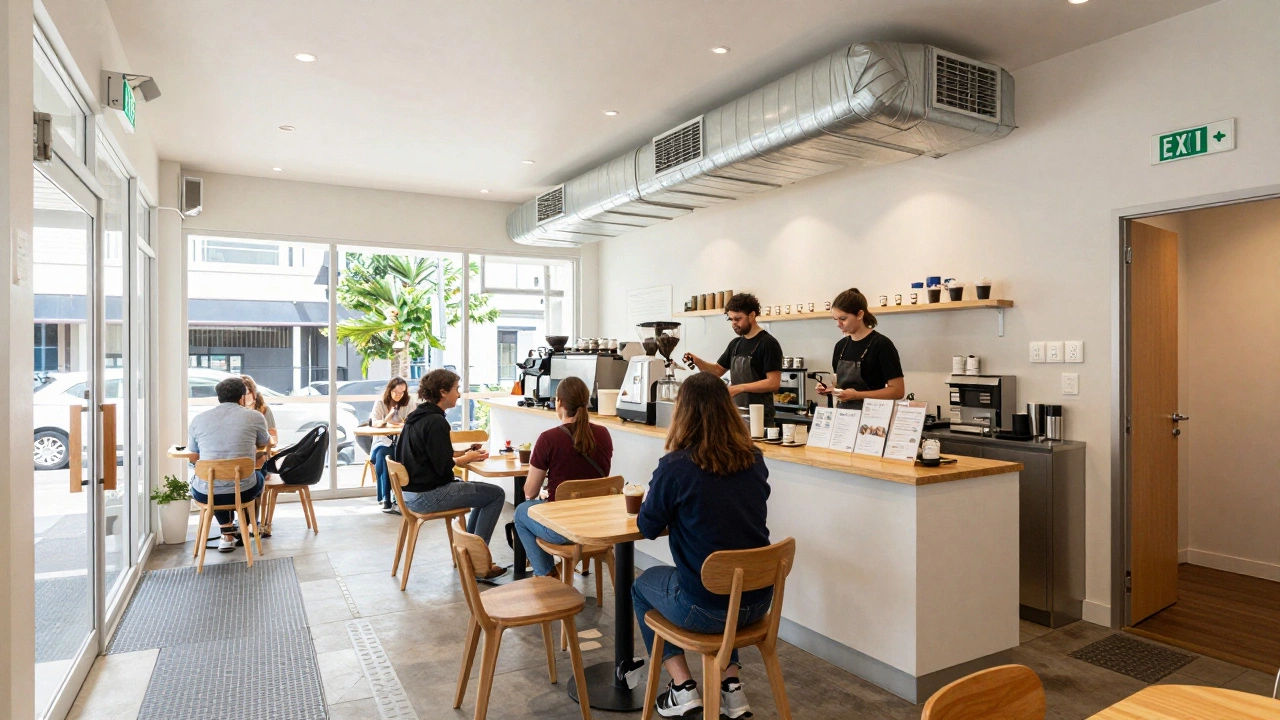
In Auckland, a coffee shop on Karangahape Road is commercial. A dentist’s office in Ponsonby is commercial. Even a small startup renting a unit in a business park is commercial. These buildings have different requirements than homes. Fire exits must be wider. HVAC systems need higher capacity. Electrical loads are heavier. Plumbing must handle more frequent use. Building codes like the New Zealand Building Code (NZBC) treat them differently because the risks are different.
What "non-residential" covers
"Non-residential" is broader. It includes all buildings that aren’t homes. That means commercial buildings, yes - but also schools, hospitals, libraries, churches, museums, government buildings, and even some types of student housing or aged care facilities. These places aren’t for profit like a shop, but they still aren’t for private living.
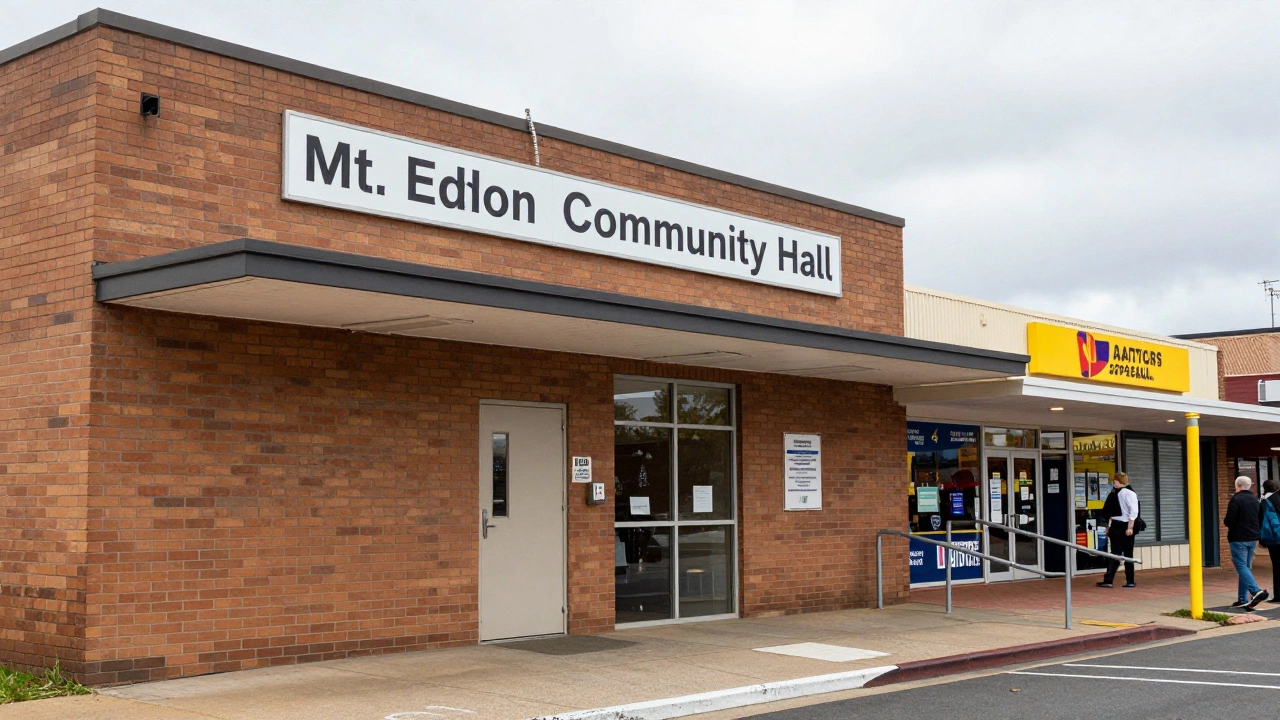
For example, a public library in Mt. Eden is non-residential. A primary school in Manukau is non-residential. A church hall in Parnell is non-residential. But none of these are commercial. They don’t sell goods or services for profit. So while all commercial buildings are non-residential, not all non-residential buildings are commercial.
Why the difference matters in construction
When you start a project, the building consent authority doesn’t just ask "is this a building?" They ask: "What kind?"
Commercial projects require:
- Higher fire safety ratings (e.g., combustible materials restricted)
- Accessible design for the public (ramps, wider doors, tactile indicators)
- More robust structural loads (think heavy equipment, crowds, or storage)
- Specialized ventilation and drainage systems
- Separate utility metering and higher power capacity
Non-residential projects that aren’t commercial - like a community center - might still need fire sprinklers, but they won’t need the same level of retail-grade lighting or point-of-sale electrical infrastructure. A hospital needs emergency power, but it doesn’t need a cash register circuit.
Real-world examples from Auckland
Let’s say you’re converting an old warehouse into something new. Here’s how the classification changes everything:
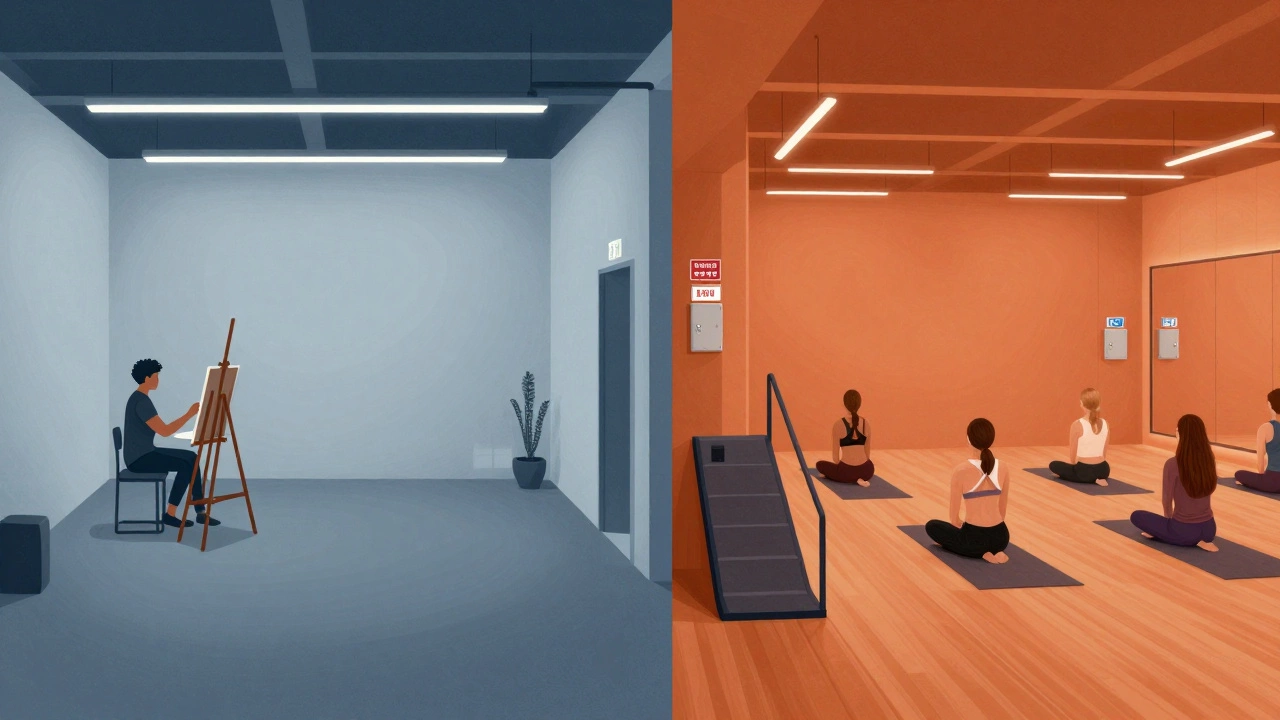
- If you turn it into a yoga studio that charges for classes - that’s commercial. You’ll need public access ramps, upgraded electrical for sound systems, and possibly a fire alarm linked to emergency services.
- If you turn it into a private art studio for one person - that’s still non-residential, but not commercial. You might not need public access features or high-capacity power.
- If you turn it into a live-work space where someone sleeps upstairs and runs a small online business downstairs - now you’re into mixed-use territory. That triggers both residential and commercial rules. It’s messy. And it’s why you need a building surveyor before you sign a contract.
Permits, inspections, and costs
Commercial projects often cost 20-40% more than similar-sized non-residential ones, not because they’re bigger, but because the rules are stricter.
Take plumbing. A small office might need three toilets for staff. A retail store serving 100 people an hour? You need six, plus accessible ones, plus handwashing stations near exits. That’s not a luxury - it’s a legal requirement under NZBC Clause G12.
Inspections are more frequent too. Commercial builds often require:
- Pre-construction review by a building surveyor
- Mid-build fire safety checks
- Final sign-off by a certified accessibility auditor
Non-residential projects like a church hall might only need a basic inspection. No accessibility auditor. No crowd-flow analysis. Just structural integrity and basic safety.
Common mistakes people make
Here’s what goes wrong when people mix up these terms:
- Buying a property zoned for "non-residential" and assuming they can open a café without changing the consent - they can’t. That’s a commercial use, and it needs different approval.
- Using residential-grade insulation in a warehouse-turned-office - fire codes reject it. Commercial spaces need non-combustible or fire-retardant materials.
- Skipping public access features because "no one will notice" - inspectors notice. Fines are steep, and you may be forced to tear out work.
One client in Mt. Roskill tried to open a gym in a former retail space. They thought "non-residential" meant "anything goes." They installed carpet, used standard lighting, and didn’t add enough exits. The council shut them down after the first inspection. They lost $18,000 before even opening.
How to know which category your project falls under
Ask yourself three questions:
- Is money being exchanged for services or goods in this space? → If yes, it’s likely commercial.
- Will the public have regular, uninvited access? → If yes, it’s probably commercial.
- Is this building used for personal living? → If yes, it’s residential. If no, it’s at least non-residential.
If you answered "yes" to the first two, you’re in commercial territory. If you answered "no" to the third but "no" to the first two, you’re in non-residential but not commercial.
When in doubt, talk to your local council’s building consent team. In Auckland, you can request a pre-application meeting. It’s free. They’ll tell you exactly what rules apply. Don’t guess. Don’t assume. This isn’t a gray area - it’s written in law.
Final takeaway
Commercial is a subset of non-residential. All commercial buildings are non-residential. But not all non-residential buildings are commercial. Confusing them leads to delays, fines, and expensive rebuilds. Know the difference before you break ground.
Can a building be non-residential but not commercial?
Yes. Many buildings are non-residential but not commercial. Examples include schools, hospitals, churches, libraries, and government offices. These serve the public or a specific group, but they don’t operate to make a profit from selling goods or services. They’re still subject to building codes, but not the same commercial requirements like retail-grade electrical systems or public crowd-flow planning.
What happens if I misclassify my building?
Misclassification can lead to serious consequences. Your building consent may be revoked. You could be fined up to $20,000 under the Building Act 2004. You might be forced to remove or rebuild non-compliant features - like exits, plumbing, or fire systems. In some cases, you can’t even occupy the space until it’s fixed. It’s not just paperwork - it’s a safety issue.
Is a home-based business commercial?
Not necessarily. If you’re running a small online business from your home, with no public access, no signage, and no change to the structure, it’s usually still classified as residential. But if you start receiving customers regularly, install separate entrances, add parking, or change the building’s use - it may need to be reclassified as commercial. Local councils in Auckland have specific rules about home businesses. Check with them before making changes.
Do commercial buildings need more inspections?
Yes. Commercial buildings typically require more inspections than residential or simple non-residential buildings. These include fire safety checks, accessibility audits, structural load reviews, and plumbing compliance tests. The number depends on size and use - a small office might need 3-4 inspections, while a shopping center could require 10 or more. Each inspection ensures public safety and code compliance.
Can I convert a residential building to commercial use?
Yes, but it’s not a simple renovation. Converting a house into a café, clinic, or office requires a change of use application. You’ll need to meet commercial building code standards: wider doors, better fire separation, upgraded electrical and plumbing, accessible toilets, and emergency exits. Structural changes may be needed too. In Auckland, this often requires a full building consent, not just a minor variation. Don’t assume you can just paint the walls and open the doors.