Grasscloth wallpaper used to be the go-to for luxury homes in the 1980s and 90s. Thick, natural, and a little mysterious, it covered walls in high-end living rooms and executive offices. But now, in 2026, people are asking: is it still worth it? Or did it fade away with shag carpets and brass fixtures?
Grasscloth isn’t gone - it’s evolved
Let’s cut to the chase: grasscloth wallpaper isn’t out of style. It’s just different. The version you remember - overly textured, beige, and a little dusty - is gone. Today’s grasscloth is cleaner, more intentional, and far more versatile. Designers in Auckland, New York, and Berlin are using it in ways no one imagined a decade ago.
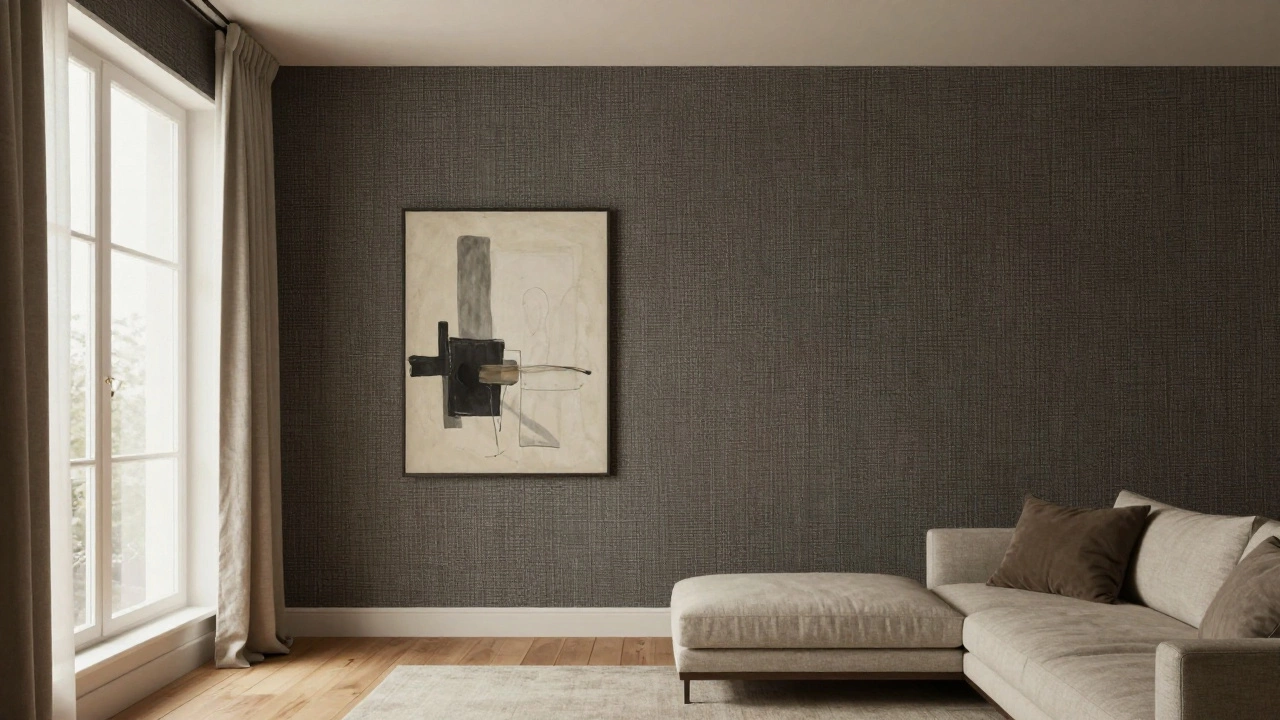
Modern grasscloth still uses natural fibers like hemp, bamboo, and jute, but the weaving is tighter. The colors? Not just cream anymore. Deep olive, charcoal, rust, even navy. Some are dyed with plant-based pigments. Others are printed with subtle metallic threads that catch the light differently depending on the time of day.
Take a look at the living room of a 2025 renovation in Ponsonby. The walls are covered in a charcoal grasscloth with a fine, irregular weave. It doesn’t scream "texture." It hums. It absorbs sound. It makes the room feel grounded, quiet, and warm. That’s not a relic. That’s a statement.
Why people stopped using it (and why they’re coming back)
There’s a reason grasscloth fell out of favor. It was hard to install. It didn’t handle humidity well. If you lived near the coast - like in Auckland - moisture crept in, and the fibers started to warp. Cleaning? Forget it. A vacuum with a brush attachment? Ruined it. And when it faded? You couldn’t touch up a patch. You had to redo the whole wall.
But here’s what changed: technology caught up. Modern grasscloth backings now include moisture-resistant liners. Some are even coated with a micro-layer of breathable polymer that lets the wall breathe without letting in damp. Installation? Professional installers use adhesive systems designed specifically for natural fibers. And if you’re DIY-inclined, there are peel-and-stick versions now that don’t require paste.
People are also realizing that flat paint and smooth wallpaper can feel cold. Especially in homes that are trying to feel cozy without being cluttered. Grasscloth adds depth without adding visual noise. It’s the anti-Instagram wall - no filter needed.
Where grasscloth works best in 2026
Not every room needs it. But in the right spot, it’s unbeatable.
- Living rooms - Especially if you have high ceilings or large windows. Grasscloth softens light and adds warmth without overwhelming.
- Bedrooms - It muffles sound better than acoustic panels. Perfect for city living or homes near busy streets.
- Entryways - First impressions matter. A grasscloth wall in the foyer feels luxurious without being pretentious.
- Home offices - Studies show natural textures reduce stress. Grasscloth creates a calm backdrop for focus.
- Stairwells - A vertical surface with texture draws the eye upward. It makes narrow spaces feel taller.
It doesn’t work as well in bathrooms unless it’s specifically rated for moisture. And avoid it in kitchens unless it’s sealed and far from steam sources. But in dry, lived-in spaces? It’s a winner.
What’s replacing it - and what’s not
Some people think grasscloth is being replaced by vinyl wallpaper or peel-and-stick panels. That’s partly true. But those are usually for temporary looks. Grasscloth isn’t about trends. It’s about longevity.
What’s actually replacing it? Flat paint with subtle undertones. But here’s the catch: paint fades. Grasscloth doesn’t. It weathers. It gets better with age. A 20-year-old grasscloth wall in a Kyoto home still looks richer than the day it was installed.
And while geometric patterns and bold prints are everywhere on social media, they’re often too loud for real life. Grasscloth offers texture without distraction. It doesn’t compete with art. It supports it.
Cost and sustainability
Yes, grasscloth is expensive. A single roll runs $80-$150. A whole room can cost $2,000-$5,000 installed. But compare that to a full custom paint job with multiple coats, primer, and labor. Or to replacing wall panels every 5 years.
Most grasscloth is made from renewable materials. Bamboo regrows in 3 years. Jute is biodegradable. Hemp requires no pesticides. And because it’s handwoven, production has a low carbon footprint compared to synthetic wallpapers made with petroleum-based plastics.
It’s not cheap. But it’s one of the few wall treatments that gets more valuable over time - both in beauty and in resale.
Real-world examples from 2025-2026
In Wellington, a couple restored a 1920s bungalow and covered the main hallway in a soft grey grasscloth. They paired it with wooden floors and linen curtains. The result? A space that feels timeless. No one guesses how old the wallpaper is. It just feels right.
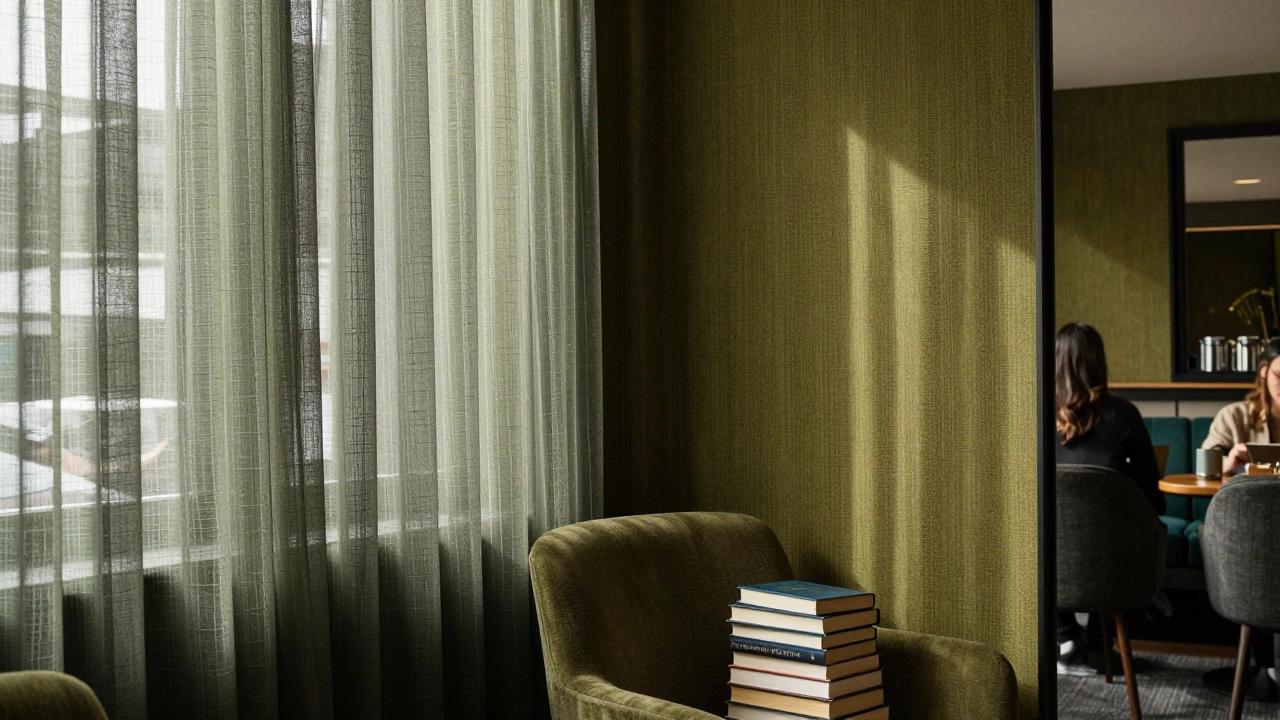
In Christchurch, a boutique hotel used a deep green grasscloth in their reading lounge. Guests keep asking about it. The owner says it’s the most photographed wall in the building - not because it’s flashy, but because it feels like a quiet hug.
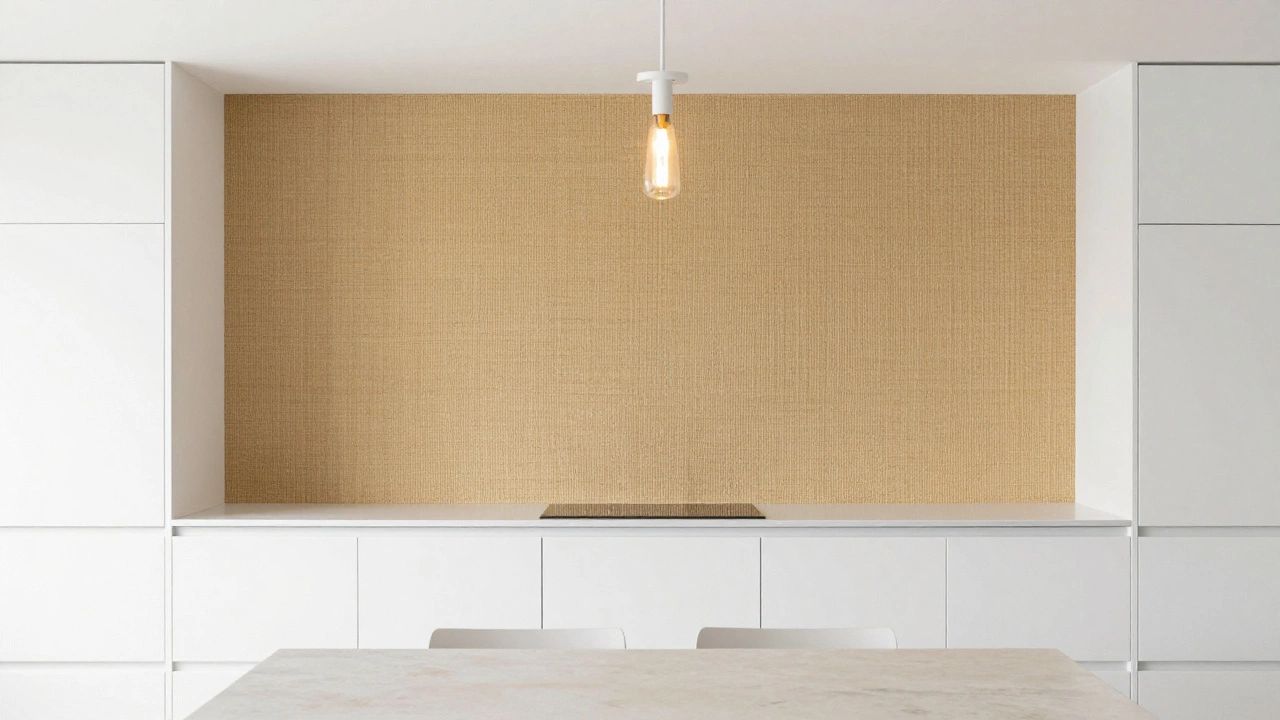
Even in minimalist homes, designers are using it as a single accent wall. One client in Auckland had a white, all-glass kitchen. The only texture? A single grasscloth panel behind the dining nook. It’s the only thing in the room that doesn’t echo.
Final verdict: Is it out of style?
No. Grasscloth wallpaper isn’t out of style. It’s back - but not as a throwback. It’s back because it solves problems modern interiors didn’t even know they had.
It brings calm. It absorbs noise. It ages gracefully. It’s sustainable. And it doesn’t look like anything else.
If you’re thinking about it for your next project, don’t ask if it’s trendy. Ask if it feels right. If the room needs warmth without clutter, if the light feels too harsh, if the walls feel too flat - then grasscloth isn’t just a good choice. It’s the right one.
Is grasscloth wallpaper hard to maintain?
Not anymore. Modern grasscloth has moisture-resistant backings and can be cleaned with a soft, dry brush or a microfiber cloth. Avoid water or vacuum brushes. Dust it gently every few months. If it gets stained, professional restoration is usually possible - and often cheaper than replacing the whole wall.
Can I install grasscloth wallpaper myself?
Yes, but only if you’re patient and precise. Peel-and-stick versions are easier, but traditional paste-on types require a steady hand, a smoothing tool, and a level surface. The adhesive dries fast, and seams are visible if not aligned perfectly. Most homeowners hire a pro - especially if the walls aren’t perfectly smooth. Installation typically takes a full day for one room.
Does grasscloth wallpaper fade in sunlight?
Natural fibers can fade over time, but today’s products are often treated with UV-resistant coatings. Still, avoid direct sun on the same wall for years. Use curtains or blinds if the room gets strong afternoon light. Fading isn’t always bad - some people like the soft, weathered look it creates. But if you want consistent color, choose darker dyes or place it in shaded areas.
Is grasscloth wallpaper eco-friendly?
Generally, yes. Most grasscloth is made from renewable, biodegradable fibers like bamboo, jute, hemp, and seagrass. Production uses minimal water and no synthetic chemicals. The glue used is often plant-based. Compare that to vinyl wallpaper, which is plastic-based and can off-gas for years. Grasscloth is one of the most sustainable wall treatments available.
How long does grasscloth wallpaper last?
With proper care, grasscloth can last 20-30 years. It doesn’t peel or crack like vinyl. It doesn’t yellow like old paint. Over time, it develops a patina - a soft, lived-in look that adds character. In historic homes, it’s not unusual to find original grasscloth still intact after 50+ years. That’s durability most wall treatments can’t match.