TV Wall Color Advisor
Find Your Perfect Wall Color
Answer these 3 questions to determine if dark or light walls work best for your TV setup.
Your Recommendation
When you’re setting up your TV, the wall behind it matters more than you think. It’s not just about hiding wires or matching the couch. The color of that wall affects how you experience your movies, your shows, and even how tired your eyes feel after an evening binge. A dark wall can make your screen pop. A light wall can make the room feel bigger. But choosing the wrong one? You’ll end up with glare, eye strain, or a space that just feels off.
Why the TV wall color changes everything
Your TV screen is a light source. When it’s on, it’s the brightest thing in the room. If the wall behind it is white or cream, that light bounces back-softly, but enough to make the blacks on your screen look gray. This is called luminance contrast. It’s why you can’t see details in dark scenes during a thriller, even on a 4K OLED. Dark walls absorb that light. They let the screen’s blacks stay true. It’s not magic. It’s physics.
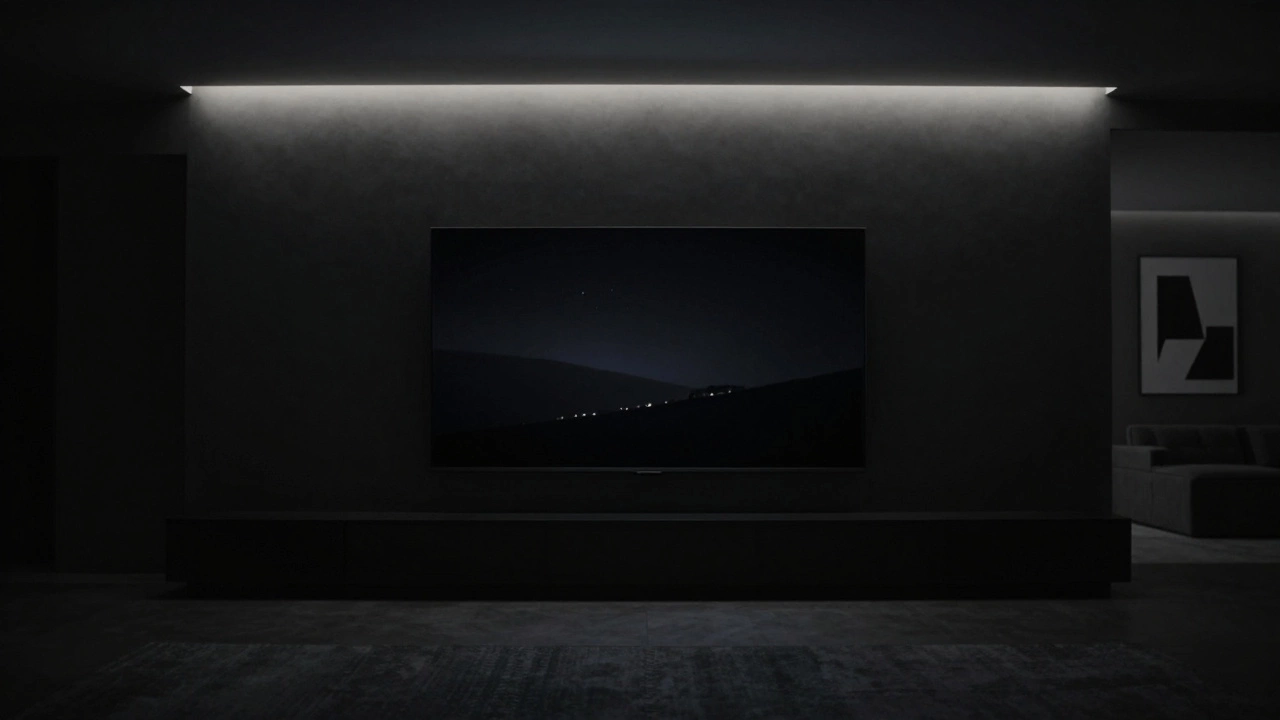
Try this: turn off all the lights, play a scene with deep shadows-like a night chase in Blade Runner 2049. Now look at your TV wall. If it’s light, you’ll notice a faint glow around the edges of the screen. That’s wasted contrast. If it’s dark, the image feels like it’s floating in space. That’s immersion.
Dark walls: the cinematic choice
Dark walls-navy, charcoal, even deep green-are the go-to for home theaters. They’re used in professional cinemas for a reason. They reduce reflections. They make the screen the center of attention. If you watch a lot of movies, binge Netflix dramas, or play video games with rich visuals, a dark TV wall is your best friend.
But it’s not just about color. Texture matters too. A matte finish absorbs light. A glossy paint? That’s a mirror waiting to happen. Avoid anything shiny. Even a satin finish can cause problems in rooms with windows or overhead lights.
Dark walls also make wall art behind the TV look intentional. A single large piece-a black-and-white photo, a minimalist abstract-becomes part of the design, not a distraction. You don’t need to cover the whole wall. Just enough to frame the screen.
Light walls: the airy alternative
Not everyone wants a theater. Maybe your living room is small. Maybe you like natural light. Maybe you use your TV during the day more than at night. That’s where light walls shine.
Soft whites, warm beiges, or light greys can make a room feel open and welcoming. They reflect ambient light, which helps balance brightness when the TV is off. That’s important if your space doubles as a reading nook or a place for morning coffee.
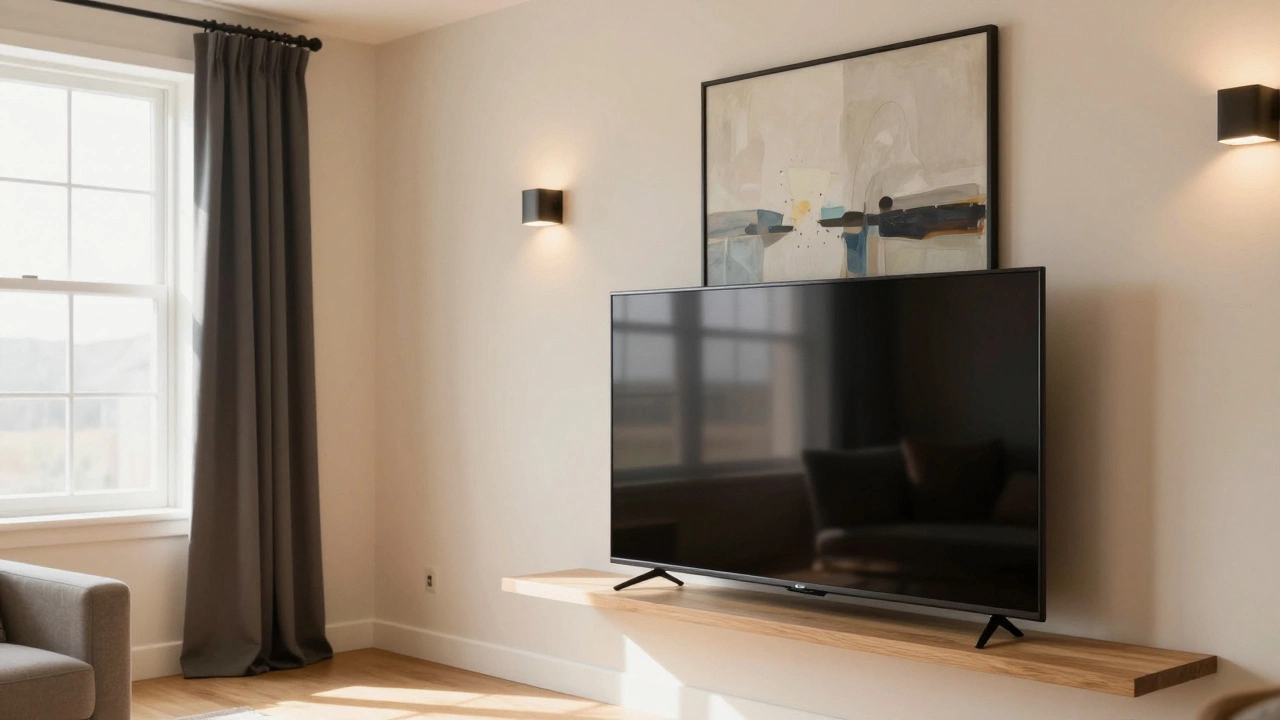
The catch? You need to manage light sources. Avoid placing your TV opposite a window. Use blackout curtains. Install dimmable lights. And never use bright overhead spots directly behind the TV. A soft, indirect glow from floor or wall sconces works better.
Wall art on a light wall? Go for contrast. A bold, dark-framed print or a metallic mirror can anchor the space without competing with the screen. Avoid busy patterns or bright colors behind the TV-they’ll pull your eyes away from the show.
What about TV placement and lighting?
Color isn’t the only factor. Where you put the TV matters just as much. Mounting it too high? You’ll get neck strain. Placing it in a corner with windows on both sides? You’ll fight glare all day.
Here’s what works in real homes:
- Mount the TV at eye level when seated-about 40 to 48 inches from the floor to the center of the screen.
- Keep it at least 3 feet away from windows to reduce direct sunlight hitting the screen.
- Use ambient lighting behind the TV. A simple LED strip on the top edge of the wall reduces eye fatigue. It’s called bias lighting, and it’s used by professionals.
- Never use a bright lamp directly behind the TV. It creates a halo effect.
Even with a dark wall, poor lighting can ruin the experience. The same goes for a light wall-without control, it’ll wash out your picture.
What do experts and real users say?
THX, the company behind movie theater calibration standards, recommends a dark surround for home theaters. Their research shows viewers report higher satisfaction with contrast and color accuracy when the wall behind the TV is dark.
But real people aren’t all movie buffs. A 2024 survey of 1,200 homeowners in the U.S. and New Zealand found that 68% of people who watched TV mostly at night preferred dark walls. The rest-mostly those who used their TV during daylight hours-preferred light walls for a more open feel.
One Auckland homeowner, Sarah L., told us: "I went with a deep charcoal wall after my OLED looked washed out on white. I didn’t realize how much I was missing until I saw the difference. Now I watch films like I’m in a cinema. My kids say it’s "cooler," which is the highest praise."
What if you already have a light wall?
You don’t need to repaint. Here’s how to fix it without a full renovation:
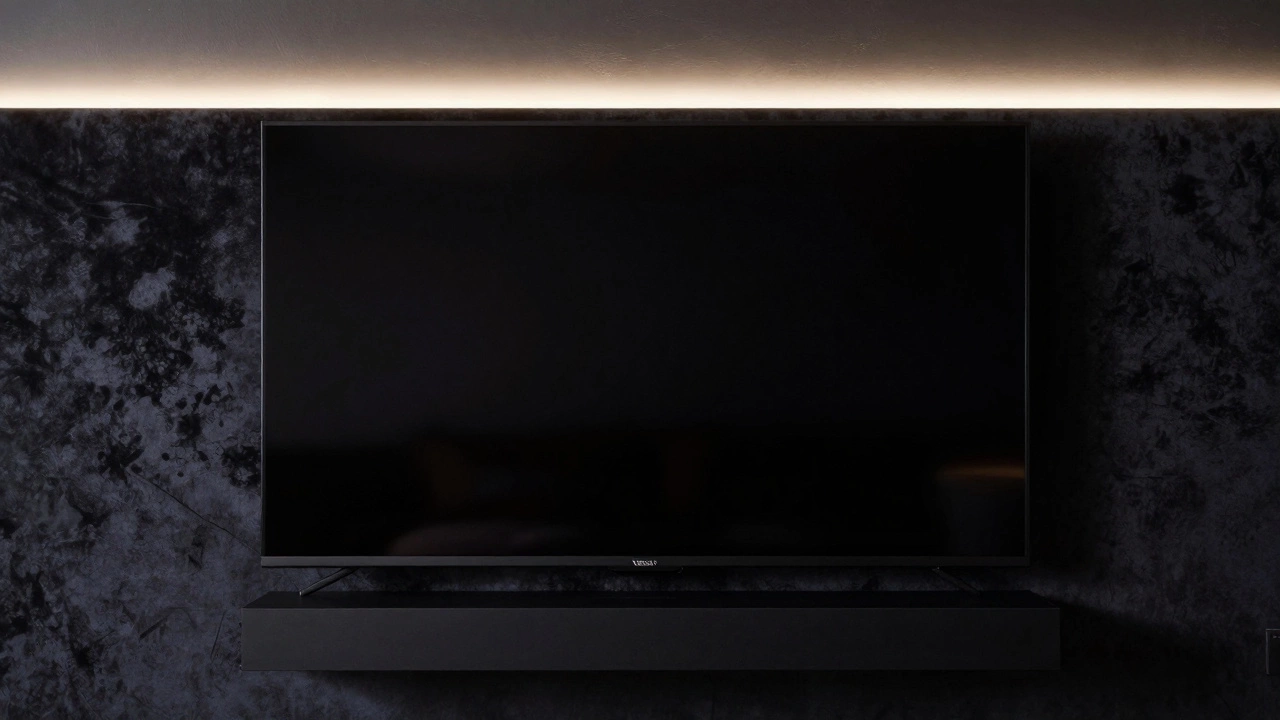
- Install a dark TV backdrop panel. These are thin, adhesive panels made of velvet or felt. They stick to the wall behind the TV and absorb light. Brands like AcousticSheep and DarkWall make them in sizes for most TVs.
- Use a floating media unit with a dark finish. Place it under the TV. The dark surface below creates a visual buffer.
- Add bias lighting. A simple USB-powered LED strip behind the TV costs under $30 and instantly improves contrast perception.
- Hang a large dark artwork or tapestry behind the TV. Make sure it’s at least 6 inches wider than the screen on each side.
These fixes work because they mimic the light-absorbing effect of a dark wall without changing your whole room.
Final decision: dark or light?
Ask yourself these three questions:
- When do you watch TV most? Night? Go dark. Daytime? Light can work.
- What’s your main use? Movies and games? Dark. Casual shows and family time? Light is fine.
- How big is the room? Small space? Light walls help it feel bigger. Large room? Dark walls add depth.
If you’re still unsure, test it. Tape a large piece of dark fabric or a black sheet to the wall behind your TV. Watch a movie. Then switch to a white sheet. Notice the difference in how the screen looks. That’s your answer.
There’s no universal rule. But there is a right choice for your space. And it’s not about trends. It’s about how your eyes feel after two hours of watching.