Incandescent Bulbs: What They Are, Why They're Phased Out, and What Replaces Them
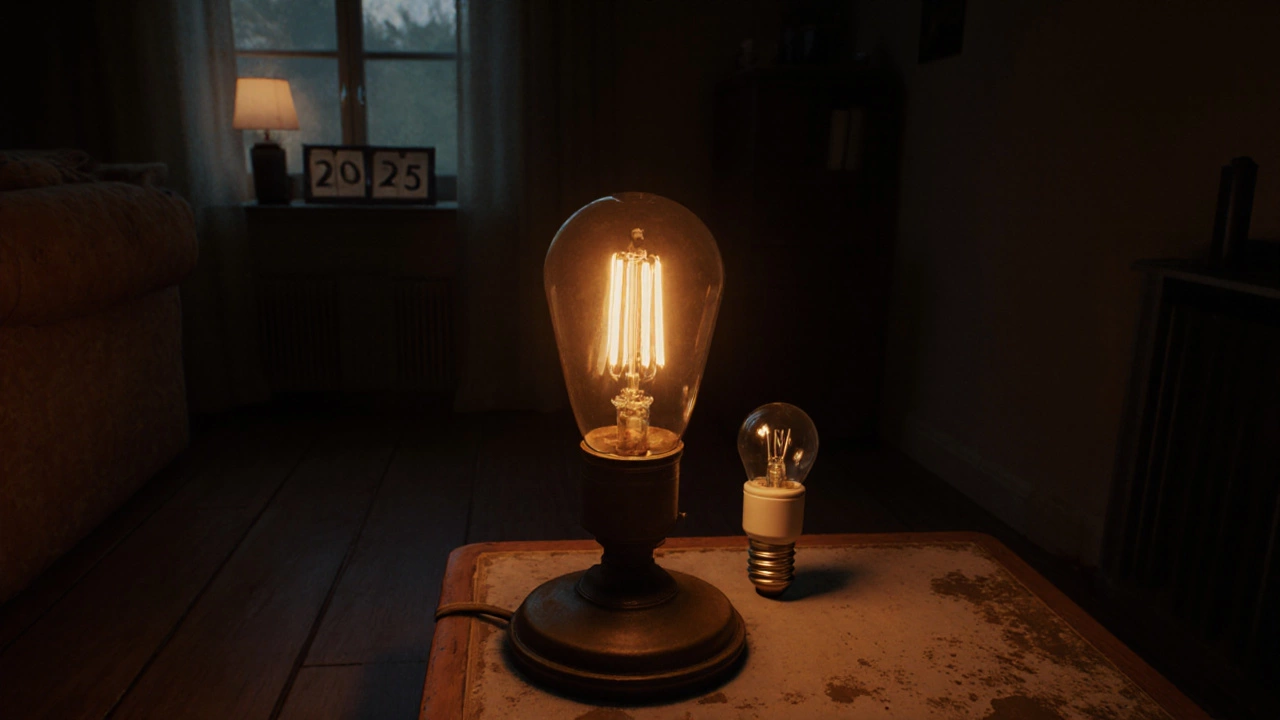
When you think of a classic light bulb—the warm, yellow glow that fills a room—you’re thinking of an incandescent bulb, a light source that produces illumination by heating a thin wire filament until it glows. Also known as a traditional filament bulb, it was the standard for over 100 years, from kitchen countertops to bedside lamps. But today, you’ll struggle to find new ones on store shelves.
Why? Because energy efficiency, the measure of how much light you get per unit of electricity used became a global priority. Incandescent bulbs waste over 90% of their energy as heat, not light. That’s why countries like the UK, US, and EU started phasing them out. In their place came LED bulbs, solid-state lighting that uses semiconductors to produce light with minimal heat, and to a lesser extent, halogen bulbs, a more efficient cousin of incandescent that still uses a filament but runs hotter and lasts longer. These alternatives use up to 85% less power and last 10 to 25 times longer.
Even though incandescent bulbs give off a cozy, flattering light—perfect for dining rooms or vintage fixtures—they’re no longer practical for everyday use. If you’ve ever replaced a bulb and wondered why the new one looks different, or why your electricity bill dropped after switching, that’s the shift happening across homes. The real question isn’t whether to switch—it’s how to pick the right replacement without losing the warmth you love.
Below, you’ll find real-world advice from people who’ve made the switch: how to match brightness without the old bulbs, what color temperatures feel closest to incandescent, and which products actually deliver on that soft glow. You’ll also see how lighting choices tie into bigger home upgrades—from kitchen remodels to bathroom renovations—because light doesn’t just illuminate a room, it shapes how you live in it.
What Is the Most Inefficient Type of Residential Lighting?
Incandescent bulbs are the most inefficient residential lighting option, wasting over 90% of energy as heat. Switching to LEDs cuts lighting bills by up to 90% and lasts decades longer.