Construction Cost Calculator
Cost Comparison Calculator
Estimate costs based on the article's construction cost ranges
When people talk about commercial construction, they’re usually thinking about office towers, retail malls, hotels, or warehouses-buildings made for business, not living. But what’s the opposite of that? It’s not just ‘not commercial.’ It’s something much more specific: residential construction.
Residential Construction Is the Direct Opposite
Residential construction builds homes. Single-family houses, duplexes, apartments, townhouses, condos-these are all designed for people to live in. That’s the core difference. Commercial buildings are built to make money through operations: renting space, selling goods, hosting customers. Residential buildings are built to provide shelter, comfort, and privacy for families and individuals.
Think about it this way: if you walk into a grocery store, the walls, lighting, and layout are all optimized to keep shoppers moving, encourage spending, and meet health codes for food handling. Now walk into a bedroom. The lighting is softer. The walls might have personal art. The floor is warm underfoot. The design doesn’t aim to maximize foot traffic-it aims to help you relax. That’s residential construction in action.
Key Differences Between Commercial and Residential Construction
The contrast goes way beyond purpose. Here’s how the two types of building differ in practice:
- Scale and size: Commercial projects often involve tens of thousands of square feet. A single Walmart can be over 100,000 sq ft. A typical single-family home is under 2,500 sq ft.
- Building codes: Commercial buildings follow stricter fire safety, accessibility, and structural codes. They need multiple exits, sprinkler systems, ADA-compliant restrooms, and load-bearing designs for heavy equipment or crowds. Residential codes focus on safety for smaller groups-like smoke detectors in every bedroom and handrails on stairs.
- Materials: Commercial projects use steel frames, concrete slabs, and heavy-duty roofing to handle high traffic and long-term wear. Residential builds use wood framing, drywall, and vinyl or asphalt shingles-cheaper, easier to work with, and sufficient for daily living.
- Timeline: A commercial project can take 12 to 24 months. A custom home? Usually 6 to 10 months. Commercial jobs involve more permits, inspections, and coordination with multiple tenants or businesses.
- Financing: Commercial construction loans are larger, riskier, and tied to projected income. Residential mortgages are based on the buyer’s credit and income, not the building’s future revenue.
There’s no gray area here: if a building’s primary function is to house people in their daily lives, it’s residential. If it’s meant to support business activity, it’s commercial.
What About Other Types of Construction?
You might hear terms like ‘industrial construction’ or ‘institutional construction.’ Are those opposites too? Not exactly.
Industrial construction includes factories, power plants, refineries-buildings made for manufacturing or heavy operations. These are still commercial in nature because they’re profit-driven and not meant for living. Institutional construction covers schools, hospitals, government buildings, and churches. These are non-commercial in the sense that they don’t sell products or services for profit, but they’re still not residential. They serve public or organizational needs, not private living.
So while industrial and institutional buildings aren’t commercial in the retail or office sense, they still fall under the broader category of non-residential construction. That means residential construction remains the only true opposite.
Why Does This Matter?
Knowing the difference isn’t just academic. It affects how you hire contractors, what permits you need, how you budget, and even what kind of insurance you buy.
For example, if you’re turning an old storefront into an apartment, you’re changing the building’s classification. That triggers a whole new set of codes, inspections, and fees. A contractor who specializes in office renovations won’t necessarily know how to install a residential HVAC system that meets energy efficiency standards for homes.
Homeowners trying to add a rental unit to their property often hit roadblocks because they didn’t realize their project shifted from residential to mixed-use-a hybrid category with its own rules. Meanwhile, developers building a strip mall might waste months trying to use residential-grade materials, only to fail inspection because the floor joists aren’t rated for retail foot traffic.
Common Misconceptions
Some people think ‘residential’ means only single-family homes. It doesn’t. High-rise apartment buildings in downtown areas are still residential, even if they’re 20 stories tall. The key is who lives there-not how many.
Others assume that if a building has windows, it’s residential. Nope. A warehouse with skylights is still commercial. Or if a building has a kitchen, it must be for living. Not true. A restaurant kitchen is commercial. A home kitchen is residential. The difference is in use, not features.
And don’t confuse ‘non-commercial’ with ‘not for profit.’ A nonprofit daycare center is non-commercial, but it’s still institutional construction-not residential. It’s not a home. It’s a place where children are cared for during the day.
Real-World Examples
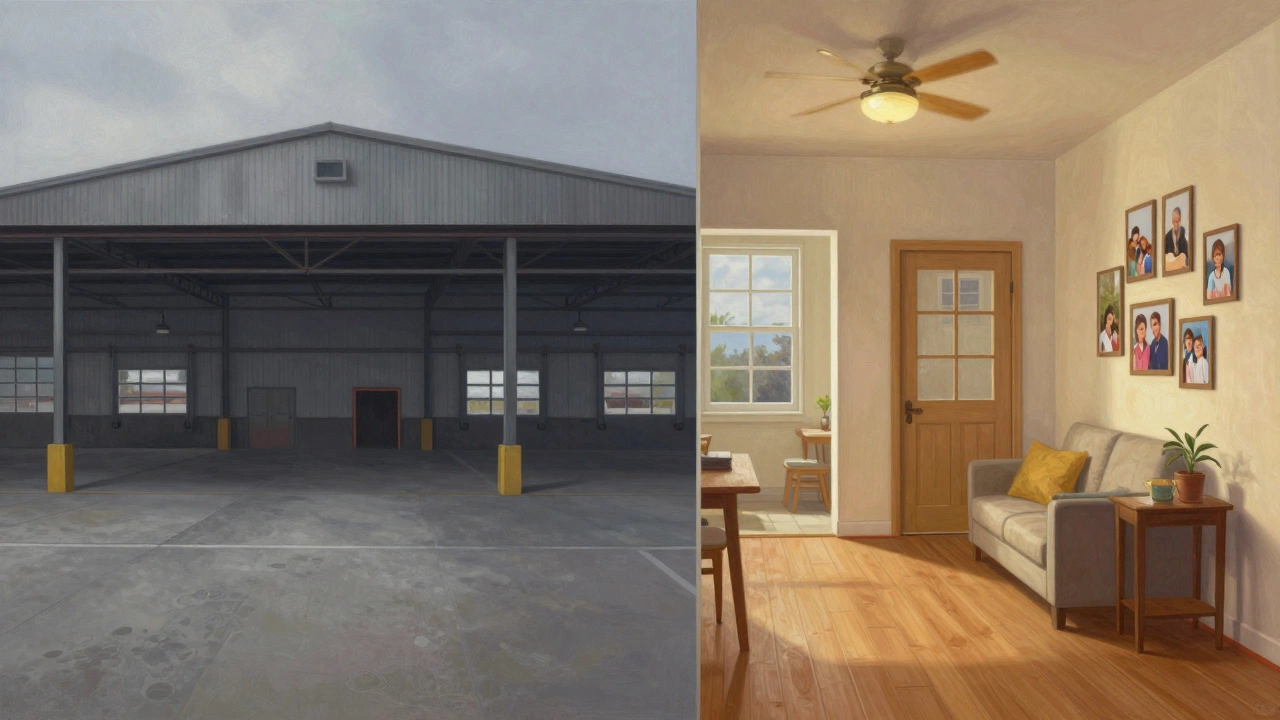
Let’s look at two buildings side by side:
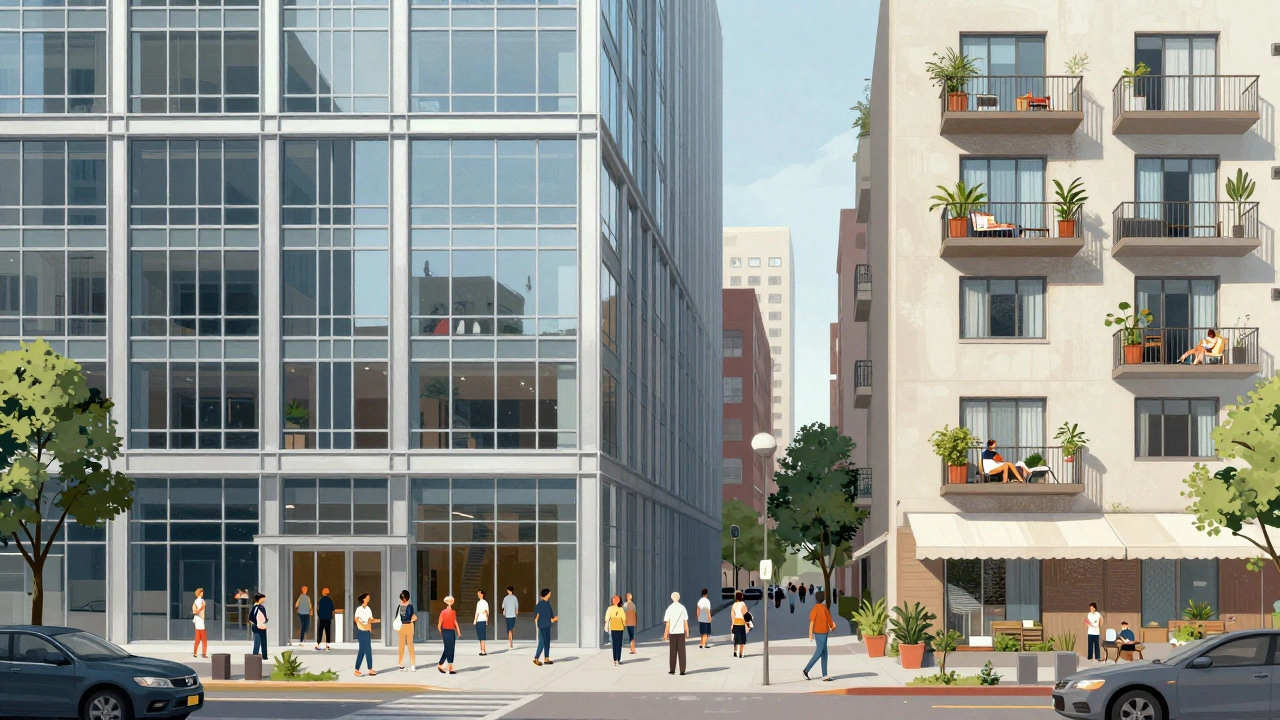
- Building A: A three-story brick building in downtown Chicago with retail space on the ground floor and 12 luxury apartments above. This is a mixed-use building. The retail portion is commercial. The apartments are residential. They’re two different construction types in one structure.
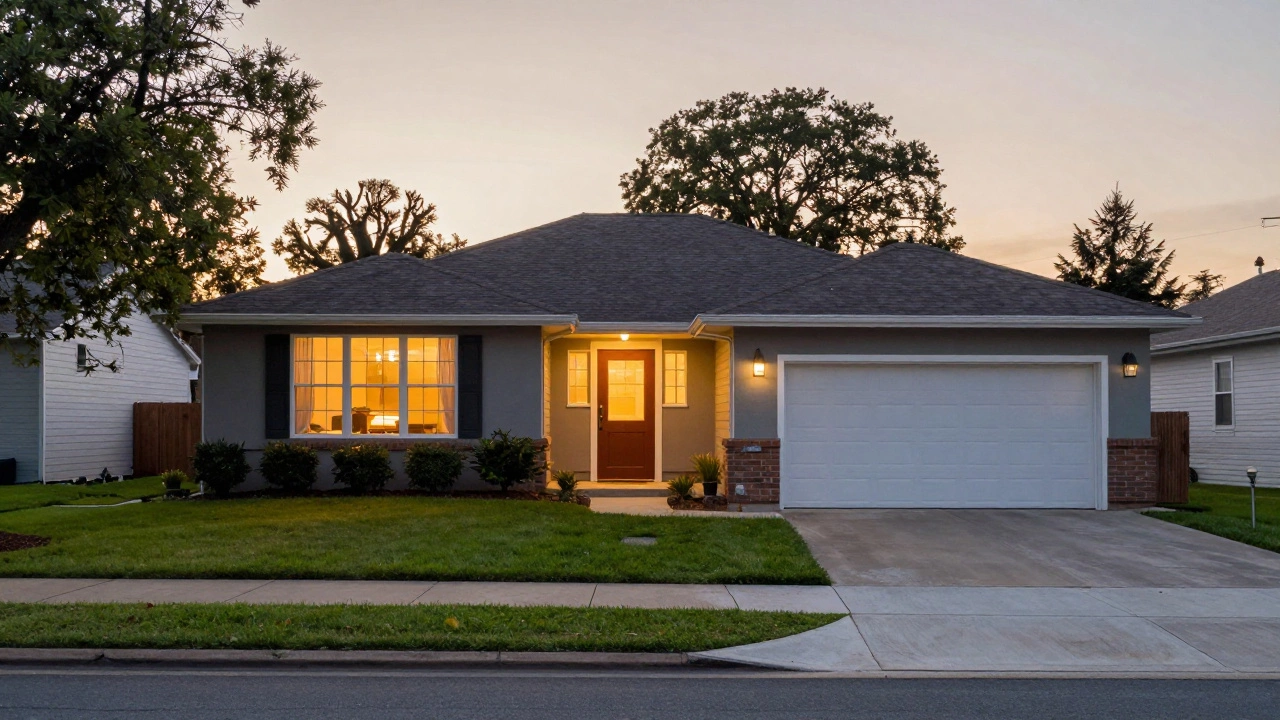
- Building B: A standalone two-story house with a garage, backyard, and three bedrooms in suburban Ohio. This is purely residential.
- Building C: A one-story warehouse with loading docks, concrete floors, and no windows, used to store inventory for an online retailer. This is commercial, even though no people work there daily.
The only building here that’s the true opposite of commercial construction is Building B.
What You Need to Know Before Starting a Project
If you’re planning to build or renovate, ask yourself: who will use this space, and how?
- If it’s for living, sleeping, cooking, or personal use-it’s residential.
- If it’s for selling, serving, manufacturing, or running a business-it’s commercial.
That simple question saves time, money, and headaches. Don’t assume your local building department will guide you. Many don’t. You need to know the classification before you submit plans.
Also, don’t underestimate the cost difference. Residential construction typically costs $150-$300 per square foot in the U.S. Commercial construction? $200-$500+ per square foot, depending on the type. A hospital wing can cost over $1,000 per square foot. That’s because of the specialized systems: medical gas lines, radiation shielding, sterile environments.
Residential construction doesn’t need any of that. It needs insulation, drywall, plumbing that doesn’t freeze, and a roof that keeps rain out. That’s it.
Final Thought
The opposite of commercial construction isn’t just another category-it’s a completely different mindset. One is about efficiency, volume, and profit. The other is about comfort, safety, and personal life. You can’t mix them without understanding the rules. And if you’re trying to build, buy, or renovate, getting this right from the start makes all the difference.
Is residential construction the only opposite of commercial construction?
Yes, in practical and legal terms, residential construction is the direct opposite. Other types like industrial or institutional are non-commercial, but they’re not designed for living. Only residential buildings serve the purpose of housing people in their daily lives.
Can a building be both commercial and residential?
Yes, and they’re called mixed-use buildings. A common example is a ground-floor coffee shop with apartments above. Each part follows its own construction code: the shop must meet commercial standards for ventilation and fire exits, while the apartments follow residential codes for bedrooms and insulation. The building as a whole is classified as mixed-use, but the two parts are still distinct in purpose and regulation.
Why do commercial buildings cost more to build than homes?
Commercial buildings require stronger materials, more complex systems, and higher safety standards. They need fire suppression systems, ADA-compliant access, heavy-duty HVAC, and structural supports for large crowds or equipment. Homes don’t need any of that. They’re built for fewer people, lower loads, and simpler needs-so the materials and labor are less expensive.
Are tiny homes considered residential construction?
Yes. Tiny homes, whether on wheels or a foundation, are classified as residential if they’re used for permanent living. They must meet the same basic residential codes for electrical, plumbing, and safety-even if they’re under 400 square feet. Some local codes have special rules for tiny homes, but they’re still residential by definition.
What if I want to turn my garage into a home office? Is that commercial?
Not necessarily. If you’re working from home alone and not seeing clients regularly, it’s still considered part of your residential space. But if you start hosting clients daily, selling products on-site, or hiring employees to work there, you may need to reclassify it as commercial. Local zoning laws vary, so check with your city before making major changes.