Kitchen Space Calculator
Kitchen Space Calculator
Calculate if your kitchen can accommodate modern dining alternatives. Input your kitchen dimensions and get recommendations for space-saving solutions.
Most people think a kitchen table is the only way to eat in the kitchen. But if you’re living in a small apartment, renovating on a budget, or just tired of the same old setup, there are better, smarter, and often more stylish ways to eat in your kitchen. You don’t need a bulky table to have a functional, inviting dining spot. In fact, many modern homes in Auckland and beyond are ditching the traditional table altogether-and they’re not missing a thing.
Kitchen Island with Bar Stools
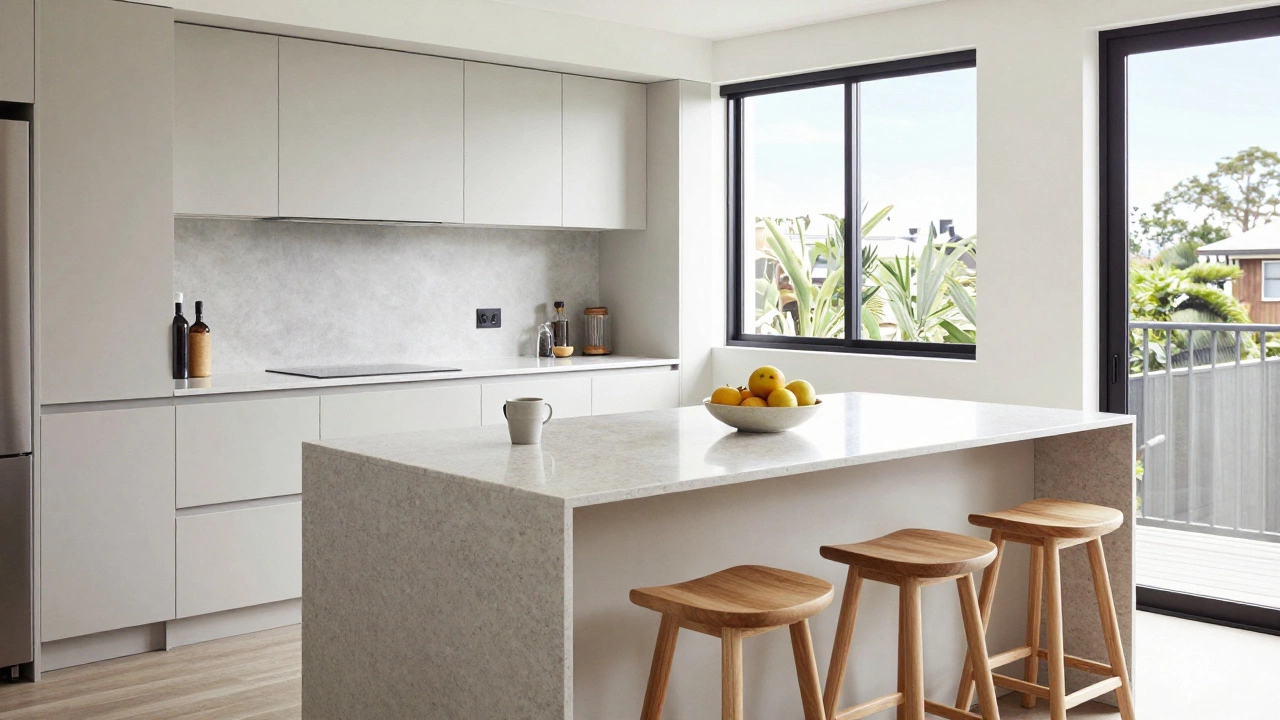
The most popular replacement for a kitchen table is a kitchen island with bar stools. It’s not just trendy-it’s practical. A well-designed island gives you prep space, storage, and seating all in one. You can fit three to four people comfortably, and it works great for quick breakfasts, casual dinners, or even homework after school.
Look for islands with a countertop that’s at least 40 inches deep. That’s enough room for plates, glasses, and elbow space without feeling cramped. Pair it with stools that have back support-no one wants to slouch through their morning coffee. In smaller kitchens, choose stools that tuck neatly underneath when not in use. Brands like IKEA and local New Zealand makers like Timberline a New Zealand-based furniture maker known for sustainable timber designs offer slim, sturdy options that won’t eat up floor space.
One real-life example: a couple in Ponsonby replaced their 6-foot table with a 7-foot island. They gained 3 square meters of prep space, added under-counter drawers, and now eat there every night. No more moving chairs around. No more tripping over legs. Just clean lines and easy cleanup.
Breakfast Bar Against a Wall
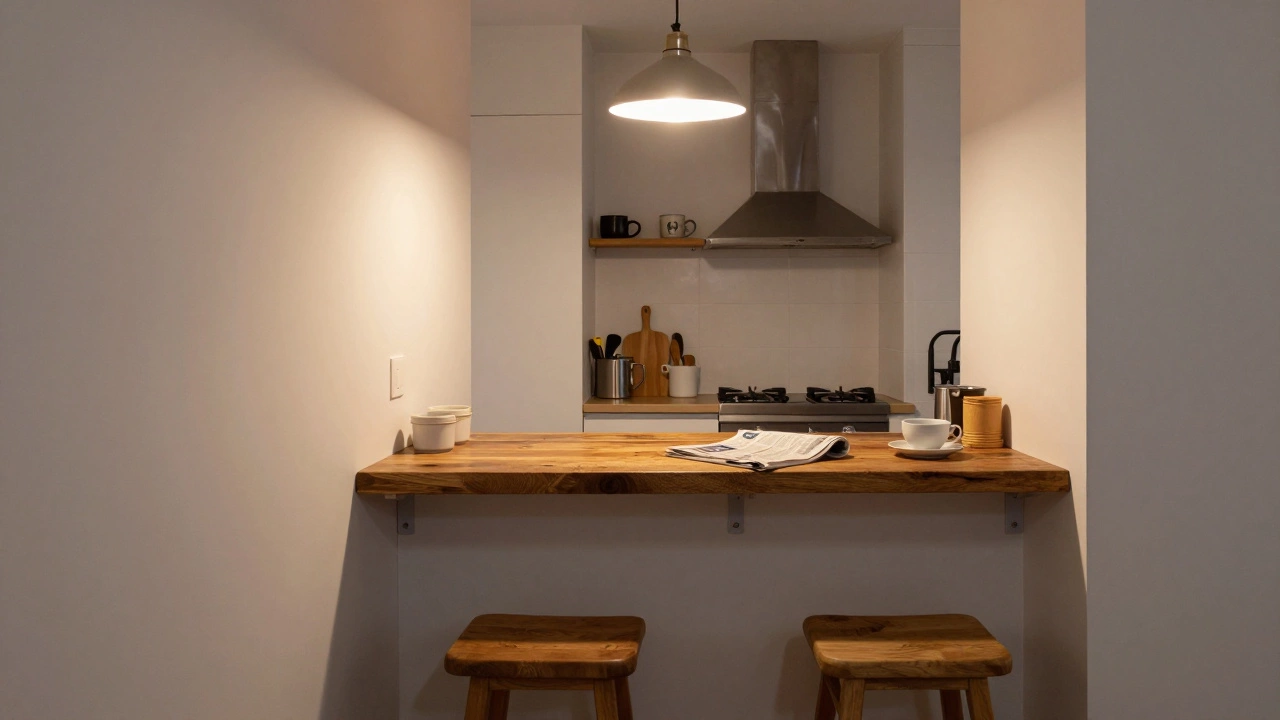
If you don’t have room for a center island, a wall-mounted breakfast bar is your quiet hero. It’s cheap, easy to install, and takes up almost no floor space. All you need is a few feet of counter space along a wall, some sturdy brackets, and two or three stools.
Use the same material as your countertops for a seamless look-quartz, laminate, or even reclaimed wood. Install a small shelf underneath for mugs or napkins. Add a pendant light above to make it feel intentional, not like an afterthought.
This setup works best in galley kitchens, studio apartments, or anywhere you need a quick bite without committing to a full dining zone. In Wellington and Christchurch, it’s become the go-to for young professionals who cook often but rarely host dinner parties. It’s not fancy, but it’s real. And it’s functional.
Foldable or Extendable Dining Solutions
What if you want the option of a table-but only when you need it? Foldable and extendable options give you the best of both worlds. Wall-mounted drop-leaf tables, like the Bifold Table a compact, wall-hung dining solution with hidden hinges and fold-down leaves, disappear into the wall when not in use. You can pull it down for four people, then fold it back up in seconds.
There are also rolling carts with built-in tabletops, like the Nordic Rolltop a mobile kitchen dining cart with a fold-out surface and storage below. Slide it out for meals, tuck it away after. Perfect for renters or anyone who doesn’t want permanent fixtures.
One Auckland homeowner used a fold-down table in her tiny studio. She eats there, works on it, and even uses it as a craft station. When folded, it looks like a sleek shelf. No one would guess it’s a dining table. That’s the power of smart design.
Use Your Coffee Table as a Dining Spot
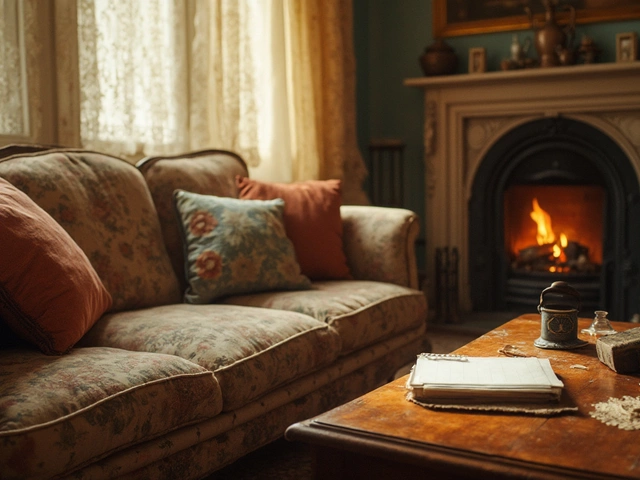
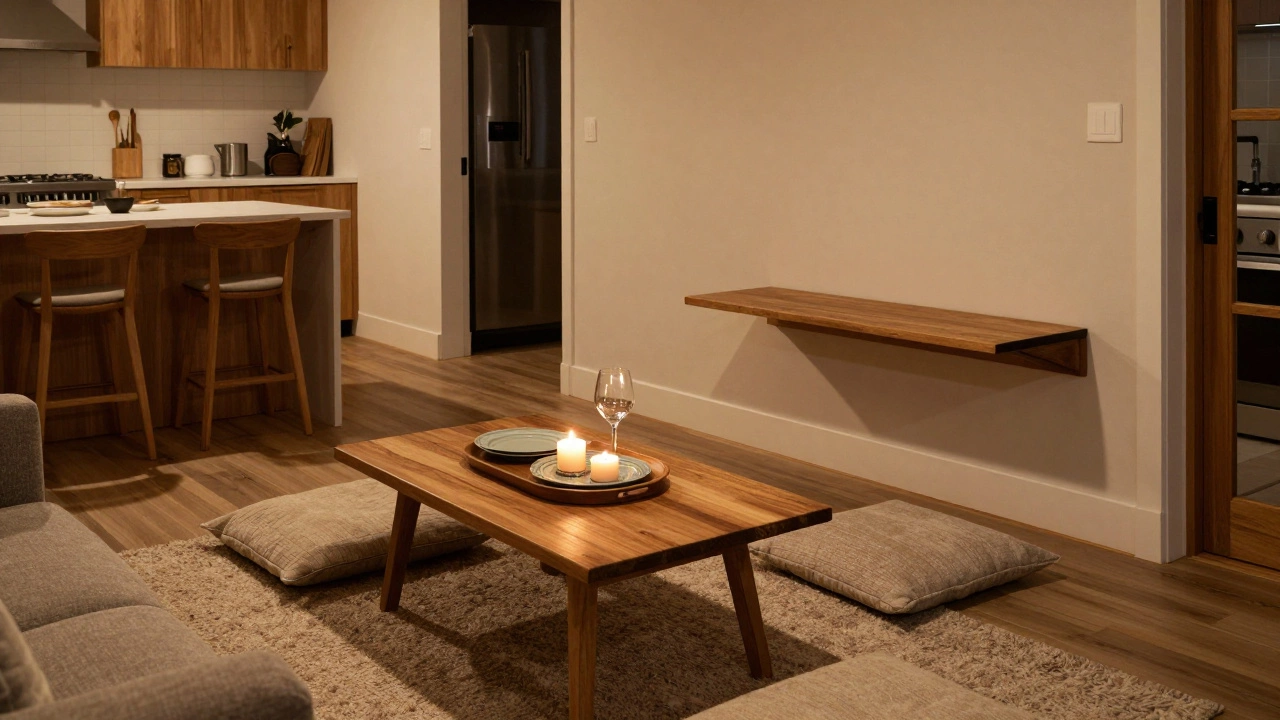
Yes, you read that right. If you have a low, sturdy coffee table and a few floor cushions or poufs, you can turn your living area into an impromptu dining zone. It’s not for every meal, but it works great for weekend brunches, movie nights with snacks, or solo dinners when you’re not feeling formal.
This works best in open-plan homes where the kitchen flows into the living room. Use trays to keep plates and glasses contained. Add a small side table nearby for wine or coffee. It’s casual, cozy, and totally flexible.
Don’t think of it as a compromise. Think of it as a lifestyle choice. In Japan, many families eat off low tables on tatami mats. In New Zealand, we’re slowly catching on. It’s not about having a table-it’s about having space to enjoy your food.
Reclaimed Wood Slabs or Floating Shelves
For those who love rustic charm, a reclaimed wood slab mounted on brackets can double as a dining surface. You can find these at salvage yards or local artisans. A 1.2-meter slab, mounted 75 cm off the floor, becomes a unique, conversation-starting dining ledge.
Pair it with matching wooden stools or even just a bench. The slab becomes the focal point-no need for matching chairs or a full table. It’s raw, real, and full of character. Plus, it’s often cheaper than buying a new table.
One designer in Mt. Eden turned an old railway sleeper into a dining ledge. She uses it for two people, and guests love how it feels like eating at a forest table. It’s not for every kitchen, but if you like handmade, one-of-a-kind pieces, this is a winner.
Why People Are Moving Away from Kitchen Tables
Why is this trend growing? Because kitchens aren’t just for cooking anymore. They’re the heart of the home. People want flexibility. They want to cook, chat, work, and eat in the same space without clutter.
Traditional tables take up space. They’re hard to clean under. They collect junk. And if you live alone or with one other person, you rarely need six seats.
Studies from the New Zealand Interior Design Association show that 68% of urban homeowners under 40 now prefer bar-style or wall-mounted dining over traditional tables. Why? Because they’re easier to clean, more adaptable, and fit better in smaller homes.
It’s not about giving up dining. It’s about rethinking how you do it.
What to Avoid
Not every alternative works for every home. Here’s what to skip:
- Stools without back support-your lower back will thank you later.
- Too-tall countertops-your arms will ache if the surface is higher than 90 cm.
- Flimsy foldable tables that wobble-invest in solid hinges and weight-rated brackets.
- Using a glass-top coffee table for meals-too slippery, too cold, too fragile.
Also, avoid trying to force a table into a space that’s too small. If you’re constantly bumping into chairs or blocking the sink, you’re making your kitchen harder to use-not better.
Final Tip: Think Like a Designer
Ask yourself: Where do I actually eat in my kitchen? Do I sit down for a full meal, or do I grab a quick bite while standing? Are meals social, or are they solo? Do I need storage nearby?
Answer those honestly, and the right solution will become obvious. You don’t need a table. You need a place to eat that fits your rhythm. That’s the real goal.
Try one alternative for a week. See how it feels. Maybe you’ll never go back.
Can I use a kitchen island as a dining table?
Yes, absolutely. A kitchen island with a deep countertop and bar stools is one of the most popular and practical replacements for a traditional kitchen table. It works well for 2-4 people, offers extra storage and prep space, and keeps the kitchen feeling open. Just make sure the counter is at least 40 inches deep and the stools are comfortable for longer meals.
What’s the minimum space needed for a breakfast bar?
You need at least 60 cm of counter space per person for comfortable seating. For two people, aim for 1.2 meters of wall space. Add 90 cm of clearance in front for stools to pull out. That’s about the size of a small wardrobe-tiny, but enough to eat properly.
Are foldable dining tables sturdy enough for daily use?
If they’re well-made, yes. Look for tables with solid wood frames, metal hinges, and a weight rating of at least 50 kg. Avoid cheap MDF or plastic versions. Brands like Timberline and IKEA’s LACK series have proven durable in real homes over years of daily use.
Can I eat at my coffee table if I don’t have a dining area?
You can, especially if you’re eating alone or with one other person. Use trays to keep things tidy, add cushions or floor pillows for comfort, and choose a table with a non-slip surface. It’s not ideal for formal meals, but it’s perfectly fine for casual eats-and it saves space.
Do kitchen table alternatives look cheap or temporary?
Not if you choose quality materials and thoughtful design. A reclaimed wood slab, a custom-built island with solid timber, or a well-placed breakfast bar with matching stools can look more stylish and permanent than a mass-produced table. The key is consistency: match materials to your countertops, lighting, and overall style. It’s not about the form-it’s about the finish.