Floor Color Compatibility Tester
Test Your Floor Compatibility
See how medium gray-brown flooring works with your existing decor. This tool simulates the goldilocks zone recommended in our guide.
The medium gray-brown floor works seamlessly with your selections. This is the goldilocks zone!
✓ Matches wall color without clashing ✓ Complements furniture tones ✓ Works in all lighting conditions
When you’re picking a new floor, you don’t want to regret it in six months. You want something that doesn’t clash with your couch, your walls, your rugs, or the next five furniture trends. The truth? There’s one color that works with just about everything-and it’s not white, not black, and not the trendy charcoal you saw on Pinterest last spring.
Neutral Isn’t Boring-It’s Smart
People think neutral means beige and boring. But neutral doesn’t mean flat. It means flexible. A floor that reads as neutral doesn’t shout. It listens. It lets your furniture, art, and lighting do the talking. And the winner? Medium-toned gray-brown wood. Not light, not dark. Not too warm, not too cool. Just right.
Think of it like a well-worn denim jacket. It goes with a white tee, a black sweater, a floral dress, or a leather vest. That’s the same energy you want from your floor. Gray-brown wood has just enough warmth to feel cozy and just enough gray to stay modern. It hides dust, scratches, and pet hair better than light floors. It doesn’t make a small room feel smaller like dark floors can.
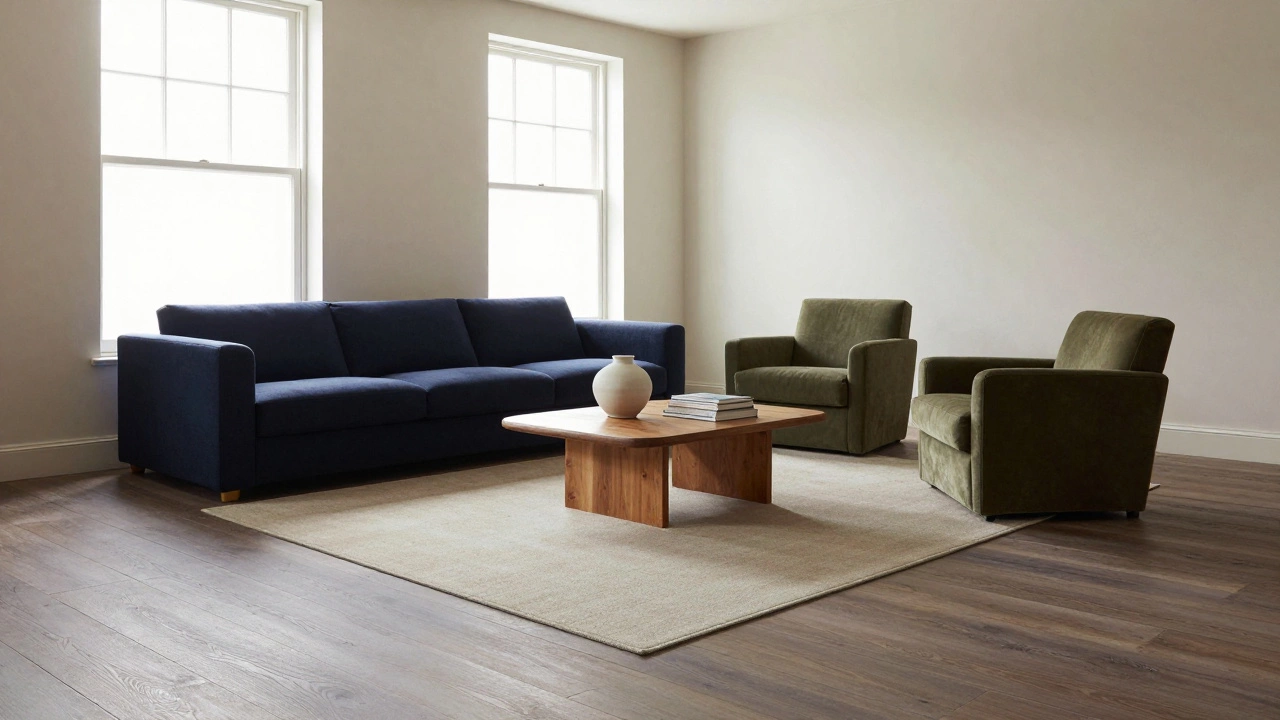
Real-world example: A home in Wellington with this exact floor color. The owner changed sofas three times in five years-first navy, then olive, then cream. The floor stayed the same. No one noticed. No one complained. It just worked.
Why Other Colors Fail
Let’s be honest. White floors? They look amazing in magazines. In real life? They show every footprint, every speck of dirt, every cat’s paw. They turn gray within months if you have kids or a dog. And if you ever want to switch to a darker rug? The contrast looks like a mistake, not a design choice.
Black floors? They’re dramatic. But they’re also a trap. They make rooms feel smaller. They reflect light in weird ways. And if your walls are even slightly off-white, the floor will look dirty, not chic. Plus, they’re expensive to maintain. One scuff from a shoe and you’re calling a refinisher.
Red or walnut? Too much personality. They date fast. They’re tied to a specific era-think 1990s or early 2000s. You might love them now, but in five years, you’ll want to tear them out. Same goes for overly yellow oak. That honey tone was popular in the 2010s. Now it looks like a time capsule.
The Goldilocks Zone: Medium Gray-Brown
There’s a sweet spot between light and dark, warm and cool. That’s where medium gray-brown lives. It’s the color of weathered driftwood after a storm. It’s the tone you find in high-end Scandinavian homes and modern New Zealand cottages alike.
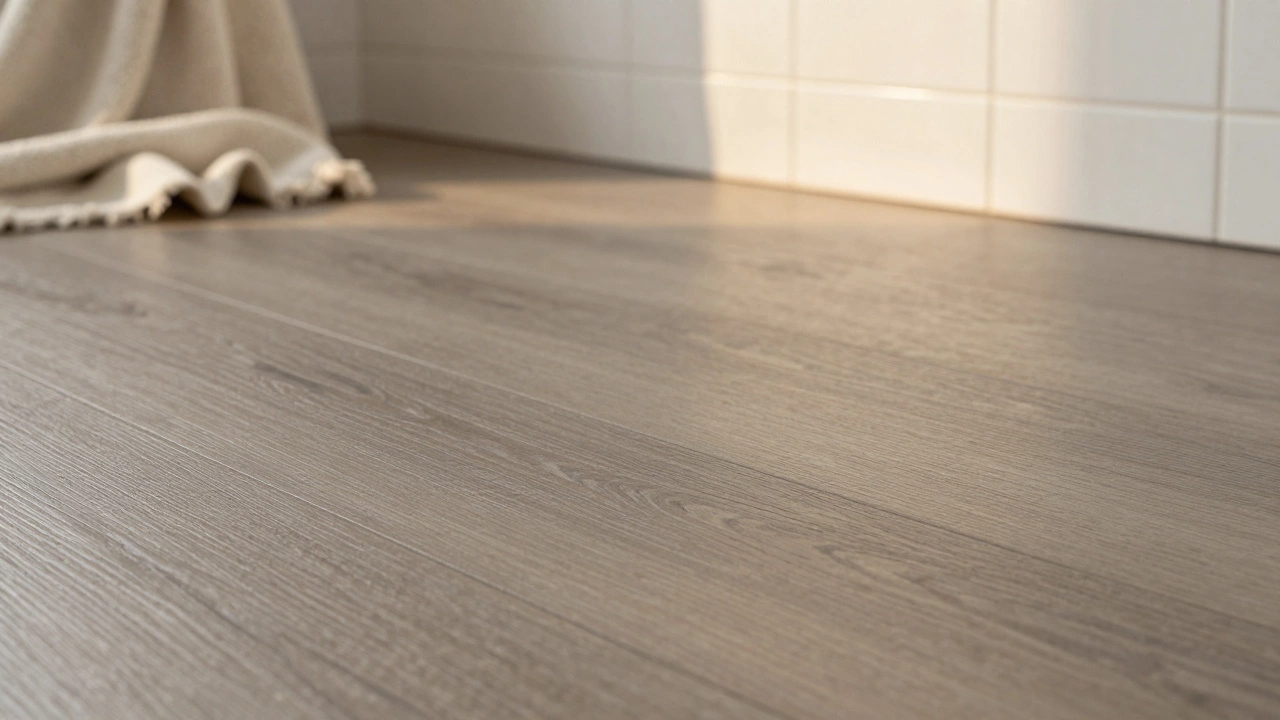
This shade has a value (lightness level) of around 5 to 6 on a 10-point scale. It’s darker than cream but lighter than espresso. The gray undertone cancels out the yellow that makes traditional oak look dated. The brown keeps it from feeling cold like a concrete slab.
Brands like Kahrs, Boral, and Tarkett all have versions of this in their premium engineered wood lines. Look for names like “Storm Oak,” “Smoke Ash,” or “Driftwood.” Don’t just go by the name-ask for a physical sample. Lighting changes everything. Hold it next to your wall paint, your cabinet samples, and your favorite throw blanket. See how it reacts.
What About Tile and Laminate?
Wood isn’t your only option. If you’re in a kitchen or bathroom, tile and laminate are practical. But you still need the same rule: avoid extremes.
For tile, go for a matte finish in a medium taupe or soft gray. Avoid glossy finishes-they amplify dirt and look cheap. Porcelain tiles that mimic wood grain are your best bet. Brands like Daltile and Marazzi have lines that look like real wood but handle moisture better.
Laminate? Skip the super-bright or super-dark options. Look for 7- or 8-layer boards with realistic wood textures. Avoid anything labeled “European White” or “Antique Black.” Those are trends, not foundations.
Pro tip: Pick a floor with a slight texture. It hides imperfections and feels more natural underfoot. Smooth, high-gloss floors look like plastic. And they echo. In a quiet house, that’s annoying.
How to Test Before You Commit
You wouldn’t buy a car without a test drive. Don’t buy a floor without one.
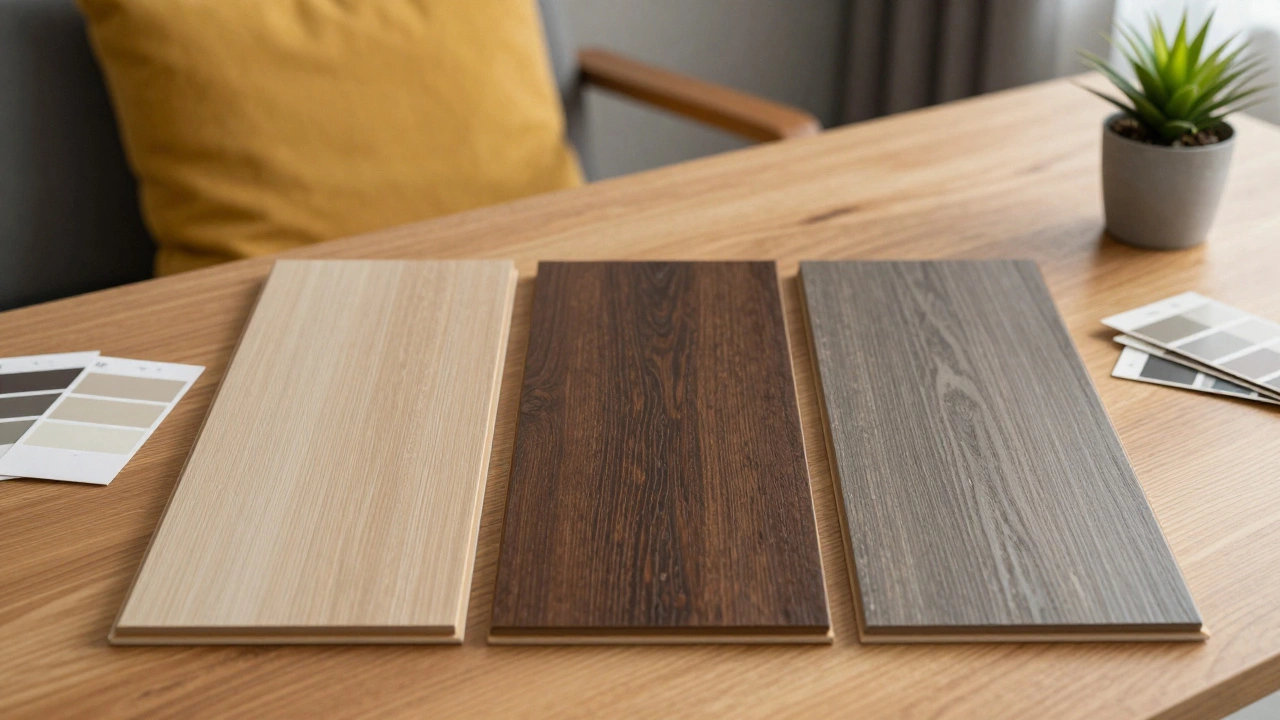
- Get at least three samples: one light, one dark, one medium gray-brown.
- Place them on the floor in different parts of the room-near windows, under lamps, next to furniture.
- Live with them for two full days. Look at them in morning light, afternoon sun, and evening lamps.
- Put your current rug on top. Does it still look good? Does the floor disappear or fight with it?
- Bring in a pillow or throw in your favorite color. Does the floor complement it or compete?
If the medium gray-brown sample fades into the background and lets everything else shine, you’ve found your winner.
What About Trends?
Yes, dark floors are back. Yes, white oak is trending. But trends don’t last. Your floor lasts 20 years. You’re not buying a sweater. You’re buying the foundation of your home.
Here’s what actually lasts: floors that don’t draw attention. Floors that make your space feel calm, not chaotic. Floors that don’t need to be replaced when your taste changes.
The most timeless homes don’t have the most expensive floors. They have the most thoughtful ones. They have floors that say, “I’m here to stay,” not “I’m the star of the show.”
Final Rule: The 80/20 Floor
Here’s a simple trick used by interior designers in Auckland and beyond: 80% of your floor should be neutral. The other 20% can be your statement.
That means: if your floor is medium gray-brown, you can go wild with your rug, your accent wall, your kitchen island. You can change your sofa every season. You can paint your walls a different color next year. Your floor won’t care.
But if your floor is bold? You’re stuck. You can’t change it without a full tear-out. And that’s expensive. And messy. And stressful.
Choose your floor like you choose your shoes. Not for the moment. For the journey.