Joanna Gaines Stain Color Selector
Create Your Perfect Floor
Replicate Joanna Gaines' signature warm, lived-in hardwood floors with her exact stain formulas.
Your perfect Joanna Gaines floor:
70% Natural + 30% Early American
When you think of Joanna Gaines, you think of warm, lived-in spaces that feel like home-not just showrooms. Her signature style isn’t about luxury finishes or trending materials. It’s about authenticity. And when it comes to flooring, she doesn’t chase fads. She picks what lasts, what feels right underfoot, and what tells a story. So what does she actually use? The answer isn’t one single product. It’s a collection of thoughtful choices that match the rhythm of everyday life.
Hardwood Is Her Go-To
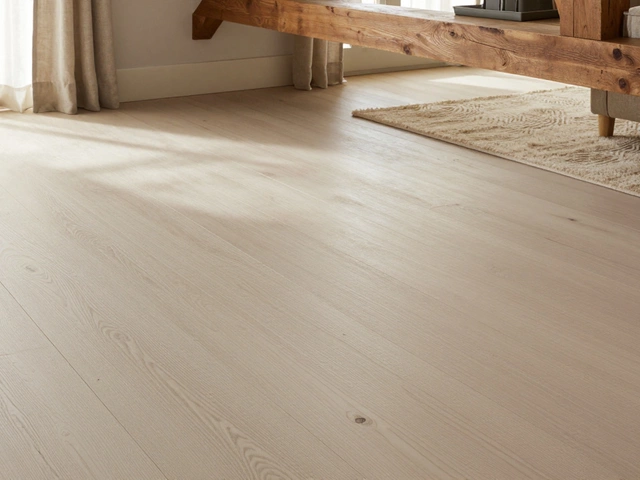
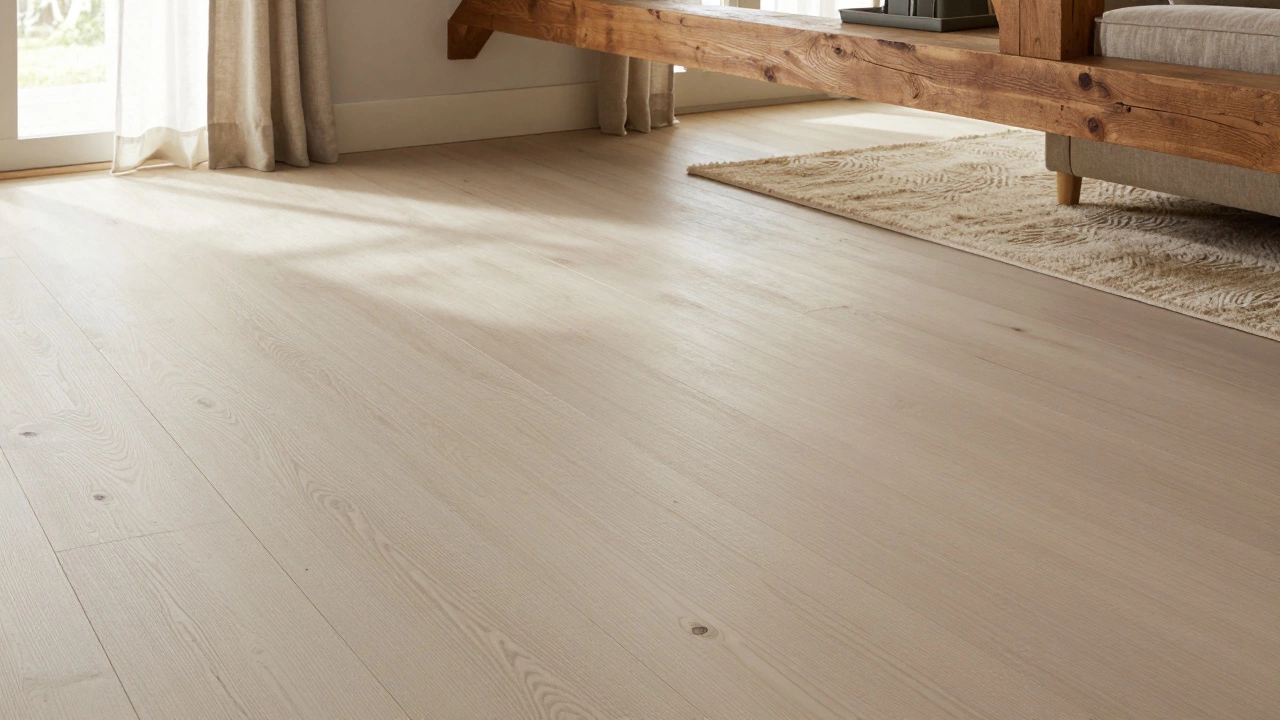
More than any other material, Joanna Gaines leans on solid hardwood. Specifically, she favors wide-plank, white oak floors with a matte or satin finish. You’ll see them in nearly every Fixer Upper renovation-from the living rooms of historic homes to the hallways of modern farmhouse builds. The planks are often 5 to 7 inches wide, laid in straight or herringbone patterns, and stained in soft, neutral tones like weathered gray, warm taupe, or a barely-there white wash.
Why hardwood? Because it ages gracefully. A scratch here or a dent there doesn’t ruin the look-it adds character. Joanna’s team often chooses unfinished wood that’s sanded and stained on-site. That gives them total control over the color and sheen. A matte finish is key. Glossy floors reflect too much light and look cold. Matte lets the grain breathe and keeps the room feeling cozy.
She avoids engineered wood unless the subfloor is concrete. Even then, she’ll only pick high-quality, thick-wear-layer options that can be sanded at least once. In her own home in Waco, Texas, the main living areas feature 5-inch white oak, stained with a custom blend of Early American and Natural. It’s not perfect. It’s not new. But it’s real.
Shiplap Isn’t Just for Walls
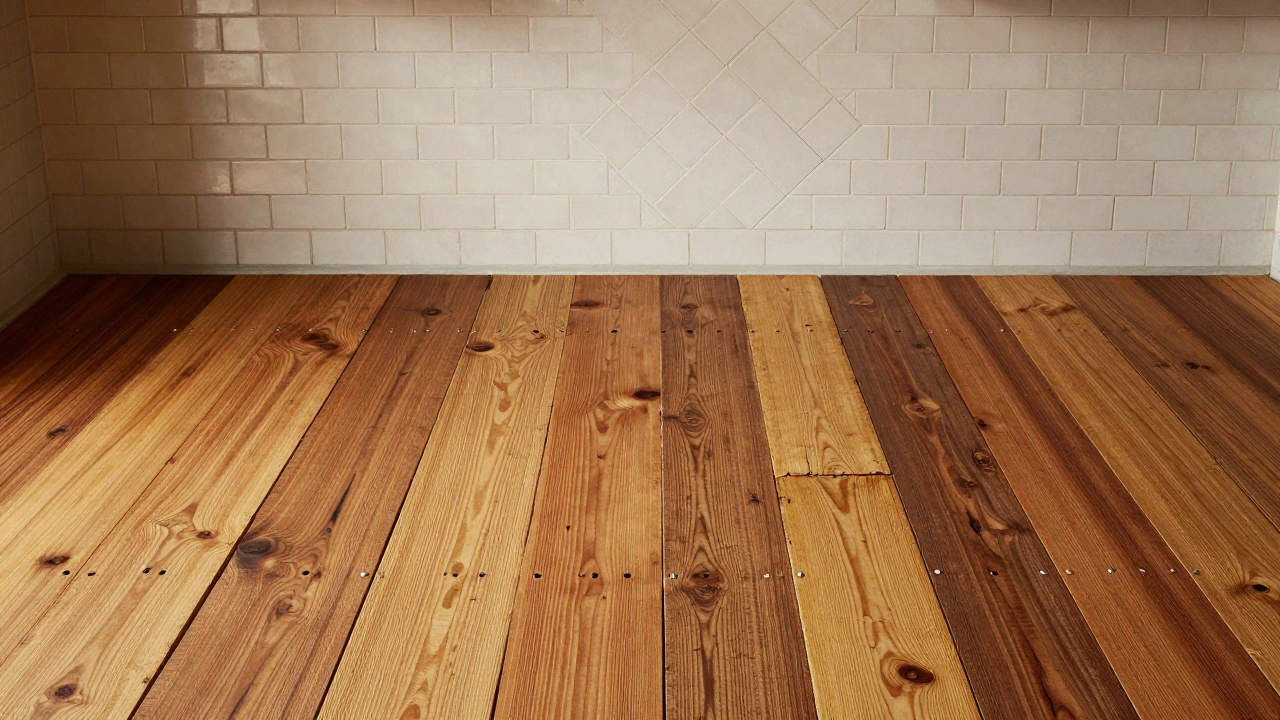
Here’s where people get confused. Shiplap is often thought of as wall paneling, but Joanna has used it as flooring too-especially in cottages, sunrooms, and older homes where she’s preserving original character. She doesn’t use the standard 1x6 pine boards you see on Pinterest. Instead, she opts for reclaimed wood planks, sometimes as narrow as 4 inches, with visible knots, nail holes, and natural wear.
In one renovation of a 1920s bungalow, she installed shiplap flooring made from salvaged heart pine. The wood had been stored in an old barn for decades. The color varied from honey gold to deep amber, and the surface was uneven in places. That’s exactly what she wanted. It wasn’t about uniformity. It was about history.
Shiplap flooring needs extra care. It’s not as stable as hardwood. Gaps can open up with humidity changes. But Joanna doesn’t see that as a flaw. She sees it as part of the charm. If you’re considering this, make sure your climate isn’t extreme. High humidity or dry heat will make gaps worse. Seal it well with a water-based polyurethane, and expect to do touch-ups every few years.
Tile in Kitchens and Bathrooms
Hardwood doesn’t work everywhere. Wet areas need something tougher. That’s where tile comes in. Joanna’s kitchen and bathroom floors almost always feature ceramic or porcelain tile in a muted, earthy tone. Think soft beige, warm greige, or a barely-there blue-gray. She avoids glossy finishes. Instead, she picks tiles with a textured, matte surface-something that won’t turn a bathroom into an ice rink.
Her favorite shape? Subway tile, but not laid in the classic running bond. She often uses it in a herringbone pattern or laid vertically to make ceilings feel higher. She’ll mix in a single row of darker tile as a border, like a subtle frame around the room. Grout color matters too. She matches it to the tile or uses a slightly lighter shade to soften the look.
In one kitchen renovation, she used 3x6 porcelain tiles in a color called “Cloud White.” The tiles were 1/2 inch thick, with a slightly rough texture. They were installed over a heated underlayment-something she swears by in colder months. The result? A floor that looks timeless, cleans easily, and feels warm under bare feet.
Concrete and Terrazzo for Modern Touches
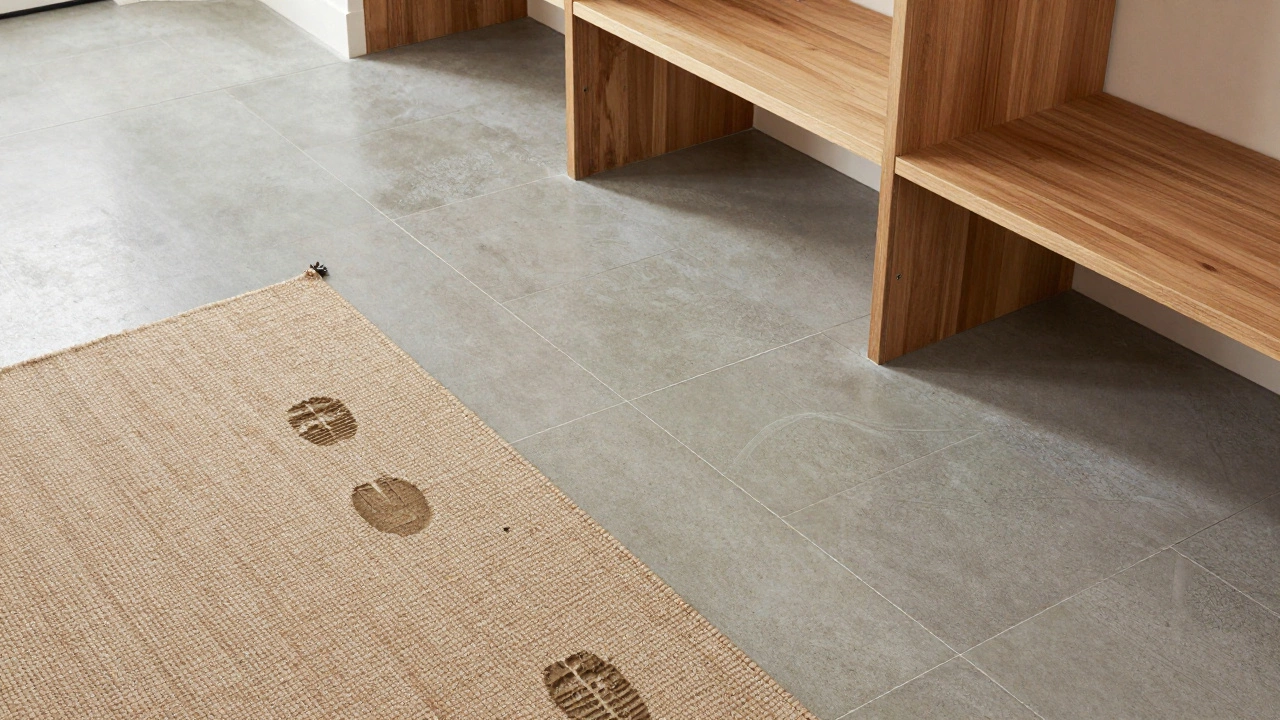
Not every Joanna Gaines home is rustic. In her more modern projects, she’s used polished concrete and terrazzo flooring. These aren’t cold industrial spaces. She warms them up with soft lighting, natural textiles, and wood accents. The concrete is ground smooth, sealed with a matte penetrant, and stained a light gray. It’s not shiny. It’s quiet.
Terrazzo appears in entryways and powder rooms. She likes small chips of marble or quartz set in a cement base, then polished to a soft sheen. The pattern is random-no two floors look the same. It’s durable, low-maintenance, and adds a touch of artistry without being flashy.
These materials aren’t for every home. They need professional installation and can be expensive. But when used right, they bring a calm, grounded energy to a space. In her own modern farmhouse, she used polished concrete in the mudroom and laundry area. It handles muddy boots, wet towels, and dog paws without a second thought.
What She Avoids
Joanna Gaines doesn’t use laminate. She doesn’t do luxury vinyl plank (LVP) unless it’s a rental property or a temporary fix. She’s said in interviews that LVP looks too uniform-like plastic pretending to be wood. It doesn’t age. It doesn’t patina. It just wears out.
She also avoids dark-stained floors. Black, espresso, or deep walnut look too heavy in her spaces. She wants light to bounce around. She wants the floor to feel like part of the air, not the floor. And she never uses carpet in main living areas. It traps dust, smells, and pet hair. In bedrooms, she’ll use a wool rug over hardwood, but never wall-to-wall.
She’s also turned down trendy options like gray washed oak in favor of warmer tones. Gray floors can look cold and dated within a few years. Her palette stays rooted in nature-beige, taupe, soft brown, and warm gray.
How to Copy Her Style Without Breaking the Bank
You don’t need to hire a designer to get Joanna Gaines floors. Here’s how to do it yourself:
- Choose white oak for hardwood. It’s durable, widely available, and takes stain well.
- Go wide plank-5 inches or more. Narrow planks look cheap.
- Ask for a matte or satin finish. Skip the gloss.
- Stain with a warm neutral: Early American, Natural, or a custom mix of 70% Natural and 30% Dark Walnut.
- For bathrooms and kitchens, use 3x6 matte porcelain tiles in a herringbone pattern.
- Use reclaimed wood for shiplap flooring if you’re restoring an older home.
- Never use dark stains. Stick to light, warm tones.
- Install radiant heating under tile in colder climates.
And here’s the secret: don’t aim for perfection. Let the floor show its age. A few scratches? A faded spot near the door? That’s not damage. That’s life.
Real Examples from Her Projects
In the 1940s farmhouse she renovated for the Gaines family, the original floor was warped and uneven. Instead of ripping it out, she sanded it down, stained it with a custom blend, and sealed it with three coats of matte polyurethane. Today, it’s one of the most photographed floors in the Fixer Upper archive.
In the modern ranch home she designed for a young family, she used 6-inch white oak throughout the main living areas, then switched to 12x24 porcelain tile in the kitchen and mudroom. The transition is seamless-no metal threshold. Just a subtle change in texture.
Her own home in Waco? Hardwood in the living room, tile in the kitchen, and a wool rug over concrete in the entry. No single material dominates. Each serves its purpose. And together, they feel like home.
Final Thought: It’s Not the Floor, It’s the Feeling
Joanna Gaines doesn’t sell flooring. She sells comfort. Her choices aren’t about brand names or price tags. They’re about how a space makes you feel. A floor that creaks just a little? That’s a house that’s lived in. A floor that warms up in the sun? That’s a house that welcomes you.
So if you’re choosing flooring, ask yourself: Does this feel like home? Not like a magazine. Not like a showroom. But like your own quiet corner of the world?
Does Joanna Gaines use engineered hardwood?
She rarely uses engineered hardwood unless the subfloor is concrete, like in basements or new builds. Even then, she prefers high-end options with a thick wear layer (at least 4mm) so they can be sanded once or twice. For most projects, she sticks with solid white oak for its authenticity and longevity.
What color stain does Joanna Gaines use on hardwood floors?
She typically uses custom blends of warm neutrals. Her most common mix is 70% Natural and 30% Early American stain on white oak. This creates a soft, light brown with golden undertones-not too yellow, not too gray. She avoids black, espresso, or stark gray tones because they feel cold and dated.
Is shiplap flooring a good idea for modern homes?
Shiplap flooring works best in older homes or rustic modern spaces where you want to preserve character. It’s not ideal for high-traffic areas or homes in extreme climates due to its tendency to expand and contract. If you use it, go with reclaimed wood and seal it well. It’s not a low-maintenance option, but it adds soul.
What’s the best alternative to Joanna Gaines flooring on a budget?
The closest budget-friendly option is luxury vinyl plank (LVP) that mimics wide-plank white oak with a matte finish. Look for brands with a wood-core base and embossed texture, like Shaw’s Floorte Pro or Mohawk’s RevWood Plus. Avoid glossy finishes. Even on a budget, choose warm, neutral tones and avoid dark stains.
Does Joanna Gaines use carpet anywhere?
She avoids wall-to-wall carpet in main living areas. In bedrooms, she sometimes uses a wool area rug over hardwood for warmth and texture. She believes carpet traps allergens and smells, so she only uses it temporarily or in rentals. Her rule: if it’s not easy to clean, it doesn’t belong in the main part of the house.