Home Improvement ROI Calculator
Your Improvement
2025 Market Insights
Wallpaper
72% of buyers skip homes with outdated wallpaper. Average ROI: 10-20%
Built-Ins
Custom shelves lose 90% of value. Avg. cost: $3,500 / Return: $400
Home Theater
Niche feature with <15% ROI. $15,000 investment → $2,000 return
Luxury Kitchen
Over $400k homes: Luxury appliances add almost no value
ROI Analysis
When you’re planning a home improvement, you want your money to stick around - not vanish when you try to sell. But not every upgrade pays off. Some projects look nice, feel satisfying, and even get compliments from friends - yet they barely move the needle on your home’s resale value. In 2025, with buyers more cautious and inventory tighter than ever, the wrong upgrade can actually hurt your chances.
Wallpaper That’s Too Bold or Too Trendy
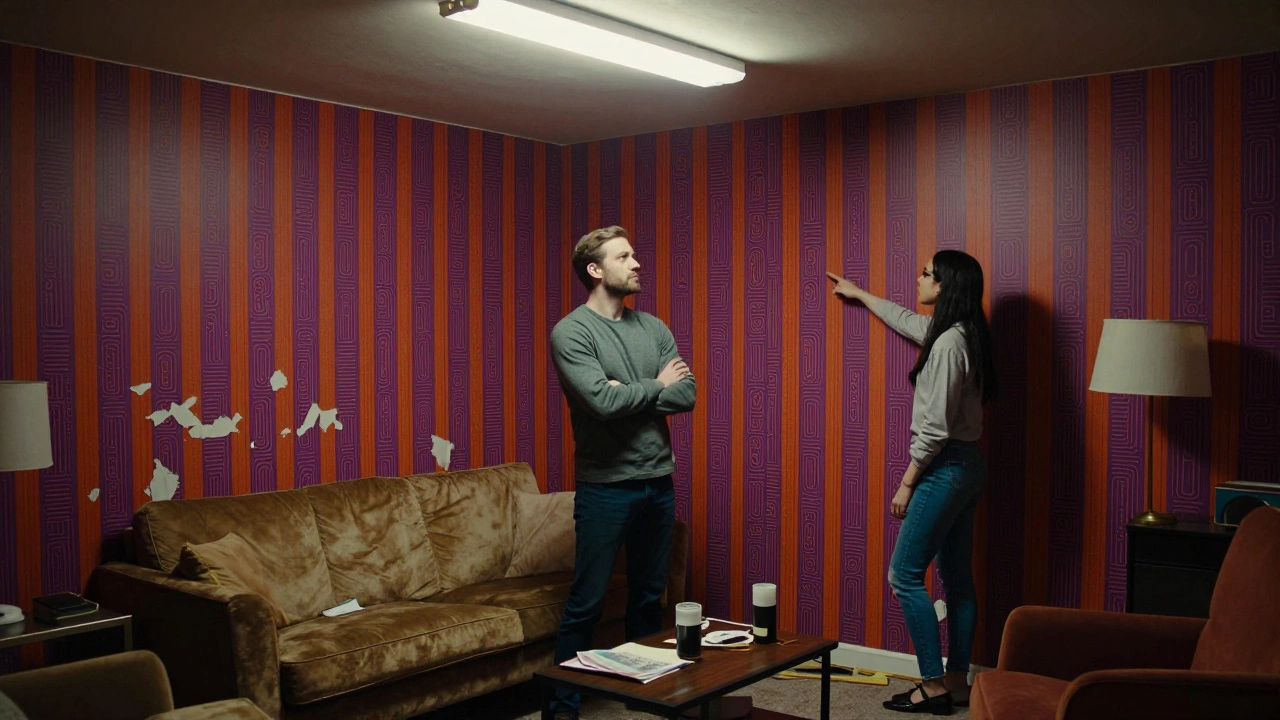
Wallpaper made a comeback, sure. But not all wallpaper is created equal. If you’ve gone full botanical jungle, metallic gold damask, or 90s geometric prints, you’ve created a buyer deterrent. Unlike paint, which can be covered in a day, wallpaper is a nightmare to remove. Buyers don’t want to spend $800 to strip it off, only to repaint the whole room. Real estate agents report that 72% of buyers skip homes with outdated or overly patterned wallpaper, even if the rest of the house is pristine.
Even neutral wallpaper - like subtle linen textures or soft gray tones - doesn’t add value unless it’s perfectly installed and matches the home’s overall style. Most buyers see wallpaper as a personal taste issue, not a feature. And in 2025, with remote staging and virtual tours dominating the market, anything that looks dated or niche on screen kills interest fast.
Custom Built-In Bookshelves (Unless You’re in a Literary Hotspot)
Building custom bookshelves along a wall sounds smart. It’s elegant. It shows you’re cultured. But unless you live in a neighborhood where 80% of buyers are academics, librarians, or indie bookstore owners, those shelves are just expensive storage. Buyers don’t want to see your old paperbacks. They want flexible space. A built-in bookshelf locks the room into one use. Turn it into a home office? Maybe. Turn it into a kid’s play area? Not without removing it.
According to a 2024 survey by the National Association of Realtors, custom built-ins ranked dead last among upgrades that added resale value - even below new countertops. The average cost to install them: $3,500. The average return: $400. That’s a 90% loss. If you love books, get freestanding shelves. They’re easy to move, easy to replace, and don’t turn buyers off.
High-End Home Theater Rooms
You spent $15,000 on a 4K projector, acoustic panels, leather recliners, and a 7.1 surround sound system. It’s amazing. You never leave the room. But when you list your house, that theater becomes a liability. Most buyers don’t want a dedicated movie room. They want a flexible space - a fourth bedroom, a gym, a study, or a playroom. A home theater is a niche feature, and niche features rarely translate to higher offers.
Even worse, those systems age fast. By the time someone buys your house, the projector will be outdated, the wiring won’t match their setup, and the speakers might be incompatible with modern streaming devices. Buyers don’t want to upgrade your tech. They want to plug in their own. That $15,000 investment? It’s unlikely to return more than $2,000 - if that.
Over-Improving the Kitchen with Luxury Appliances
Yes, a Sub-Zero fridge and Wolf range sound impressive. But if your house is worth $350,000 and you drop $25,000 on kitchen appliances, you’ve crossed into over-improvement territory. Buyers don’t pay extra for brand names unless the whole house matches the premium. A $10,000 kitchen remodel with solid quartz counters and modern cabinets adds value. A $40,000 remodel with top-tier appliances? That’s just personal luxury.
Studies show that in homes under $400,000, luxury appliances add almost zero resale value. Buyers in that range care more about clean lines, good lighting, and storage than whether the oven has Wi-Fi. In fact, oversized appliances can make a kitchen feel cramped. And if the buyer doesn’t cook, they’ll just replace them anyway.

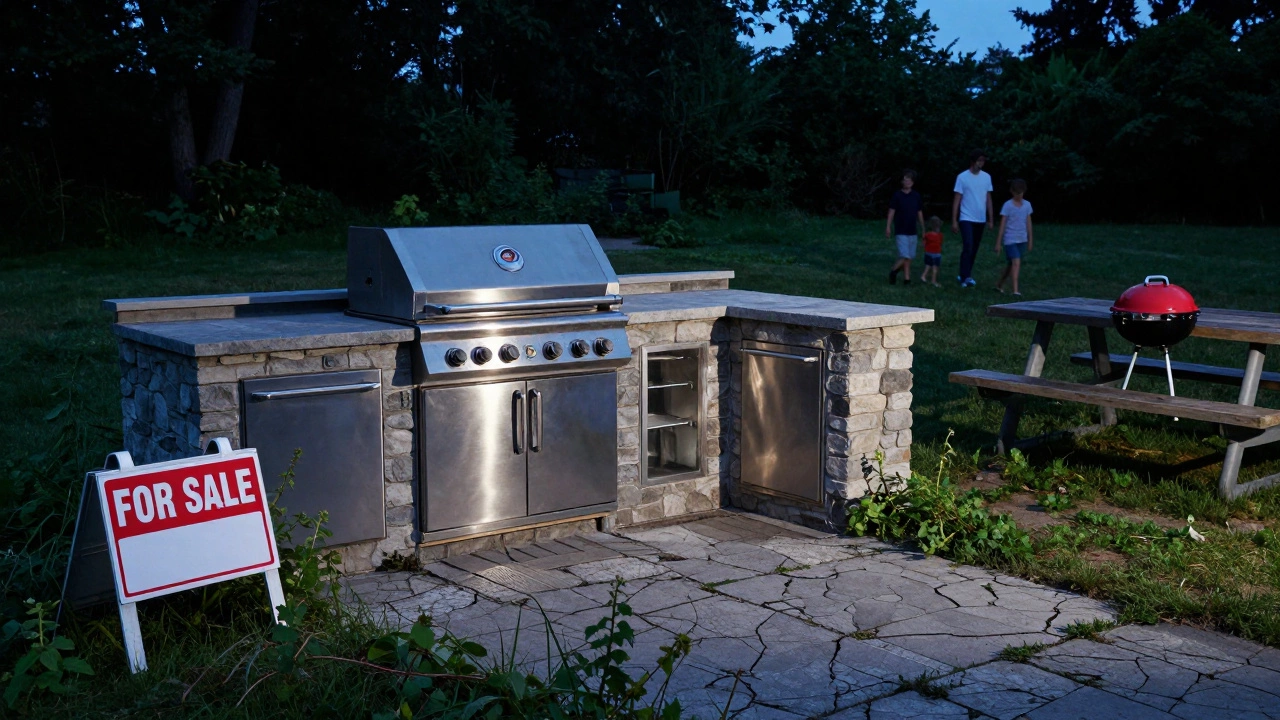
Expensive Outdoor Kitchens
Outdoor kitchens look great on Instagram. But in most parts of the country, they’re used maybe 12 days a year. In colder climates, they’re useless half the year. Even in warmer areas, buyers don’t see them as essential. They see them as high-maintenance.
An outdoor kitchen with a built-in grill, sink, fridge, and stone counter can cost $20,000 to $40,000. The average return? $8,000. That’s a 60-80% loss. And maintenance? Weather damage, pest infestations, gas line repairs - all things buyers don’t want to inherit. A simple grill station on a patio table? That’s what most buyers want. It’s cheap, flexible, and doesn’t require a permit.
Unique Tile Work in Bathrooms (Especially in Hallways)
That mosaic backsplash behind the vanity? That hand-painted tile floor in the powder room? It might be stunning - but it’s also a red flag for buyers. Custom tile work is expensive to install and even more expensive to replace. If the pattern doesn’t match the buyer’s taste, they’ll tile over it. And that means ripping out your $6,000 design just to put in $2,000 of basic subway tile.
Worst of all? Buyers hate tile in unexpected places. Hallway bathrooms with ornate tiles? Bedrooms with patterned floor tiles? Those are instant turn-offs. Even neutral, high-end tile doesn’t add value unless it’s part of a full, cohesive bathroom renovation. Most buyers just want clean, easy-to-clean surfaces. Simplicity sells.
Artificial Turf Lawns (In Most Markets)
Artificial turf looks great in photos. Low maintenance. Always green. But in most neighborhoods, it screams “cheap shortcut.” Buyers associate it with neglect - like the homeowner didn’t care enough to water real grass. In areas with water restrictions, it might help. But in places like Ohio, Pennsylvania, or Michigan? It’s a liability.
A 2025 study by Zillow found homes with artificial lawns sold for 5-7% less than similar homes with natural grass. Why? Buyers fear hidden costs - drainage issues, heat buildup, pet odor retention. And let’s be honest: no one wants to buy a house that looks like a golf course practice green. Natural grass, even if it’s patchy, feels more lived-in and welcoming.
Painting Walls in Bold, Non-Neutral Colors
Remember when teal and mustard yellow were “on-trend”? They’re not anymore. Painting walls in strong, saturated colors is one of the fastest ways to kill buyer interest. Even if you think it’s “modern” or “bold,” most buyers see it as a chore. They don’t want to repaint. They don’t want to live in a color that feels like a statement.
Real estate agents say that homes painted in bold colors sit on the market 22% longer than those in neutral tones. And the cost to repaint? $1,500 to $3,000 - a number that directly eats into your profit. If you love color, use it on furniture, art, or throw pillows. Those are easy to swap. Walls aren’t.
Why These Upgrades Fail
There’s a pattern here. Every low-value upgrade shares one trait: it’s too personal. Buyers don’t want to inherit your taste. They want to imagine their own life in the space. That’s why neutral paint, simple lighting, and functional layouts win every time.
Also, many of these upgrades are hard to undo. Wallpaper, tile, built-ins, and outdoor kitchens require labor, time, and money to remove. Buyers factor that in - and they’ll offer less to cover the cost of fixing your “improvements.”
And in 2025, buyers are smarter than ever. They use apps to compare homes. They watch virtual tours on their phones. If your home looks like a museum of your hobbies, they’ll click away.
What Actually Adds Value Instead
If you want to spend money wisely, focus on what buyers actually care about:
- Replacing old windows with energy-efficient ones
- Updating the HVAC system if it’s over 15 years old
- Fixing leaky roofs or foundation cracks
- Painting with neutral, light colors
- Adding smart thermostats or security systems
- Improving curb appeal with clean landscaping and a fresh front door
These aren’t glamorous. But they’re invisible wins. Buyers notice them - even if they don’t say it. And they’re willing to pay more for peace of mind.
Final Thought: Sell the Potential, Not Your Personality
Your home is not a gallery of your hobbies. It’s a blank canvas for someone else’s life. The best upgrades don’t scream “look what I did.” They whisper, “you can make this yours.”
Walk away from the wallpaper, the theater room, the custom shelves. Save your money for things that matter - structure, safety, and simplicity. That’s what sells houses in 2025.
Does wallpaper hurt home value?
Yes, especially if it’s bold, dated, or hard to remove. Most buyers see wallpaper as a negative because it requires extra work and cost to replace. Even neutral wallpaper can reduce appeal if it doesn’t match the home’s overall style. In 2025, clean, painted walls are the safest choice for resale.
What home improvements have the worst ROI?
The worst ROI projects include custom home theaters, luxury outdoor kitchens, high-end built-in bookshelves, and artificial turf lawns. These often cost $15,000-$40,000 but return less than 20% of the investment. Buyers don’t want to inherit your personal luxury - they want functional, neutral spaces.
Should I paint my walls before selling?
Yes - but only with neutral colors like soft white, warm gray, or light beige. Bold colors deter buyers and extend time on the market. Repainting is one of the cheapest upgrades with the highest return. Most agents recommend it before listing.
Is a new kitchen worth it if I’m not staying long?
Only if you’re doing a budget-friendly update: new cabinet doors, fresh paint, modern hardware, and quartz countertops. Avoid replacing appliances or cabinets unless they’re broken. Luxury upgrades rarely pay off in homes under $400,000. Focus on clean, updated looks - not expensive features.
Do buyers care about smart home tech?
Yes - but only basic, reliable tech. Smart thermostats, door locks, and security cameras add value. Fancy systems like whole-home automation or voice-controlled lighting don’t. Buyers want functionality, not gimmicks. Stick to well-known brands like Nest, Ring, or Ecobee.
What to Do Next
If you’re thinking about upgrading before selling, start by walking through your home like a buyer. What would make you hesitate? What feels too personal? What would you have to fix before moving in?
Ask a local real estate agent to do a quick pre-listing walkthrough. Most offer it for free. They’ll tell you exactly what’s helping - and what’s hurting - your home’s value.
Don’t spend money trying to impress. Spend it making your home feel like a place anyone could live in. That’s how you get offers - not just interest.