Foundation Crack Assessment Tool
Assess Your Foundation Crack
This tool helps determine whether interior or exterior repair is most appropriate for your foundation crack based on crack characteristics and symptoms.
Results will appear here after assessment.
When you spot a crack in your foundation, your first thought isn’t about paint or decor-it’s about survival. Is this just a cosmetic issue, or is your house slowly sinking? And when it comes time to fix it, the big question pops up: should you fix it from the inside or the outside? There’s no one-size-fits-all answer, but there are clear rules based on what’s causing the crack, how bad it is, and where you live.
Why Foundation Cracks Happen in the First Place
Not all cracks are the same. A thin, hairline crack (less than 1/16 inch) that runs vertically is often just shrinkage from curing concrete. These are common in homes built in the last 20 years and usually don’t need repair. But if you see a crack wider than 1/4 inch, especially if it’s diagonal, stair-stepped, or getting wider over time, that’s a red flag. In Auckland’s climate, where clay-rich soils swell when wet and shrink in dry spells, foundation movement is common. Homes built on slopes or near old drainage paths are especially vulnerable. The real danger comes from water. When soil around your foundation gets saturated, it expands and pushes against the walls. Over time, that pressure causes cracks. If water keeps seeping in, it doesn’t just damage concrete-it washes away the soil beneath, leading to settling. That’s when your floors slope, doors stick, and windows won’t close.Fixing from the Inside: What It Actually Does
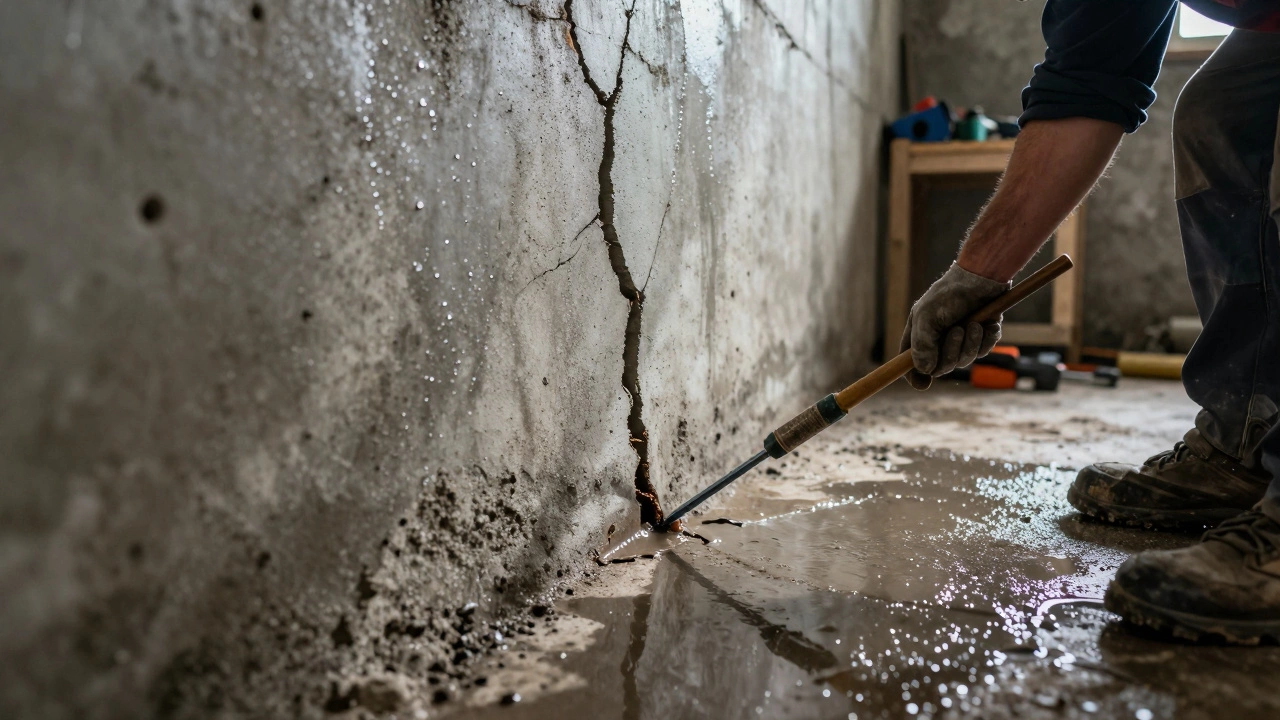
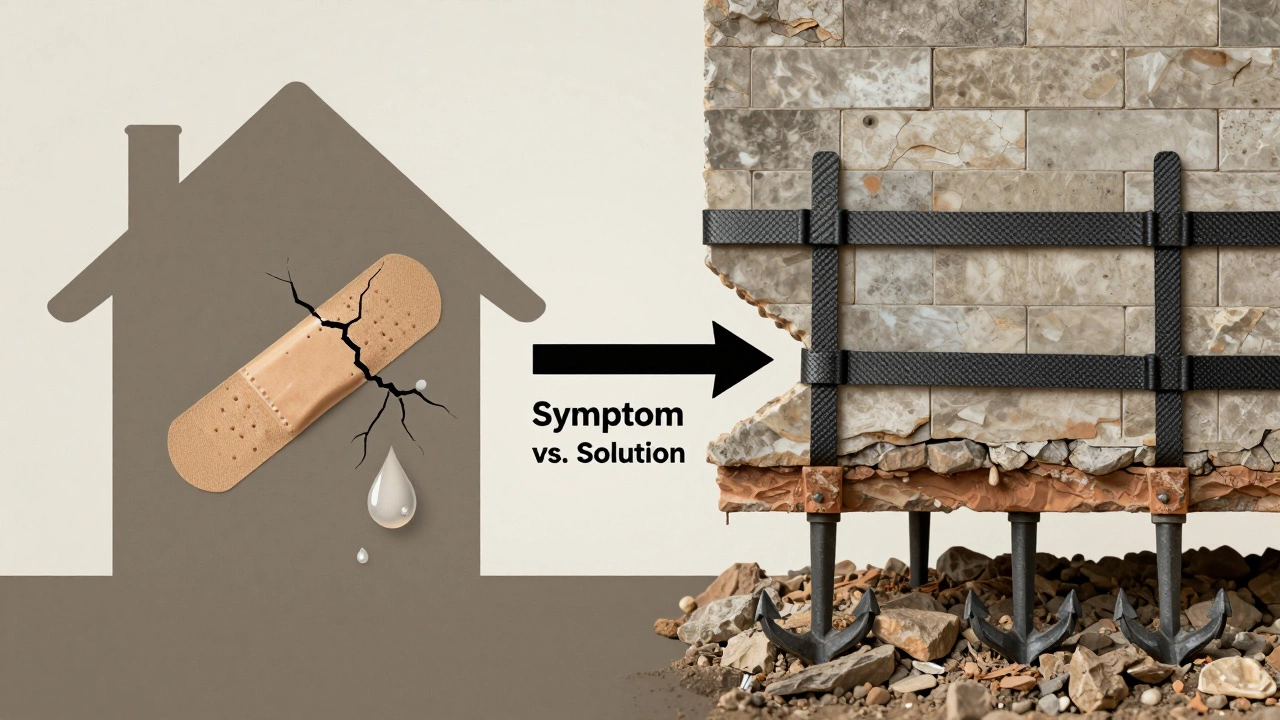
Interior repairs are the most common first step because they’re cheaper and less disruptive. You’ll see contractors injecting epoxy or polyurethane foam into cracks from the basement or crawl space. These materials expand to seal the crack and stop water from leaking through. Some also install interior drainage systems along the base of the wall, directing water to a sump pump. But here’s the catch: interior repairs don’t stop the cause-they only manage the symptom. If the soil outside is still pushing against your wall, or if water is still pooling near your foundation, the crack will likely return. Interior fixes are great for stopping leaks and preventing mold, but they won’t stop your wall from bowing inward or shifting further. In Auckland, where many older homes have brick veneer over concrete block, interior repairs are often the only practical option. Digging around the house can damage gardens, driveways, or underground utilities. For minor leaks and non-structural cracks, sealing from the inside makes sense.Fixing from the Outside: The Real Solution
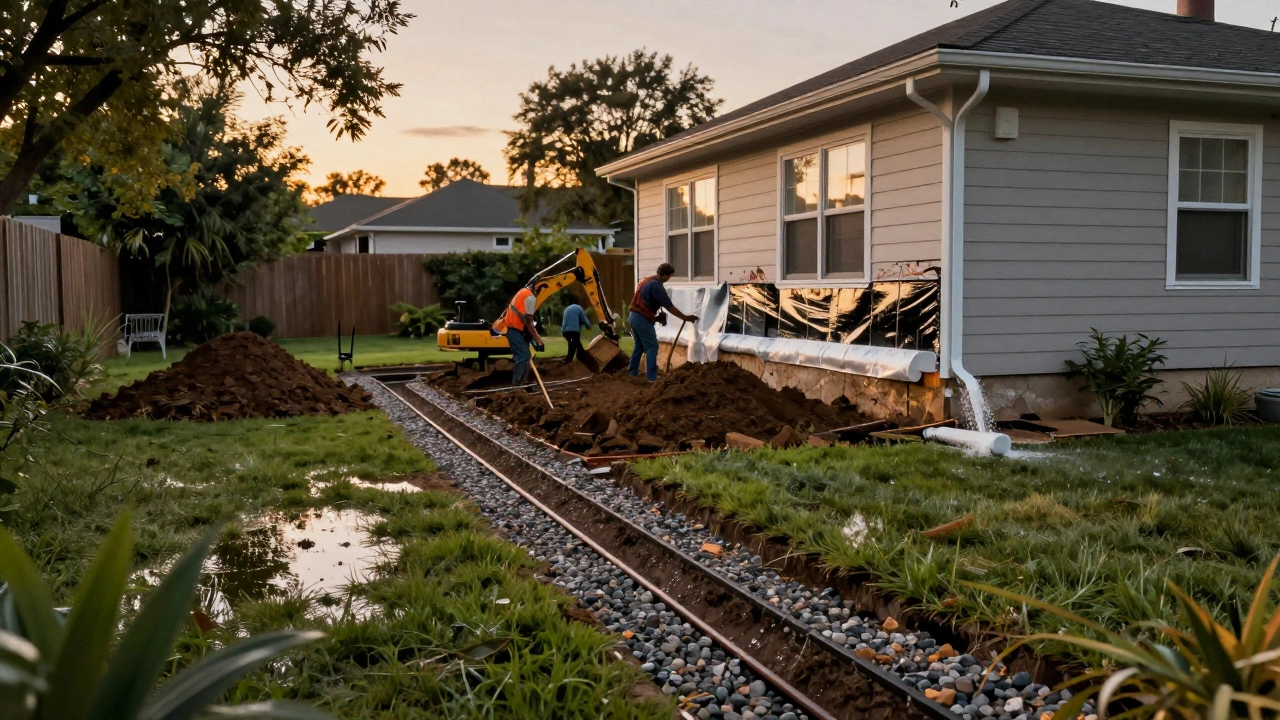
Exterior repairs go after the root problem. This means excavating soil around the foundation, cleaning the wall, applying waterproofing membranes, and installing drainage tiles (French drains) to redirect water away from the house. If the wall is bowing, steel or carbon fiber straps can be bolted to the outside to stabilize it. In severe cases, underpinning with concrete piers may be needed to lift and support the structure. This isn’t a weekend DIY job. It’s expensive-typically $5,000 to $20,000 depending on depth and size-and messy. But it’s the only way to truly stop water intrusion and soil pressure. If your foundation wall is moving more than 1 inch, or if you’ve got multiple cracks forming, exterior repair is the only long-term fix. In New Zealand, building codes require foundations to handle lateral pressure from soil and water. Exterior waterproofing and drainage systems meet those standards. Interior solutions often don’t. If you’re planning to sell your home, an exterior repair with proper documentation gives buyers confidence. Inspectors will note interior-only fixes as temporary, and may require further investigation.When to Choose Inside Repair
You should consider an interior fix if:- The crack is less than 1/4 inch wide and hasn’t changed in six months
- You’re seeing minor seepage during heavy rain but no structural movement
- Your budget is tight and you need a quick, low-impact solution
- Digging outside isn’t possible-your property is tight, has a deck, or shared walls
- You’re renting and need a temporary fix
When to Choose Outside Repair
Go exterior if:- The crack is wider than 1/4 inch or growing
- You’ve noticed floors sloping, doors jamming, or windows sticking
- Water keeps coming in even after interior repairs
- Your home is over 40 years old with no original waterproofing
- You plan to sell or refinance and need a permanent solution
What Most People Get Wrong
The biggest mistake? Thinking a crack is fixed once it’s sealed. Too many homeowners pay for an epoxy injection, feel better, and never check again. But if the soil pressure hasn’t changed, the wall keeps moving. That’s why you need to monitor your cracks. Here’s how: tape a piece of clear plastic over the crack and mark the edges with a permanent marker. Check it every month. If the line shifts, the wall is still moving. That’s your signal to call a structural engineer-not just a waterproofing company. Another mistake: using sealants like hydraulic cement or silicone caulk on large cracks. These materials are rigid. They crack again when the foundation shifts. Flexible polyurethane or epoxy is better, but only if applied correctly. Poor application is why so many interior repairs fail.What Professionals Look For
A good foundation inspector doesn’t just look at the crack. They check:- Soil slope away from the house (should be 6 inches over 10 feet)
- Downspout placement (should be at least 5 feet from the foundation)
- Drainage in the yard (is water pooling near the wall?)
- Crack pattern (vertical = settling; horizontal = lateral pressure)
- Age of the home and original construction type
Cost Comparison: Inside vs Outside
| Repair Type | Typical Cost Range | Duration | Longevity | Best For |
|---|---|---|---|---|
| Interior Epoxy Injection | $300-$800 per crack | 1 day | 5-10 years | Minor leaks, non-structural cracks |
| Interior Drainage System | $2,000-$5,000 | 2-3 days | 10-15 years | Water seepage, no wall movement |
| Exterior Waterproofing + Drainage | $8,000-$15,000 | 1-2 weeks | 25-30+ years | Active movement, water pressure, structural concerns |
| Carbon Fiber Strapping (exterior) | $5,000-$10,000 | 3-5 days | 20+ years | Bowing walls, no major settlement |
| Underpinning (piering) | $15,000-$30,000+ | 2-4 weeks | Lifetime | Severe settling, sinking foundation |
What Happens If You Do Nothing?
Ignoring a foundation crack is like ignoring a toothache. At first, it’s just annoying. Then it gets worse. Water leads to mold, which damages drywall and insulation. Soil erosion under the slab causes uneven settling. That leads to cracked tiles, broken pipes, and eventually, structural failure. In extreme cases, walls can collapse. That’s rare, but it happens-especially in homes with poor drainage and clay soil. Insurance claims for foundation damage are often denied if you didn’t maintain drainage or ignored early signs. In New Zealand, most home insurance policies don’t cover gradual foundation movement unless it’s caused by a sudden event like an earthquake.Next Steps: What to Do Right Now
1. Measure the crack. Use a ruler. If it’s under 1/4 inch and stable, monitor it. If it’s wider or growing, act. 2. Check your drainage. Are your downspouts pointing away from the house? Is the ground sloping away? Fix these first-they’re cheap and often solve the problem. 3. Take photos. Document the crack every month. Note the date. This helps professionals assess progression. 4. Call a structural engineer, not just a contractor. Engineers don’t sell repairs-they assess risk. They’ll tell you if you need a quick fix or a full rebuild. 5. Get written quotes. Always ask for a detailed scope: materials, warranty, and what’s included. Avoid companies that pressure you into immediate work.Frequently Asked Questions
Can I fix a foundation crack myself?
You can seal small, non-structural cracks (under 1/8 inch) with epoxy kits sold at hardware stores. But if the crack is wider, growing, or letting in water, DIY won’t work. Foundation repair requires structural knowledge, proper materials, and sometimes heavy equipment. Mistakes here can make things worse-and cost more to fix later.
Will insurance cover foundation repair?
Most home insurance policies in New Zealand won’t cover foundation damage from gradual settling, soil movement, or poor drainage. They only cover sudden events like earthquakes, landslides, or burst pipes. If your crack is due to water buildup from clogged gutters, that’s considered maintenance-and not covered. Always check your policy wording.
How long does exterior foundation repair take?
Typically 1 to 2 weeks, depending on the size of your home and weather. Excavation takes time, and waterproofing needs to cure before backfilling. Most contractors will protect your lawn and driveway, but expect some disruption. You’ll need to keep pets and kids away from the site.
Do I need a permit for foundation repair?
Yes, in most cases. Exterior repairs involving excavation or structural reinforcement require building consent from your local council. Interior repairs usually don’t, unless you’re modifying drainage or adding a sump pump. Always check with your local council before starting work-fines for unapproved work can be steep.
What’s the best material for sealing foundation cracks?
For interior use, flexible polyurethane injection is best-it moves with the foundation. Epoxy is stronger but rigid, so it’s better for non-moving cracks. For exterior waterproofing, liquid-applied membranes like bituminous coatings or bentonite clay panels are standard. Avoid cement-based sealants-they crack under pressure.