Sofa Pillow Sizing Calculator
Measure the total width of the seat cushions from arm to arm.
Recommended 2-2-1 Configuration
Based on a 80 inch sofa:
22" x 22"
Anchor pillows18" x 18"
Bridge pillows14" x 14"
CenterpieceTip: For this size, ensure your large pillows don't exceed 25% of the total sofa width each.
Ever spent twenty minutes arranging your throw pillows are decorative cushions used to add comfort and style to seating furniture, only to step back and feel like something was still off? You’re not alone. Most of us treat our sofas like dumping grounds for leftover bedding or mismatched fabrics we found on sale. It looks cluttered, not curated.
Enter the 2-2-1 pillow rule is an interior design guideline for arranging decorative cushions on a sofa using specific sizes and quantities. It’s one of those simple tricks that makes a room look professionally styled without costing a fortune. The logic is straightforward: use two large pillows, two medium ones, and one small accent piece. But why does this work? And how do you actually pull it off without looking like you followed a rigid manual?
The Anatomy of the 2-2-1 Formula
The beauty of the 2-2-1 rule lies in its balance. It prevents visual chaos by creating a hierarchy of sizes. If you put five identical square pillows in a row, your eye has nowhere to rest. It feels flat. By varying the scale, you create depth and rhythm.
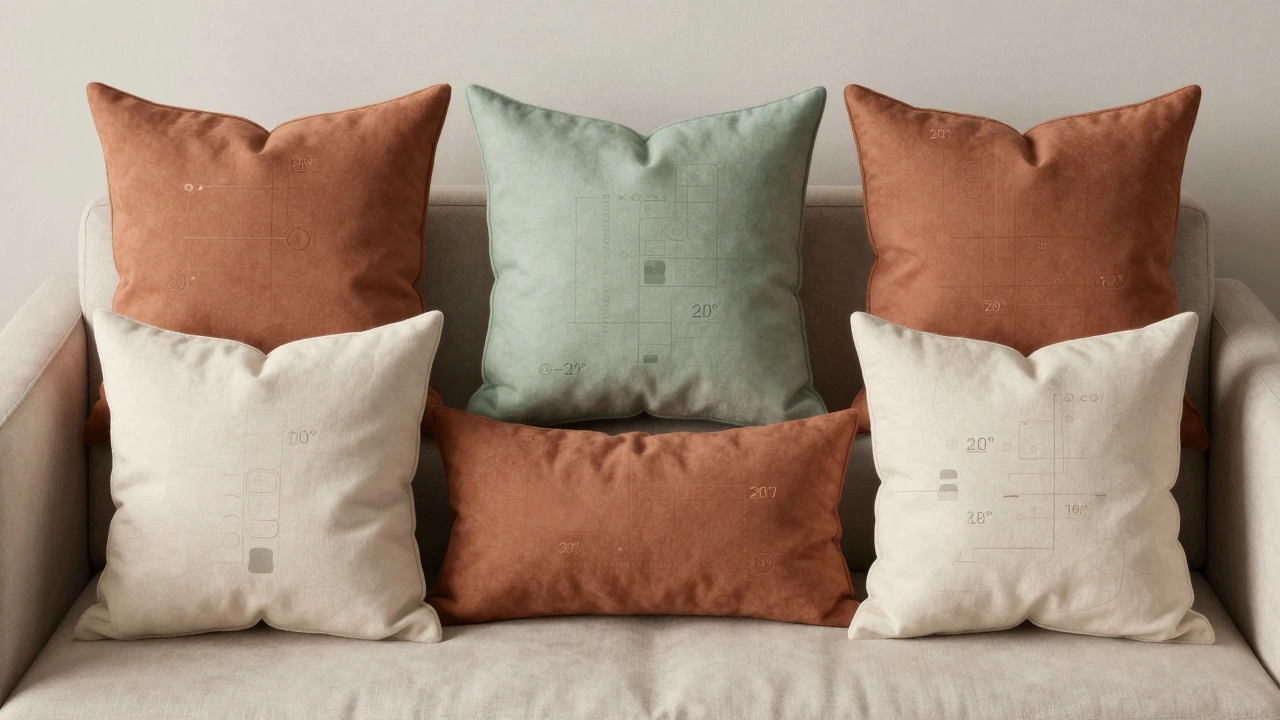
- The "2" (Large Pillows): These are usually 20-inch or 22-inch squares. They anchor the ends of the sofa. Think of them as the bookends of your design. They provide substantial support and define the outer edges of the seating area.
- The "2" (Medium Pillows): Typically 18-inch squares, these sit just inside the large ones. They bridge the gap between the anchors and the center, adding texture and color without overwhelming the space.
- The "1" (Accent Pillow): This is your wildcard. It can be 14 inches, lumbar-shaped, or even a round bolster. Placed in the center, it draws the eye inward and adds a final touch of personality.
This structure works because it mimics natural symmetry while allowing for asymmetry in pattern and fabric. It’s predictable enough to feel orderly but flexible enough to be interesting.
Why Size Matters More Than You Think
Many people skip measuring their sofa and just grab whatever fits. That’s where the magic dies. For the 2-2-1 rule to work, the proportions must align with the scale of your furniture.
If you have a compact loveseat, standard 22-inch pillows will swallow the seat entirely. In that case, you might adapt the rule to 1-1-1 using smaller 16-inch squares. Conversely, on a massive sectional, 20-inch pillows might look tiny. Here, you’d bump up to 24-inch "Euro sham" size pillows for the first pair.
| Sofa Type | Large Pair (2) | Medium Pair (2) | Accent (1) |
|---|---|---|---|
| Standard 3-Seater | 20" x 20" or 22" x 22" | 18" x 18" | 14" x 14" or Lumbar |
| Loveseat | 18" x 18" | 16" x 16" | 12" x 12" or Small Lumbar |
| Sectional / Large Sofa | 24" x 24" (Euro Shams) | 20" x 20" | 18" x 18" or Bolster |
Measuring isn’t just about width; it’s about height too. Ensure the pillows don’t sink completely into the seat cushion when you lean back. If they do, you need firmer inserts or larger dimensions.
Choosing Fabrics and Patterns: The Visual Layer
Once the sizes are sorted, you tackle the aesthetics. The 2-2-1 rule gives you a canvas, but the paint is up to you. A common mistake is using solid colors for everything. It looks sterile. Another error is clashing patterns that fight for attention.
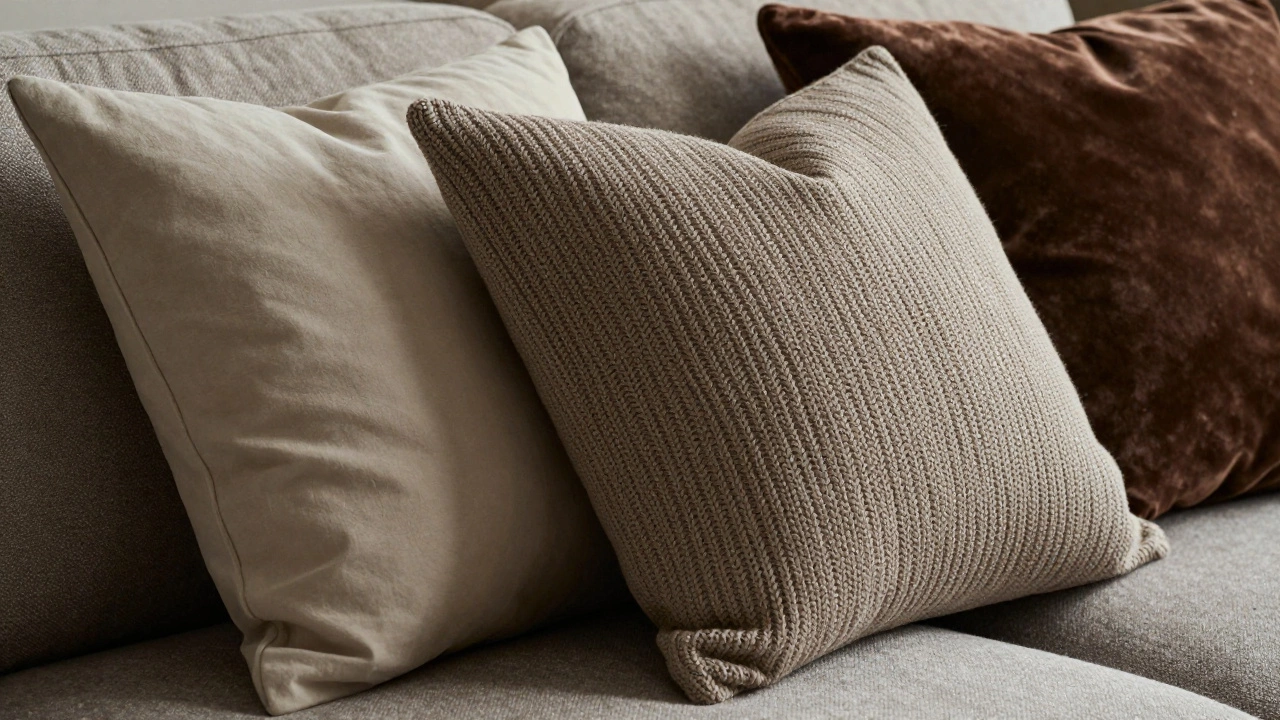
Aim for variety in texture. Mix a chunky knit with smooth linen, or velvet with crisp cotton. Texture adds dimension even if the colors are similar. When it comes to patterns, follow the "rule of three":
- Two solids: Use neutral tones like beige, grey, or navy for the large and medium pairs. They ground the look.
- One pattern: Let the accent pillow carry the print-floral, geometric, or abstract.
- Or, mix two subtle patterns: If you want more flair, ensure the scales differ significantly. A large-scale ikat paired with a small-scale stripe works well.
Color coordination doesn’t mean everything has to match perfectly. Pull hues from your rug, artwork, or curtains. If your rug has hints of mustard yellow, let one of the medium pillows echo that shade. This ties the room together seamlessly.
Placement Techniques for a Polished Look
How you place the pillows matters as much as what you choose. Avoid the "soldier line" effect where all pillows stand upright in a perfect row. It looks stiff and unwelcoming.
Instead, try leaning them against each other at slight angles. Lean the large pillows outward toward the arms of the sofa. Angle the medium pillows slightly inward. Place the accent pillow loosely in the center, perhaps folded over itself to show off the insert’s loft.
For a more relaxed vibe, push the large pillows back against the sofa frame so they act as back support. Then, arrange the mediums and accents in front, overlapping them casually. This invites people to sit down and get comfortable, rather than treating the sofa like a museum exhibit.
Common Mistakes to Avoid
Even with a solid plan, pitfalls exist. Here are the most frequent errors I see in living rooms:
- Ignoring the Insert Quality: A cheap polyester fill flattens quickly. Invest in down-alternative or feather-blend inserts that hold their shape. The cover is only half the equation.
- Overstuffing: Don’t cram too many pillows onto a small sofa. If there’s no visible seat cushion left, it looks cluttered. Leave breathing room.
- Mismatched Scales: Using a tiny 12-inch pillow next to a giant 24-inch Euro sham creates a jarring contrast. Stick to incremental size differences.
- Forgetting Function: Pillows should be usable. If they’re too hard or positioned awkwardly, guests won’t use them. Comfort enhances style.
Adapting the Rule for Different Styles
The 2-2-1 rule is flexible. It adapts to modern, traditional, bohemian, and minimalist interiors alike.
In a minimalist space, stick to monochromatic schemes. Use different textures of white or grey to maintain interest without visual noise. Keep the lines clean and the placement precise.
For a bohemian look, embrace eclectic mixes. Combine embroidered textiles, fringed edges, and vibrant colors. The structure of 2-2-1 keeps the chaos controlled, preventing the room from feeling messy.
In traditional settings, opt for classic shapes and rich fabrics like silk or damask. Symmetry is key here. Place the pillows evenly spaced and aligned with the sofa’s buttons or seams.
Maintenance and Longevity
Pillows collect dust, pet hair, and spills. Regular maintenance keeps them looking fresh. Shake them out weekly to restore fluffiness. Rotate them seasonally to swap heavy wools for light linens. Wash covers according to care labels-most machine-washable fabrics last longer if dried on low heat.
Check the zippers and seams periodically. Loose threads can unravel quickly under daily use. Repairing a small tear early saves you from replacing the entire pillow later.
Can I use the 2-2-1 rule on a sectional sofa?
Yes, but apply the rule to each distinct seating section. For example, if your sectional has an L-shape, treat the long side and the chaise as separate units. Each segment gets its own 2-2-1 arrangement to maintain balance across the entire piece.
What if my sofa only has room for three pillows total?
You can simplify the rule to 1-1-1. Use one large, one medium, and one small pillow. Alternatively, use two large pillows and one accent, skipping the medium pair entirely. The key is maintaining size variation.
Should all pillow covers match exactly?
Not necessarily. Exact matches can look dated. Instead, aim for cohesion through shared color palettes or complementary textures. Mixing similar tones creates a more sophisticated, layered look.
How often should I replace throw pillows?
Covers can last years if cared for properly. Inserts typically need replacement every 2-3 years as filling loses resilience. Swap out seasonal styles annually to keep your decor feeling fresh without buying new furniture.
Is the 2-2-1 rule mandatory for good design?
No, it’s a guideline, not a law. Design rules exist to help beginners avoid common pitfalls. Once you understand the principles of balance and proportion, you can experiment freely. However, sticking to 2-2-1 ensures a polished result with minimal effort.