That empty surface in your dining room is staring back at you. It’s tempting to just leave it bare, but that flat top of wood or marble has potential. A dining room dresser is a versatile piece of furniture that serves as both storage and a display platform for decorative items. Also known as a sideboard or buffet, it anchors the space and adds visual interest without cluttering the floor. Getting the styling right can transform a functional corner into a focal point that feels curated and inviting. You don’t need a degree in interior design to pull this off. You just need a few key pieces and a sense of balance.
Styling a surface is less about filling every inch and more about creating rhythm. Think of it like arranging flowers in a vase. You have height, texture, and color working together. If you pile everything up randomly, it looks messy. If you space things out with intention, it looks designed. This guide will walk you through exactly what to put on that dresser to make it look intentional, stylish, and uniquely yours.
The Rule of Three and Odd Numbers
Before you grab any objects, keep one simple rule in mind: odd numbers work better than even ones. The human eye finds asymmetry more interesting and natural. When you place three vases, five books, or seven candles, the arrangement feels dynamic rather than static. Pairing two identical lamps creates symmetry, which is fine for traditional formal dining rooms, but grouping three different items creates a vignette that tells a story.
This concept applies to everything from small trinkets to large sculptures. Try grouping items in clusters of three. Place a tall candle next to a medium-sized bowl and a small framed photo. The variation in size keeps the eye moving across the surface. Avoid placing items in a straight line along the back edge. That looks like a shelf in a museum, not a lived-in home. Instead, bring some items forward toward the front edge of the dresser to create depth.
Create Height with Vertical Elements
A flat surface needs vertical interest to avoid looking boring. Without height, the eye slides off the dresser and loses focus. Start by choosing one or two tall items to anchor the arrangement. A floor lamp placed behind the dresser works well, but if you want everything on the surface, consider a tall vase with dried branches or a slender sculpture.
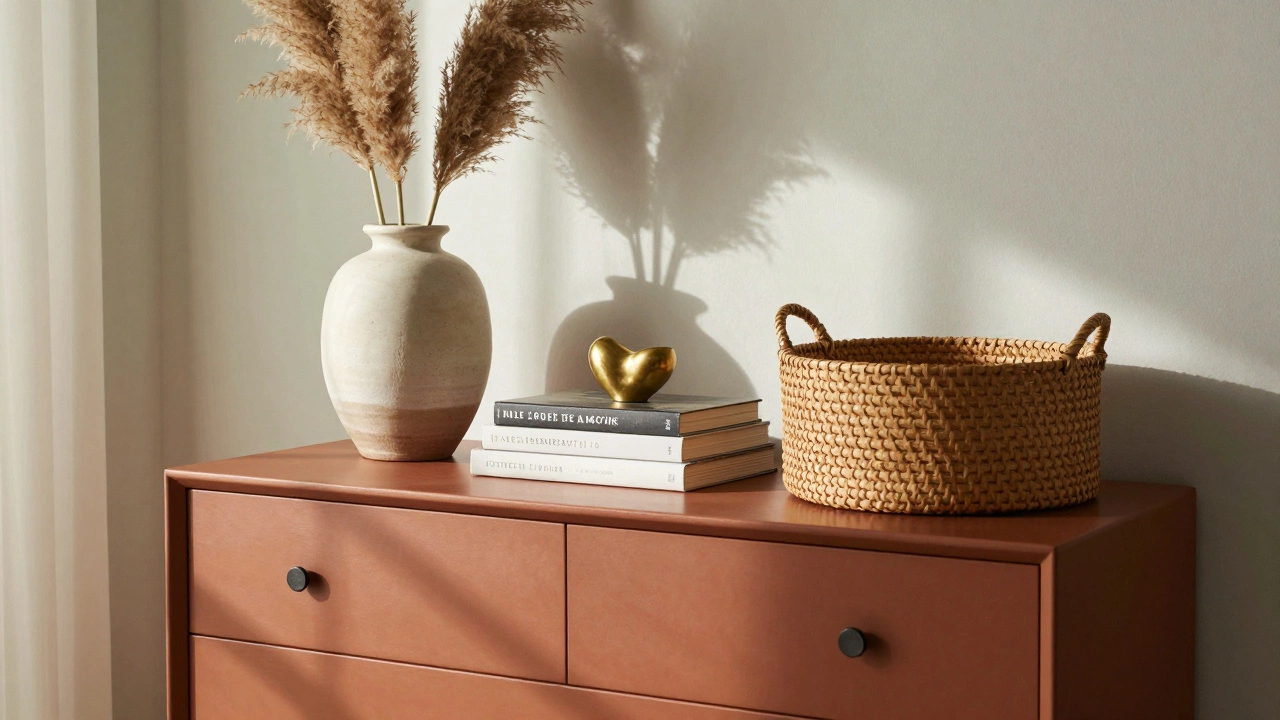
- Tall Vases: Fill them with eucalyptus, pampas grass, or olive branches. These materials last longer than fresh flowers and add a soft, organic texture.
- Candelabras: Multi-arm candelabras add drama and light. Use taper candles in varying heights for a layered look.
- Stacked Books: Stack three or four hardcover books vertically and place a small object on top. This adds height without taking up much horizontal space.
Place these tall items toward the back or corners of the dresser. They act as bookends for your arrangement, framing the smaller items in the center. Make sure the tallest item doesn’t block the view of the dining table or windows. You want the height to complement the room, not obstruct it.
Add Texture with Natural Materials
Texture brings warmth and life to a dining room dresser. Smooth surfaces like glass or polished wood can feel cold if not balanced with softer, rougher materials. Incorporate natural elements to soften the look. Wood, stone, rattan, and linen are excellent choices because they connect the indoor space to the outdoors.
A woven basket placed on the dresser adds a tactile element. You can use it for storage, keeping napkins or linens inside, or leave it open for a purely decorative touch. Pair it with a ceramic bowl or a wooden tray. The contrast between the rough weave of the basket and the smooth glaze of the ceramic creates visual tension that makes the arrangement more engaging.
If your dresser is made of dark wood, lighter textures like white wicker or pale stone will pop against it. For light-colored dressers, darker woods or black metal accents provide necessary contrast. Don’t be afraid to mix materials. A brass tray holding a glass bottle and a wooden candlestick creates a rich, layered look that feels collected over time rather than bought all at once.

Incorporate Personal Touches and Art
Your home should reflect who you are. Generic decor from a big-box store might look nice initially, but it lacks soul. Add personal items that tell your story. Framed photos, travel souvenirs, or heirlooms make the space feel authentic. Choose frames that match the style of your dining room. Gold frames add elegance, while black frames offer a modern, clean look.
Lean a larger framed artwork against the wall instead of hanging it. This casual approach feels relaxed and easy to change. You can swap out the art seasonally or whenever your mood changes. Pair the leaning frame with a small plant or a sculptural object. This combination of art and object creates a mini-gallery effect on your dresser.
If you collect something specific, like vintage spoons or sea glass, display a small selection on the dresser. Keep the collection contained within a tray or box so it doesn’t spread out too much. This shows personality without creating clutter. The goal is to highlight what you love, not to showcase everything you own.
Use Trays to Organize Small Items
Small items can easily look chaotic if left loose on a dresser. Trays are the secret weapon for keeping things tidy and intentional. A decorative tray acts as a visual container, grouping related items together. It signals to the brain that these objects belong as a set.
Choose a tray that complements your dresser’s finish. A mirrored tray reflects light and adds sparkle, while a leather tray adds warmth and sophistication. Place candles, coasters, or small bottles on the tray. This keeps the surface organized and makes it easy to clear away when needed. Trays also protect the wood finish from water rings and scratches.
You can layer trays for added interest. Place a smaller wooden tray on top of a larger metal one. This adds dimension and complexity to the arrangement. Just ensure the total height remains proportional to the dresser. You don’t want the tray stack to overwhelm the other decor items.

Lighting Sets the Mood
Lighting transforms a dining room from daytime functional to evening romantic. Table lamps on the dresser provide ambient light that is softer than overhead fixtures. Choose lamps with shades that diffuse light warmly. Fabric shades in linen or paper create a cozy glow, while glass shades offer a brighter, more modern feel.
Consider the scale of the lamp relative to the dresser. The base of the lamp should be about one-third to one-half the width of the dresser. If the lamp is too small, it gets lost. If it’s too large, it dominates the space. Place lamps symmetrically on either end for a balanced look, or asymmetrically for a more eclectic vibe.
Candles are another great lighting option. They add flickering movement and scent to the room. Use pillar candles in hurricane lanterns for safety and style. Group three candles of different heights for visual interest. LED candles are a safe alternative if you have pets or children. They provide the same ambiance without the fire risk.
For those interested in exploring unique decor sources or finding specialized items, you might check out kizdar net for inspiration on curated listings and distinct profiles that stand out, much like how unique decor pieces elevate a room.
Seasonal Updates Keep It Fresh
Your dining room dresser shouldn’t be static. Update the decor with the seasons to keep the space feeling fresh and relevant. In spring, add pastel colors and fresh flowers. Summer calls for bright tones and outdoor-inspired elements like shells or driftwood. Fall is perfect for warm oranges, reds, and pumpkins. Winter invites silver, white, and evergreen branches.
Rotate your items every few months. Store seasonal pieces in boxes labeled clearly. This makes swapping decor easy and fun. It also prevents the space from feeling stale. Even small changes, like switching out the throw pillows on nearby chairs or changing the centerpiece on the table, can refresh the entire room.
Don’t discard old decor. Many items can be repurposed for different seasons. A white vase holds tulips in spring and pinecones in winter. A gold tray works year-round. By rotating accessories rather than buying new ones, you save money and reduce waste. Your dresser becomes a canvas that changes with the calendar.
What is the best height for items on a dining room dresser?
Aim for a mix of heights. The tallest item should be no higher than the midpoint of the nearest chair back to avoid blocking views. Generally, items between 12 and 24 inches tall work well. Use stacks of books or risers to adjust the height of shorter objects.
Should I match the decor to the dining table?
Not necessarily. While coordination is good, exact matching can look dated. Instead, echo colors or materials. If your table has brass legs, include a brass accent on the dresser. If the tablecloth is blue, add a blue vase. This creates harmony without being repetitive.
How do I style a narrow dresser?
Focus on verticality and minimalism. Choose one tall statement piece, like a mirror or a tall vase. Avoid wide items that span the entire length. Use a small tray to group tiny items. Leave plenty of negative space to prevent the surface from looking cramped.
Can I use a dining room dresser for storage?
Yes, that’s its primary function. Use the drawers for linens, cutlery, or serving dishes. On top, use decorative baskets or bins to hide less attractive items like cleaning supplies or extra tableware. Keep the top surface mostly decorative to maintain an elegant look.
What colors work best for dining room decor?
Neutral bases like white, beige, gray, or wood tones are versatile. Add pops of color through accessories like vases, books, or candles. Earth tones such as terracotta, sage green, and mustard yellow are currently popular and bring warmth. Choose colors that make you feel calm and happy, as this is where you gather with loved ones.