Wall Art Placement Safety Calculator
Analysis Result
You spend hours curating the perfect collection of prints, photos, or paintings. You frame them with care. But then you nail them into a wall that looks fine on the surface but is secretly working against you. The result? Peeling paint, sagging frames, faded colors, or worse-cracked plaster and water damage.
Hanging wall art is a decorative practice that involves displaying framed images, paintings, or sculptures on vertical surfaces within a home. While it seems simple, the placement of your art dictates its longevity and the integrity of your walls. Most people think about where they *want* to hang something, but rarely consider where they absolutely should *not*. Ignoring these zones can turn a beautiful gallery wall into a maintenance nightmare.
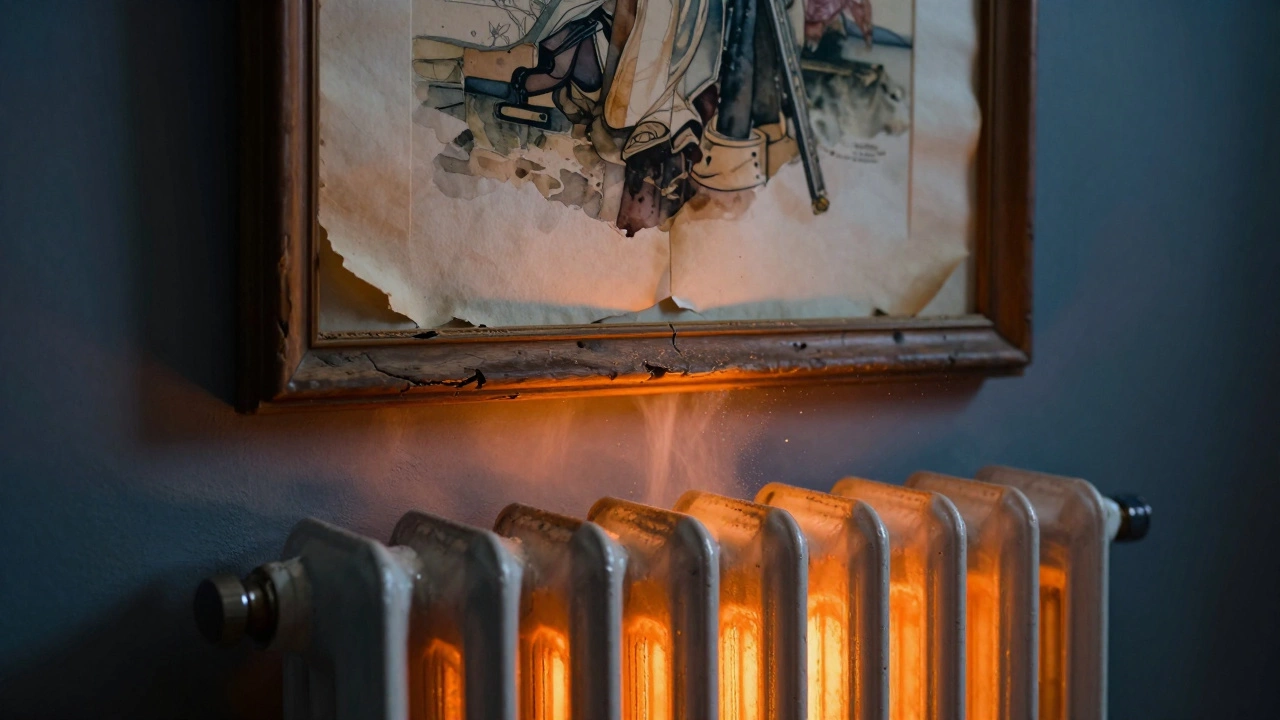
The Heat Zone: Why Radiators and Vents Are Art Killers
It might seem like a cozy spot to place a small print above a baseboard heater or near a central heating vent. In reality, this is one of the fastest ways to destroy your investment. Heat causes materials to expand and contract. For framed art, this constant shifting stresses the joints of the frame, leading to warping or cracking over time.
But the frame isn't the only victim. Paper-based media, such as photographs, watercolors, and unmounted prints, are highly sensitive to temperature fluctuations. Direct heat dries out the paper fibers, causing them to become brittle and yellow. If you have canvas prints, the tension in the fabric changes with heat, which can lead to bubbling or separation from the stretcher bars.
- Avoid direct airflow: Keep art at least two feet away from HVAC vents, radiators, and fireplaces.
- Check for hidden heat: Some modern homes have radiant floor heating that runs up the walls. If the wall feels warm to the touch, it’s too hot for delicate paper art.
- Use glass wisely: Even with UV-protective glass, the microclimate inside the frame will still suffer from rapid temperature changes near heat sources.
The Humidity Trap: Bathrooms and Kitchens Require Caution
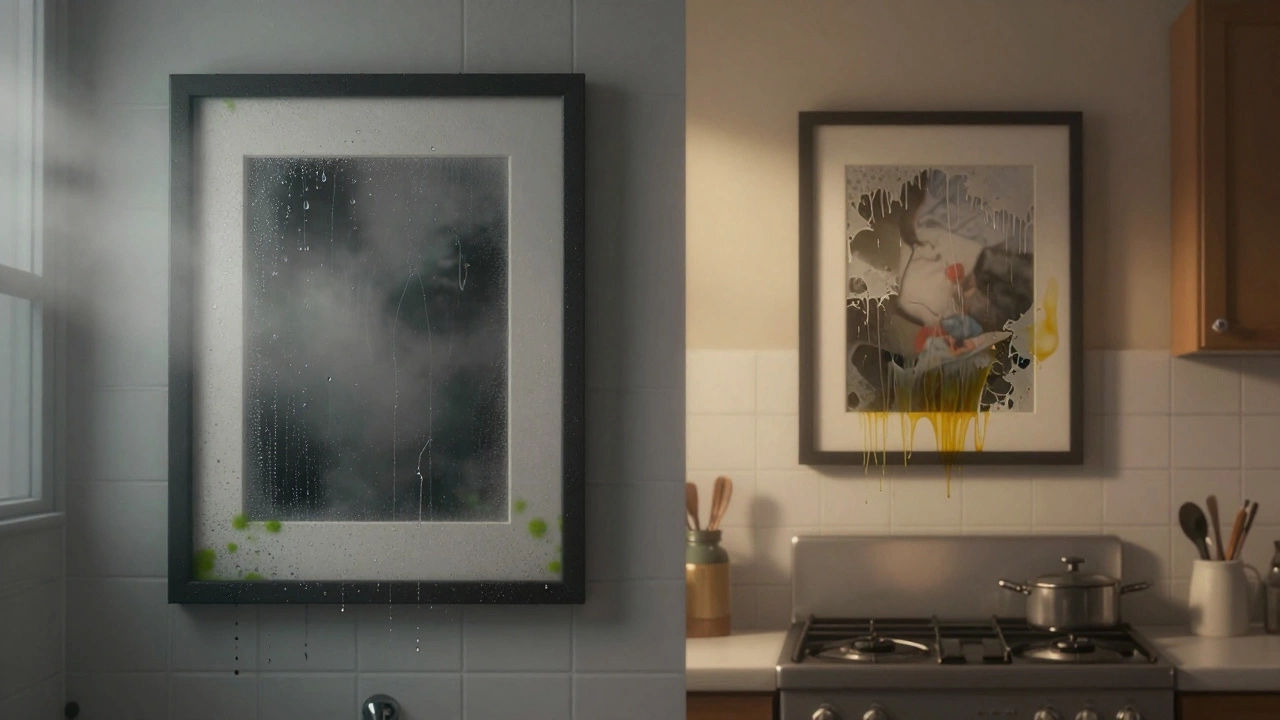
Bathrooms and kitchens are high-humidity environments. Steam from showers and boiling pots creates moisture that settles on walls. When you hang standard framed art in these areas, you invite mold, mildew, and adhesive failure. The glue holding your matting or backing board can soften, causing the artwork to slide down or detach entirely.
If you must hang art in a bathroom, ensure it is in a low-moisture zone, far from the shower and tub. Better yet, use sealed acrylic instead of glass to prevent condensation buildup between the frame and the image. In kitchens, avoid placing art directly above stovetops or sinks. Grease particles in the air settle on glass and frames, creating a film that is difficult to clean without damaging the finish.
| Room | Risk Factor | Safe Placement Strategy |
|---|---|---|
| Bathroom | Steam & Mold | Far from shower/tub; use sealed acrylic frames |
| Kitchen | Grease & Heat | Above eye level, away from stove/sink; easy-to-wipe frames |
| Laundry Room | Vibration & Dampness | On solid studs; avoid dryers specifically |
The Sunlight Problem: UV Rays Fade Everything
Natural light is beautiful, but ultraviolet (UV) rays are brutal on pigments. Whether it’s an oil painting, a digital print, or a vintage photograph, prolonged exposure to direct sunlight will cause irreversible fading. This process, known as photochemical degradation, breaks down the chemical bonds in dyes and pigments. Once the color is gone, it cannot be restored.
Windows facing south or west receive the most intense sunlight during the day. Avoid hanging valuable or sentimental art on walls adjacent to these windows. If you love the look of art near a window, use curtains or blinds to filter the light during peak hours. Alternatively, invest in museum-grade UV-filtering glass or acrylic. While expensive, it blocks up to 99% of harmful UV rays, extending the life of your art significantly.
Remember, it’s not just about direct sun. Reflected light from large windows or bright white floors can also contribute to fading over several years. Rotate your art collection every six months to ensure even exposure if you’re using natural light-heavy spaces.
The Structural Danger: Drywall Without Studs
Here’s a mistake that leads to more than just aesthetic issues: hanging heavy frames solely on drywall anchors. Standard drywall has a weight limit of about 10-20 pounds per anchor before it begins to pull out. Over time, the weight of the frame, combined with minor vibrations from walking or traffic, can cause the anchor to loosen. When it fails, the frame falls, potentially shattering glass and damaging the artwork.
Always locate the studs behind your drywall. Studs are the wooden or metal beams that form the skeleton of your walls. They can support hundreds of pounds securely. Use a stud finder to locate them-they are typically spaced 16 or 24 inches apart. If you can’t hit a stud, use heavy-duty toggle bolts for masonry or reinforced drywall anchors rated for the specific weight of your frame.
- Light frames (under 5 lbs): Picture hooks or small nails are sufficient.
- Medium frames (5-20 lbs): Plastic anchors or screw-in anchors work well.
- Heavy frames (over 20 lbs): Must be anchored into studs or use toggle bolts.
The Traffic Hazard: Doorways and Hallways
Hanging art in high-traffic areas like hallways, doorways, or next to staircases might seem like a great way to showcase your collection. However, these spots are prone to accidental bumps. Imagine carrying groceries through a narrow hallway and knocking a fragile glass frame off the wall. Or worse, opening a door that swings directly into a picture.
Doors create a “swing zone” that extends several feet into the room. Any art placed within this radius is at risk. Similarly, hallways often have sharp corners where furniture or moving boxes can scrape against the wall. If you must hang art in these areas, choose robust frames without glass, such as canvas wraps or metal prints. These materials are less likely to shatter upon impact.
The Acoustic Interference: Above TVs and Speakers
Modern living rooms often feature large televisions mounted on walls. It’s tempting to flank the TV with matching frames to create a symmetrical look. However, sound waves from speakers can cause lightweight frames to vibrate. Over time, this vibration loosens the hardware holding the frame to the wall. Additionally, the glare from the TV screen can make nearby art difficult to view, defeating the purpose of display.
Keep a buffer zone of at least 12 inches around your television. This prevents visual clutter and reduces the risk of physical contact. If you have a surround-sound system, avoid hanging delicate glass-fronted art directly above or beside large speakers. The bass frequencies alone can rattle loose fittings.
The Layout Error: Too High, Too Low, or Too Crooked
While not physically damaging, poor placement ruins the visual impact of your art. A common mistake is hanging pictures too high because people stand on ladders and align the top of the frame with their eyes. This forces viewers to crane their necks uncomfortably. The ideal height for the center of the artwork is approximately 57 to 60 inches from the floor. This aligns with average human eye level.
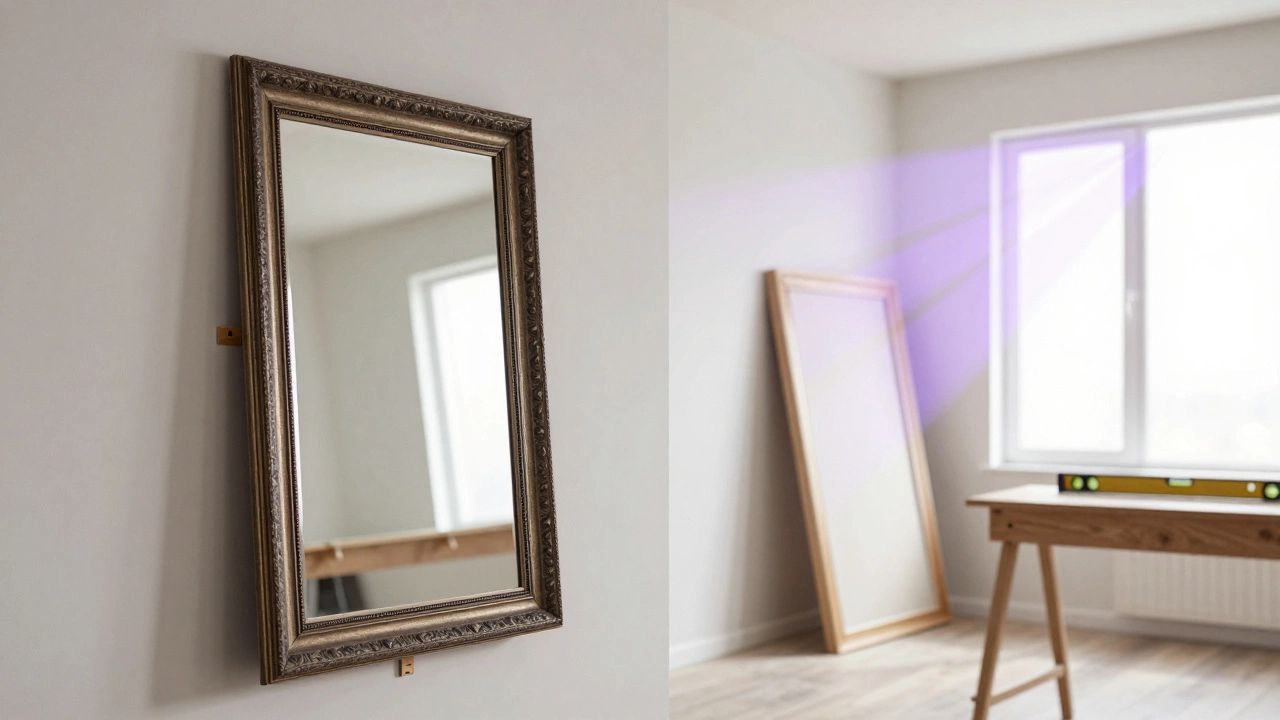
Crooked frames are another sign of rushed installation. Use a spirit level to ensure your hangers are perfectly horizontal. Even a slight tilt draws the eye away from the content and makes the space feel unfinished. For gallery walls, map out the arrangement on the floor first. Take a photo, then transfer the layout to the wall using painter’s tape to mark positions before drilling any holes.
Can I hang pictures above a radiator?
No, you should avoid hanging pictures directly above radiators. The heat causes frames to warp and paper-based art to dry out and yellow. Keep art at least two feet away from heat sources to preserve its condition.
Is it safe to hang art in the bathroom?
Yes, but with caution. Avoid areas directly exposed to steam from showers. Use sealed acrylic frames instead of glass to prevent condensation. Ensure the wall is well-ventilated to reduce mold risk.
How do I prevent my pictures from fading in sunlight?
Avoid direct sunlight by keeping art away from south or west-facing windows. Use UV-protective glass or acrylic glazing. Close curtains during peak sun hours and rotate your art periodically to ensure even exposure.
What is the best way to hang heavy frames?
Always anchor heavy frames into wall studs using screws. If studs are unavailable, use heavy-duty toggle bolts designed for drywall. Never rely solely on plastic anchors for frames over 20 pounds.
At what height should I hang my pictures?
The center of the artwork should be hung at 57 to 60 inches from the floor. This aligns with average adult eye level and ensures comfortable viewing without straining your neck.