
Construction Trade Career Matcher
Answer three simple questions to discover which construction trade aligns best with your priorities regarding income, physical demand, and stability.
Top Recommendation:
Match: 0%You’re standing at a crossroads. Maybe you’re tired of sitting behind a desk, or maybe you just graduated and want a career that doesn’t bury you in student debt for a degree you’ll barely use. You look at the construction industry and see opportunity, but also chaos. Which path actually pays well? Which one won’t wreck your back by age forty? And which skills will still be in demand when robots start laying bricks?
There is no single "best" trade for everyone, but there is a best trade for you if you know what to look for. The construction sector is shifting. Green energy mandates, aging infrastructure, and a massive labor shortage have changed the game. Some trades are becoming obsolete while others are seeing salary spikes. We need to cut through the noise and look at hard data on pay, physical toll, and future stability.
Key Takeaways
- Highest Earning Potential: Elevator Installers and Electricians consistently top the list for median annual wages, often exceeding $100k with experience.
- Best Job Security: Plumbers and HVAC technicians offer near-recession-proof employment because buildings always need water and climate control.
- Lowest Physical Toll: Electricians and Inspectors generally face less heavy lifting than masons or roofers, leading to longer career longevity.
- Fastest Path to Income: General Laborers and Drywall Installers can start earning immediately, though ceiling growth is lower without specialization.
- Future-Proof Skills: Solar Photovoltaic Installers and Smart Home Integrators are growing fastest due to regulatory changes and tech adoption.
Defining Value: What Makes a Trade "The Best"?
Before we rank anything, we have to agree on what "best" means. If you define it solely by starting salary, you might pick a niche field that disappears in ten years. If you define it by job security, you might end up in a role that pays little but never lets you go idle. Most people looking for the best trade in construction are balancing three factors: income potential, physical sustainability, and market demand.
Income potential isn't just about your hourly rate. It’s about overtime opportunities, union benefits, and the ability to run your own business later. A plumber who starts at $25/hour can eventually own a company billing $150/hour. A roofer might make more per hour initially but faces higher injury rates and seasonal downtime.
Physical sustainability is often ignored until it’s too late. Trades like masonry and roofing involve repetitive stress that destroys joints. Electrical work involves climbing ladders and working in tight spaces, but rarely requires carrying 80-pound loads all day. Think about your body as an asset. If you blow out your knees at 35, your earning potential drops drastically unless you move into management or inspection.
Finally, consider market demand. The U.S. Bureau of Labor Statistics projects significant growth for specific roles through 2030. We aren't just building new houses; we're retrofitting old ones. This shift favors trades involved in efficiency upgrades-insulation, windows, HVAC, and electrical grids.
The Heavy Hitters: Electricians and Plumbers
If you want a safe bet with high upside, you look at two trades: electrical and plumbing. These are the central entities of modern building systems. They are complex, regulated, and essential.
Why do electricians rank so high? First, the barrier to entry protects their wages. Licensing requirements are strict. Second, the scope of work is expanding. Every new home needs smart panels, EV chargers, and solar integration. According to recent industry reports, electricians earn a median wage significantly above the national average, often hitting six figures in major metropolitan areas after five years of journeyman experience.
However, it’s not all easy money. You deal with code inspections constantly. One wrong connection can fail a whole system. But compared to digging trenches for sewer lines, the physical strain is manageable. You spend time on ladders and crawling in attics, but you don't rely on brute strength.
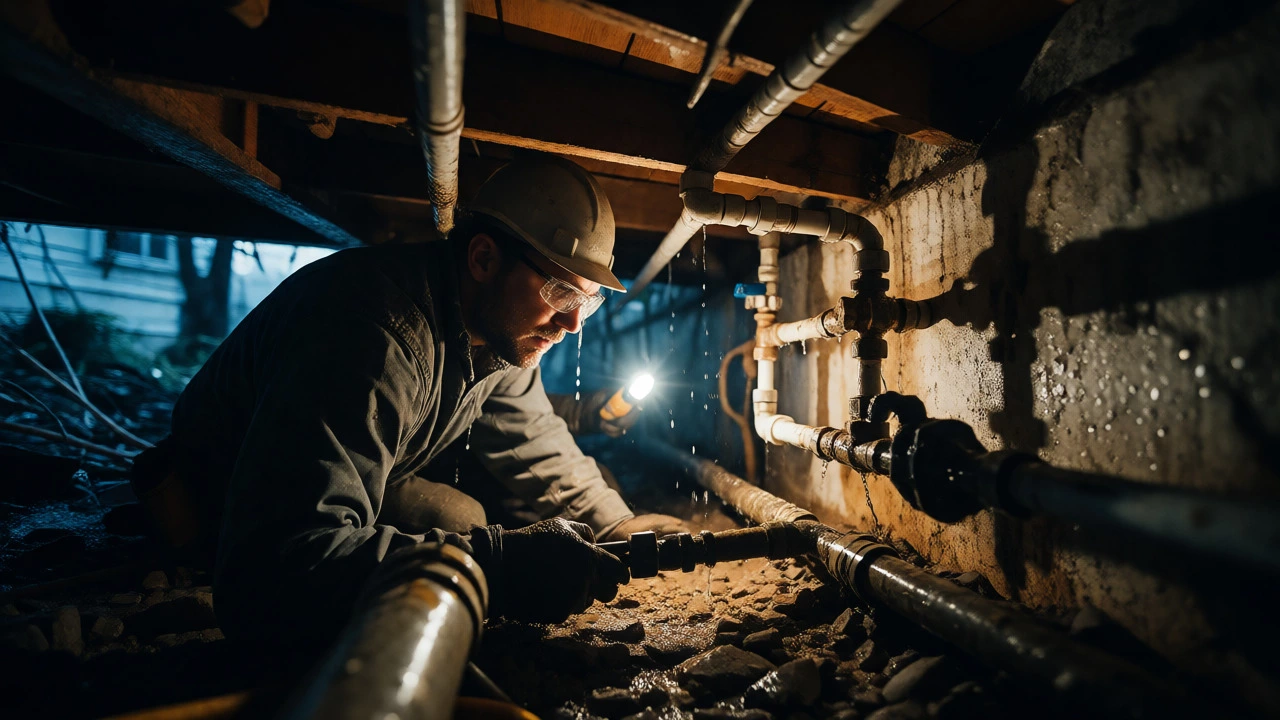
Plumbing offers incredible entrepreneurial potential. Because emergencies happen 24/7, plumbers command premium rates for after-hours calls. This creates a side-income stream that other trades struggle to match. The downside? It’s dirty work. You will encounter sewage, tight crawl spaces, and wet conditions. The physical toll is moderate but consistent. Back injuries are common due to awkward positioning under sinks and tubs.
Climate Control: HVAC Technicians
HVAC Technicians (Heating, Ventilation, and Air Conditioning) are the unsung heroes of comfort. As climate change drives more extreme weather, heating and cooling systems become critical infrastructure rather than luxury items.
This trade sits comfortably in the middle ground. It requires strong diagnostic skills because you’re dealing with refrigerants, electronics, and airflow dynamics. Mistakes here don't just break the machine; they can cause health hazards like mold or carbon monoxide leaks.
The pay is competitive, often matching electricians in commercial sectors. The biggest advantage is variety. You might work on a residential furnace in the morning and a large rooftop chiller unit in the afternoon. The transition to heat pumps and geothermal systems is creating a surge in demand for technicians who understand these newer technologies. If you enjoy troubleshooting and don't mind driving between sites, this is a top-tier choice.
Niche High-Payers: Elevator Installers and Millwrights
When people ask for the highest-paid construction jobs, they often overlook specialized niches. Elevator Installers frequently hold the title for the highest median annual wage in construction. Why? Because elevators are life-safety devices. The liability is huge, the training is rigorous, and the union presence is strong.
Becoming an elevator mechanic takes patience. Apprenticeships are long, and jobs are concentrated in urban areas with high-rises. You won't find many openings in rural towns. But if you live in a city, the pay scale is unmatched. You’re essentially maintaining complex mechanical computers that carry hundreds of people daily.
Millwrights install and repair industrial machinery. While technically part of the broader industrial maintenance sector, they often work within construction projects setting up factories and power plants. Their work requires precision engineering skills. If you like gears, hydraulics, and heavy equipment alignment, this trade pays exceptionally well because few people possess the specialized knowledge to calibrate massive turbines or conveyor systems.
The Physical Reality Check: Roofing, Masonry, and Carpentry
Not every high-demand trade is comfortable. Let's look at the traditional favorites: carpenters, roofers, and masons.
Carpenters are the backbone of framing and finishing. There is immense satisfaction in building something visible. However, the market is saturated with entry-level workers. To make good money, you must specialize. Finish carpentry (trim, cabinets, stairs) pays much better than rough framing because it requires artistic precision and attention to detail. Framing is physically brutal and highly seasonal.
Roofers face the toughest conditions. Working on sloped surfaces under direct sun or rain increases injury risk significantly. The turnover rate is high because many quit due to physical exhaustion. While the demand is steady due to storm damage and aging roofs, the long-term career viability is lower unless you move into estimating or project management early.
Masons (bricklayers and stonemasons) create durable structures. The skill gap is widening as fewer young people enter the trade. This scarcity drives up wages for skilled masons. However, the work is slow-paced and extremely heavy. Lifting blocks and mixing mortar strains the shoulders and knees. It’s a craft for those who value permanence over speed.

Comparison of Top Construction Trades
To help you decide, let's compare the key attributes of the most popular trades. Note that salaries vary heavily by location and union status.
| Trade | Median Annual Salary (Est.) | Physical Toll | Job Security | Entrepreneurial Potential |
|---|---|---|---|---|
| Electrician | $60,000 - $100,000+ | Low-Moderate | Very High | High |
| Plumber | $55,000 - $95,000+ | Moderate-High | Extremely High | Very High |
| HVAC Tech | $50,000 - $90,000 | Moderate | High | High |
| Elevator Installer | $80,000 - $120,000+ | Moderate | High (Urban) | Low |
| Carpenter | $45,000 - $80,000 | High | Moderate | Moderate |
| Roofer | $40,000 - $70,000 | Very High | Moderate | High |
Emerging Trends: Green Energy and Smart Homes
The definition of a "good" trade is evolving with technology. If you want to future-proof your career, look at where regulations are pushing the industry.
Solar Photovoltaic Installers are seeing explosive growth. Government incentives and corporate ESG goals are forcing buildings to adopt renewable energy. While solar installation can be physically demanding (roof work), the combination of electrical knowledge and solar expertise creates a powerful niche. Many electricians are adding solar certifications to double their billable hours.
Similarly, Smart Home Integrators bridge the gap between IT and construction. Modern homes are filled with sensors, automated blinds, and voice-controlled systems. Traditional electricians often lack the software configuration skills for these devices. A trade professional who understands both low-voltage wiring and network protocols becomes indispensable. This is less about swinging hammers and more about configuring ecosystems.
How to Choose Your Path
So, how do you pick? Don't just chase the highest number on a salary sheet. Follow this decision tree:
- Assess Your Tolerance for Dirt: If you hate getting messy, avoid plumbing and excavation. Lean toward electrical or finishing carpentry.
- Evaluate Your Problem-Solving Style: Do you like logical puzzles (Electrical/HVAC) or tangible creation (Carpentry/Masonry)? Diagnostic trades pay better because mistakes cost more.
- Consider Your Location: Are you in a dense city? Elevator and Commercial Electrical work thrives here. Rural area? Plumbing and General Contracting dominate.
- Plan for Age: Can you do this physically for 20 years? If not, choose a trade with a clear path to supervision or inspection (like HVAC or Electrical).
Apprenticeships are the golden ticket. Look for programs sponsored by unions or major contractors. They provide paid education. Avoid schools that charge tuition for basic trade skills; you should be earning while you learn.
Which construction trade makes the most money?
Elevator Installers typically have the highest median annual wages, often exceeding $100,000. Electricians and Plumbers follow closely, especially in unionized markets or when running their own businesses. Specialized millwrights in industrial settings can also earn very high incomes.
What is the easiest construction trade to learn?
General Labor and Drywall Installation are considered the easiest to enter because they require less formal licensing and have shorter training periods. However, "easiest to learn" does not mean "easy to master," and these roles often have lower wage ceilings without further specialization.
Is plumbing better than electrical work?
It depends on your preferences. Plumbing offers higher emergency call-out fees and slightly easier entry into self-employment. Electrical work is cleaner, has a stronger focus on technology integration, and often involves less physical strain. Both are excellent choices with high job security.
Are construction jobs safe?
Construction remains one of the more dangerous industries, particularly regarding falls and struck-by incidents. Roofing and excavation have higher injury rates. Electrical work carries risks of shock and arc flashes. However, strict OSHA regulations and proper safety gear significantly mitigate these risks for trained professionals.
Do I need a college degree for construction trades?
No. Most trades prefer apprenticeships, vocational school certificates, or on-the-job training combined with licensing exams. A four-year degree is rarely required and often results in unnecessary debt. Technical certifications are far more valuable.