Dining Space Optimizer
Answer three simple questions to get personalized recommendations for replacing a traditional dining table.
Solution Name
Description goes here.
Select your options and click "Get Recommendation" to see which dining alternative fits your lifestyle.
You walk into your dining room and realize the massive wooden slab in the center is eating up half the floor space. It’s heavy, it’s hard to clean under, and honestly, it makes the room feel smaller than it actually is. You’re not alone in feeling this way. In Auckland, where many homes feature compact layouts or open-plan living areas, the traditional dining table is often more of a burden than a benefit. The good news? You don’t need a four-legged beast to enjoy meals with friends and family. There are smarter, sleeker, and sometimes cheaper ways to create a functional eating area that actually fits your life.
This guide breaks down practical alternatives to the standard dining set. We’ll look at fixed structures like banquettes, mobile solutions like carts, and multi-functional pieces like kitchen islands. Whether you are renting a small apartment in Ponsonby or renovating a suburban bungalow, there is a solution here that saves space without sacrificing style.
Why Ditch the Standard Dining Table?
Before we swap out the furniture, let’s be clear about why you might want to. A standard rectangular table requires clearance on all sides-usually about 90 centimeters-to allow chairs to pull out comfortably. If your room is tight, this clearance requirement effectively shrinks your usable square footage significantly.
Beyond space, there’s the issue of flexibility. A heavy oak table is basically anchored in place once loaded with plates and decor. If you host a dinner party one night and need to do yoga the next morning, moving that table is a workout. Plus, tables collect clutter. They become drop zones for mail, keys, and random objects because they are always there, waiting to be used as surfaces rather than dedicated eating spaces.
The Kitchen Island: The Ultimate Multi-Tasker
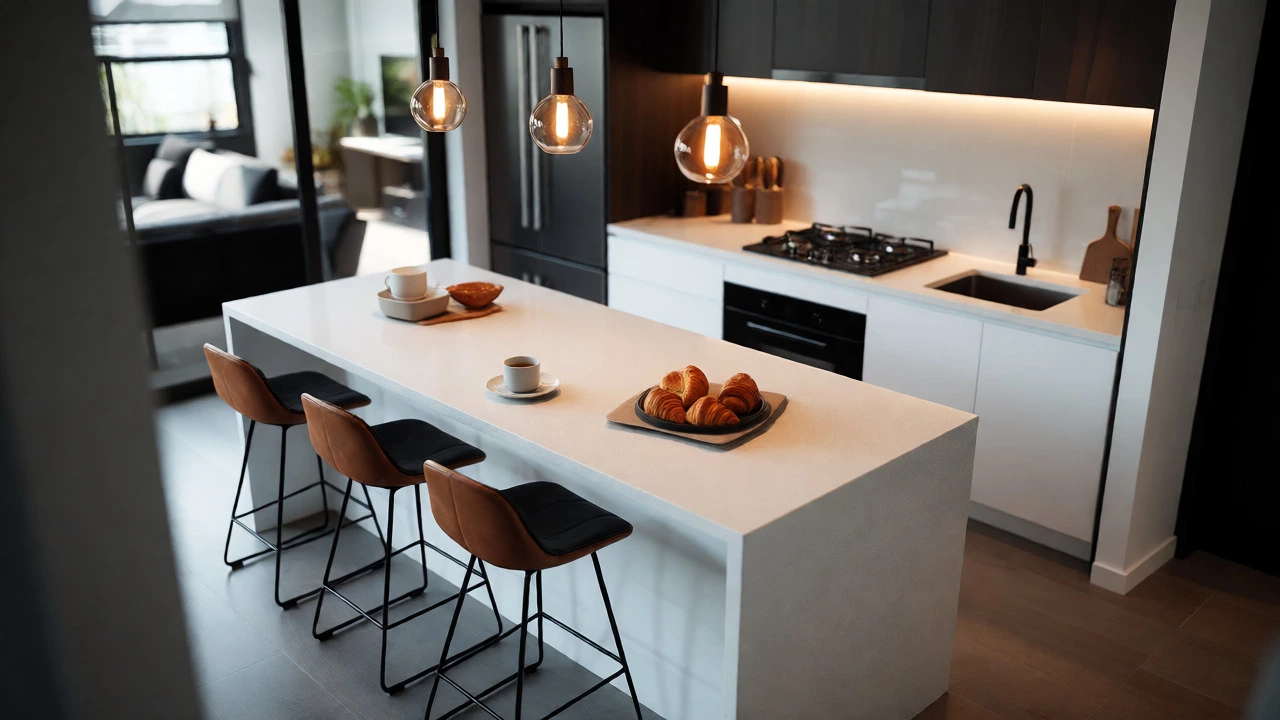
If you have an open-plan kitchen, the kitchen island is likely your best friend. It serves as prep space during the day and a dining spot at night. Unlike a separate dining table, an island integrates directly into the workflow of the home.
To make an island work as a primary dining spot, you need the right seating. Bar stools are the obvious choice, but comfort matters. Look for stools with footrests and back support if you plan to sit there for more than ten minutes. If your island has an overhang of at least 30 centimeters, you can fit two or three people comfortably on one side. For larger groups, consider adding a bench along the opposite wall or using a combination of stools and freestanding chairs.
Pro Tip: Ensure the stool height matches the counter. Standard counters are 90cm high, requiring 65-70cm stools. Breakfast bars are often higher (100-110cm), needing taller stools. Getting this wrong leads to uncomfortable elbows and cramped knees.
Banquette Seating: Built-In Efficiency
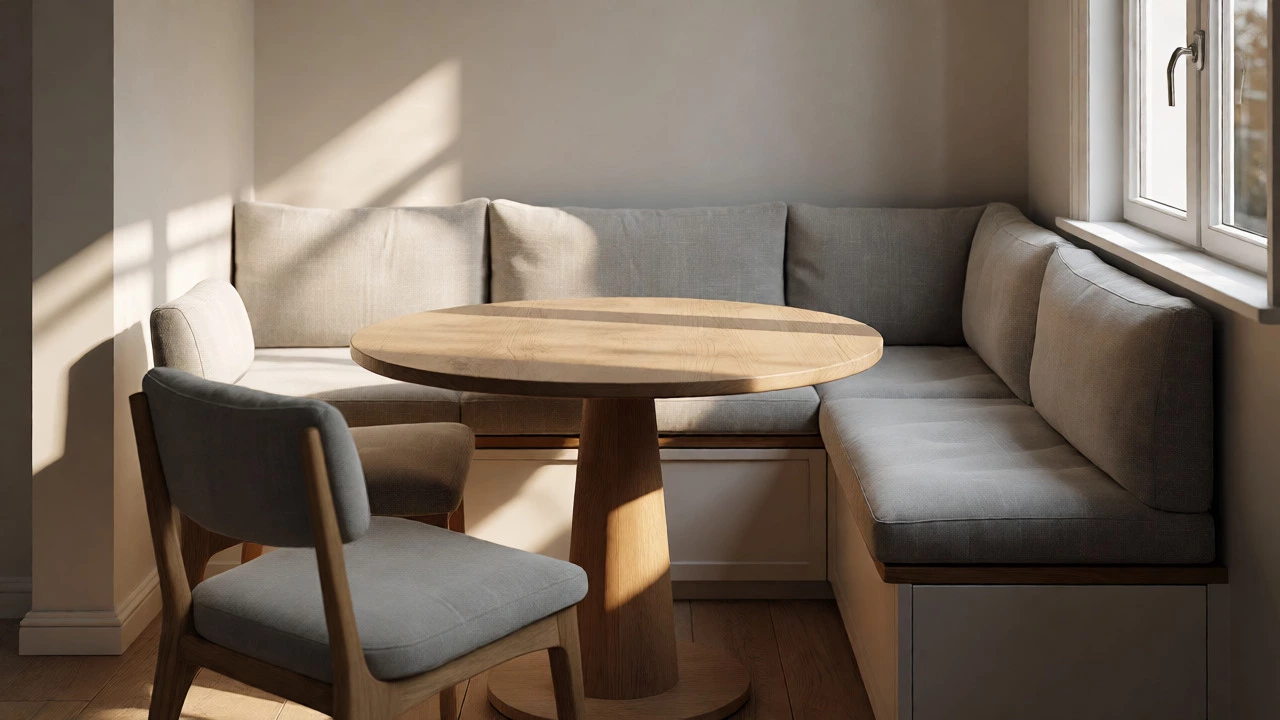
A banquette is a built-in bench seat, usually tucked into a corner or against a wall. This is a game-changer for small dining rooms because it eliminates the need for chair backs on one or two sides, reclaiming nearly a meter of floor space.
Think of a booth in a diner. That’s essentially what a banquette is, but customized for your home. You can build one permanently with storage underneath (great for hiding board games or extra linens) or buy a freestanding upholstered bench. Pair it with a round pedestal table or even a wall-mounted folding table, and you have a cozy, intimate dining zone that disappears when not in use.
| Feature | Banquette Seating | Traditional Chairs |
|---|---|---|
| Floor Space Used | Low (flush against wall) | High (requires clearance behind back) |
| Storage Potential | High (under-seat storage possible) | None |
| Mobility | Fixed or Semi-Fixed | Highly Mobile |
| Cost | Medium-High (custom build) | Variable (can be cheap) |
Folding Wall Tables: Invisible Dining
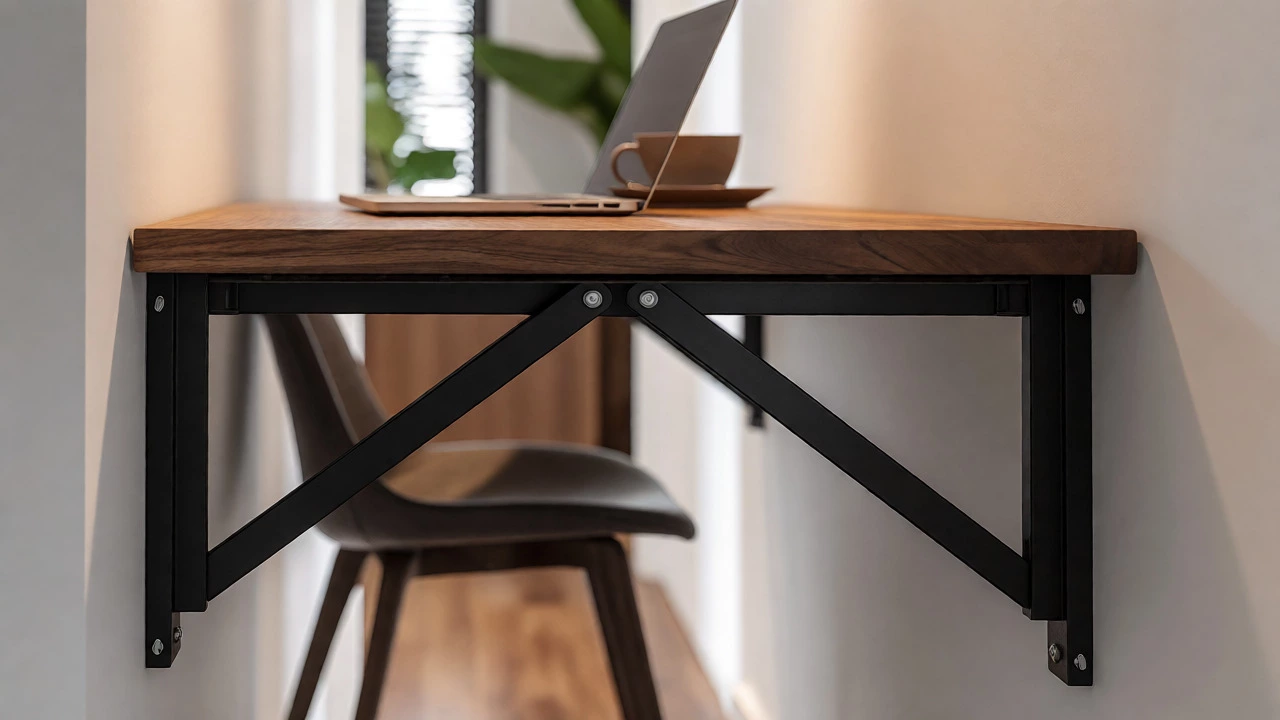
For renters or those with extremely narrow rooms, a folding wall table is the hero solution. These units mount directly to the wall and fold flat when not in use. When deployed, they provide a sturdy surface for two to four people.
Modern designs have moved far beyond the flimsy plywood shelves of the past. Look for models with solid wood tops and metal brackets rated for at least 50kg. Some include built-in shelving above the table for dishes or wine glasses. Because the table folds away, you can use the space for a home office desk, a craft station, or just empty floor space for kids to play. It’s the ultimate dual-purpose hack.
Kitchen Carts and Trolleys: Portable Flexibility
Not everyone wants a permanent fixture. A kitchen cart offers mobility and versatility. You can roll it out for dinner, then tuck it into a corner or pantry when guests leave.
Choose a cart with a large top surface. Many modern carts come with extendable leaves, allowing you to expand the surface from a breakfast bar size to a full dinner setting. Wheels should lock securely to prevent wobbling while you eat. This option is particularly useful if your “dining room” is actually a hallway or a nook in the living room. You aren’t committing to a specific layout; you’re creating a temporary zone.
Coffee Tables and Low Seating: The Casual Approach
Who says you have to sit at counter height to eat? If your lifestyle is casual, consider using a large coffee table in the living area as your main dining spot. Pair it with plush floor cushions, poufs, or low armchairs.
This setup works best for families who prefer relaxed dinners, pizza nights, or board game evenings. It blurs the line between the living room and dining area, making the home feel larger and more cohesive. Just ensure the coffee table is sturdy enough to hold hot plates and drinks without tipping. Glass tops can be slippery, so textured wood or stone is safer.
Bar Counters and Half-Walls
If your home has a pass-through window or a half-wall separating the kitchen from the living area, use that structure as a natural divider and dining edge. Installing a wide countertop over the half-wall creates a long, continuous surface perfect for stools.
This approach keeps sightlines open. You can cook while talking to guests seated on the other side. It’s less formal than a enclosed dining room but encourages interaction. To define the space visually, hang pendant lights directly over the counter. Lighting plays a huge role in signaling “this is where we eat,” even without walls.
How to Choose the Right Alternative
Selecting the right substitute depends on three factors: frequency of use, number of regular diners, and available floor plan.
- Small Apartment (1-2 people): Go for a folding wall table or a narrow console table with drop leaves. Maximize vertical space.
- Open Plan Family Home (4+ people): Invest in a large kitchen island with integrated seating or a custom banquette in a corner.
- Rental Property: Stick to portable options like kitchen carts or freestanding benches that won’t require drilling into walls.
- Formal Occasions: If you host large dinners rarely, keep a lightweight card table stored in the garage or closet, and use a daily alternative for everyday meals.
Common Pitfalls to Avoid
Don’t underestimate lighting. Without a central overhead light or focused pendants, a makeshift dining area feels like a workspace. Add warm-toned bulbs to create ambiance.
Also, watch out for ergonomics. Eating at a too-high counter for hours causes neck strain. If you choose a high-top solution, ensure the stools have adequate back support. And finally, consider traffic flow. Don’t place a bench in front of a doorway or a cart in a narrow hallway where passing becomes a shuffle-dance.
Can I use a desk as a dining table?
Yes, absolutely. A sturdy writing desk can serve as a dining table, especially in small spaces. However, desks are often narrower than dining tables, which limits elbow room. To make it work, pair it with slim-profile chairs that tuck completely under the desk when not in use. Avoid using expensive wooden desks if you eat messy foods, as spills can damage the finish quickly. Consider using placemats or a protective runner to preserve the surface.
What is the minimum space needed for a dining nook?
You can create a functional dining nook in as little as 1.5 meters by 1.5 meters. This allows for a small round table (approx. 80cm diameter) and two chairs. If you use a banquette instead of chairs on one side, you can reduce the required depth to around 1.2 meters, making it feasible for very tight corners or alcoves.
Are folding wall tables stable?
Modern folding wall tables are quite stable if installed correctly. The key is anchoring them into wall studs, not just drywall. Look for models with diagonal bracing arms that lock into place. Cheap versions may wobble if the mounting hardware is weak or if the wall material is hollow. Always check the weight rating before placing heavy serving dishes on them.
How do I define a dining area without a table?
Use visual cues to define the zone. An area rug placed under the seating area helps anchor the space. Pendant lighting hanging directly over the eating surface signals its purpose. Additionally, changing the flooring material (e.g., from hardwood to tile) or using a different wall color can psychologically separate the dining zone from the rest of the room.
Is a kitchen island better than a dining table for entertaining?
It depends on the type of entertainment. For casual gatherings, snacks, and conversation, an island is superior because it encourages movement and interaction. For formal plated dinners, a traditional table is better because it provides ample space for multiple courses, serving platters, and proper place settings. Many homeowners opt for both: an island for daily use and a small extendable table for special occasions.