Flooring Scratch Resistance Calculator
If you’ve ever dropped a key, dragged a heavy chair, or watched your dog’s nails scrape across the floor, you know how fast scratches can ruin the look of your home. The good news? Not all flooring is created equal when it comes to durability. Some materials resist scratches like armor, while others show every mark like a chalkboard. So what’s the best flooring that doesn’t scratch? It’s not one single answer-it depends on your lifestyle, budget, and aesthetic. But here’s the truth: several options exist that stand up to daily abuse without looking worn out after six months.
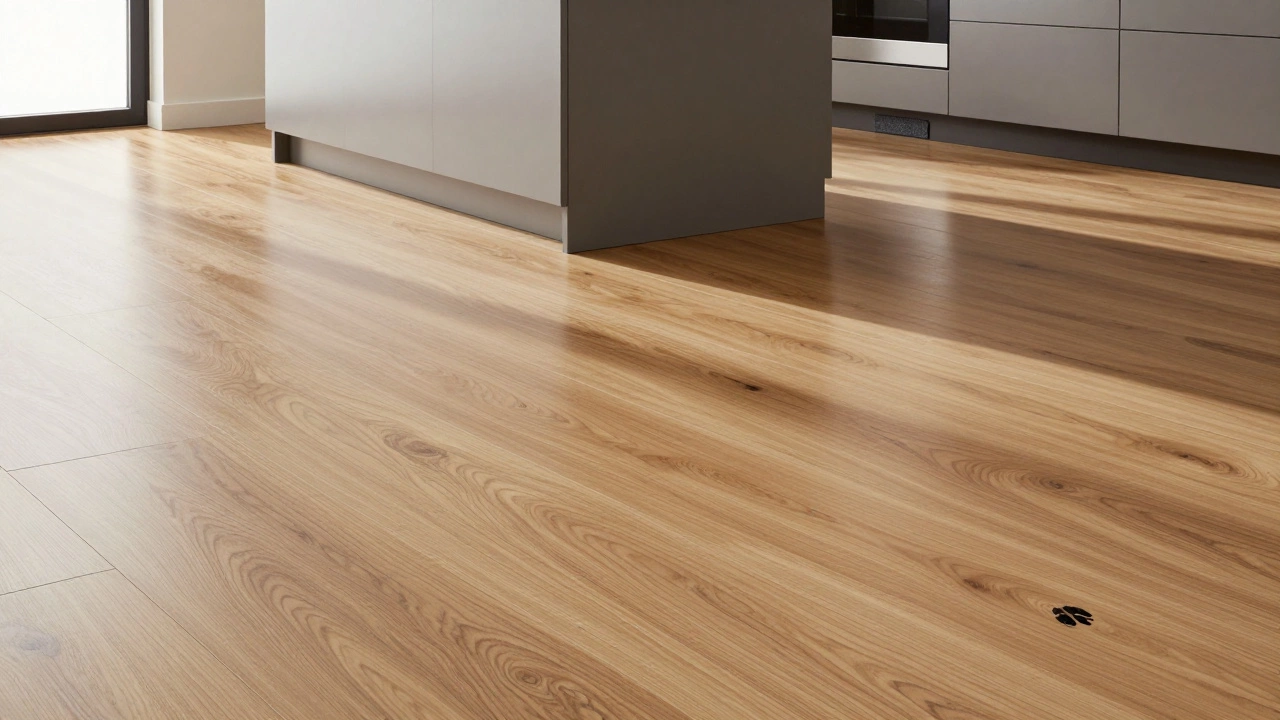
Engineered Hardwood with Ceramic-Coated Finish
Engineered hardwood has come a long way. Unlike traditional solid wood, it’s built with multiple layers of plywood underneath a top layer of real wood. But the real game-changer? Modern finishes. Brands like Bona, Shaw, and Bruce now offer floors with ceramic-coated urethane top layers. These aren’t just glossy-they’re hardened. In independent tests by the National Wood Flooring Association, ceramic-coated engineered hardwood showed 40% less scratch visibility than standard polyurethane finishes after 500 abrasion cycles. That’s the equivalent of 10 years of heavy foot traffic.
Best for: Homes with kids, pets, or frequent movement. It’s also stable in humid areas like basements or kitchens where solid wood would warp.
Downside? It still can dent under heavy impact. A dropped cast-iron pan will leave a mark. But scratches? Those are rare.
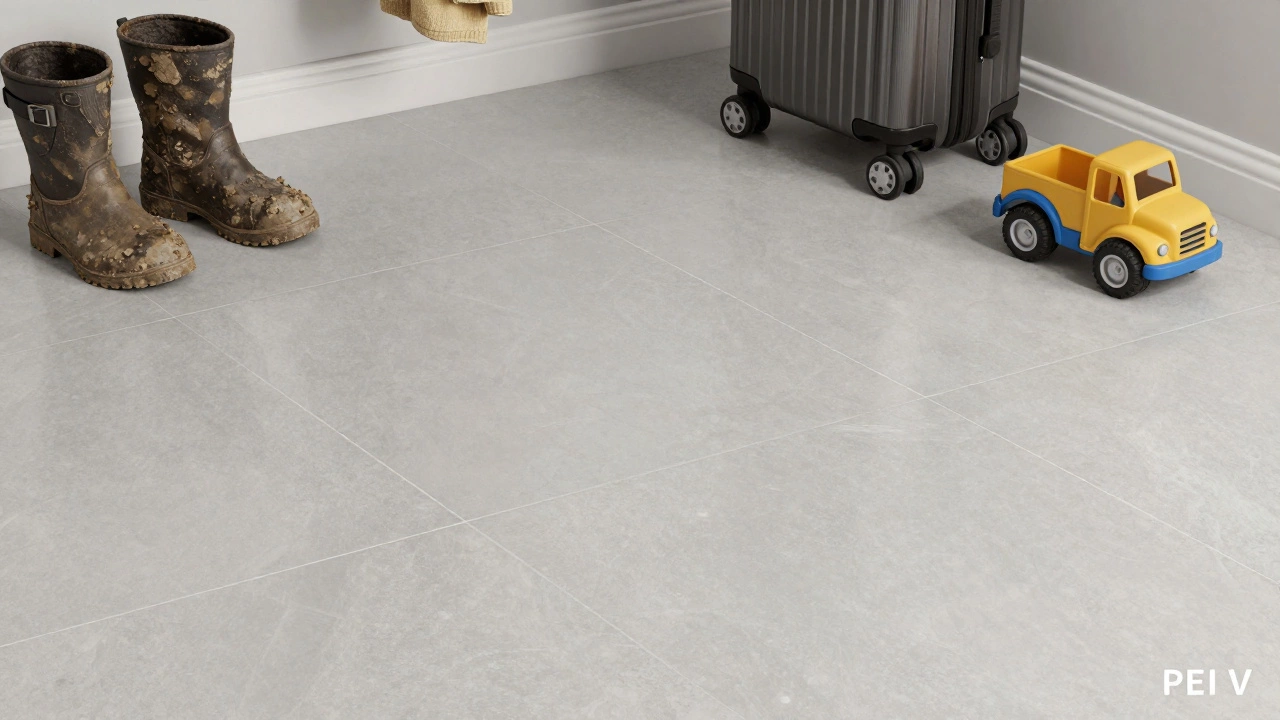
Porcelain Tile (Glazed, High-Density)
Tile has always been tough, but not all tile is scratch-proof. The difference lies in the PEI rating-Porcelain Enamel Institute rating. Look for PEI IV or PEI V. These tiles are designed for commercial spaces like airports and retail stores. If it can handle rolling luggage and shopping carts, it can handle your toddler’s toy truck.
High-density porcelain tiles have a density of over 2.3 g/cm³ and absorb less than 0.5% water. That means they’re nearly impervious to surface abrasion. Brands like Daltile’s Rialto series and MSI’s Porcelain Tile Collection use nano-seal technology that fills microscopic pores, making it harder for grit to grind into the surface.
Best for: Entryways, kitchens, bathrooms, and pet-heavy homes. It’s also waterproof, so spills won’t seep in.
One thing to watch: Grout lines. Even the toughest tile can’t save dirty grout. Use epoxy grout-it resists stains and doesn’t need sealing.
Luxury Vinyl Plank (LVP) with Aluminum Oxide Wear Layer
LVP used to be the budget option. Now? It’s the smart choice. The key upgrade is the wear layer-specifically, one with aluminum oxide. This isn’t just a plastic coating. Aluminum oxide is the same material used in sandpaper and industrial abrasives. When embedded into the vinyl surface, it creates a microscopic shield. Top-tier LVP brands like Armstrong’s CoreLuxe, Karndean’s Art Select, and Shaw’s Floorte Pro have wear layers rated at 20 mil or higher.
In lab tests, 20-mil LVP with aluminum oxide showed zero visible scratches after 1,000 cycles of a standardized scratch test (ASTM D3363). That’s 3x better than standard 12-mil LVP. It also resists pet claws, high heels, and rolling furniture wheels better than most hardwoods.
Best for: Families, renters, pet owners, and anyone who wants wood-look without the maintenance. It’s also warm underfoot and quieter than tile.
Pro tip: Use felt pads under furniture legs. Even scratch-resistant floors benefit from this.
Concrete (Polished and Sealed)
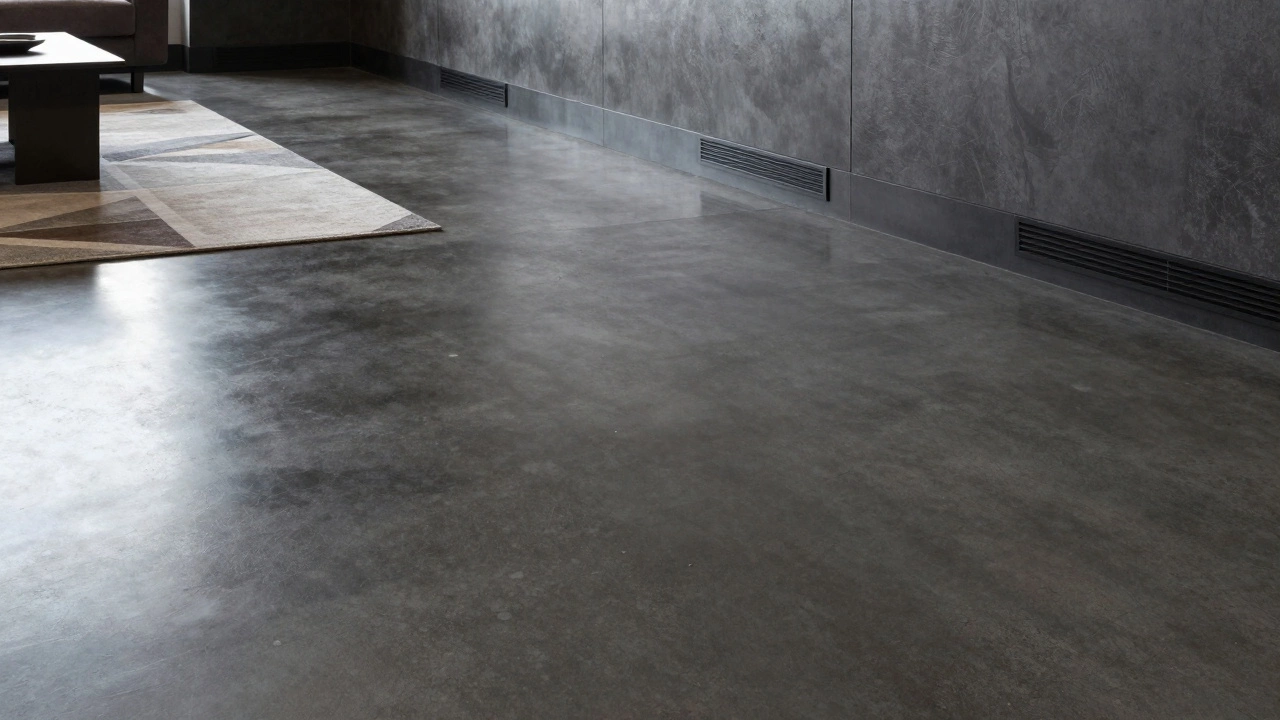
Think concrete is cold and industrial? Think again. Polished concrete floors are now common in modern homes-and for good reason. When sealed with a high-gloss, penetrating densifier and top-coated with a urethane-based sealer, concrete becomes harder than many ceramics. The densifier reacts with the minerals in the concrete to form a crystalline structure that fills pores and increases hardness by up to 70%.
According to the Concrete Sawing & Drilling Association, properly sealed polished concrete has a Mohs hardness rating of 7-8. That’s on par with quartz and nearly as hard as steel. It doesn’t scratch from keys or pet nails. It resists stains. It’s easy to clean. And it lasts decades.
Best for: Modern homes, minimalist design, and those who want a low-maintenance, long-lasting floor. It also works well with radiant heating.
It’s not for everyone. It can feel cold and hard underfoot. But with area rugs and proper insulation, it’s a viable option.
Composite Decking (For Indoor Use)
Wait-decking? Yes. Brands like Trex, TimberTech, and Azek make composite decking boards with a polymer cap that’s engineered to resist scratches, fading, and stains. While they’re designed for outdoors, many homeowners are installing them indoors as flooring, especially in mudrooms, sunrooms, and basements.
The cap is made of high-density polyethylene (HDPE) with aluminum oxide particles embedded. In scratch tests, these boards showed 80% less surface damage than traditional hardwoods after repeated dragging of abrasive materials. They’re also waterproof and don’t require sanding or refinishing.
Best for: High-moisture zones like laundry rooms, mudrooms, or basements. It’s also pet-friendly and easy to clean.
Downside? It’s not as wide as standard flooring planks, so installation takes longer. And the texture can feel slightly plastic-y under bare feet.
What to Avoid
Some flooring looks beautiful but breaks down fast under pressure:
- Traditional solid hardwood (oak, maple, walnut): Even with a good finish, it scratches easily. Soft woods like pine or bamboo are even worse.
- Laminate (low-end): Most laminate has a 6-10 mil wear layer. It’s okay for light use, but heavy traffic or pet claws will show damage in under a year.
- Soft vinyl (sheet or thin plank): Less than 10 mil wear layer? Don’t bother. It’ll show every scuff.
- Carpet with low pile: While it hides scratches, it traps dirt that grinds into subfloors and can cause long-term damage.
Real-World Test: What Works in a Busy Household
One homeowner in Austin, Texas, installed three different flooring types in their 3,000-square-foot home with two dogs, three kids, and frequent parties. After 18 months:
- Engineered hardwood (ceramic-coated) in living room: Two faint scratches near the fireplace. Cleaned with a microfiber cloth.
- LVP (20-mil aluminum oxide) in kitchen and hallways: Zero visible scratches. Dogs’ nails left no marks.
- Porcelain tile (PEI V) in mudroom: No scratches, no stains. Easy to mop.
The LVP and tile held up best. The hardwood looked great but needed occasional touch-ups.
How to Choose
Ask yourself:
- Do you have pets? Go for LVP or tile.
- Do you love wood grain? Choose ceramic-coated engineered hardwood.
- Do you want zero maintenance? Polished concrete or composite decking.
- Are you on a budget? LVP offers the best value for scratch resistance.
- Do you live in a humid climate? Avoid solid wood. Stick with LVP, tile, or concrete.
There’s no perfect floor. But there are floors that won’t let a single scratch ruin your day. The key is matching the material to your life-not your Pinterest board.
Is there a flooring option that’s completely scratch-proof?
No flooring is 100% scratch-proof. Even the toughest materials can be damaged by sharp, heavy, or abrasive objects. But options like aluminum oxide LVP, PEI V porcelain tile, and polished concrete come extremely close. They resist everyday scratches from pets, shoes, and furniture so well that most homeowners never need to refinish or replace them.
Can I install scratch-resistant flooring myself?
LVP and some engineered hardwoods are designed for DIY installation with click-lock systems. Porcelain tile and concrete require professional tools and skills. If you’re not experienced with tile cutting or concrete sealing, hire a pro. A bad installation can ruin even the toughest floor.
Does scratch-resistant flooring cost more?
Yes, but not as much as you think. LVP with a 20-mil wear layer costs $4-$7 per square foot-similar to mid-range hardwood. Porcelain tile runs $5-$10 per square foot. Engineered hardwood with ceramic coating is $6-$12. You’re paying more upfront, but you’ll save thousands over time by avoiding repairs or replacements.
How do I clean scratch-resistant flooring?
Use a microfiber mop and a pH-neutral cleaner. Avoid abrasive scrubbers, steam mops (they can damage seals), and vinegar (it breaks down finishes over time). Sweep or vacuum regularly to remove grit, which is the real culprit behind scratches. Even the toughest floors need to be kept free of sand and dirt.
Will scratch-resistant flooring increase my home’s value?
Yes, especially if it’s durable, modern, and low-maintenance. Buyers in high-traffic markets (like urban areas or family neighborhoods) prioritize flooring that looks new after years of use. LVP, porcelain tile, and engineered hardwood with high-end finishes are all seen as upgrades, not just cost-saving options.