Refrigerator Placement Checker
Check Your Kitchen Layout
Select any common refrigerator placement mistakes you might have in your kitchen. This tool identifies potential issues and provides solutions based on your selections.
Where you put your refrigerator isn’t just about convenience-it’s about how your whole kitchen works. A fridge that’s tucked into a corner or crammed next to the oven might look fine on a showroom floor, but in real life, it turns meal prep into a chore. Too many people focus on style over function and end up with a fridge that’s hard to open, takes too long to reach, or overheats because it’s stuck where the sun hits all afternoon. Here are the seven worst places to put a refrigerator-and why avoiding them makes your kitchen faster, safer, and easier to live in.
Right next to the oven or stove
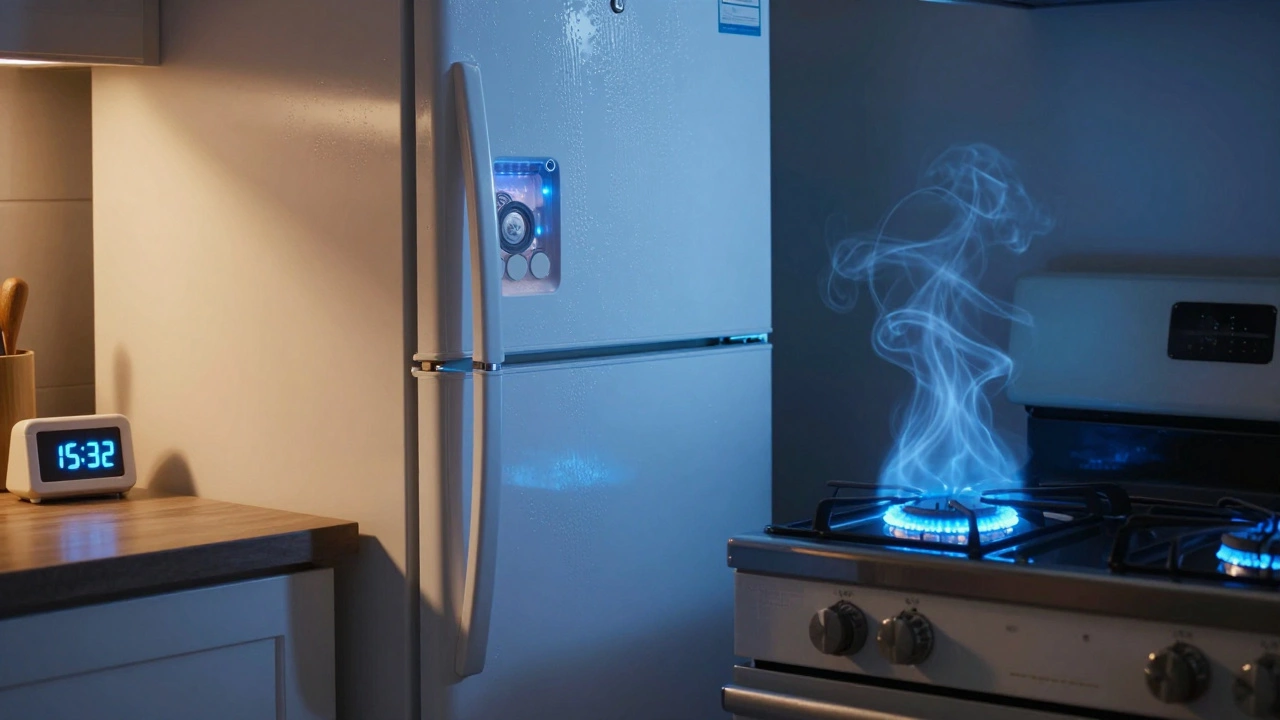
It sounds logical: the fridge and stove are both used constantly during cooking, so put them close together. But heat is the enemy of refrigeration. Ovens, stovetops, and even toasters pump out serious heat when they’re running. A fridge sitting right next to that heat has to work twice as hard to keep things cold. That means higher electricity bills, more wear on the compressor, and a shorter lifespan. In tests by the Appliance Energy Efficiency Lab, fridges placed within 12 inches of a running stove used 30% more power than those with proper clearance. Even if you don’t cook all day, that residual heat adds up. Give your fridge at least 18 inches of breathing room from any heat source.
Directly across from the kitchen entrance
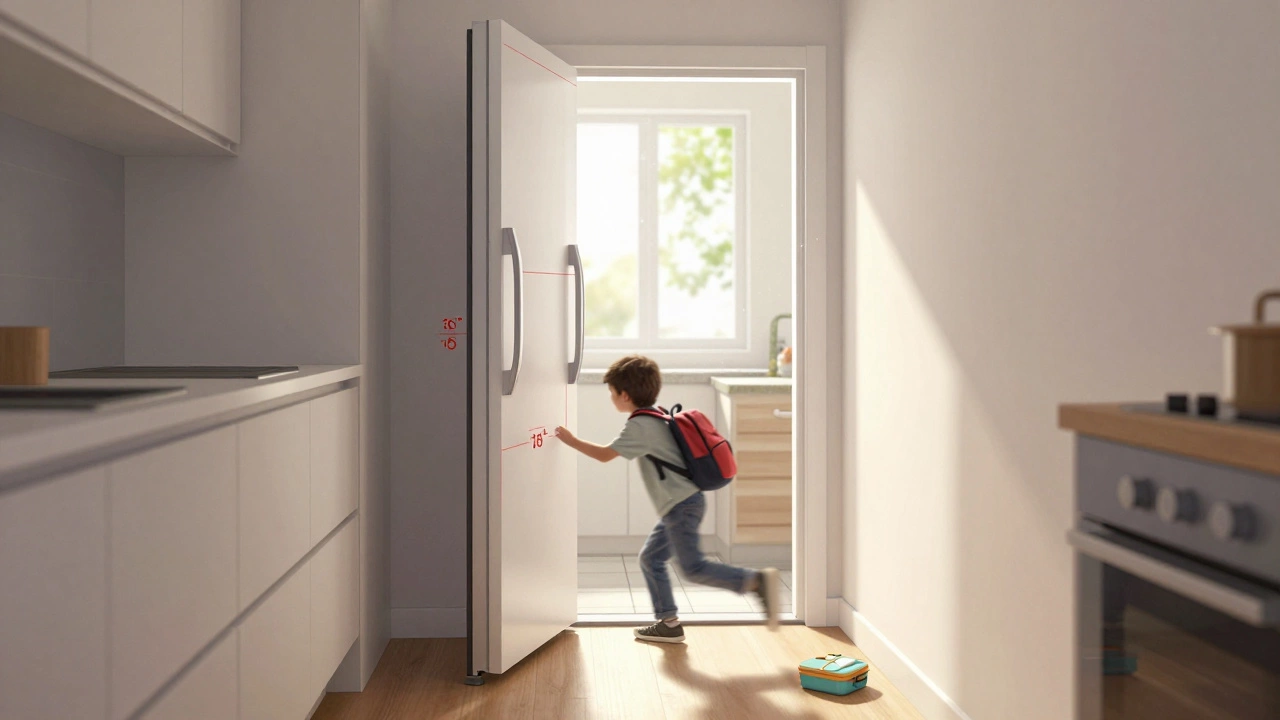
If you walk into your kitchen and the fridge door swings right into your path, you’re setting up for collisions. People walk through kitchens constantly-kids running to the backyard, guests grabbing a drink, you rushing out the door with lunch. A fridge door that swings open into a walkway becomes a hazard. It’s not just about bumping heads; it’s about flow. Kitchens with clear traffic lanes feel bigger and more open. The National Kitchen and Bath Association recommends keeping a 36-inch-wide clear path between the fridge and any doorway or main walkway. If your fridge door opens toward the entry, consider switching the hinge side or repositioning it entirely.
In a hot corner with direct sunlight
Sunlight doesn’t just fade your curtains-it can raise the temperature of your fridge by 10°F or more. That’s enough to make your compressor run nonstop, especially during summer. Windows are great for natural light, but not if they’re shining directly on your appliance. I’ve seen kitchens in Auckland where the fridge sat under a south-facing window, and in January, the condenser coils were so hot the homeowner could feel the warmth from three feet away. Even if you don’t notice it, that extra heat is stressing the motor. Move the fridge away from windows, or install blackout shades if relocation isn’t possible. A fridge in full sun can last half as long as one in shade.
Behind a closed door or in a pantry with no ventilation
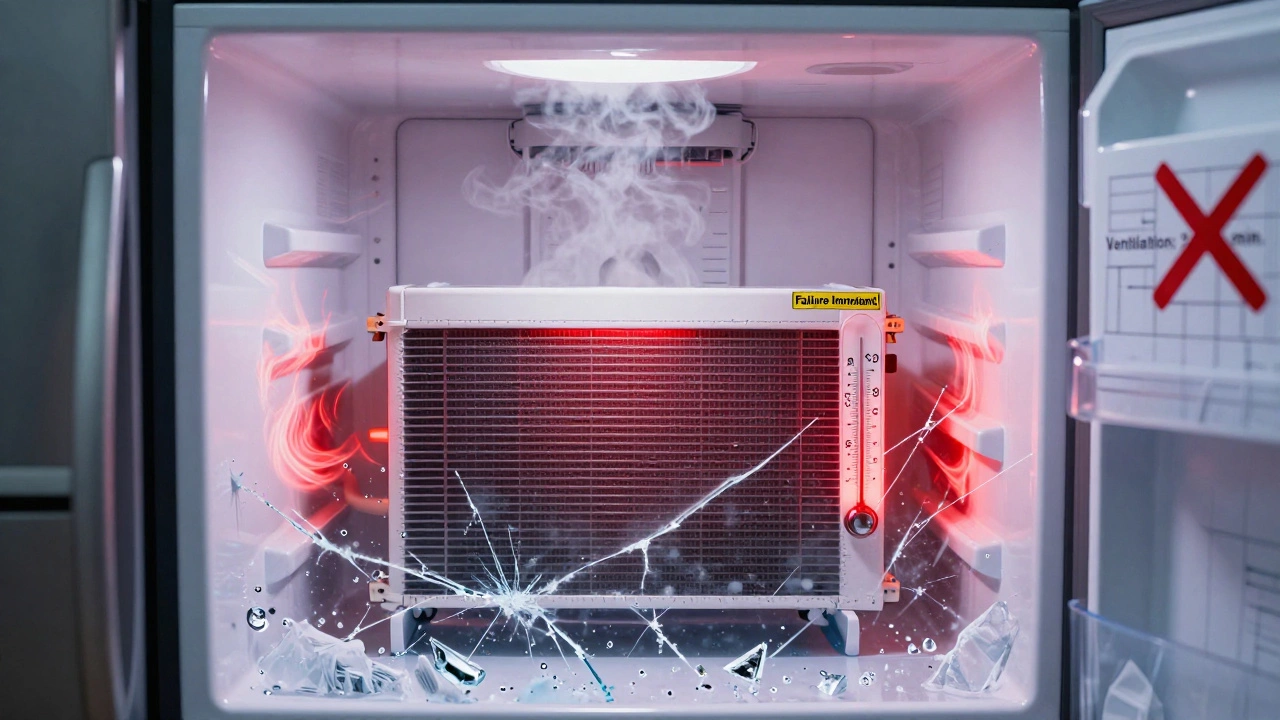
Some people think hiding the fridge behind a cabinet door or in a pantry makes the kitchen look cleaner. But fridges need airflow. They pull air in from the back and sides to cool their condenser. If you seal them in a tight space with no gaps, heat builds up and the system can’t shed it. That leads to overheating, frequent shutdowns, and eventual failure. The Consumer Reports lab found that fridges installed in enclosed cabinets without at least 2 inches of clearance on all sides failed 40% faster than those with proper ventilation. If you want a built-in look, go with a panel-ready model designed for cabinetry-but even then, leave room for air to move. No exceptions.
Under a counter without proper clearance
Under-counter fridges look sleek, but they’re not just mini fridges. They’re full-sized units crammed into tight spaces. Many homeowners assume that if it fits the hole, it’ll work. It won’t. Most under-counter fridges need 4-6 inches of space above for heat to escape. Without it, the top vents get blocked, and the compressor overheats. I’ve helped fix three fridges in the last year alone that died because they were shoved under a granite countertop with zero clearance. Always check the manufacturer’s specs. If the manual says “minimum 5 inches above,” that’s not a suggestion-it’s a requirement. If you’re remodeling, build the space right the first time.
Next to the dishwasher
Dishwashers aren’t just noisy-they’re wet. Every time it runs, steam escapes, and that moisture finds its way into the fridge’s electronics and seals. Over time, that dampness causes rust on the condenser coils, warps door gaskets, and leads to frost buildup inside. The result? A fridge that doesn’t seal properly, leaks, or develops mold around the door frame. In homes with frequent dishwashing, the humidity near the fridge can increase by 25%. That’s enough to ruin seals in under two years. Keep the fridge at least 3 feet away from the dishwasher. If space is tight, install a vent hood over the dishwasher or use a model with a built-in steam vent.
In a cold garage or unheated space
Garages are tempting for extra storage, but most fridges aren’t built for freezing temperatures. If it drops below 40°F (4°C), the thermostat can’t sense the cold properly and shuts off. That means your food warms up, spoils, and you don’t even know it. Even if the fridge runs, the oil in the compressor thickens in the cold, causing mechanical strain. Many manufacturers warn against garage use unless the fridge is labeled “garage-ready.” Even then, insulation matters. A fridge in a New Zealand garage in July might be fine, but in August, when temperatures dip to 3°C at night, you’re risking food safety. If you must store a fridge in a garage, get one with a temperature-controlled compartment, or insulate the space properly. Otherwise, keep it inside.
What should you do instead?
Good fridge placement follows the kitchen work triangle: sink, stove, fridge. The fridge should be near the prep area but not in the way. Aim for 4-6 feet between the fridge and the main cooking zone. Keep it away from heat, sun, and moisture. Leave room for airflow. Make sure the door opens smoothly without hitting cabinets, walls, or people. Test the swing before installing. If you’re redesigning, sketch your layout on paper and walk through the motions-opening the fridge, grabbing a bowl, walking to the sink, reaching for a pan. If it feels awkward, it is awkward. Your kitchen should feel effortless, not like an obstacle course.