Bathroom Finish Compatibility Checker
Select Your Finishes
Verdict
Summary of analysis
Design Advice:
Select your finishes and click Analyze to see how they work together.
The Great Bathroom Debate: What Should Your Faucet Match?
You’re standing in the showroom, holding a beautiful brushed nickel faucet. It looks perfect against the white ceramic sink you picked out yesterday. But then you glance at your towel bars, which are matte black. Suddenly, doubt creeps in. Do you change the faucet to match the hardware? Or do you keep the faucet because it complements the sink’s style? This is one of the most common dilemmas in bathroom renovation, and the answer isn’t as simple as “yes” or “no.”
For decades, interior designers preached strict uniformity: everything must match. Every handle, every fixture, every hook had to be the exact same finish. Today, that rule is dead. Modern design embraces contrast, layering, and personality. However, abandoning all rules can lead to a chaotic look that feels like an afterthought rather than a design choice.
To get this right, you need to understand the hierarchy of fixtures in a bathroom. Not all metals are created equal in terms of visual weight. Some elements demand attention, while others should recede into the background. By understanding these relationships, you can create a space that feels cohesive, intentional, and stylish without spending a fortune on custom pieces.
Why the Old “Match Everything” Rule Failed
In the early 2000s, polished chrome was king. If you bought a chrome toilet, you bought a chrome sink, chrome showerhead, and chrome towel bars. It looked clean, sure, but it also looked sterile and generic. As design trends shifted toward warmth and texture, homeowners began mixing finishes. Brass returned. Matte black became popular. Oil-rubbed bronze found a niche.
The problem with strict matching is that it limits your options. You might find the perfect vanity cabinet with brass knobs, but if your faucet is chrome, you feel forced to replace either the cabinet or the faucet. That’s unnecessary expense and waste. More importantly, it ignores how light interacts with different surfaces. A room full of identical shiny metal can reflect light harshly, creating glare instead of ambiance.
Today’s approach is about coordination, not matching. Coordination means the finishes work together harmoniously, even if they aren’t identical. It allows for depth and interest. Think of it like dressing up: you don’t wear a belt, shoes, watch, and bag in the exact same shade of brown unless you’re going for a very specific (and often dated) look. Instead, you mix tones-tan, cognac, dark chocolate-to create richness.
The Hierarchy of Fixtures: Who Leads the Dance?
Not all fixtures carry the same visual weight. In any bathroom, there is a clear hierarchy that dictates what should stand out and what should support. Understanding this hierarchy is the key to making smart decisions about what to match and what to mix.
- The Faucet: This is the star of the show. It’s the first thing people see when they walk into the bathroom. It sits center stage on the sink, directly in front of the mirror. Its shape, height, and finish define the character of the vanity area.
- The Shower/Tub Trim: This is the second most important element. It’s larger than the faucet but often further away. It sets the tone for the wet zone.
- Hardware (Towel Bars, Hooks, Toilet Paper Holders): These are supporting actors. They should complement the main fixtures, not compete with them.
- Sink and Vanity: These provide the canvas. Their color, material, and style frame the metal fixtures.
Because the faucet is the focal point, it usually dictates the primary metal finish in the room. If you choose a striking gold faucet, that becomes your anchor. The shower trim can match it, or it can be a neutral like brushed nickel that doesn’t clash. The hardware can then pick up hints of both, or stick to one dominant tone.
Faucet vs. Sink: Form Follows Function
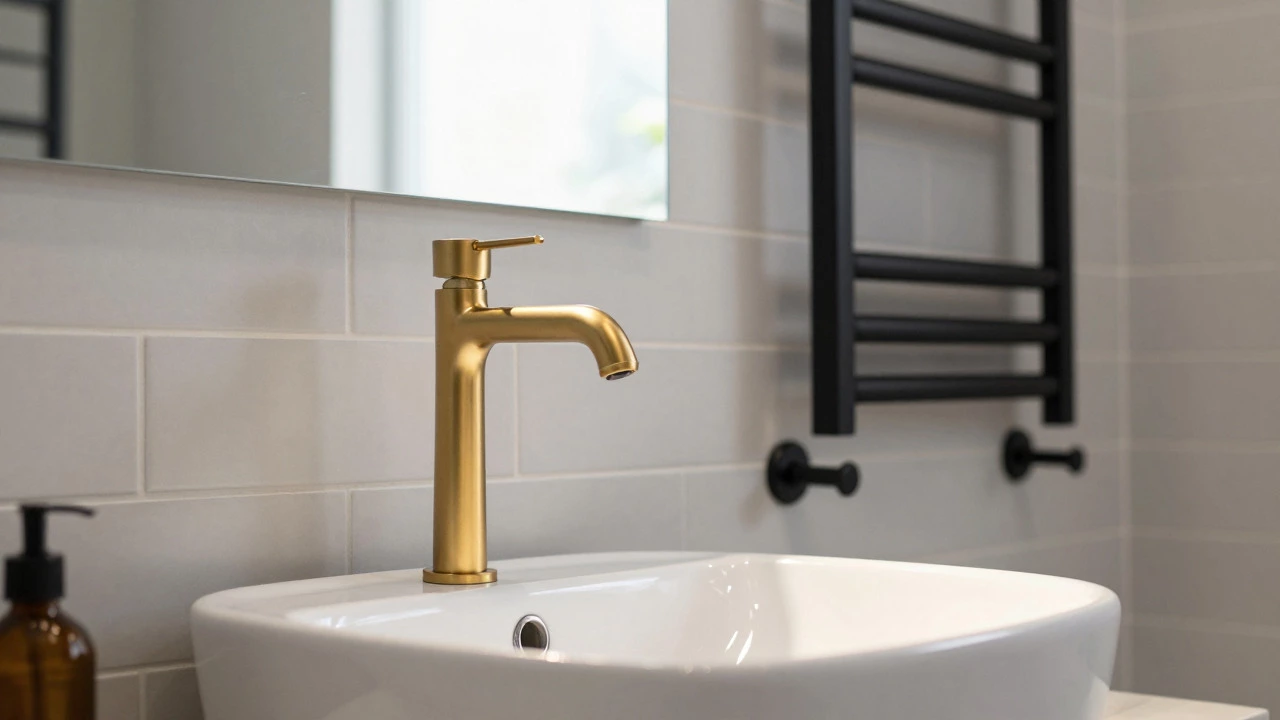
When people ask if the faucet should match the sink, they’re often confusing finish with style. The faucet doesn’t need to be the same material as the sink-in fact, it rarely is. A porcelain sink pairs beautifully with a brass faucet. A concrete vessel sink looks stunning with a matte black industrial faucet.
What matters more is the proportion and silhouette. A tall, slender faucet looks ridiculous on a short, wide basin. It will drip water onto the sides, creating splashes and messes. Conversely, a small, low-profile faucet gets lost on a large farmhouse sink. Always check the dimensions.
Here’s a practical rule: Let the sink dictate the faucet’s height and reach, but let your personal taste dictate the finish. If you have a deep undermount sink, you need a high-arc faucet to prevent splashing. Whether that arc is chrome, gold, or black is up to you. Just ensure the hole spacing (centerset, widespread, or single-hole) matches the sink’s configuration.
| Sink Type | Ideal Faucet Height | Finish Considerations |
|---|---|---|
| Vessel Sink | Tall (8+ inches) | Bold finishes work well; faucet is highly visible |
| Undermount | Medium to High | Can hide plumbing; focus on sleek lines |
| Drop-In / Self-Rimming | Low to Medium | Traditional styles; avoid overly ornate designs |
| Farmhouse / Apron Front | High Arc | Brushed or oil-rubbed finishes complement rustic vibes |
Faucet vs. Hardware: The Art of Mixing Metals
This is where most people get stuck. Should the towel bar match the faucet? The short answer: It depends on the vibe you want.
If you’re aiming for a classic, formal, or minimalist look, matching the faucet and hardware creates a sense of order and calm. All-brass bathrooms feel luxurious and warm. All-matte-black spaces feel modern and edgy. Uniformity reduces visual noise, which is great for small bathrooms where clutter can make the space feel smaller.
But if you want a layered, curated, or transitional look, mixing metals is your friend. Here’s how to do it without looking messy:
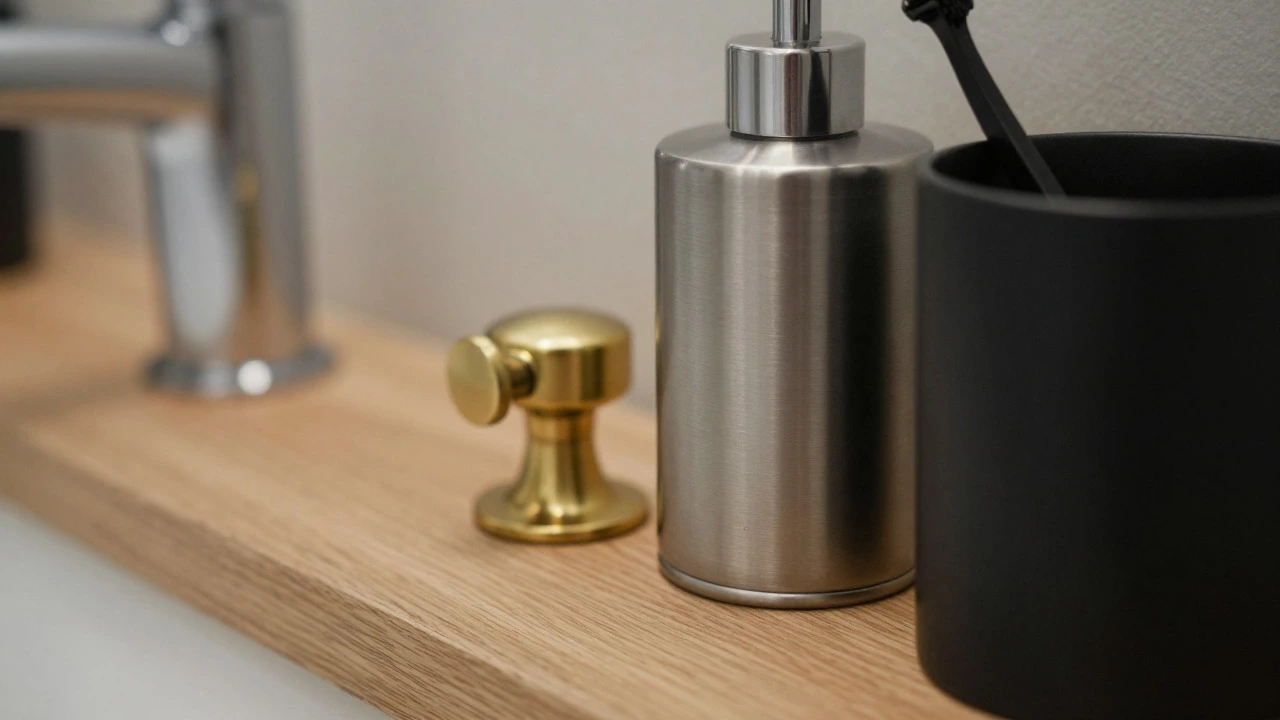
- The 60-30-10 Rule: Let 60% of the metal in the room be one finish (e.g., brushed nickel faucet and shower). Let 30% be a second finish (e.g., brass cabinet knobs). Use 10% as an accent (e.g., a copper soap dispenser).
- Anchor with Neutrals: Black, white, gray, and wood tones act as buffers between conflicting metals. A wooden vanity top separates brass hardware from a chrome faucet, softening the transition.
- Warm with Warm, Cool with Cool: Avoid pairing starkly contrasting temperatures unless you’re very experienced. Gold and silver can work, but only if balanced carefully. Stick to gold + brass + bronze, or chrome + nickel + stainless steel for safer mixes.
A pro tip: Look at the undertones. Is your faucet a yellow-gold or a rose-gold? Is your hardware a cool gray or a warm taupe? Matching undertones is more important than matching exact shades. A warm-toned brushed nickel can pair beautifully with antique brass, even though they’re technically different colors.
Practical Scenarios: How to Decide
Let’s walk through three common situations to help you apply these principles.
Scenario 1: The Full Renovation
You’re tearing out everything. Start with the faucet. Choose the finish you love most-it’s the centerpiece. Then select the shower trim to match or complement. Finally, pick hardware that ties it all together. Don’t buy the towel bars first; they’re easier to swap later if needed.
Scenario 2: The Quick Update
You’re keeping the existing sink and vanity but want a fresh look. Replace just the faucet and hardware. If your current faucet is dated chrome, try a brushed nickel or matte black replacement. Swap out the old towel bars for ones in the new finish. Instant upgrade, minimal cost.
Scenario 3: The Mixed Legacy Space
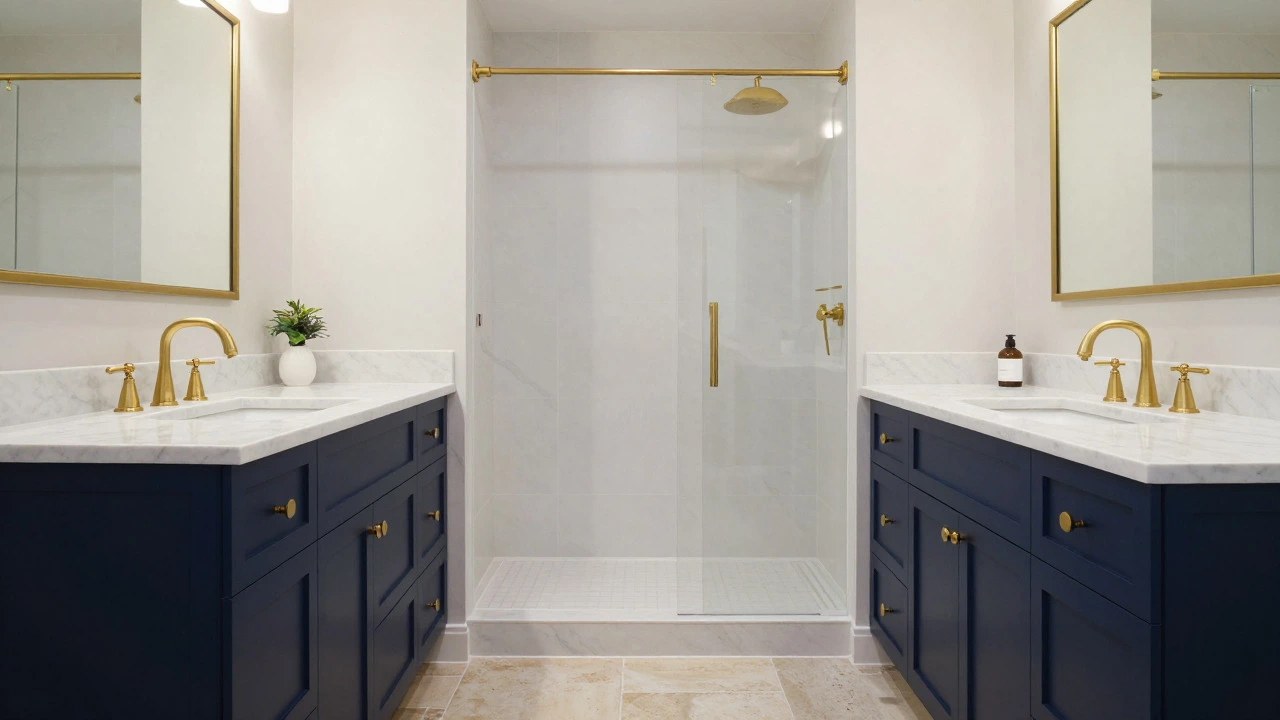
You inherited a bathroom with brass faucets and chrome showerheads. Don’t panic. Add a unifying element. Paint the vanity a deep navy blue. Add warm wood accessories. Introduce a rug with both brass and chrome accents in its pattern. The eye focuses on the color and texture, not the mismatched metals.
Common Mistakes to Avoid
Even with good intentions, it’s easy to slip up. Here are the pitfalls that turn a nice bathroom into a design disaster:
- Too Many Finishes: Three is the maximum number of metal finishes you should use in one small space. Four starts to look chaotic.
- Ignoring Lighting: Metal looks different under warm incandescent bulbs versus cool LED lights. View samples in your actual bathroom lighting before buying.
- Overlooking Maintenance: Polished chrome shows water spots instantly. Brushed nickel hides fingerprints. Matte black can show hard water stains. Choose finishes based on your lifestyle, not just aesthetics.
- Matching Too Closely: Trying to match a vintage brass fixture with a new mass-produced brass one often fails because the alloys differ. Embrace the patina of older pieces instead of forcing a match.
Final Thoughts: Trust Your Eye
Design rules are guidelines, not laws. If you love the way a gold faucet pops against a black hardware set, go for it. If you prefer the calm of all-silver tones, stick with that. The best bathrooms feel personal, lived-in, and intentional. They don’t follow a checklist; they reflect the people who use them.
Start with the faucet. Build outward. Mix with purpose. And remember: cohesion comes from balance, not uniformity.
Should my bathroom faucet match my shower head?
Ideally, yes. The faucet and shower trim are the two largest metal fixtures in the bathroom. Matching them creates a strong visual anchor. If you mix, ensure the finishes share similar undertones (warm with warm, cool with cool) to avoid clashing.
Can I mix gold and silver in the same bathroom?
Yes, but carefully. Pairing gold and silver requires balance. Use one as the dominant finish (e.g., gold faucet and shower) and the other as an accent (e.g., silver cabinet pulls). Ensure there’s enough neutral space (white tiles, wood vanity) between them to prevent visual competition.
Does the faucet need to match the cabinet knobs?
No. Cabinet knobs are considered decorative hardware and can differ from the faucet. In fact, contrasting knob finishes can add depth. For example, a brushed nickel faucet paired with brass knobs creates a sophisticated, layered look.
What finish hides water spots best?
Brushed or satin finishes hide water spots and fingerprints much better than polished or glossy finishes. Brushed nickel, matte black, and oil-rubbed bronze are excellent choices for low-maintenance bathrooms. Polished chrome and high-gloss gold require frequent wiping.
How do I choose a faucet finish for a small bathroom?
In small bathrooms, lighter finishes like chrome, brushed nickel, or polished brass can help reflect light and make the space feel larger. Dark finishes like matte black absorb light and can make a tiny room feel heavier. If you love dark metals, use them sparingly and pair with bright walls and ample lighting.