Credenza Height Calculator
How Tall Should Your Credenza Be?
Calculate the ideal height for your dining room credenza based on your table height and other factors.
Getting the height of a dining room credenza right isn’t just about looks-it’s about function. Too tall, and you can’t reach your plates. Too short, and it looks out of place next to your table. The sweet spot? Between 34 and 36 inches. That’s the standard range that matches most dining tables and lets you easily access dishes, glasses, or serving platters without bending or stretching.
Why Height Matters More Than You Think
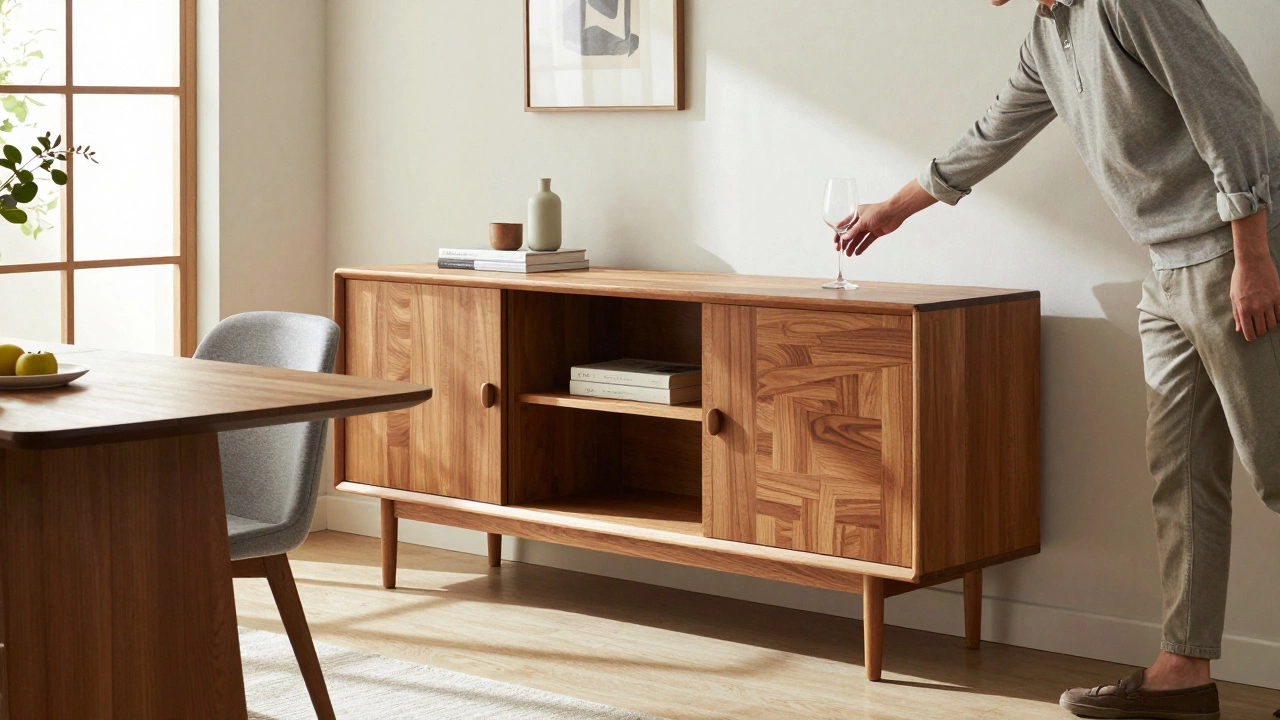
A credenza isn’t just storage. It’s part of your dining experience. When you pull out a serving bowl or grab a wine glass, you want to do it without awkwardly leaning or lifting your arm too high. A credenza that’s too tall-say, 40 inches or more-forces you to reach up, which feels unnatural and can make the room feel cramped. Too low, like 30 inches, and it looks like a side table, not a proper storage piece.
Most dining tables sit at 29 to 30 inches. Your credenza should be just a few inches taller to create visual balance. Think of it like shoes and pants: you don’t want the leg of your pants to drag, and you don’t want your credenza to look like it’s floating above the table.
Standard Credenza Height vs. Table Height
Here’s the simple math: your credenza should be 4 to 7 inches taller than your dining table. That’s not a rule carved in stone, but it’s what works in 9 out of 10 homes.
- Dining table height: 28-30 inches
- Recommended credenza height: 32-37 inches
- Optimal height: 34-36 inches
Why this gap? It gives you enough clearance to slide plates or trays onto the credenza without hitting the table edge. It also lets people walk behind the credenza without bumping their heads-especially important if you have a high-back chair or a bench on one side.
Credenza vs. Buffet: Is There a Difference?
People use the words “credenza” and “buffet” interchangeably, but there’s a subtle difference. A buffet is usually designed for serving food during meals, often with a lower profile-sometimes as low as 30 inches-to make it easier to pass dishes. A credenza leans more toward storage: it’s often taller, has closed cabinets, and might hold china, barware, or electronics.
Modern designs blur the line. Many pieces today are hybrids. But if you’re buying for storage and want easy access to dishes, go for 34-36 inches. If you’re using it mainly for serving buffet-style meals, 30-32 inches might work better.
What About Countertops and Kitchen Islands?
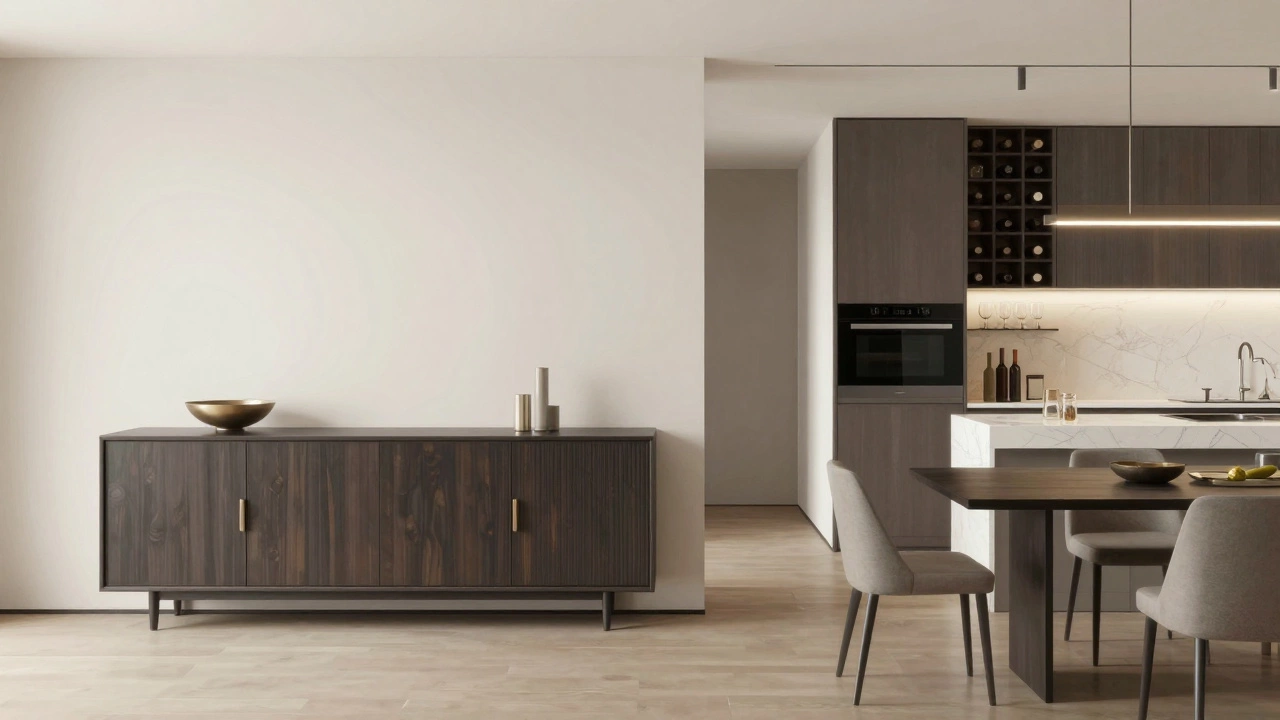
If your dining area opens into the kitchen, you might be comparing the credenza height to your kitchen counter, which is usually 36 inches. That’s fine. A 36-inch credenza will match your counter height and create a seamless flow. Just make sure your dining table is still 29-30 inches. You don’t want the table and credenza to be the same height-that looks odd and breaks visual rhythm.
Many homeowners in open-concept homes now choose a 36-inch credenza because it doubles as a prep station or bar counter. Add a small stool or two, and you’ve got a casual eating spot. Just keep the top surface clear of clutter. A credenza isn’t a kitchen counter-it’s still meant to store and display, not cook.
How to Measure Your Space Before Buying
Don’t just grab the first credenza that looks nice. Measure before you buy.
- Measure your dining table’s height from the floor to the top surface.
- Measure the ceiling height in your dining room. You want at least 12 inches of clearance between the top of the credenza and the ceiling if it’s near a window or under a light fixture.
- Check the width. A credenza should be no wider than 75% of your table’s length. If your table is 72 inches long, aim for a credenza under 54 inches wide.
- Leave 36 inches of walking space behind the credenza. That’s the minimum for comfortable movement, especially if you have chairs pulled out.
Also, consider the doorways and hallways leading to your dining room. A tall, wide credenza can get stuck on the way in. Most standard doorways are 30 inches wide. If your credenza is over 32 inches wide, you’ll need to disassemble it or take it through a different entrance.
Special Cases: Raised Floors and Bar Stools
If your dining room has a raised platform or a sunken floor, your credenza height needs to adjust. If the floor is 4 inches higher than the kitchen, your table might be 34 inches tall. In that case, your credenza should be 38-40 inches. That keeps the proportions balanced.
And if you’re using bar stools at your table? That usually means your table is 40-42 inches tall-common in modern lofts or industrial-style homes. In that case, your credenza should match the table height: 40-42 inches. This creates a unified look and makes it easy to reach items while seated.
What to Avoid
Here are three common mistakes people make:
- Choosing a credenza taller than your ceiling height. Even if it fits through the door, a 48-inch credenza under an 8-foot ceiling will make the room feel like a closet.
- Putting a low credenza under a tall light fixture. The gap between the top of the credenza and the fixture should be at least 18 inches for proper lighting flow.
- Buying a credenza with drawers that open too close to the floor. If the bottom drawer is less than 6 inches off the ground, you’ll trip over it or struggle to pull it out.
Real-World Examples
Take a 72-inch rectangular dining table in a traditional home. The table is 29.5 inches tall. The homeowner picks a 35-inch credenza with closed cabinets and glass-front doors. It holds 12 dinner plates, 8 wine glasses, and a set of serving bowls. Guests can easily grab napkins or pour water without standing up. The credenza doesn’t block the view of the wall art behind it. It’s functional, balanced, and looks intentional.
Another example: a 60-inch round table in a loft apartment. The table is 30 inches tall. The owner chooses a 36-inch credenza that doubles as a wine bar. It has a built-in wine rack and a small shelf for glasses. The height matches the kitchen counter. It looks like part of the design, not an afterthought.
Final Tip: Test Before You Buy
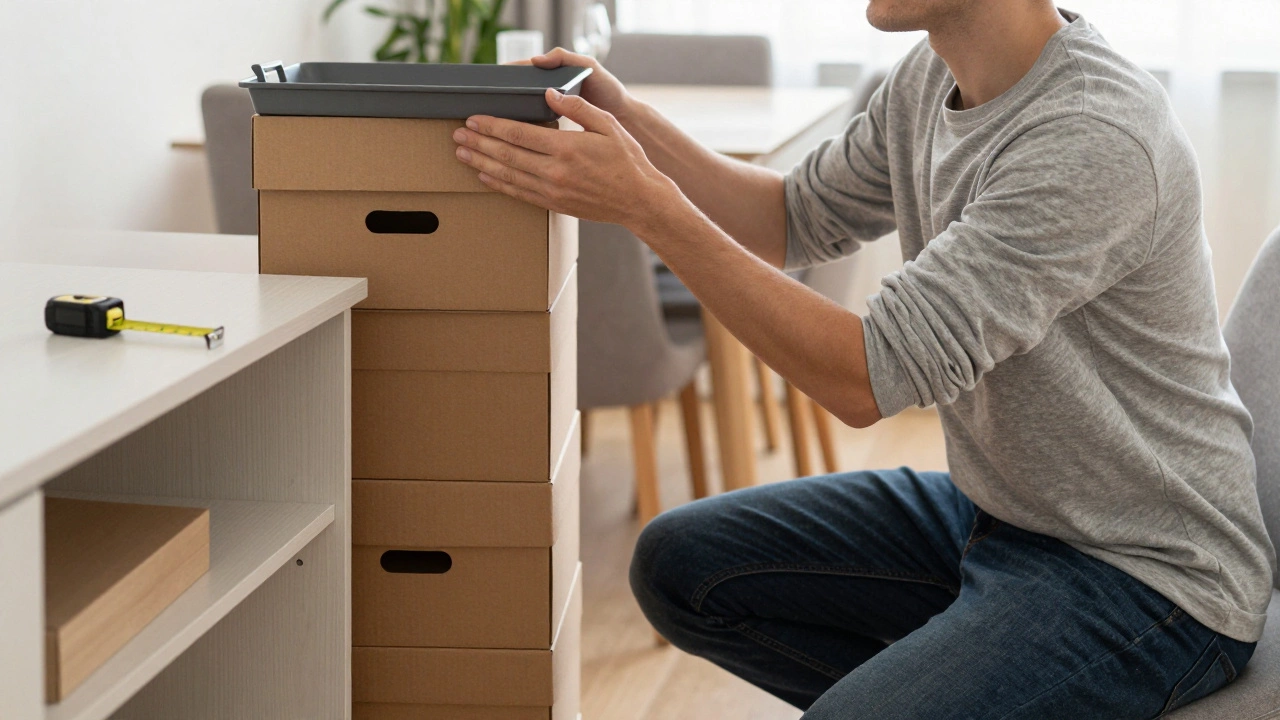
Before spending $800 on a credenza, test the height. Stack two sturdy boxes-each about 17 inches high-on the floor where you plan to put it. Put a large tray or cutting board on top. Now, sit in your dining chair and reach for the tray. Can you grab it without leaning forward? Can you set it down without bumping the table? If yes, 34 inches works. If you’re stretching, go taller. If you’re bending, go shorter.
That’s how real people decide. Not by catalog photos. Not by trends. By doing the one simple thing: trying it out.
Can a credenza be the same height as a dining table?
Technically yes, but it’s not recommended. A credenza and table at the same height look mismatched and disrupt the visual flow of the room. The credenza should be 4 to 7 inches taller than the table to create balance and make it easy to access items without interference.
Is a 30-inch credenza too short?
It’s not too short for serving, but it’s too low for storage. A 30-inch credenza works only if you’re using it like a buffet for food display. For storing dishes, glassware, or linens, it’s awkward to reach into. Aim for at least 34 inches for practical use.
Does a credenza need to match the dining table?
No, it doesn’t need to match in style or wood tone, but the height should complement the table. A modern credenza next to a rustic table looks intentional if the heights are proportional. Focus on function first, then aesthetics.
What if my ceiling is low?
If your ceiling is under 8 feet, avoid a credenza taller than 34 inches. A taller piece will make the room feel smaller. Instead, choose a wide, low credenza with open shelving. It draws the eye sideways instead of up, making the space feel more open.
Can I use a credenza in a small dining room?
Yes, but keep it slim. A narrow credenza-24 to 30 inches wide-can still hold essentials without crowding the space. Choose a height of 34 inches to stay proportional. Wall-mounted shelves or a floating credenza can also save floor space.