Lighting Calculator
Calculate Your Home Lighting Needs
Determine the right amount of light for any room with this simple calculator. Based on room dimensions and lighting layer (ambient, task, accent).
Your Lighting Requirements
What this means:
Most people think lighting is just about turning on a bulb. But proper lighting in the house isn’t about brightness-it’s about balance. Too dim, and you strain your eyes. Too harsh, and your space feels cold and clinical. The right lighting doesn’t just help you see-it shapes how you feel, how you move, and even how long you stay in a room.
Lighting isn’t one thing-it’s three
There’s no single ‘perfect’ light for your home. Instead, good lighting is built in layers: ambient, task, and accent. Think of them like the foundation, the tools, and the details of a room.
Ambient light is the base layer. It’s the soft, even glow that fills the room without shadows. This comes from ceiling fixtures, wall sconces, or recessed lights. In living rooms and bedrooms, aim for 10 to 20 lumens per square foot. A 12x12-foot bedroom? That’s about 1,440 to 2,880 lumens total. LED bulbs with a color temperature of 2700K to 3000K give you that warm, cozy feel-like candlelight, but reliable.
Task lighting is focused. It’s what you need to read, cook, or apply makeup. A desk lamp, under-cabinet lights in the kitchen, or a vanity mirror with LEDs around it. These should be brighter-around 50 to 75 lumens per square foot in the task area. Don’t rely on overhead lights alone for reading. That’s why so many people end up with headaches by the end of the day.
Accent lighting highlights what matters. A picture frame, a bookshelf, a textured wall. Track lights, wall-mounted spots, or even LED strips behind furniture can do this. Use 3 to 5 times the ambient light intensity here to make things pop. It’s not about function-it’s about emotion.
Room by room: What works where
Every room has different needs. You wouldn’t use the same lighting in a bathroom as you would in a bedroom.
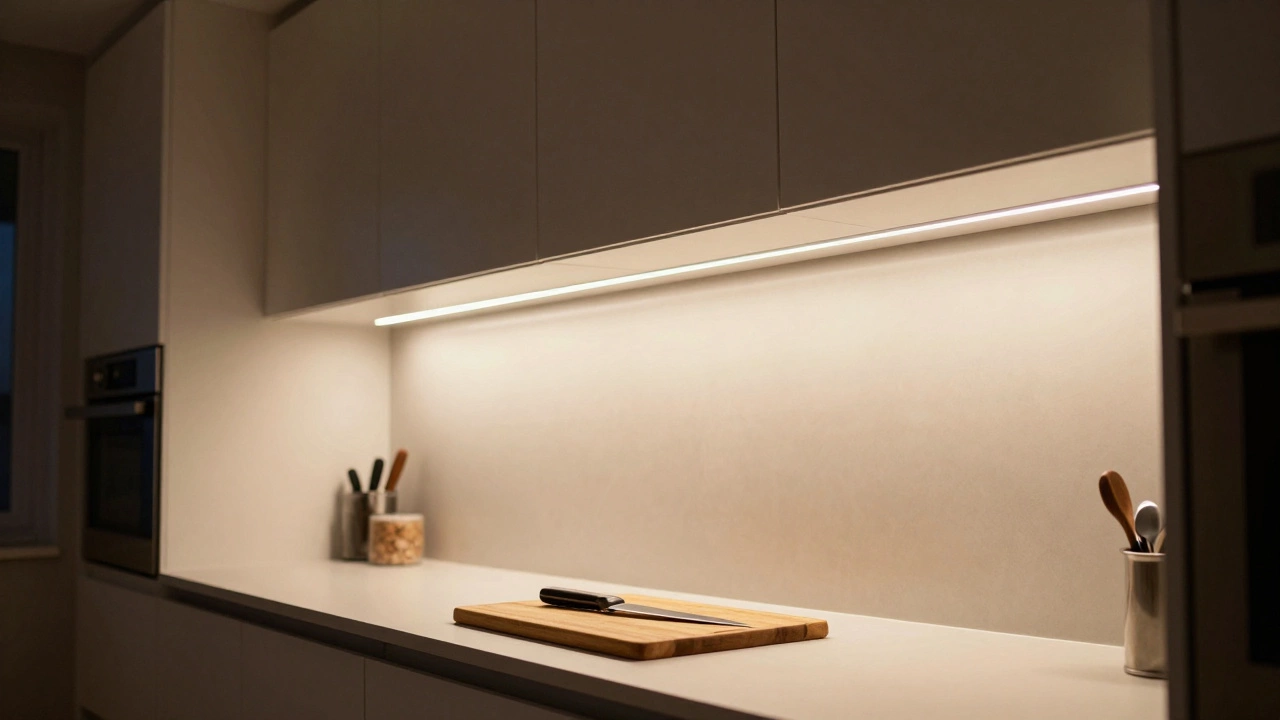
In the kitchen, you need bright, clear task lighting over the countertops and sink. Under-cabinet LED strips are the gold standard-they eliminate shadows from your hands when chopping. Overhead lights should be dimmable. Many people install recessed lights in a grid, but forget to angle them. Aim them at the counters, not the floor. A color temperature of 3000K to 3500K gives you clean, neutral light that makes food look natural.
The bathroom needs two things: even light around the mirror and bright light for grooming. A single overhead bulb casts ugly shadows on your face. Instead, use wall sconces on both sides of the mirror, at eye level. LED strips behind the mirror work too. Avoid cool white (5000K+)-it makes skin look gray. Stick to 2700K to 3000K for a flattering glow.
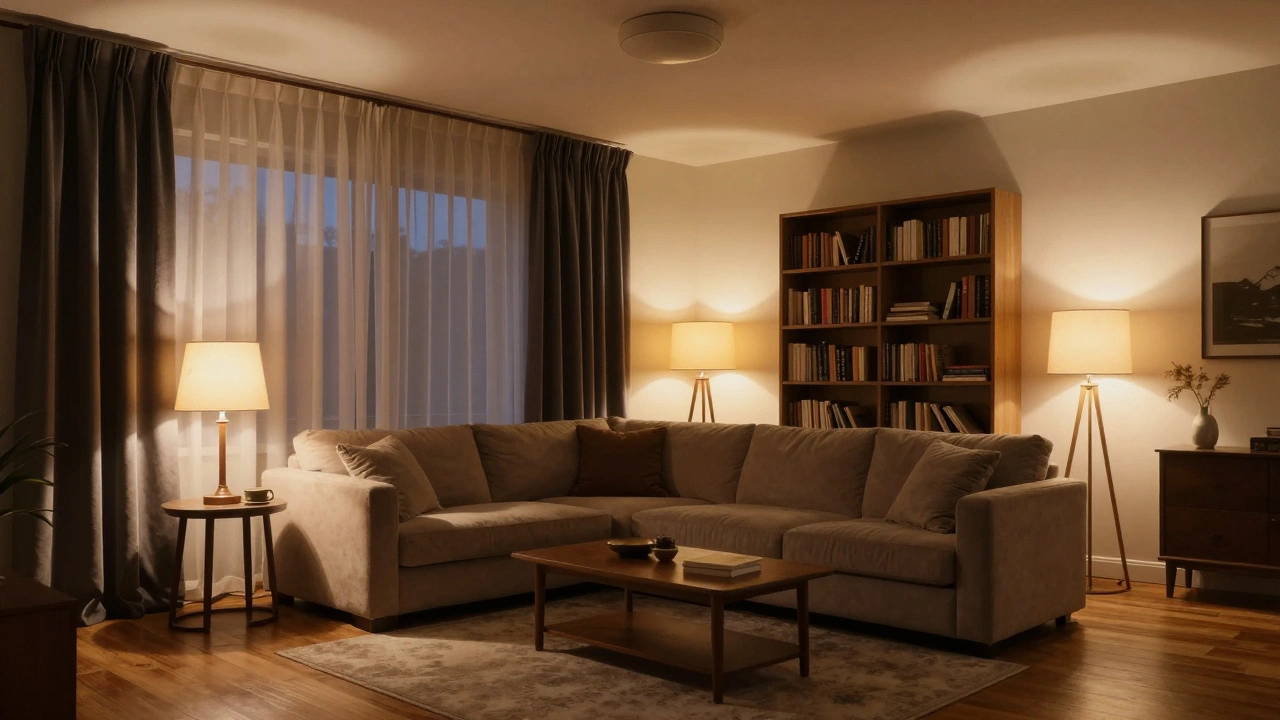
In the living room, ambient light should be soft. Floor lamps with fabric shades, dimmable ceiling fixtures, and table lamps with warm bulbs create layers. Add a spotlight on a piece of art or a bookshelf. Use dimmers. You don’t need full brightness to watch TV. In fact, too much light makes screens harder to see.
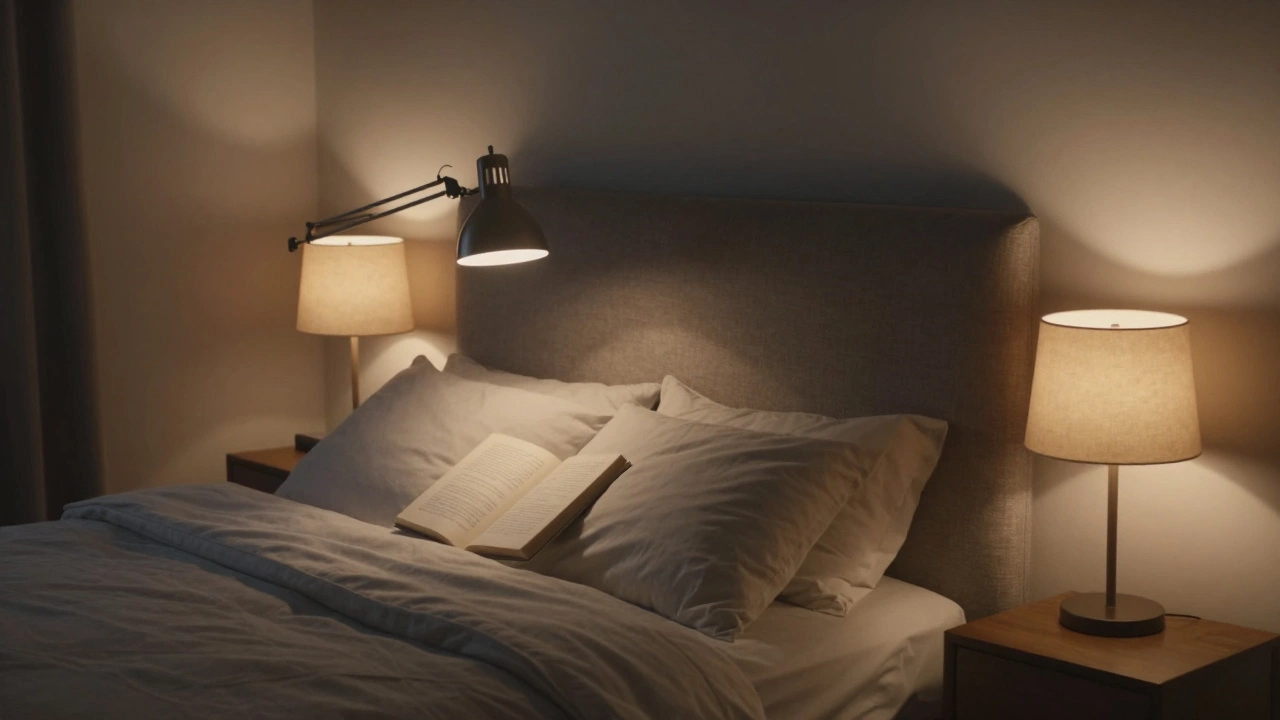
Bedrooms should be calming. Avoid bright overheads. Use bedside lamps with dimmable bulbs (2700K). If you need light to read, get a swing-arm lamp that points at the book, not your eyes. Install a dimmer switch. A study from the Journal of Clinical Sleep Medicine found that warm, low-light environments before bed improved sleep quality by 23% compared to bright white lights.
The home office needs precision. A desk lamp with adjustable brightness and color temperature is essential. 4000K is ideal for focus-it’s bright enough to prevent eye strain but not so cool it feels sterile. Avoid fluorescent tubes. They flicker, even if you can’t see it, and they cause fatigue over time. LED task lights with a CRI of 90+ show true colors, which matters if you’re editing photos or reading fine print.
Color temperature matters more than you think
Lumens tell you how bright a bulb is. Kelvin tells you what color it is. And that color changes your mood.
2700K is warm white-like sunset or incandescent bulbs. Perfect for bedrooms and living rooms. It relaxes you.
3000K is soft white-slightly crisper but still warm. Great for kitchens and bathrooms.
3500K to 4000K is neutral white. Clean, alert, professional. Best for offices, garages, and utility spaces.
5000K and above is daylight-blueish, harsh. Only use this in workshops or garages where you need to see fine details. In living spaces, it feels like a hospital. People avoid rooms with this light. They don’t even realize why.
Don’t mix color temperatures in the same room. If your kitchen has 4000K under-cabinet lights and 2700K ceiling lights, it looks broken. Stick to one range per room, or layer carefully.
Dimmers aren’t optional-they’re essential
Most homes have switches that are either on or off. That’s like driving a car with only first gear and reverse.
Dimmers let you control the mood, save energy, and extend bulb life. LED bulbs with dimmers last up to 50% longer when run at 70% brightness. And you don’t need expensive systems. Basic LED-compatible dimmers cost under $20. Install them in living rooms, bedrooms, dining areas, and even hallways.
Pro tip: If you’re replacing a switch, make sure your bulbs are labeled ‘dimmable.’ Not all LEDs are. Non-dimmable LEDs on a dimmer circuit will buzz, flicker, or die early.
Common mistakes and how to fix them
Here’s what most people get wrong-and how to fix it in under an hour.
- Mistake: One bright ceiling light in every room. Fix: Add a floor lamp or table lamp. Instant layering.
- Mistake: Using cool white bulbs everywhere. Fix: Swap them out for 2700K or 3000K. You’ll feel the difference immediately.
- Mistake: Ignoring shadows under cabinets or behind furniture. Fix: Install LED strips under shelves or behind TV stands. It adds depth and reduces glare.
- Mistake: Buying bulbs based on wattage, not lumens. Fix: Look for lumens on the package. 800 lumens = 60W incandescent. 1600 lumens = 100W. Wattage only tells you energy use.
- Mistake: Over-lighting small spaces. Fix: Less is more. A 10x10-foot room doesn’t need 10 recessed lights. Two or three with dimmers work better.
Smart lighting isn’t magic-it’s convenience
Smart bulbs and systems (like Philips Hue or Lutron) let you change color and brightness with your phone. But they’re not necessary for good lighting. A $15 dimmer switch and a pack of warm LED bulbs will do 90% of the work.
Use smart lighting only if you want schedules (e.g., lights turn on at sunset), remote control, or color-changing for parties. Don’t buy them because you think they’re ‘better.’ They’re just easier to control.
What to buy and where to look
You don’t need to spend a fortune. Here’s what to prioritize:
- LED bulbs: Look for ENERGY STAR certified. They’re efficient and last 15+ years.
- Color temperature: Buy 2700K for bedrooms/living rooms, 3000K for kitchens/bathrooms.
- Dimmers: Choose ones labeled ‘LED compatible.’ Brands like Lutron and Leviton are reliable.
- Under-cabinet lights: Stick-on LED strips with adhesive backing. Easy to install, under $30.
- Accent lights: Small track lights or adjustable wall sconces. Aim for 10-20W equivalent LEDs.
Avoid cheap, no-name bulbs. They often flicker, have poor color rendering, and burn out fast. Stick to Philips, Cree, GE, or Sylvania. You’ll notice the difference in how things look.
Final check: Does your lighting pass the test?
Walk through your home at night. Ask yourself:
- Can I read without squinting or leaning forward?
- Do I see shadows on my face when I look in the mirror?
- Is there at least one light source I can turn on without flipping the main switch?
- Does the room feel inviting, or does it feel like a warehouse?
- Are the lights too blue, too harsh, or too yellow?
If you answered ‘no’ to any of these, you’re not using lighting properly. Fixing it doesn’t require a remodel. Just swap a few bulbs, add a lamp, install a dimmer. That’s it.
Lighting is the quietest, most powerful design tool in your home. Get it right, and your house doesn’t just look better-it feels better. You’ll sleep deeper, work longer, and spend more time in the places you love.
What is the best color temperature for home lighting?
For most living spaces, 2700K to 3000K is ideal. It’s warm, soft, and flattering-like traditional incandescent bulbs. Use 3000K to 3500K in kitchens and bathrooms for clearer visibility without being too cold. Avoid 5000K and above in bedrooms and living rooms-it feels clinical and disrupts relaxation.
How many lumens do I need per room?
For ambient lighting, aim for 10-20 lumens per square foot in living areas. Bedrooms and lounges can stay on the lower end. Task areas like kitchens and home offices need 50-75 lumens per square foot in the specific zone. A 12x12-foot kitchen (144 sq ft) would need around 7,200-10,800 lumens total for task lighting, spread across under-cabinet strips, overheads, and pendant lights.
Can I use smart bulbs instead of dimmers?
Smart bulbs can dim, but they’re not a replacement for a good dimmer switch. Smart bulbs are expensive, require a hub or Wi-Fi, and often have lag. A $20 dimmer switch works instantly, is more reliable, and saves energy. Use smart bulbs if you want color-changing or voice control-otherwise, stick with dimmable LEDs and a simple switch.
Why do my LED lights flicker?
Flickering usually means the bulb isn’t compatible with the dimmer, or the bulb is low quality. Always use ‘dimmable’ LEDs with a dimmer switch. Cheap LEDs without proper drivers will flicker even on regular switches. If you’re replacing old incandescent fixtures, make sure the dimmer is rated for LED loads-older dimmers designed for incandescents don’t work well with LEDs.
Should I use recessed lighting in my home?
Recessed lighting works well for ambient light in rooms with high ceilings. But in standard 8-foot ceilings, too many recessed lights create a ‘cave effect’-dark walls and a harsh overhead glow. Use them sparingly and angle them toward walls or artwork, not straight down. Combine with floor or table lamps to add warmth and balance.
Is natural light enough for home lighting?
Natural light is excellent during the day, but it’s not reliable. Cloudy days, winter months, and rooms without windows need artificial lighting. Also, sunlight changes color and intensity throughout the day-what looks bright at noon can feel dim by 5 p.m. Always plan for layered artificial lighting to complement, not replace, daylight.