Sofa Cushion Size Calculator
Measure Your Cushions Accurately
Enter exact dimensions in centimeters to get recommendations for fill type and density
Your Recommendations
Recommended Density: kg/m³
Best For:
Expected Lifespan:
Key Considerations
Ever sat down on your favorite sofa only to find the cushions have turned into lumpy, flat pillows? You’re not alone. Most sofa cushions start to lose their shape within 2 to 3 years, especially if you use the sofa daily. The good news? You don’t need to replace the whole sofa. Replacement cushions are not only possible-they’re often cheaper, faster, and way more sustainable than buying new.
Why Replacement Cushions Make Sense
Buying a new sofa can cost anywhere from $1,000 to $5,000, depending on quality and size. A set of replacement cushions? That’s usually between $150 and $600. You’re saving hundreds, maybe thousands, and keeping your old frame out of landfill. In Auckland, where landfills are filling up fast and recycling rates for furniture are low, this small choice adds up.
Plus, your sofa’s frame is probably still solid. The springs haven’t broken. The legs aren’t wobbly. The wood hasn’t cracked. You just need fresh padding. Replacing cushions is like giving your sofa a facelift instead of a full transplant.
Where to Find Replacement Cushions
You’ve got three main options: DIY, local upholsterers, or online retailers.
- DIY: Buy foam, batting, and fabric, then sew or staple it yourself. This works if you’re handy and have time. But getting the density right is tricky-too soft and it collapses; too hard and it’s uncomfortable.
- Local upholsterers: Most cities have small shops that specialize in this. In Auckland, places like Upholstery Workshop in Ponsonby or Recover Furniture in Mt. Albert will take measurements, match fabric, and build custom cushions. This is the most reliable option if you want professional results.
- Online retailers: Sites like Wayfair, Overstock, or CustomCushions.com let you upload dimensions and choose fill types. Some even offer free fabric swatches mailed to you. Just make sure they accept measurements in centimeters (standard in NZ) and not just inches.
Choosing the Right Cushion Fill
The fill determines how long your cushions last and how comfortable they feel. Here’s what’s actually out there:
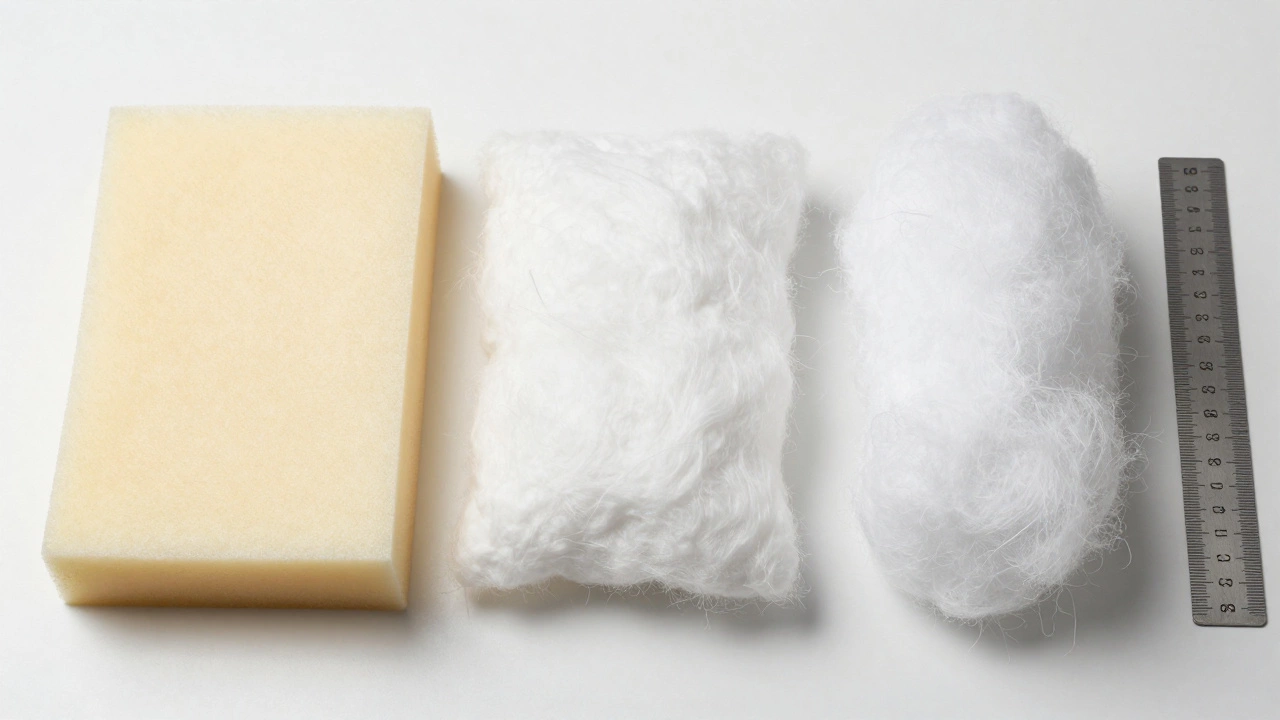
- High-resilience foam (HR foam): This is the gold standard. It bounces back after sitting, doesn’t flatten easily, and lasts 7-10 years. Density matters: look for 30-40 kg/m³. Anything lower will sag in under a year.
- Down and feather blends: Soft, luxurious, and great for lounging. But they need fluffing daily and lose shape faster. Best for formal living rooms, not family TV zones.
- Memory foam: Great for pressure relief, but it gets hot and doesn’t recover quickly. Often used in chair cushions, not sofas.
- Polyester fiberfill: Cheap and fluffy at first, but it clumps and flattens within months. Avoid unless you’re on a tight budget and plan to replace them yearly.
- Hybrid fills: Some companies mix HR foam with a thin layer of down or fiber for balance. These are ideal if you want comfort without constant maintenance.
Pro tip: Ask for a density chart. Reputable suppliers will give you exact numbers. If they say “premium foam” without numbers, walk away.
Measuring Your Cushions Correctly
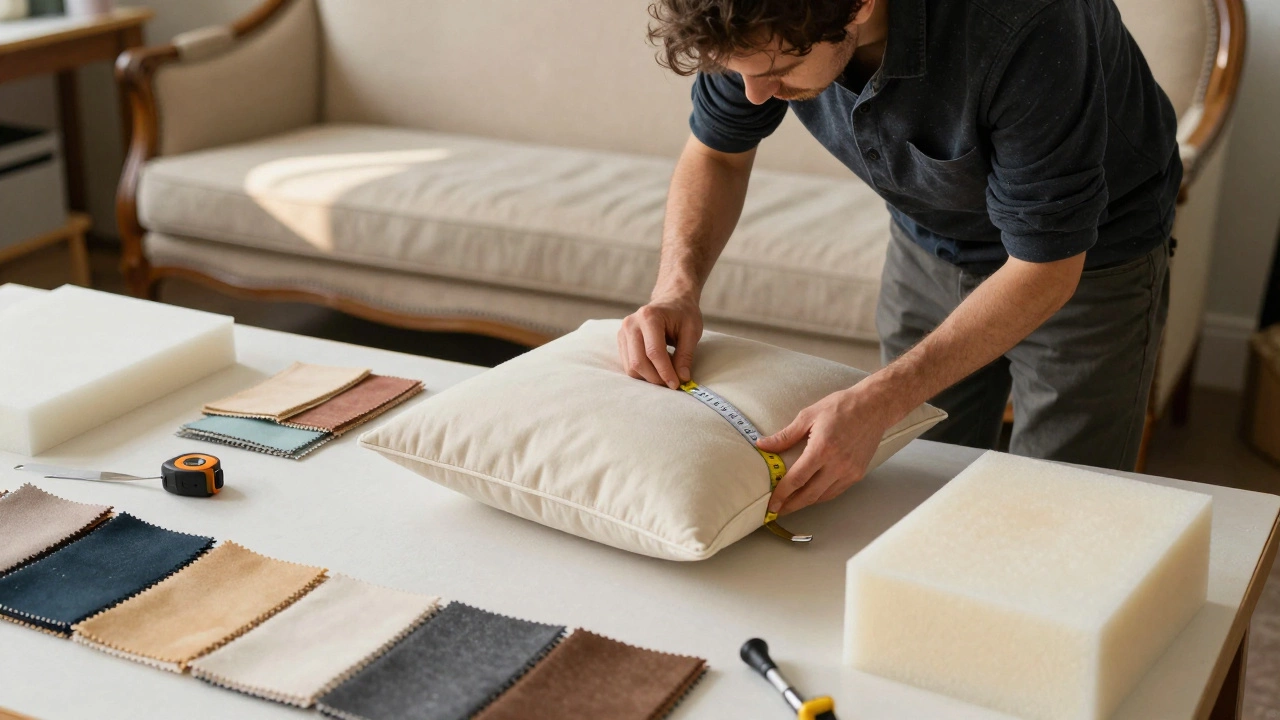
Getting the size wrong is the #1 reason replacement cushions look weird or don’t fit. Here’s how to do it right:
- Remove the old cushion and lay it flat.
- Measure the length, width, and thickness with a tape measure. Don’t guess.
- Measure the zipper or closure type-some cushions have hidden zippers, others are slip-on.
- Check the shape. Are the corners square? Rounded? Do they have a pillow-like top or a flat one?
- Take a photo with a ruler next to it. Send this to your supplier. It helps them spot odd shapes.
Most online shops let you enter measurements in centimeters. If your cushion is 85 cm long, 70 cm wide, and 12 cm thick, enter those numbers exactly. Don’t round up. Even 1 cm off can make the cushion look too loose or too tight in the cover.
Matching Fabric and Style
You don’t need to match the original fabric perfectly. In fact, many people use this chance to refresh the whole look.
- If your sofa is a neutral color, try a bold pattern or texture-like linen, velvet, or a woven jacquard.
- If you have kids or pets, go for performance fabric: stain-resistant, fade-proof, and machine-washable. Brands like Sunbrella and Crypton are popular for this.
- Don’t forget the backing. Some cushions have a non-slip bottom, others are smooth. If your sofa has a slippery fabric (like microfiber), get cushions with a grippy backing.
Many upholsterers keep fabric swatch books. If you’re ordering online, request 3-5 samples. Hold them up next to your sofa in natural light. A color that looks gray in the store might look blue under your window.
How Long Do Replacement Cushions Last?
With proper care, good-quality cushions last 5-8 years. Here’s how to stretch that:
- Flip and rotate them every 2 weeks. Even if they’re not reversible, turning them helps even out wear.
- Use a vacuum with a brush attachment every month to remove dust and crumbs.
- Keep them out of direct sunlight. UV rays break down foam and fade fabric faster.
- If you have pets, consider a removable, washable cover. It’s cheaper than replacing the whole cushion.
Some people buy extra covers and rotate them seasonally. It’s like having two sofas in one.
When Not to Replace Cushions
Replacement cushions aren’t magic. They won’t fix these problems:
- Sagging springs. If the frame feels bouncy or you hear creaking when you sit, the springs are done. Cushions won’t fix that.
- Broken or cracked frame. Wood or metal that’s split or bent needs structural repair.
- Stains that won’t come out. If the fabric is permanently stained or smells (from pets or spills), replacing the cover might be better than just the cushion.
If any of these apply, talk to a local upholsterer. They can re-spring the frame or re-upholster the whole piece for less than a new sofa.
Final Thoughts
Yes, you can absolutely buy replacement cushions for your sofa. It’s one of the smartest home upgrades you can make-affordable, eco-friendly, and instantly refreshing. Whether you’re in Papatoetoe or Parnell, local shops in Auckland can help you get the right fit, fill, and fabric. You don’t need to live with a sad, flat sofa. A little effort, a few measurements, and a good supplier can bring your sofa back to life.