Most people think making a living room look nice means buying expensive furniture or hiring a designer. But the truth? It’s about small, smart choices you can do yourself - no budget required. I’ve seen homes in Auckland where the sofa was secondhand, the rug was from a garage sale, and still, the room felt like a magazine spread. How? Because they focused on what actually matters: balance, light, and personal touch.
Start with the walls - they’re your biggest canvas
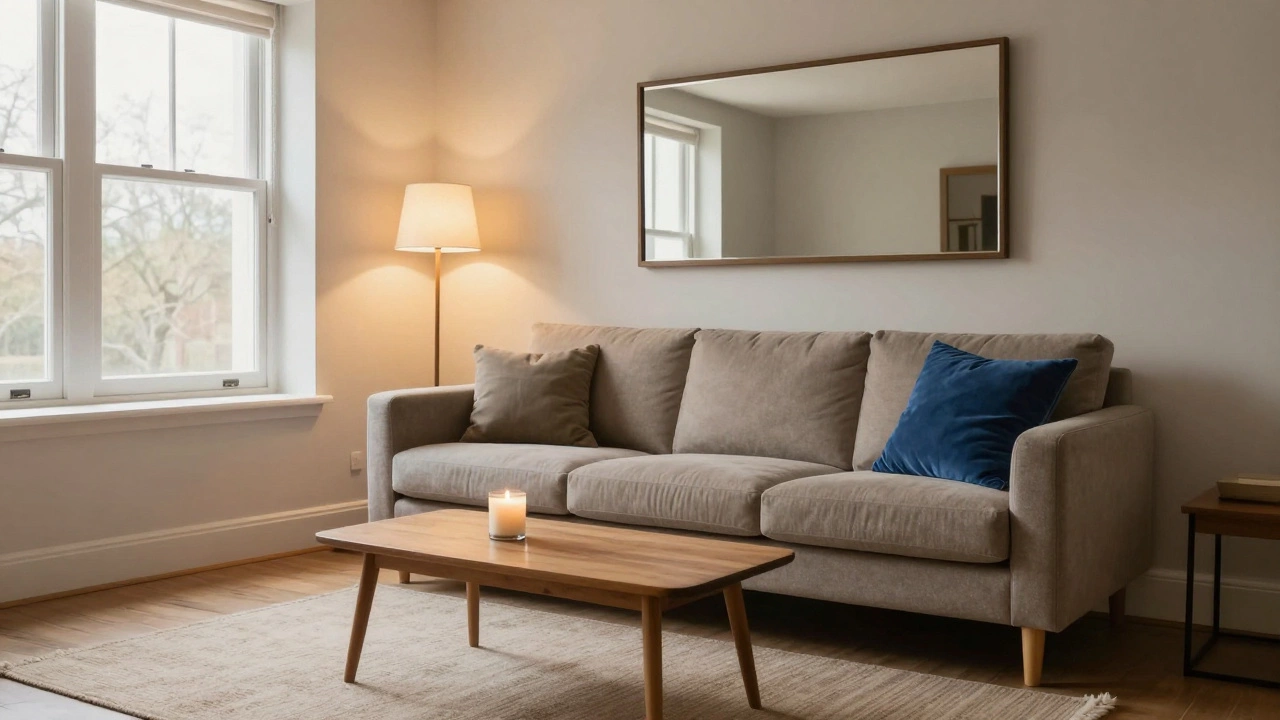
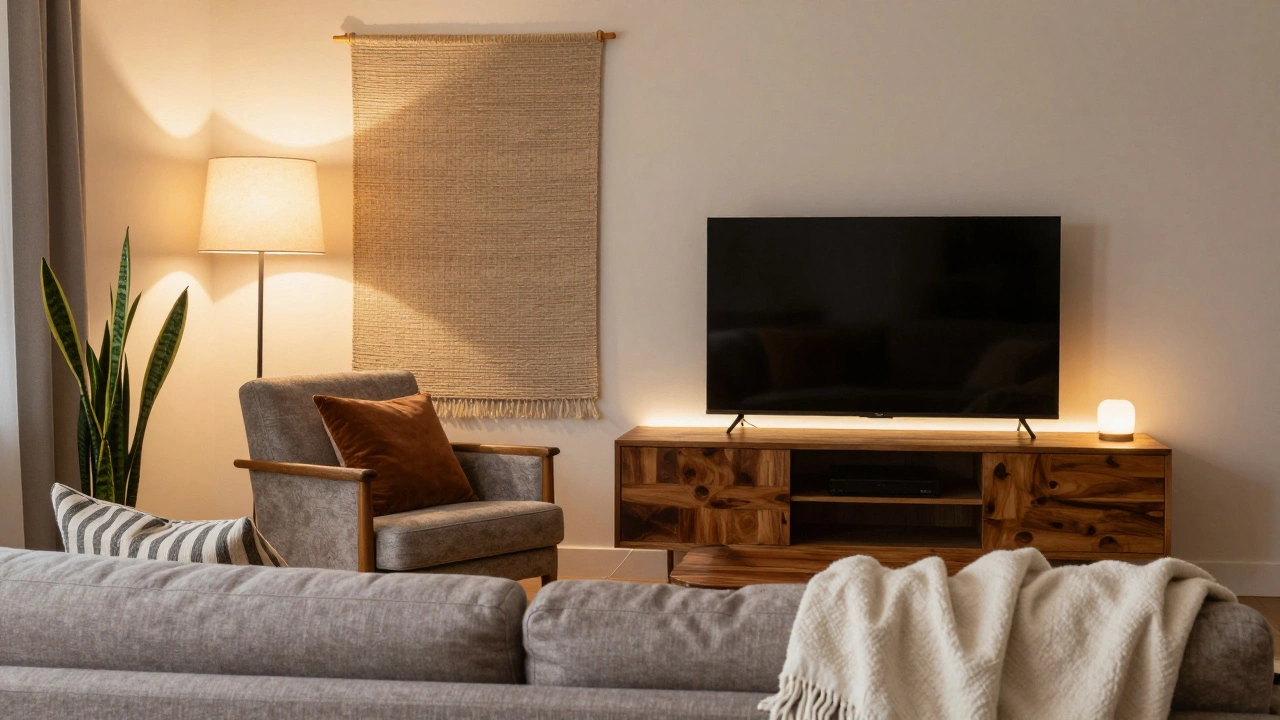
White walls aren’t a crime, but they’re also not a solution. If your walls are bare, the room feels empty, not clean. You don’t need a gallery wall. One large piece - a framed print, a mirror, or even a woven tapestry - can anchor the whole space. Hang it at eye level. That’s about 145 cm from the floor. Too high? It feels like it’s floating. Too low? It drags the room down. A mirror isn’t just for checking your hair. It reflects light, makes the room feel bigger, and adds depth. Try placing it opposite a window. Instant brightness.
Lighting is not an afterthought - it’s the foundation
One overhead light? That’s what a hospital waiting room looks like. A living room needs layers. Start with ambient light - maybe a floor lamp in the corner. Then add task lighting - a reading lamp next to the chair. Finally, accent lighting - a small LED strip under the TV or a candle on the side table. Candles aren’t just for romance. A single unscented candle on the coffee table gives warmth without clutter. Use dimmable bulbs. Even if your lamp is cheap, a soft glow makes everything feel more expensive.
Furniture doesn’t have to match - it has to feel right
You don’t need a matching sofa, armchair, and side table. In fact, matching sets look like a showroom. Mix styles. A modern sofa with a vintage wooden side table? Perfect. The key is scale. If your sofa is long and low, pair it with a tall lamp. If your coffee table is small, add a rug underneath to ground it. And please, stop pushing furniture against the walls. Pull the sofa out. Leave 60 cm of space behind it. Suddenly, the room breathes. You create a natural flow. People don’t feel trapped.
Textiles change everything - and they’re cheap
A throw blanket on the sofa isn’t decoration. It’s a signal. It says, "This is a place to relax." A cushion or two? Good. Four? Too many. Three is the sweet spot. Pick one neutral, one pattern, one bold color. That’s enough. Avoid all-over prints. A striped cushion with a solid velvet one? That’s texture. A cotton blanket over a leather sofa? That’s contrast. Rugs matter. A small rug in a big room looks like an afterthought. Go big. The rug should fit under the front legs of your sofa and chairs. If it’s too small, it’s like wearing socks with sandals - it just doesn’t work.
Clutter kills comfort - even pretty clutter
That stack of design magazines? The five ceramic bowls? The three different remote holders? Put them away. A nice living room isn’t a museum of your hobbies. It’s a calm space. Use hidden storage. A coffee table with drawers. A bench with a lift-top. A media console that hides wires. If you can’t hide it, make it intentional. One decorative basket for blankets. One tray for remotes. One plant. That’s enough. Less is not just more - it’s calmer, quieter, and way more relaxing.
Plants are not optional - they’re essential
A fake plant? Fine if you’re not going to water anything. But if you want life in the room, get a real one. Snake plants and ZZ plants don’t need sun. They survive neglect. Put one in the corner. One on the windowsill. One on the bookshelf. They don’t have to be fancy. A $12 plant from the local nursery looks more real than a $100 fake one. Green adds calm. It softens hard edges. It makes the room feel alive. And if you kill it? Replace it. No guilt.
Color isn’t about paint - it’s about rhythm
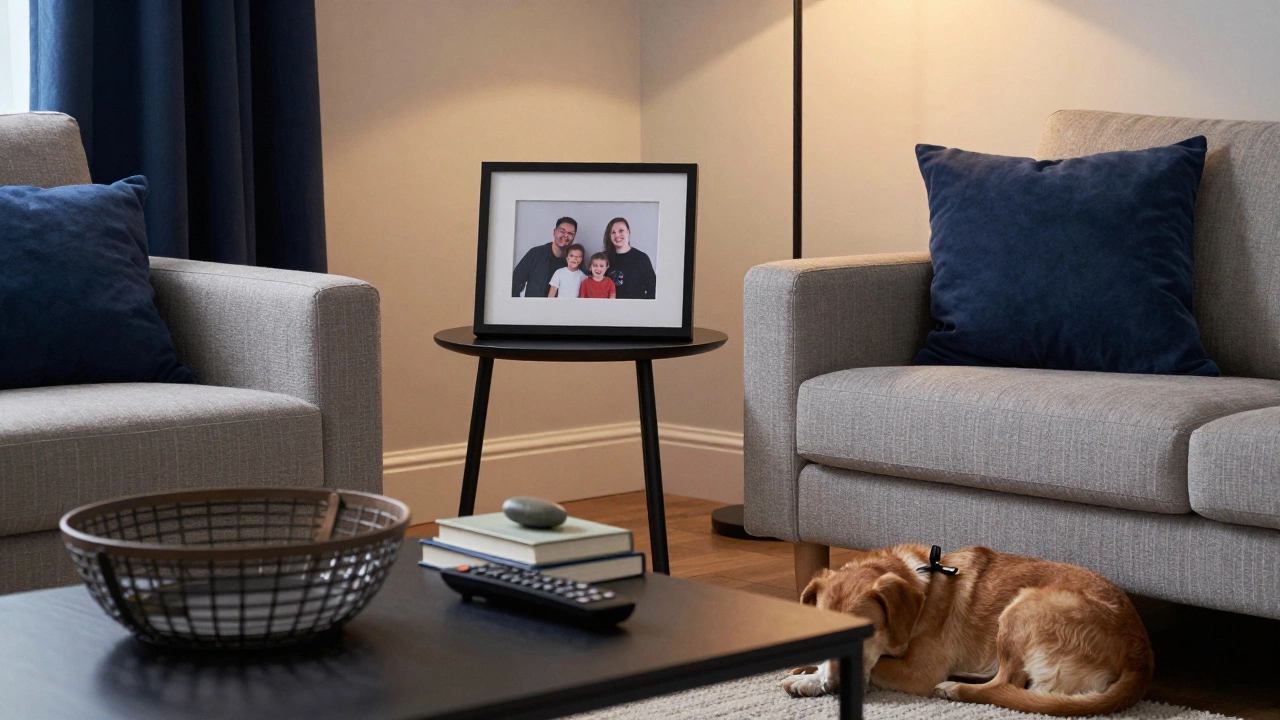
You don’t need to repaint. Look at what’s already in the room. Your sofa is gray? Then bring in gray through a blanket or a rug. Your curtains are navy? Add a navy pillow. You’re not matching - you’re echoing. That creates rhythm. A room with rhythm feels put together, even if it’s simple. Try this: pick three colors. One main, one secondary, one accent. Use them across different objects. A navy pillow, a navy lamp base, a navy book spine. That’s cohesion. No need for a paint roller.
Personal touches - not trophies
Photos? Yes. But not the whole wall. Pick one or two meaningful ones. Frame them simply. Black or white wood. No glitter frames. Books? Stack them. Two or three. Add a small object on top - a stone, a teacup, a tiny sculpture. It’s not about being artistic. It’s about being you. That’s what makes a room feel like home, not a hotel. A single family photo on the side table? Better than ten generic prints.
Final check: Does it feel like you?
Walk into your living room. Sit down. Breathe. Does it feel calm? Inviting? Or does it feel like you’re trying too hard? If you’re constantly rearranging, you’re overthinking. The nicest living rooms aren’t the most expensive. They’re the ones that feel lived-in, not staged. A worn-in blanket. A coffee stain on the side table. A dog curled up on the rug. That’s not mess. That’s comfort. That’s nice.