Sofa Foam Density Selector
Why this choice?
Adjust the settings and click the button to see the recommended density for your sofa.
Key Takeaways for Your Choice
- 32 Density: Best for occasional seating, guest rooms, or as a top layer for a softer feel.
- 40 Density: The gold standard for daily-use sofas, providing better support and longevity.
- Support vs. Softness: Higher density doesn't always mean "harder," but it always means it will keep its shape longer.
- Weight Matters: Heavier people or high-traffic areas require the 40 density option to prevent sagging.
Understanding What Density Actually Means
Before picking a number, let's clear up a common mistake. Many people think density is the same as firmness. It isn't. Density Foam is a measure of how much polyurethane material is packed into a specific volume of foam, usually measured in kilograms per cubic meter (kg/m³).
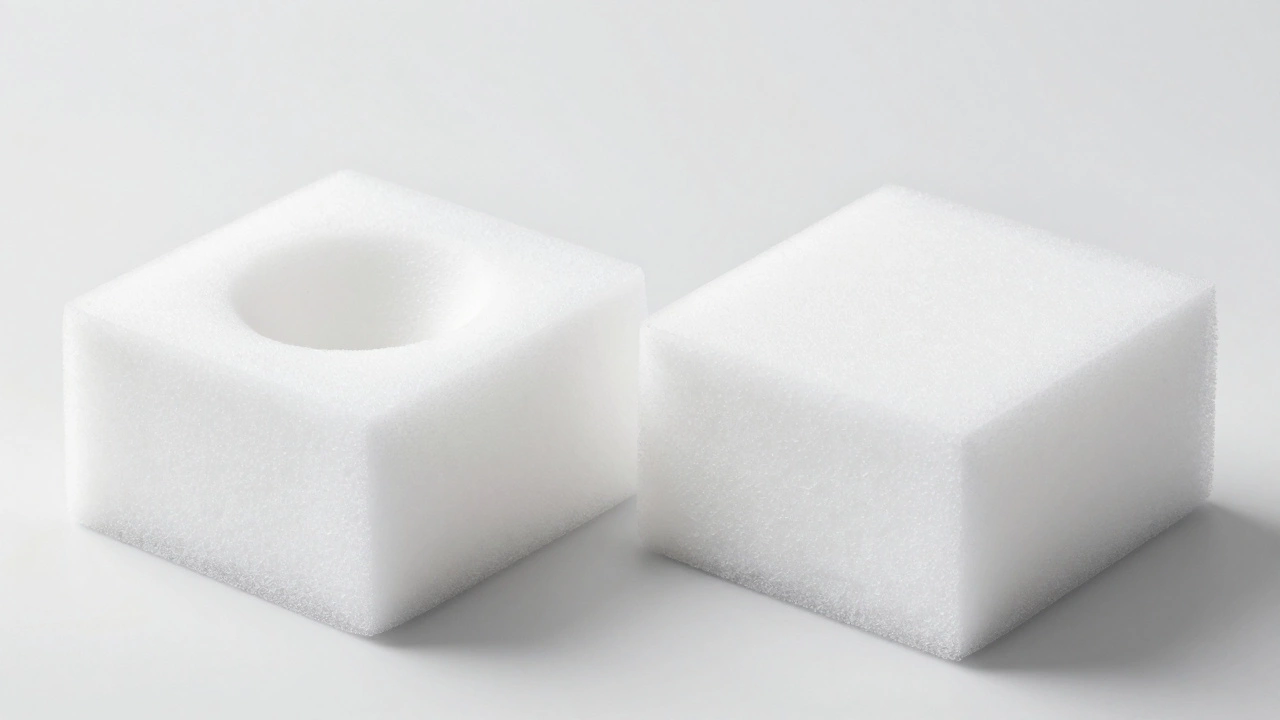
Think of it like a sponge. A low-density sponge has bigger holes and less material; it's light and easy to compress. A high-density sponge has smaller holes and more material; it's heavier and resists collapsing. While a manufacturer can make a 40-density foam feel soft by changing the cell structure, the fact that there is more "stuff" in the foam means it will bounce back to its original shape thousands of times more than a 32-density foam would. If you use 32 density in a spot where you sit every single night watching TV, those cells will eventually fatigue and flatten, leading to that dreaded "sink-hole" effect.
The Case for 32 Density Foam
Is 32 density ever the right choice? Absolutely. 32 kg/m³ Foam is often classified as a medium-grade polyurethane foam. It provides a welcoming, plush feel that makes a sofa look cozy. If you are furnishing a formal sitting room where guests only sit for an hour or two, or if you're designing a daybed that is used more for lounging than sitting upright, this is your best bet.
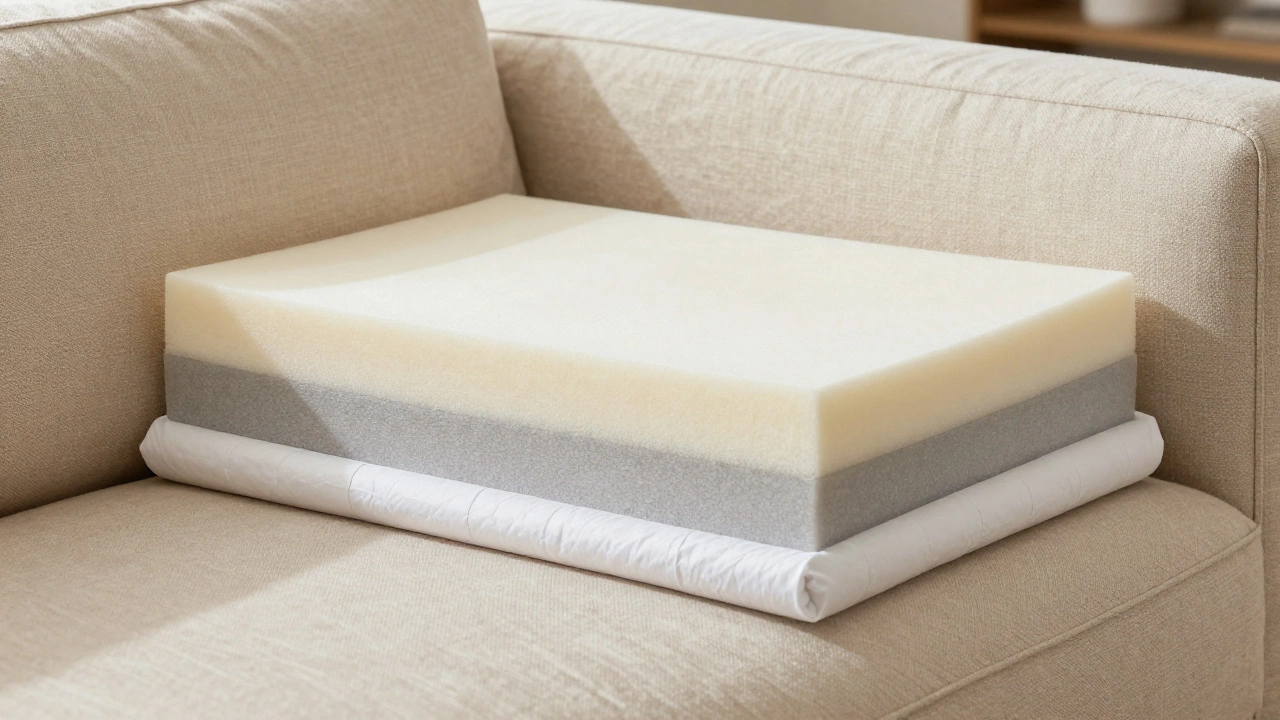
One clever trick professional upholsterers use is "layering." They might put a thick slab of 40 density foam at the bottom for structural support and top it with a 2-inch layer of 32 density foam. This gives you the best of both worlds: the immediate softness of the 32 density and the long-term support of the 40. If you only use 32 throughout the whole cushion, you'll likely notice the edges starting to round off and the center dipping within two to three years of regular use.
Why 40 Density Foam Wins for Daily Use
For the main sofa in a family home, 40 kg/m³ Foam is almost always the superior choice. This is considered a high-density foam that can withstand the constant compression of daily sitting. It doesn't just support your weight; it distributes it across the surface of the cushion, which prevents the foam from concentrating stress in one area.
Consider the physics of a typical living room. Kids jump on the cushions, adults lean back at angles, and pets curl up in the corners. A 40-density foam has a higher "recovery rate," meaning it returns to its flat state much faster after you stand up. In a real-world test, a cushion made of 40 density foam will typically maintain its original height and shape for 7 to 10 years, whereas a 32 density cushion in the same high-traffic environment might start failing at the 3-year mark. If you are investing in density foam for sofas, going slightly higher in density is the cheapest way to extend the life of your furniture.
Comparing the Two Side-by-Side
| Attribute | 32 Density (Medium) | 40 Density (High) |
|---|---|---|
| Feel | Plush, softer initial sink | Firm, supportive, stable |
| Lifespan | Short to Medium (3-5 years) | Long (7-10+ years) |
| Best Use Case | Guest rooms, accent chairs | Main sofa, lounge chairs |
| Sag Resistance | Moderate - prone to dipping | High - resists permanent deformation |
| Weight | Lighter | Heavier/Denser |
How to Decide Based on Your Body and Habits
The "right" foam depends heavily on who is sitting on the sofa. If the primary users are petite or prefer a "sinking" feeling, 32 density might feel more comfortable. However, for anyone over 180 lbs (82 kg), 32 density often feels too soft, causing the person to bottom out and hit the frame. This is not only uncomfortable but actually damages the foam faster because the cells are being crushed completely.
You should also think about your posture. Do you sit bolt upright to read, or do you slouch and lounge? Slouching puts more pressure on the rear edges of the cushion. Polyurethane Foam with a density of 40 kg/m³ handles these uneven pressure points much better. If you find that your current sofa is too hard, don't immediately jump to 32 density. Instead, look for a "soft-grade" 40 density foam or add a dacron wrap around the core. This gives the appearance of softness without sacrificing the structural integrity of the seat.

Common Pitfalls When Buying Replacement Foam
One big mistake people make is buying foam that is exactly the same size as the old cushion. Foam compresses. If you buy a piece of 40 density foam that fits perfectly in the cover, it might actually be too tight, causing the fabric to strain and the cushion to bulge awkwardly. You want a slight overage (about 1 inch or 2.5 cm) so the foam fills the corners of the fabric cover completely.
Another trap is ignoring the "ILD" or Indentation Load Deflection. While density tells you how long the foam lasts, ILD tells you how hard it feels. You can find a 40-density foam with a low ILD (meaning it's high quality but feels soft) and a 32-density foam with a high ILD (meaning it's lower quality but feels stiff). Always ask your supplier for the ILD rating if you are worried about the sofa feeling like a brick.
The Long-Term Value Proposition
When you calculate the cost per year, 40 density foam is almost always cheaper. A 32 density replacement might cost less upfront, but if you have to replace it twice in the time it takes for a 40 density slab to wear out, you've spent more money and wasted more time. Moreover, high-density foams are generally better for your back. Using a foam that is too soft (like a low-grade 32) can lead to lower back pain because your spine isn't properly supported during long periods of sitting.
If you're truly stuck between the two and can't decide, the safest bet is always the 40. It is much easier to add a soft topper to a firm cushion than it is to add support to a sagging, soft cushion. In the world of upholstery, you can always make something softer, but you can't make something denser once it's already manufactured.
Will 40 density foam make my sofa feel too hard?
Not necessarily. Density is about the weight of the material, not the firmness. However, 40 density typically feels more supportive. If you want it to feel softer, you can wrap the foam in a layer of polyester fiber or dacron, which creates a plush outer layer while keeping the internal support of the high-density foam.
Can I mix 32 and 40 density foam in one cushion?
Yes, this is actually a professional technique called "sandwiching." By placing a layer of 40 density foam at the bottom and 32 density on top, you get a seat that feels soft when you first sit down but doesn't sag over time. This is common in high-end furniture design.
How do I know if my current foam is 32 or 40?
Unless the foam is marked, it's hard to tell by sight. However, you can do a "recovery test." Press your thumb deep into the foam and let go. If it pops back instantly, it's likely a higher density (40+). If it takes a second to slowly expand back, it's likely a lower density (32 or below).
Is 40 density foam better for heavy people?
Yes. Heavier individuals put more stress on the cell walls of the polyurethane. 32 density foam will compress much faster and may "bottom out," meaning you'll feel the springs or frame. 40 density provides the necessary resistance to keep the user supported.
Does higher density foam mean it's more expensive?
Generally, yes. Because there is more raw material used to create a 40 density foam than a 32 density foam, the price per cubic foot is higher. However, the increased lifespan usually makes it a better investment over time.
Next Steps for Your Sofa Project
If you've decided to go with 40 density foam, your next step is to measure your cushions accurately. Don't just measure the fabric cover; measure the actual foam inside. If the foam has already sagged, it will be smaller than the cover, and you'll need to base your measurements on the cover dimensions to ensure a snug fit.
For those on a budget, consider replacing only the seat cushions and keeping the back cushions at 32 density. We spend most of our weight on the seat, but the back cushions only need to provide a soft lean. This allows you to save money on the backrest while ensuring the seat remains durable for years to come.