Flooring Selector & Cost Estimator
Tell us about your project:
Recommended Choice
Reason goes here.
- Cost (Mid-Range): $70-$100/m²
- Est. Total: $0
- Lifespan: 20-25 Years
- Cost (Mid-Range): $50-$70/m²
- Est. Total: $0
- Lifespan: 15-20 Years
Why this choice?
Detailed advice text will appear here based on your inputs.
Select your room details and click "Get Recommendation" to see which flooring suits your needs best.
You’re standing in a hardware store or scrolling through endless options online, and you hit the same wall. You need new flooring. It needs to look good, last long, and not break the bank. But which one do you pick? Vinyl or laminate? This isn’t just a matter of taste. It’s about how your home actually functions.
I’ve walked through enough Auckland renovations to know that picking the wrong floor is a headache you don’t want. If you put laminate in a bathroom, you’ll be replacing it in two years. If you put cheap vinyl in a high-traffic hallway, it might dent under heavy furniture. The answer depends on where you live, what you do, and how much water enters your house.
Quick Takeaway
- Choose Vinyl (LVT/LVP) if you need waterproof floors for kitchens, bathrooms, or basements. It handles spills and humidity without warping.
- Choose Laminate if you are on a tighter budget and installing in dry areas like bedrooms, living rooms, or hallways. It feels more like real wood underfoot.
- Avoid Laminate in any room with potential water exposure. It swells and ruins quickly when wet.
- Vinyl is softer and quieter, making it better for homes with kids or pets who run around barefoot.
What Are We Actually Comparing?
Before we dig into pros and cons, let’s clear up the confusion. People often use these terms loosely, but they are very different materials.
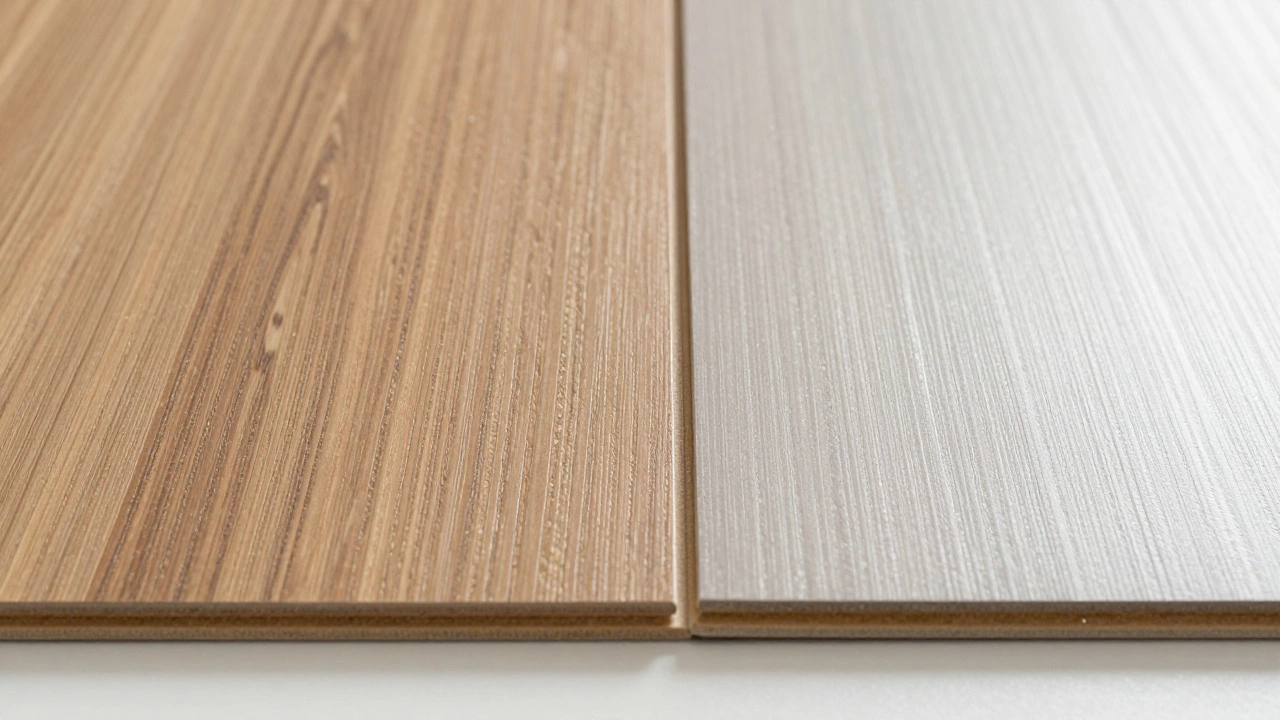
Laminate flooring is a composite wood product consisting of a fiberboard core topped with a photographic layer of wood grain and a protective wear layer. Think of it as a sandwich. The bottom is moisture-resistant backing, the middle is dense compressed wood fibers (HDF), and the top is a printed image of wood covered by a hard plastic coating. It looks like wood because it has a picture of wood on it.
Vinyl flooring, specifically Luxury Vinyl Tile (LVT) or Plank (LVP), is a synthetic flooring material made primarily from polyvinyl chloride (PVC) resin, stabilizers, and pigments. It doesn’t have a wood core. It’s plastic-based. Modern vinyl uses advanced printing technology to mimic stone, tile, or wood so realistically that even installers sometimes double-check.
The key difference? One is wood-based (laminate), and one is plastic-based (vinyl). That single fact dictates everything else: durability, water resistance, feel, and price.
The Water Test: Why Moisture Matters Most
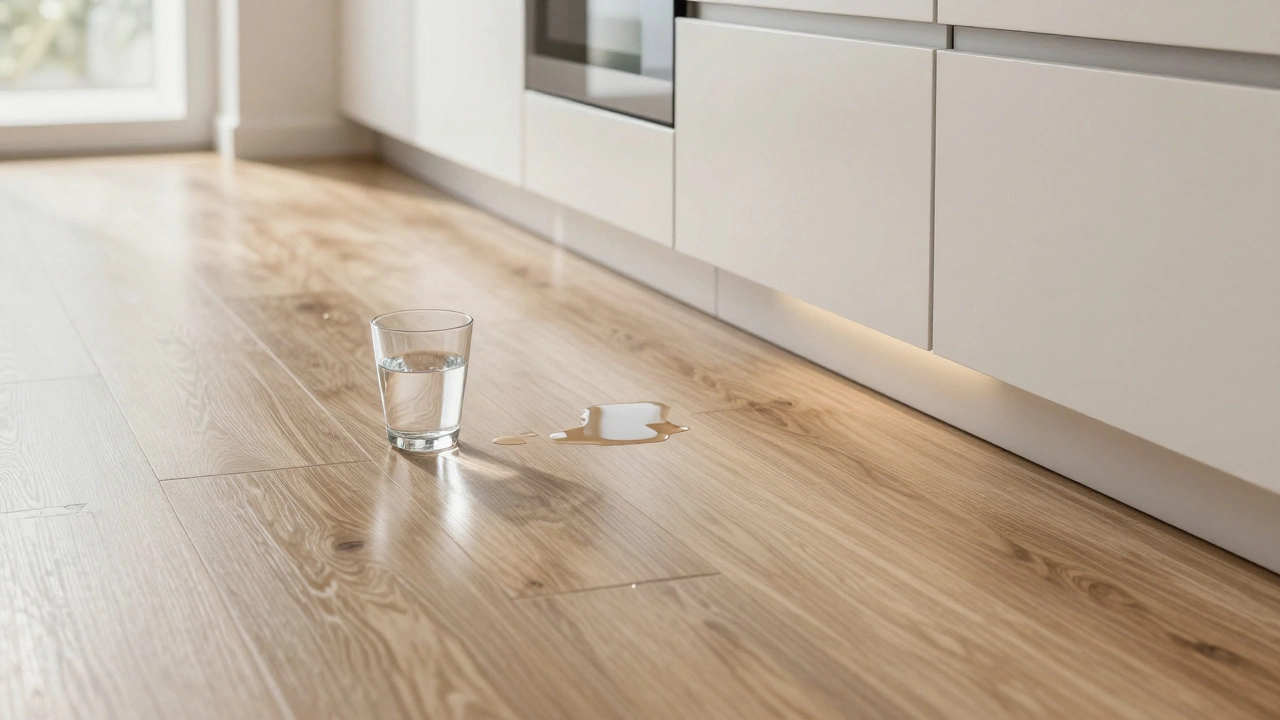
If there is one rule in flooring, it’s this: water kills laminate. In New Zealand, our weather can be unpredictable. Humidity spikes, rain drives sideways, and leaks happen. If you live in a ground-floor apartment or have a basement, this is critical.
Laminate has a fiberboard core. Wood fibers absorb water like a sponge. Even "water-resistant" laminate only resists surface spills for a short time. If water seeps into the seams-which it inevitably does over years-it swells the core. The planks buckle, lift, and create ugly gaps. There is no fixing this. You have to rip it out.
Vinyl is inherently waterproof. Because it’s made of PVC, water cannot penetrate the core. You can spill a glass of wine, leave a puddle from a leaky dishwasher, or even hose down a vinyl floor (though I wouldn’t recommend hosing unless necessary). It won’t swell. It won’t warp. This makes vinyl the undisputed king for kitchens, bathrooms, laundry rooms, and entryways.
If you are renovating a bathroom or kitchen, skip the debate. Go with vinyl. It saves you from costly repairs later.
Durability and Wear Layers
How hard is the floor? How will it handle dog claws, dropped keys, or moving furniture?
Laminate is incredibly hard. The top wear layer is usually aluminum oxide or ceramic beads bonded to melamine. It resists scratches very well. If you drop a heavy cast-iron skillet, laminate might chip slightly, but it won’t dent. However, because it’s rigid, it can feel harsh underfoot. Walking barefoot on laminate feels like walking on a hard table.
Vinyl is softer. It has some give. This means it’s quieter when you walk on it. It absorbs impact better. If you drop something, it’s less likely to break, and your feet are less tired after standing all day. But, vinyl can be scratched by sharp objects. A cat’s claw or a dragging chair leg can leave marks. High-quality vinyl has a thick urethane wear layer (look for 12 mils or more for residential use) that protects against daily abrasion. Cheaper vinyl wears out faster.
For homes with pets, vinyl is often safer for their joints, while laminate is tougher against accidental drops. It’s a trade-off between comfort and hardness.
Installation: DIY Friendly?
Both vinyl and laminate come in click-lock floating systems. This means you don’t glue them down (usually). You snap the planks together and float them over the subfloor. This makes both options excellent for DIYers.
Laminate installation is straightforward. The clicks are tight and secure. However, laminate requires a perfectly level subfloor. If your concrete slab has dips or humps, the laminate will creak or break at the joints. You may need to pour self-leveling compound first, which adds cost and labor.
Vinyl is more forgiving. Because it’s flexible, it can bridge minor imperfections in the subfloor. It also doesn’t expand and contract as much with temperature changes as laminate does. This makes vinyl easier to install in older homes with uneven floors. Some vinyl planks are also thicker (5mm to 8mm), providing built-in underlayment that adds sound dampening and comfort.
If you are renting or plan to move soon, consider peel-and-stick vinyl tiles. They require no tools and can be removed cleanly, though they don’t look as premium as plank styles.
Cost Breakdown: What Will You Pay?
Budget matters. Let’s talk numbers. Prices vary by brand and quality, but here is the general landscape in 2026.
| Flooring Type | Low End ($/m²) | Mid Range ($/m²) | High End ($/m²) |
|---|---|---|---|
| Laminate | $30 - $45 | $50 - $70 | $80+ |
| Vinyl (LVT/LVP) | $40 - $60 | $70 - $100 | $120+ |
Laminate is generally cheaper upfront. You can find decent quality laminate for under $50 per square meter. Vinyl starts higher because the manufacturing process is more complex. However, the gap is closing. As demand for waterproof floors grows, vinyl prices have stabilized.
Don’t forget installation costs. If you hire a professional, labor costs are similar for both. But if laminate fails due to water damage five years later, you pay for removal and replacement twice. Vinyl’s longevity often offsets its higher initial price.
Aesthetics: Does It Look Real?
This used to be laminate’s weak point. Early laminate looked fake-shiny, repetitive patterns. Today, high-end laminate uses embossed-in-register technology. This means the texture of the wood grain matches the printed image exactly. When you run your hand over a knot in the wood, you feel a depression. It’s impressive.
Vinyl has caught up too. Modern LVT uses multi-layer printing to create depth. Light reflects off vinyl differently than laminate. Laminate tends to be glossier or have a uniform matte finish. Vinyl can mimic the subtle sheen of oiled hardwood or the cool touch of stone. For a truly realistic look, especially in wide-plank designs, vinyl often wins because it lacks the rigid, flat appearance of laminate.
If you want the exact look of natural timber, check samples in natural light. Artificial showroom lighting can deceive you. Hold the plank up to your eye level. Does the pattern repeat too soon? Good brands have large variation packs to avoid this.
Environmental Impact and Health
This is a growing concern. Laminate is made from wood fibers, which are renewable. However, the binding agents often contain formaldehyde, a volatile organic compound (VOC). Look for CARB Phase 2 or E0 certified laminate, which emits negligible VOCs.
Vinyl is made from PVC, a plastic derived from petroleum. Critics argue it’s not eco-friendly. Manufacturing PVC releases chlorine and other chemicals. Additionally, old vinyl flooring is difficult to recycle. However, modern vinyl production has improved significantly. Many brands now offer phthalate-free vinyl, which is safer for indoor air quality. If you have allergies or respiratory issues, check the GreenGuard certification for low emissions.
Neither option is perfect environmentally. Hardwood is more sustainable if sourced responsibly, but it’s expensive and less durable. Between vinyl and laminate, choose based on performance first, then verify low-VOC certifications.
When to Choose Which: Decision Guide
Still unsure? Use this simple checklist.
Pick Laminate If:
- You are installing in bedrooms, living rooms, or offices (dry zones).
- Your budget is tight, and you need to cover a large area.
- You prefer a harder, cooler surface underfoot.
- You want the closest visual match to traditional hardwood without the maintenance.
Pick Vinyl If:
- You are installing in kitchens, bathrooms, basements, or entryways.
- You have pets, kids, or a busy household with lots of foot traffic.
- You want a softer, quieter, warmer floor.
- You plan to stay in the home long-term and want minimal maintenance.
Maintenance: Keeping It Looking New
Both floors are low maintenance, but they differ slightly.
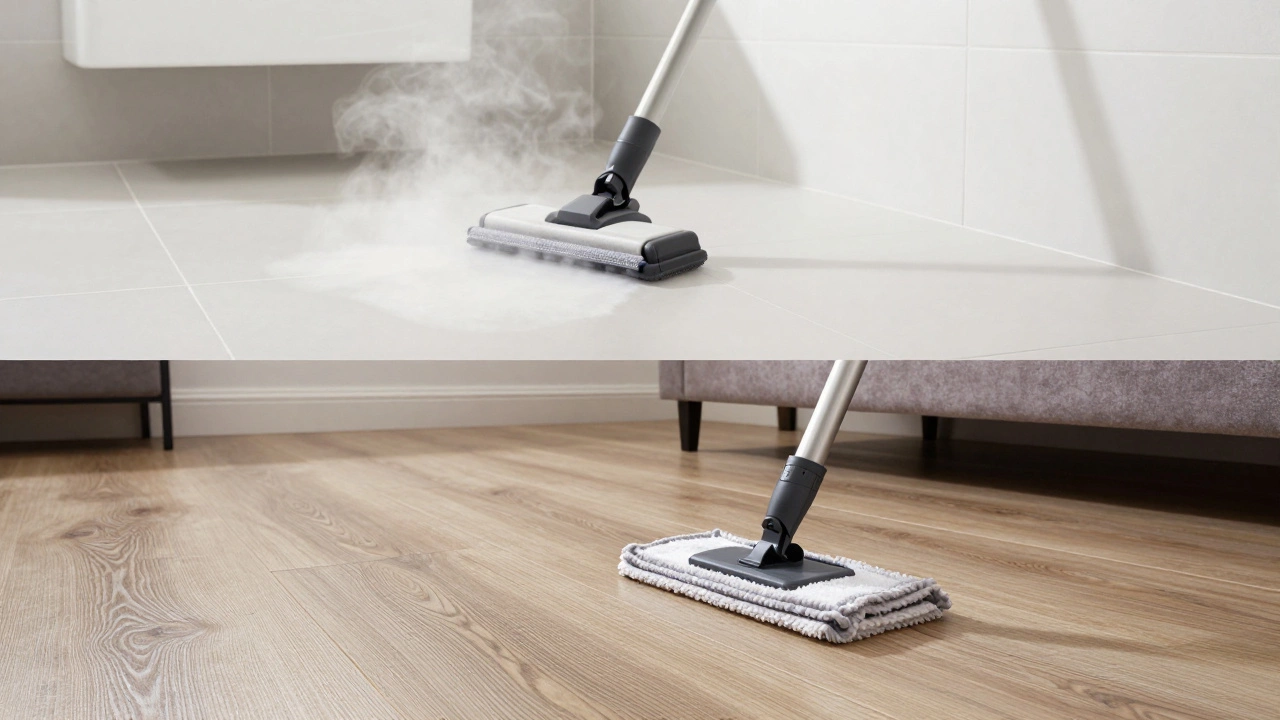
Laminate requires sweeping or vacuuming regularly. You can damp-mop, but never soak it. Excess water damages the seams. Avoid steam mops-they force hot vapor into the cracks, ruining the core. Use cleaners designed for laminate to maintain the wear layer.
Vinyl is easier. Sweep or vacuum. Mop with water and mild detergent. Steam mops are generally safe on vinyl (check manufacturer guidelines), as the heat sanitizes without damaging the plastic core. Spills wipe up instantly. Stains from wine or coffee rarely set if cleaned promptly.
In both cases, place felt pads under furniture legs. Dragging heavy items causes permanent damage. Use rugs in high-wear areas, but avoid rubber-backed mats that can discolor vinyl over time.
Can I install laminate over existing vinyl?
Yes, you can install laminate over existing vinyl if the vinyl is firmly attached, smooth, and free of cracks. However, adding another layer raises the floor height, which may affect door clearances and transitions to other rooms. Ensure the total height doesn’t interfere with appliances or cabinets.
Is vinyl flooring bad for your health?
Modern vinyl flooring is generally safe. Older vinyl contained phthalates, which are harmful plastics softeners. Today, most reputable brands produce phthalate-free vinyl. Look for certifications like FloorScore or GREENGUARD Gold to ensure low VOC emissions and better indoor air quality.
Which lasts longer: vinyl or laminate?
Quality vinyl typically lasts 20-25 years, while laminate lasts 15-20 years. However, laminate’s lifespan is heavily dependent on avoiding water damage. In dry environments, both can last decades. Vinyl’s waterproof nature gives it an edge in longevity for average households.
Can I refinish laminate or vinyl floors?
No. Neither laminate nor vinyl can be sanded or refinished like solid hardwood. Once the wear layer is damaged, the plank must be replaced. This is why choosing a thick wear layer initially is crucial for long-term value.
Does vinyl increase home value?
Yes, high-quality luxury vinyl tile (LVT) increases home value, especially in kitchens and bathrooms. Buyers appreciate waterproof, durable flooring. Laminate also adds value but is perceived as less premium than vinyl in wet areas. Both are better than worn carpet or damaged tile.