Kitchen Designer ROI Calculator
Your Project Details
Analysis Result
Enter your budget details to see if hiring a designer makes financial sense.
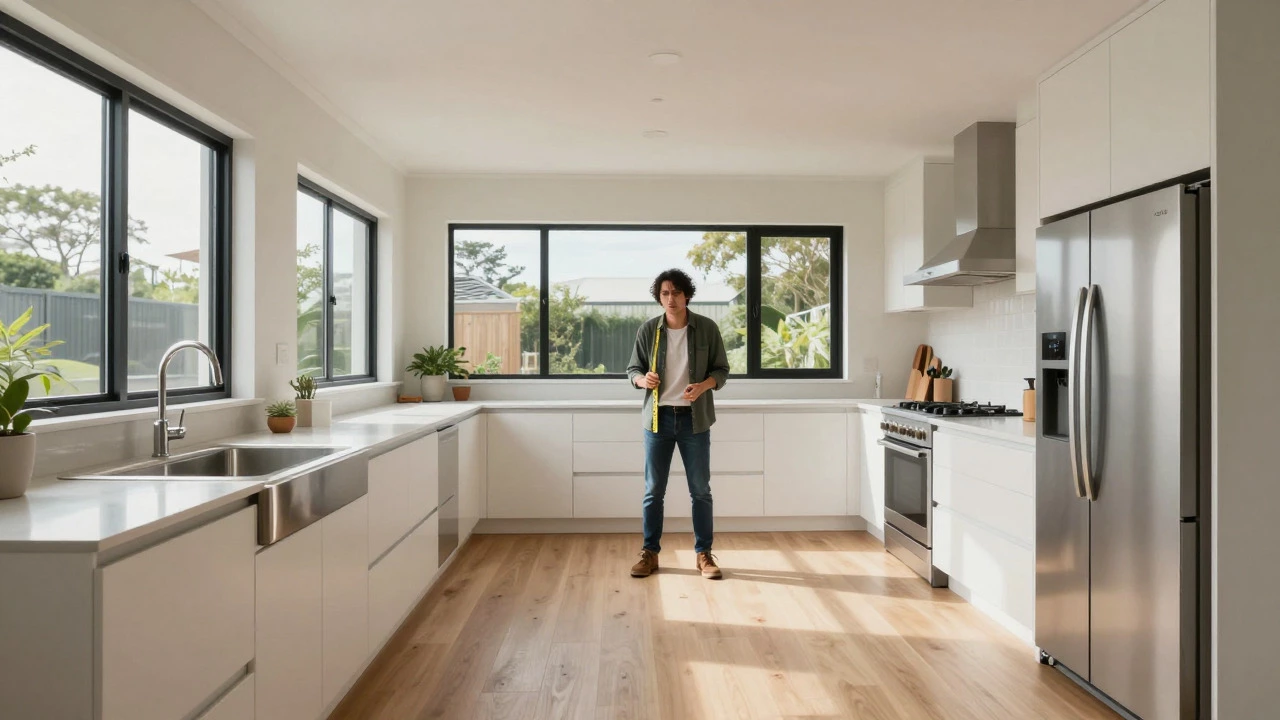
Picture this: you’ve just bought your dream home in Auckland. The kitchen is spacious, but the workflow makes no sense. You’re walking past the fridge to get to the sink, and the cabinets are too shallow for your pots. You could try fixing it yourself with some online tutorials, or you could hire a professional. But here’s the real question-will that professional actually save you money, or will they just add another bill to an already expensive renovation?
This is the dilemma facing thousands of homeowners right now. With material prices fluctuating and labor costs rising in New Zealand, every dollar counts. A kitchen designer is a specialized professional who plans the layout, selects materials, and coordinates the installation of kitchen spaces. They bridge the gap between your aesthetic desires and the physical realities of plumbing, electrical codes, and structural limitations. But do you really need one?
The Hidden Value of Professional Layouts
The biggest mistake people make when skipping a designer is underestimating the complexity of a functional layout. It’s not just about picking out marble countertops and subway tiles. It’s about the "work triangle"-the relationship between your sink, stove, and refrigerator. If these three points are too far apart, you’ll be exhausted after cooking dinner. If they’re too close, you’ll bump into each other if you’re cooking with a partner.
A professional uses software like SketchUp or AutoCAD to create precise 3D models. This allows you to walk through your kitchen before a single cabinet is built. You might realize that the island you wanted blocks the natural light from the window, or that the pantry door swings into the dining area. Catching these errors on screen costs nothing. Fixing them after construction begins can cost thousands.
In Auckland, where space is often at a premium due to smaller lot sizes, optimizing every square centimeter is crucial. A designer knows how to utilize vertical space with floor-to-ceiling cabinetry or integrate hidden storage solutions that a DIY planner might overlook. They understand ergonomics-the height of counters for someone who is six feet tall versus someone who is five feet four inches. These details define daily comfort.
Cost Breakdown: Designer Fees vs. Renovation Budget
Let’s talk numbers, because that’s usually the dealbreaker. In New Zealand, hiring a dedicated kitchen designer typically costs between $1,500 and $5,000 NZD for a standard residential project. High-end firms may charge more, especially if they handle full interior design services. Some designers work on an hourly basis, ranging from $150 to $300 per hour.
Compare this to the average kitchen renovation cost in Auckland, which often exceeds $40,000 to $60,000 NZD. The designer’s fee represents roughly 3% to 8% of the total budget. Is it worth spending 5% of your budget to potentially save 10-15% on costly mistakes? Often, yes.
| Factor | DIY Approach | Hiring a Designer |
|---|---|---|
| Initial Cost | $0 - $200 (software/books) | $1,500 - $5,000+ |
| Error Risk | High (plumbing/electrical misalignment) | Low (professional verification) |
| Time Investment | 20-40 hours of research | 5-10 hours of meetings |
| Material Access | Retail prices only | Trade discounts (10-20% off) |
| Resale Value Impact | Variable | Higher (cohesive, professional finish) |
One often-overlooked benefit is trade access. Designers have relationships with suppliers and manufacturers. They can often secure trade discounts on appliances, cabinetry, and fixtures that aren’t available to the general public. These savings can sometimes offset the designer’s fee entirely. For example, getting a 15% discount on a $10,000 appliance package saves you $1,500-covering the lower end of designer fees.
When You Can Skip the Designer
Not everyone needs a professional. If your kitchen is structurally sound and you only want to update surfaces-painting cabinets, changing hardware, or replacing countertops-a designer is overkill. Similarly, if you are working with a large-scale renovation contractor who includes design services in their package, you might already have the expertise you need.
You might also skip a designer if:
- Your budget is extremely tight (under $15,000 NZD).
- You are experienced with CAD software and building codes.
- You are keeping the existing layout and only swapping like-for-like items.
- You enjoy the process of researching and making decisions yourself.
However, if you are moving walls, changing the location of the sink or stove, or dealing with an older home with potential asbestos or wiring issues, professional guidance becomes much more valuable. Structural changes require engineering input, and a good designer knows how to coordinate with engineers and builders seamlessly.

The Role of Builders vs. Designers
A common point of confusion is the difference between a builder and a designer. Builders focus on construction-they know how to frame walls, install pipes, and lay tiles. Designers focus on aesthetics and function-they know how to select colors, arrange layouts, and source materials. While many builders offer basic design advice, it is often limited to what is easiest to build, not necessarily what is most functional or beautiful for you.
In New Zealand, the Building Act 2004 requires certain renovations to have building consents. A designer can help prepare the necessary drawings and documentation to ensure your project complies with local council regulations. This alone can prevent delays and fines. Without proper consent, you might face issues when selling your home later, as buyers’ lawyers will check for compliance.
How to Choose the Right Designer
If you decide to hire a professional, look for credentials. In New Zealand, membership in organizations like the New Zealand Institute of Interior Designers (NZIID) indicates a level of professionalism and adherence to industry standards. Ask for portfolios of completed projects, specifically kitchens similar in size and style to yours.
During consultations, pay attention to how they listen. Do they ask about your cooking habits, storage needs, and lifestyle? Or do they immediately start showing you catalogs? A good designer solves problems; a bad one just sells products. Also, clarify their scope of work. Do they manage the contractors? Do they order the materials? Or do they just provide the drawings?

Long-Term Value and Resale Potential
Kitchens are consistently cited as one of the top factors influencing homebuyers' decisions. A professionally designed kitchen signals quality and care. It suggests that the home has been maintained by someone who understands value. Conversely, a poorly planned kitchen with awkward layouts or mismatched finishes can deter buyers or lower offers.
In Auckland’s competitive property market, a well-executed kitchen renovation can yield a significant return on investment. While exact returns vary, industry estimates suggest that major kitchen remodels can recoup 50-70% of their cost in increased home value. A designer helps maximize this ROI by ensuring the design appeals to a broad range of buyers while still meeting your personal needs.
Frequently Asked Questions
How much does a kitchen designer cost in Auckland?
In Auckland, kitchen designer fees typically range from $1,500 to $5,000 NZD for a standard residential project. Hourly rates can vary from $150 to $300 per hour. High-end firms may charge more, depending on the complexity of the project and the level of service provided.
Do I need a building consent for a kitchen renovation?
Yes, if you are altering the structure, moving plumbing or electrical fixtures, or changing the external appearance of the home. A kitchen designer can help prepare the necessary drawings and documentation to obtain consent from your local council, ensuring compliance with the Building Act 2004.
Can a kitchen designer save me money?
Yes, indirectly. By preventing costly errors during construction, optimizing material usage, and accessing trade discounts on appliances and fixtures, a designer can help reduce overall renovation costs. Their expertise can also increase the resale value of your home, providing a better return on investment.
What is the difference between a kitchen designer and a builder?
A kitchen designer focuses on the layout, aesthetics, and functionality of the space, creating plans and selecting materials. A builder focuses on the physical construction, installing cabinets, plumbing, and electrical systems. While builders may offer basic design advice, designers specialize in creating optimized, visually appealing spaces.
Should I hire a designer for a small kitchen?
Absolutely. Small kitchens often require more creative problem-solving to maximize storage and functionality. A designer can help you utilize every inch of space efficiently, incorporating clever storage solutions and ergonomic layouts that might not be obvious to a DIY planner.