Fridge Placement: Best Spots for Efficiency and Flow in Your Kitchen
When it comes to your kitchen, fridge placement, the position of your refrigerator in relation to other appliances, work zones, and traffic flow. Also known as appliance positioning, it isn’t just about fitting a big box into a corner—it’s about making your daily routine smoother, saving energy, and keeping food safe. A fridge that’s tucked away in a dark corner or crammed next to the oven isn’t just annoying—it’s costing you money and making cooking harder.
Good kitchen layout, the arrangement of countertops, appliances, and storage to maximize workflow follows the work triangle: fridge, sink, and stove should form a loose triangle with each leg under 9 feet. That way, you’re not walking across the whole room every time you grab milk or chop veggies. If your fridge is far from the prep area, you’re adding steps to every meal. And if it’s right next to the dishwasher or oven? Heat from those appliances makes your fridge work harder, which means higher bills and more wear on the motor.
It’s not just about distance—it’s about access. A fridge door that swings into a narrow aisle or blocks a cabinet? That’s a design mistake. People need at least 32 inches of clear space in front of the fridge to open the door fully and pull out drawers. And don’t forget ventilation. Most fridges need at least an inch of space on the sides and back to breathe. Crowding it against a wall or inside a cabinet without airflow? That’s a fast track to a broken compressor.
Some people think they need a fridge in the pantry or garage. But unless your space is climate-controlled, that’s asking for trouble. Freezers might handle cold garages, but standard fridges don’t. If it’s below 50°F, the thermostat won’t trigger the cooling cycle, and your food warms up. If it’s above 110°F, the compressor burns out. Your fridge doesn’t care about your design aesthetic—it cares about temperature stability.
Think about who uses the kitchen. If kids grab snacks, put the fridge where they can reach it safely—no climbing on stools. If you cook often, keep it near where you pull out ingredients. If you entertain, make sure it’s not blocking the path to the dining area. A fridge that’s easy to access but out of the way is the sweet spot.
And don’t overlook lighting. A fridge in a dark corner means you’re fumbling in the dark for yogurt at midnight. Even a simple under-cabinet light can make a difference. Same with noise—if your fridge is right against a bedroom wall, you’ll hear the hum all night. Move it if you can.
There’s no single perfect spot for every kitchen, but the best fridge placement, the position of your refrigerator in relation to other appliances, work zones, and traffic flow always follows the same rules: easy access, proper airflow, away from heat, and in line with how you actually use the space. It’s not about trends—it’s about function.
Below, you’ll find real examples from actual kitchens—what works, what doesn’t, and how small changes can make your fridge work better for you, not against you.
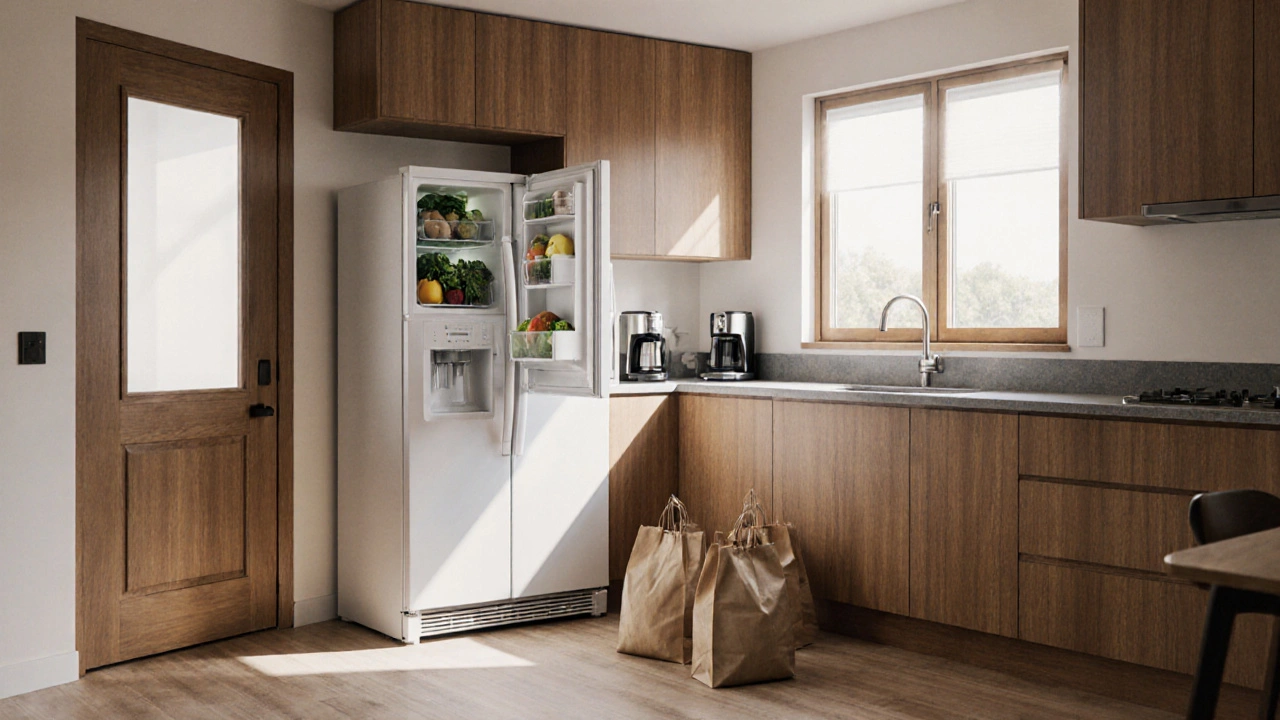
Where Should the Fridge Be in the Kitchen? Practical Placement Tips for Better Flow
The right fridge placement makes cooking easier, saves energy, and reduces clutter. Learn practical tips for positioning your fridge based on workflow, space, and real-life use-not just design trends.