Sideboard Dimensions: What Size Works for Your Space?
When you think of a sideboard, a long, low storage cabinet typically used in dining rooms for serving food and storing dishes. Also known as a buffet cabinet, it’s more than just extra storage—it’s a functional piece that shapes how you use your dining area. Get the dimensions wrong, and you’ll end up with a sideboard that blocks the flow, looks awkward, or leaves you short on space for plates and serving trays.
Most sideboards fall between 48 and 72 inches wide, with heights around 30 to 36 inches—same as a standard dining table. Depth usually ranges from 16 to 20 inches. But size isn’t just about numbers. It’s about how it fits with your table, your walkways, and your storage needs. If your dining table is 72 inches long, a sideboard that’s 60 inches wide leaves enough breathing room on each end. Too narrow, and it looks lost. Too wide, and it crowds the room. You also need at least 36 inches of clearance behind it for people to move freely. That’s not a suggestion—it’s the bare minimum for comfort.
Think about what you’re storing. A sideboard with deep drawers (over 18 inches) can hold table linens and serving ware, but only if you have the depth. Shallow sideboards (under 16 inches) work in tight spaces but won’t fit bulky platters. And don’t forget the height. If your table is 29 inches tall, a sideboard at 34 inches gives you a nice visual balance. Too tall, and it overwhelms; too short, and it looks like an afterthought.
People often buy sideboards based on looks alone—then realize they can’t open the doors or reach the back shelf. That’s why measuring your space before you buy matters more than the style. Check door swings, light switches, and radiator placements. A sideboard might look perfect in a magazine, but if it blocks your kitchen door, it’s just expensive decoration.
There’s no one-size-fits-all sideboard. But once you know the standard dimensions and how they relate to your room layout, you can cut through the noise. The posts below show real examples—from small apartments to large family homes—of sideboards that actually work. You’ll find guides on how to pick the right width, where to place it, and what to store inside so it stays useful, not just pretty.
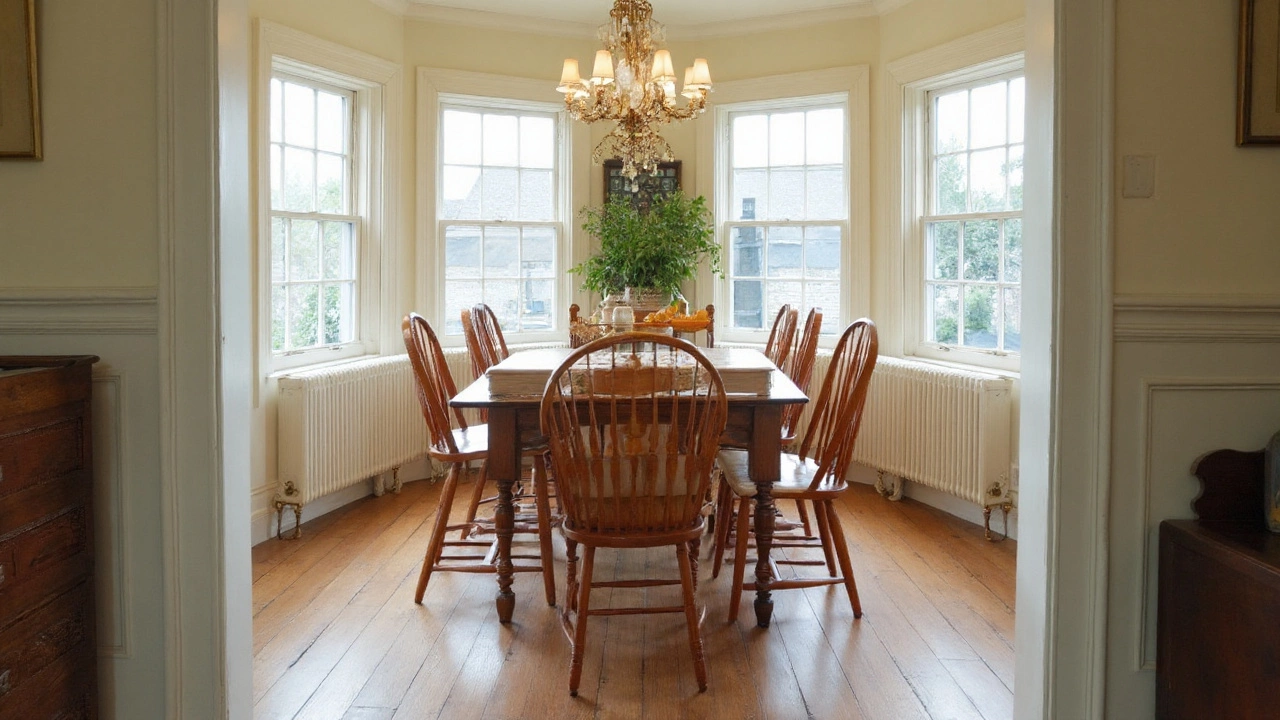
Sideboard Size vs Dining Table: Rules, Clearances, and Visual Balance
Exact rules for sizing a sideboard to your dining table: lengths, heights, depth, and clearance distances. Metric & inches, examples, checklists, and pro tips.