Construction Material Selector
Select your top priority for a construction project to see which material performs best.
Wood
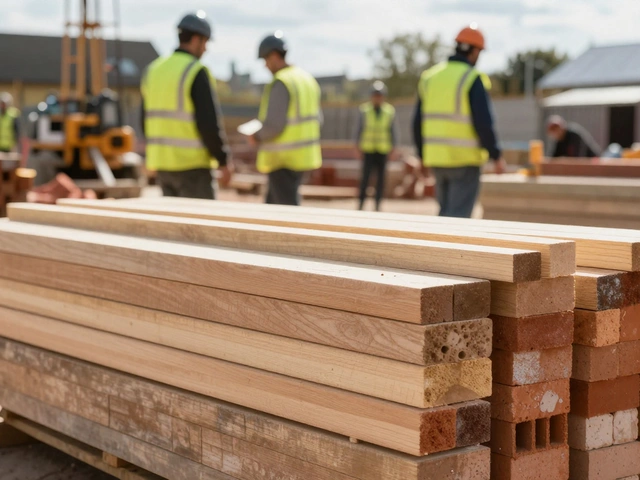
Organic backbone of residential building. Fast, renewable, and insulating.
Concrete
Versatile moldable stone. Durable, fire-resistant, and strong under compression.
Steel
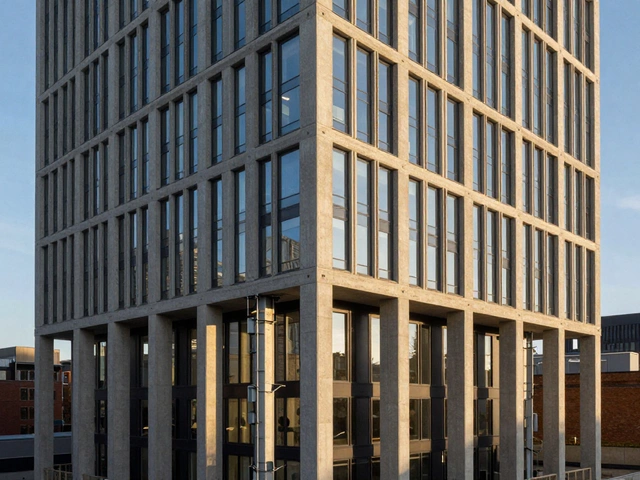
Strength behind skyscrapers. High tensile strength, ductile, and recyclable.
Comparison Results
When you look at a skyscraper, a suburban home, or a historic bridge, you are seeing the result of choices made by engineers and architects. While modern construction uses hundreds of specialized products, almost every structure relies on three core construction materials that form its skeleton and skin: wood, concrete, and steel. These three materials dominate the industry because they offer the best balance of strength, cost, availability, and versatility. Understanding how these primary materials work-and where they fall short-is essential for anyone planning a build, renovating a property, or simply curious about the built environment.
The question "what are the three construction materials?" often stems from a desire to simplify a complex field. In reality, no single material is perfect. Each has distinct physical properties that make it suitable for specific applications. By breaking down these three pillars, we can see why your house might be framed in wood while the city center rises in steel and concrete.
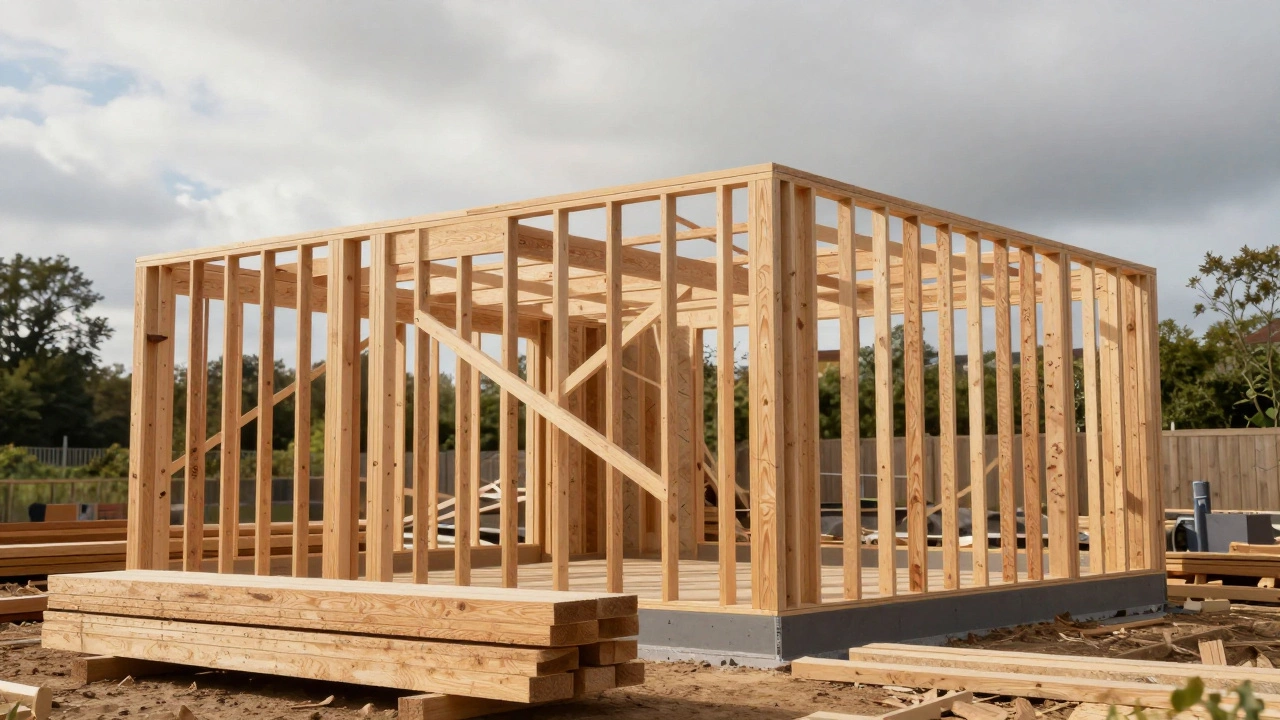
Wood: The Organic Backbone of Residential Building
Wood is a renewable natural resource used extensively in residential construction for framing, flooring, and finishing. For centuries, timber was the only option available. Today, despite the rise of synthetic alternatives, wood remains the dominant material for single-family homes in North America and many parts of Europe. This isn't just tradition; it's physics and economics.
Wood is lightweight yet strong relative to its weight. It acts as a natural insulator, keeping homes warmer in winter and cooler in summer without excessive energy use. When you touch a wooden window frame, it doesn't feel cold like metal or damp like stone. This thermal comfort is a significant factor in its popularity. Furthermore, wood is carbon-sequestering. Trees absorb CO2 as they grow, and that carbon remains locked in the lumber when it becomes part of a building, unlike concrete which emits carbon during production.
However, wood has clear limitations. It is combustible. While modern treatments can improve fire resistance, wood will eventually burn if exposed to high heat for too long. It is also susceptible to moisture. If not properly sealed and maintained, wood rots, warps, and invites pests like termites. Because of these vulnerabilities, wood is rarely used for high-rise buildings or structures requiring massive spans without internal supports. Its strength is directional-strong along the grain but weaker across it-which requires careful engineering in load-bearing walls.
- Best for: Single-family homes, interior framing, decking, and aesthetic finishes.
- Key Advantage: High strength-to-weight ratio and natural insulation properties.
- Main Risk: Susceptibility to fire, rot, and insect damage.
Concrete: The Versatile Moldable Stone
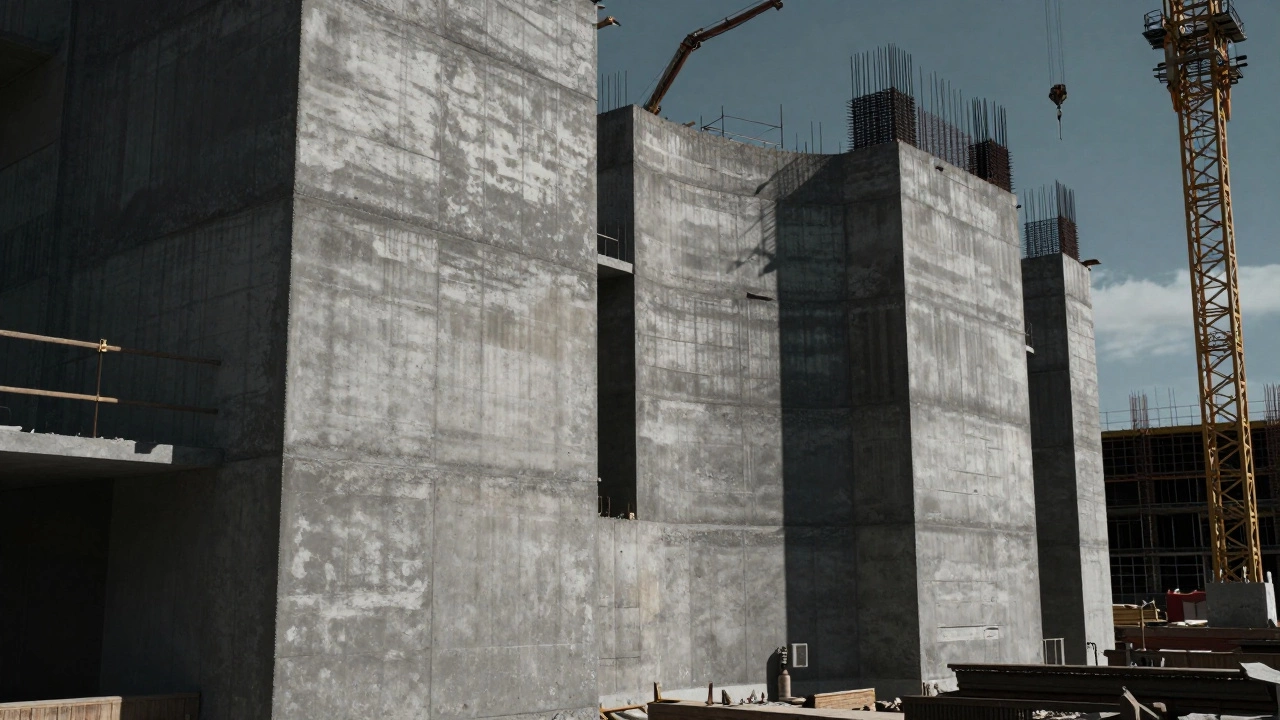
Concrete is a composite material made of cement, water, and aggregates (sand, gravel) that hardens into a stone-like substance. On its own, concrete is strong under compression-it can hold immense weight pushing down on it-but weak under tension. If you try to bend a concrete beam, it snaps. To solve this, engineers embed steel bars within it, creating reinforced concrete that combines the compressive strength of concrete with the tensile strength of steel rebar.
This combination makes concrete incredibly versatile. It can be poured into any shape, allowing for curved walls, complex foundations, and massive slabs. It is non-combustible, making it ideal for firewalls and high-density urban environments. Concrete structures are durable and require minimal maintenance over decades. They resist wind, rain, and pests better than wood. In coastal areas, where salt air corrodes metal and rots wood, concrete stands firm.
The downside of concrete is its environmental footprint. Cement production accounts for approximately 8% of global CO2 emissions. Additionally, concrete is heavy. Transporting and pouring it requires significant machinery and labor. Once set, it cannot be easily changed. Modifying a concrete wall involves cutting through hardened stone, which is noisy, dusty, and expensive. Cracks can develop due to settling or temperature changes, though these are often cosmetic rather than structural.
- Best for: Foundations, high-rise cores, bridges, parking garages, and industrial floors.
- Key Advantage: Extreme durability, fire resistance, and moldability.
- Main Risk: High carbon footprint and difficulty in modification after curing.
Steel: The Strength Behind Skyscrapers
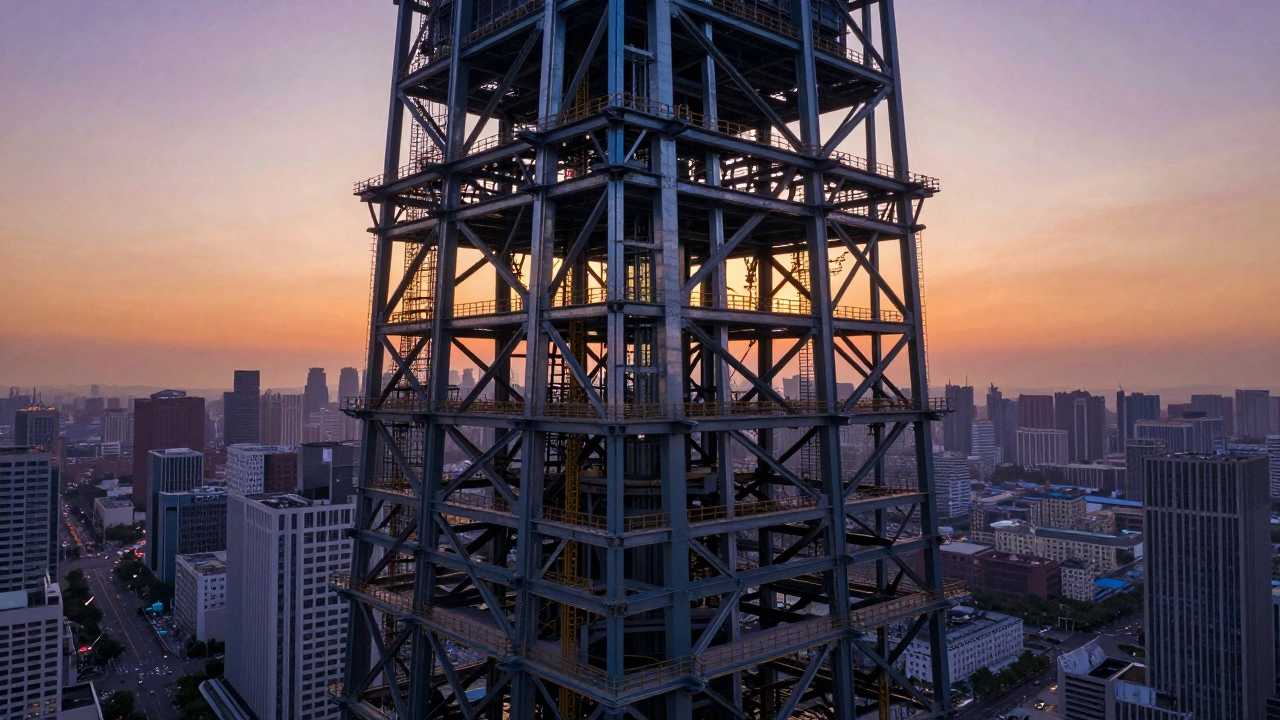
Steel is an alloy primarily composed of iron and carbon, known for its high tensile strength and ductility. If you imagine a building as a human body, steel is the muscle. It allows structures to reach heights that wood and concrete alone cannot achieve efficiently. Steel beams can span large distances without intermediate columns, creating open floor plans in offices and stadiums. This flexibility is crucial for modern commercial architecture.
Steel is predictable. Engineers know exactly how it will behave under stress. It does not rot, shrink, or swell. It is fully recyclable, meaning old steel buildings can be melted down and reused without losing quality. In earthquake-prone regions, steel's ability to bend slightly without breaking (ductility) helps dissipate seismic energy, protecting the structure from collapse.
However, steel has two major enemies: fire and corrosion. Unlike concrete, steel loses strength rapidly when heated. In a fire, unprotected steel beams can buckle and cause a building to collapse. This is why you see thick fireproofing coatings on steel frames in malls and offices. Corrosion is another issue. Without proper painting or galvanization, steel rusts when exposed to moisture and oxygen. Rust expands, weakening the metal and potentially cracking surrounding concrete. Maintenance costs for steel structures can be higher due to the need for regular inspections and repainting.
- Best for: Skyscrapers, long-span bridges, industrial warehouses, and stadiums.
- Key Advantage: Superior tensile strength, speed of construction, and recyclability.
- Main Risk: Vulnerability to fire (requires protection) and corrosion.
Comparing the Big Three: A Decision Matrix
| Feature | Wood | Concrete | Steel |
|---|---|---|---|
| Cost Efficiency | Low to Moderate | Moderate | Moderate to High |
| Fire Resistance | Poor (without treatment) | Excellent | Poor (requires coating) |
| Durability/Lifespan | Medium (50-100 years) | High (75+ years) | High (50+ years with maintenance) |
| Environmental Impact | Low (Carbon sink) | High (CO2 emissions) | Medium (Recyclable) |
| Construction Speed | Fast | Slow (curing time) | Very Fast |
| Flexibility/Modification | Easy | Difficult | Moderate |
Hybrid Approaches: Why We Use All Three
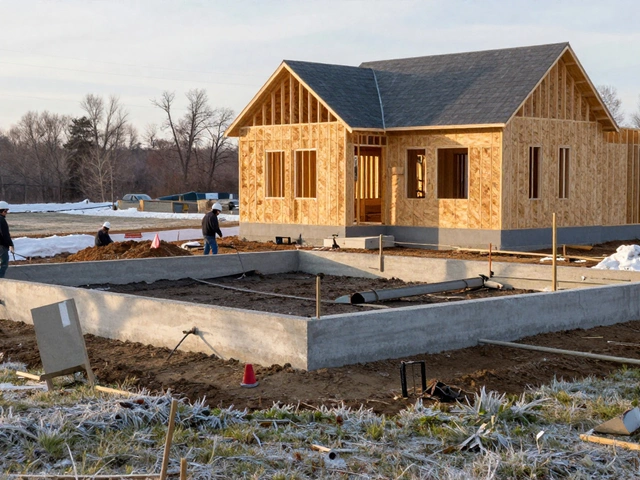
In practice, most buildings do not rely on just one of these materials. Instead, they combine them to leverage their strengths and mitigate weaknesses. A typical suburban home uses a concrete foundation that provides a stable, moisture-resistant base for the structure above. The walls are framed with wood studs that create the interior layout and support the roof load. Steel nails and connectors hold it all together. In a high-rise office building, the core might be reinforced concrete for stability and elevator shafts, while the outer frame is steel for height and openness. Floors might be concrete slabs for sound dampening and fire resistance.
This hybrid approach is standard in modern building science that integrates various materials to optimize performance, safety, and cost.. Architects choose materials based on local codes, climate, budget, and aesthetic goals. For example, in wildfire-prone areas, builders might replace wood siding with concrete or stucco. In humid climates, steel joists might be treated or replaced with concrete to prevent rust.
Emerging Alternatives and Future Trends
While wood, concrete, and steel remain the kings of construction, new materials are challenging their dominance. Cross-Laminated Timber (CLT) is an engineered wood product that allows for taller wooden buildings, pushing the limits of traditional timber construction. Green concrete mixes, using fly ash or slag instead of pure cement, aim to reduce the carbon footprint of concrete. Mass timber projects in cities like Vancouver and Seattle show that wood can compete with steel in mid-rise buildings.
Despite these innovations, the fundamental principles remain the same. Any new material must prove itself against the benchmarks set by wood, concrete, and steel: strength, durability, cost, and safety. Until a new material offers a compelling advantage in all these areas, the big three will continue to define our skylines and neighborhoods.
What are the three main types of construction materials?
The three primary construction materials are wood, concrete, and steel. Wood is favored for residential framing due to its insulation and cost. Concrete is used for foundations and high-rises for its compressive strength and fire resistance. Steel provides the tensile strength needed for skyscrapers and long-span structures.
Is wood stronger than concrete?
It depends on the type of force. Concrete is much stronger in compression (resisting being squashed), making it ideal for columns and foundations. Wood is stronger in tension relative to its weight and easier to work with, but it cannot support the massive loads that reinforced concrete or steel can in large structures.
Why is steel used in skyscrapers?
Steel has a high strength-to-weight ratio and excellent tensile strength. This allows it to support the immense weight of tall buildings while remaining relatively lightweight compared to concrete. It also enables large open spaces without interior load-bearing walls, which is crucial for office layouts.
What is the most environmentally friendly construction material?
Wood is generally considered the most environmentally friendly among the big three, as it is renewable and sequesters carbon. However, sustainable sourcing is critical. New forms of green concrete and recycled steel are also reducing the environmental impact of those materials significantly.
Can you build a house entirely out of steel?
Yes, steel-framed houses exist, particularly in areas prone to termites or hurricanes. However, they are less common than wood-framed homes due to higher costs and the need for specialized insulation to prevent thermal bridging (heat loss through the metal).
How does fire affect these three materials differently?
Wood burns but can char, which sometimes protects the inner core temporarily. Concrete is non-combustible and highly fire-resistant. Steel does not burn but loses structural integrity quickly at high temperatures, requiring fireproofing coatings to maintain safety in fires.