Global Construction Powerhouse Analyzer
Select a company from the list to view detailed metrics.
When you think about who is actually building the world’s most ambitious skyscrapers, bridges, and airports, a few names dominate the conversation. But identifying the top construction companies isn't just about looking at the biggest billboards; it's about analyzing revenue, project complexity, and global reach. As of 2026, the landscape has shifted slightly due to post-pandemic recovery patterns and new infrastructure investments in Asia and the Middle East. If you're looking to understand which firms hold the keys to modern infrastructure, this breakdown gives you the concrete data you need.
How We Determine the "Top" Global Players
Ranking construction firms can be tricky because many operate as conglomerates with diverse holdings. The industry standard for these rankings often relies on the annual Engineering News-Record (ENR) Top Global Contractors list, which measures revenue from construction-related activities specifically. This filters out non-construction income, giving a clearer picture of pure building capability. However, we also look at project diversity. A company that builds only residential homes in one region doesn't compete on the same level as a firm managing multi-billion dollar airport expansions across three continents.
The criteria for this 2026 list include:
- Annual Construction Revenue: Verified figures from the latest fiscal year reports.
- Global Footprint: Number of countries where active projects are underway.
- Project Scale: Average contract value and maximum single-project size.
- Sector Specialization: Balance between civil engineering, building construction, and industrial plants.
The Heavyweights: Who Leads the Pack?
At the very top, the battle is usually between state-backed giants and private mega-firms. In recent years, Chinese and Korean conglomerates have surged past traditional European and American players, driven by massive domestic infrastructure programs and aggressive international bidding strategies. Let’s look at the specific entities dominating the 2026 rankings.
| Rank | Company Name | Headquarters | Primary Strengths | Estimated Annual Revenue (USD) |
|---|---|---|---|---|
| 1 | China State Construction Engineering Corp (CSCEC) | Beijing, China | Civil Infrastructure, High-Rise Buildings | $85+ Billion |
| 2 | Samsung Engineering Co., Ltd. | Seoul, South Korea | Petrochemical Plants, Industrial Facilities | $45+ Billion |
| 3 | SK E&C | Seoul, South Korea | Nuclear Power, Water Treatment, Smart Cities | $40+ Billion |
| 4 | Hyundai Engineering & Construction | Seoul, South Korea | Industrial Plants, Renewable Energy | $38+ Billion |
| 5 | Bechtel Corporation | Dallas, USA | Mining, Energy, Complex Civil Works | $35+ Billion |
| 6 | Fluor Corporation | Irvine, USA | Infrastructure, Public Projects, Defense | $32+ Billion |
| 7 | Vinci Construction | Paris, France | Transportation, Urban Development, Maintenance | $30+ Billion |
| 8 | Strabag SE | Vienna, Austria | Highways, Bridges, Rail Networks | $25+ Billion |
| 9 | Salini Impregilo | Milan, Italy | Hydropower, Tunnels, Green Energy | $22+ Billion |
| 10 | Turner Construction Company | New York, USA | Skyscrapers, Healthcare, Education Buildings | $20+ Billion |
Deep Dive: The Asian Dominance
You might notice a heavy concentration of Korean and Chinese firms in the upper half of the list. This isn't an accident. CSCEC, for instance, operates as the largest construction company globally by revenue. Their ability to mobilize massive labor forces and secure government contracts for high-speed rail and urban renewal projects gives them a scale advantage that Western competitors struggle to match. Similarly, the "Big Three" of Korean construction-Samsung Engineering, SK E&C, and Hyundai E&C-have carved out niches in high-tech industrial plants and nuclear energy. These sectors require specialized engineering expertise and long-term maintenance contracts, which lock in steady revenue streams for decades.
For example, SK E&C recently secured major contracts for smart city developments in Southeast Asia, leveraging their experience in integrating digital infrastructure with physical buildings. This shows how top firms are no longer just pouring concrete; they are becoming technology integrators.

The Western Giants: Quality and Complexity
While Asian firms lead in raw volume, American and European companies often dominate in project complexity and regulatory navigation. Bechtel Corporation, a privately held US firm, is famous for tackling some of the most difficult projects on earth, such as deep-sea mining operations and large-scale desalination plants. Their reputation for finishing complex jobs on time makes them a preferred partner for governments in the Gulf states and Australia.
In Europe, Vinci Construction stands out not just for new builds but for asset management. They don't just build the road; they often maintain it for 30 years afterward. This Business-as-a-Service model provides financial stability during construction downturns. Meanwhile, Turner Construction Company remains the go-to choice for iconic skyscrapers in North America, handling the intricate logistics of building vertically in dense urban cores like New York and Chicago.
What Makes a Company "Top Tier"? Beyond Revenue
Revenue is a good proxy for size, but it doesn't tell the whole story. When evaluating these firms, consider their risk management capabilities. Construction is a low-margin business where a single delay or safety incident can wipe out profits for a quarter. Top-tier companies invest heavily in Building Information Modeling (BIM) and predictive analytics to mitigate these risks. For instance, using BIM allows teams to simulate construction sequences before breaking ground, catching clashes in plumbing or electrical systems early.
Another critical factor is supply chain resilience. Since 2020, material price volatility has been a constant headache. Firms like Fluor Corporation have diversified their supplier networks across multiple continents to avoid bottlenecks. This logistical agility is a key differentiator in winning competitive bids.
Future Trends Shaping the Industry
Looking ahead to 2027 and beyond, several trends will influence which companies stay at the top. Sustainable construction is no longer optional; it's a requirement. Governments worldwide are mandating green building standards, favoring firms with proven track records in LEED certification and carbon-neutral design. Salini Impregilo, for example, has positioned itself strongly in renewable energy infrastructure, including wind farms and solar parks, ensuring its relevance in the green transition.
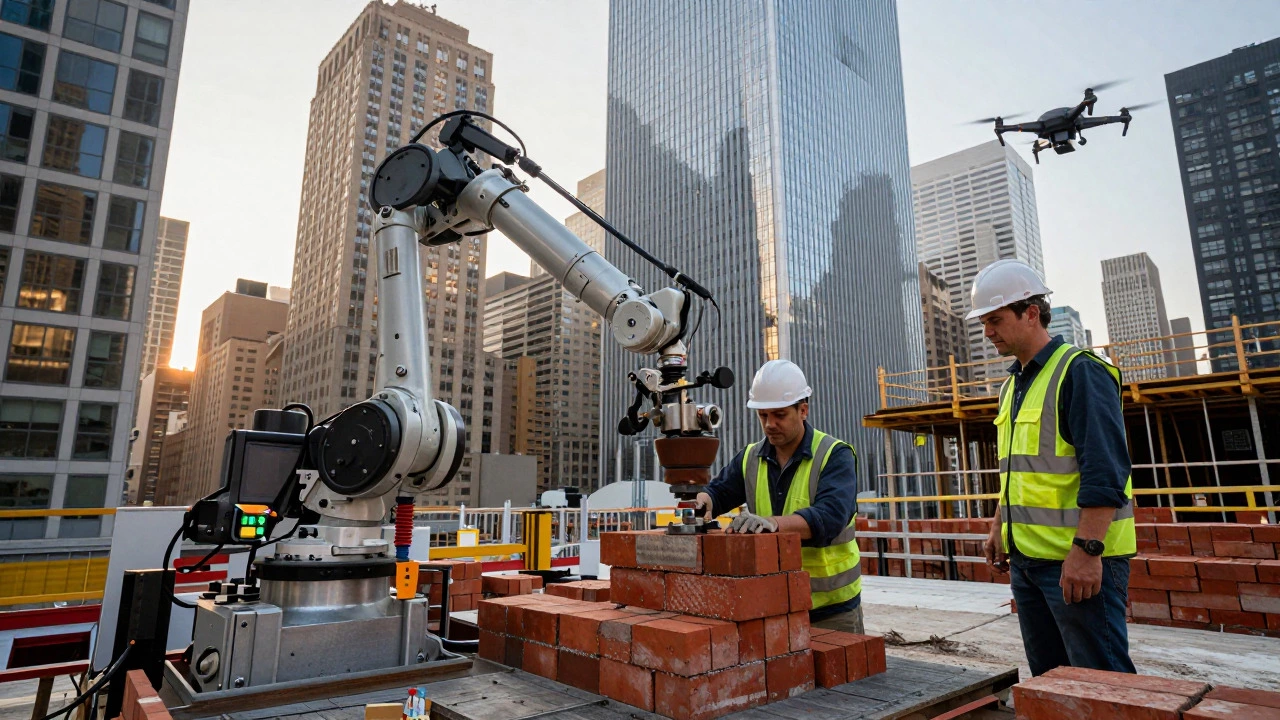
Labor shortages are also driving innovation. Automated bricklaying robots and drone surveying are becoming standard tools for top firms to offset rising labor costs. Companies that fail to adopt these technologies may find themselves losing ground to more agile competitors. The future belongs to those who can blend traditional engineering prowess with digital efficiency.
Frequently Asked Questions
Which country has the most top construction companies?
South Korea and China currently dominate the top 10 lists. South Korea typically holds three spots (Samsung, SK, Hyundai), while China leads with CSCEC. The United States follows with Bechtel, Fluor, and Turner, showing a strong presence in high-complexity sectors.
Are these companies publicly traded?
Most are, but not all. Bechtel Corporation is famously privately held, owned by the Bechtel family. In contrast, Samsung Engineering, Vinci, and Strabag are listed on major stock exchanges, making their financial data more transparent to investors.
What types of projects do these top firms specialize in?
Specializations vary. Korean firms excel in industrial plants and petrochemicals. American firms like Bechtel focus on mining and energy. European firms like Vinci and Strabag specialize in transportation infrastructure and urban development. Turner focuses on high-rise commercial buildings.
How does inflation affect construction company rankings?
Inflation boosts reported revenue numbers because materials and labor cost more. However, it squeezes profit margins. Therefore, a rise in rank based on revenue doesn't always mean improved profitability. Analysts often adjust for inflation when assessing true growth versus nominal growth.
Can smaller regional contractors compete with these global giants?
Yes, but in specific niches. Regional firms often win local projects due to lower overhead, better community relationships, and faster response times. However, for mega-projects exceeding $1 billion, global giants are usually required due to the capital intensity and risk exposure involved.